
Master the Plastic Heat Resistance Chart in 4 Simple Steps
Introduction
Mastering the heat resistance of plastics is crucial for ensuring the durability and performance of applications in demanding environments. This guide will empower you to master the plastic heat resistance chart, equipping you to make informed decisions about material selection. Navigating the complexities of heat resistance can be daunting, leading to potential missteps in material selection. Without a clear understanding of heat resistance, you risk making decisions that could jeopardize your project's success.
Understand Heat Resistance in Plastics
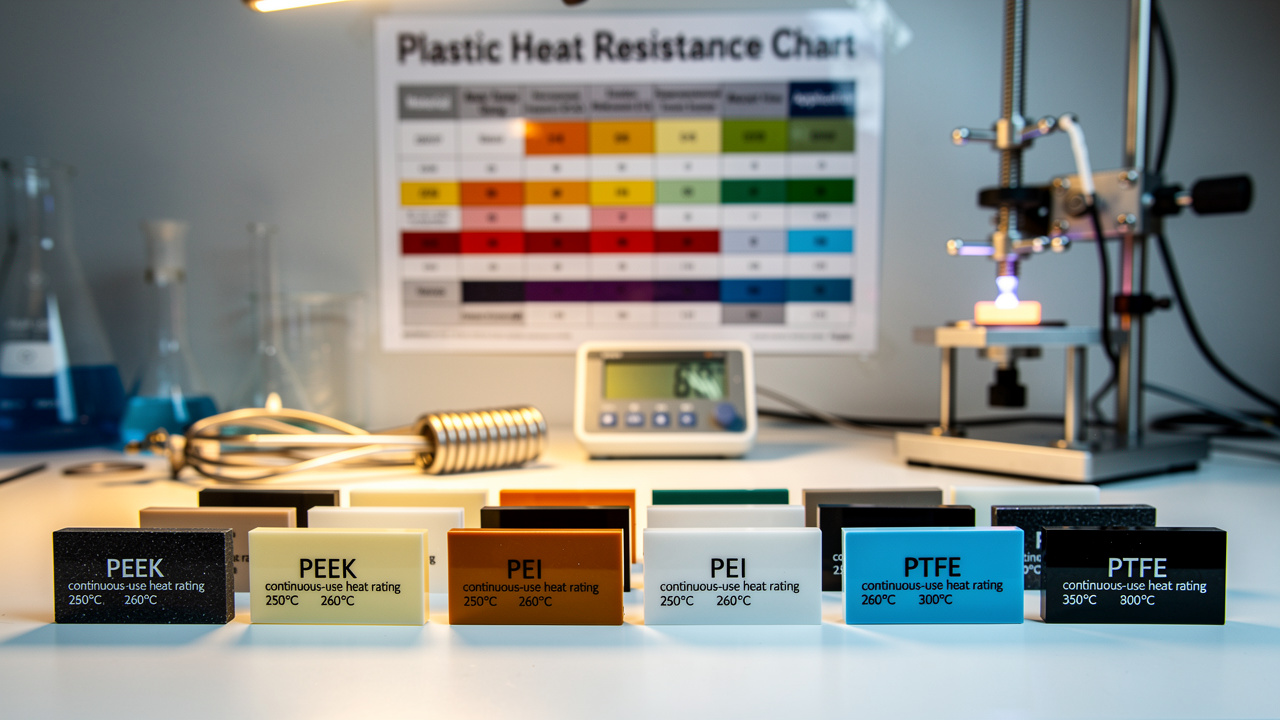
Understanding heat durability in polymers is crucial for ensuring the longevity and performance of your applications. Heat durability refers to a polymer's ability to maintain its physical and mechanical properties under high temperatures. Plastics are typically classified based on their heat resistance, as indicated in the plastic heat resistance chart, which is influenced by their chemical composition, molecular structure, and any additives used during manufacturing.
- Continuous-Use Heat: This is the maximum temperature at which a polymer can be used continuously without significant deterioration. For most heat-resistant polymers, this threshold exceeds 150°C (302°F).
- Short-Term Exposure: Some materials can withstand elevated temperatures for brief periods. Recognizing the difference between continuous-use and short-term exposure is vital for applications that may encounter temperature spikes.
- Factors Influencing Thermal Endurance: A polymer's thermal endurance can be affected by its type (thermoplastic vs. thermoset), the presence of fillers or reinforcements, and the specific processing conditions during production.
So, how can you ensure you're choosing the right materials for your needs? Understanding these concepts is key to making informed decisions.

Interpret the Plastic Heat Resistance Chart
Choosing the right heat-resistant material is essential for ensuring the longevity and reliability of your products. To effectively select a heat-resistant material, understanding how to interpret the plastic heat resistance chart is crucial. Here’s a step-by-step guide:
- Identify the Heat Ratings: Look for the continuous-use heat and short-term exposure heat ratings for each plastic listed. These values indicate the highest heat levels the material can endure without significant degradation.
- Understand the Context: Various applications may necessitate different heat tolerances. For instance, a material utilized in an industrial environment may need to endure higher temperatures than one employed in consumer goods.
- Compare Materials: Use the chart to compare the heat tolerance of various plastics. Pay attention to the specific grades of each substance, as these can significantly affect performance.
- Consider Additional Properties: While heat durability is critical, also consider other attributes such as chemical tolerance, mechanical strength, and flexibility, which may influence your choice.
By mastering the interpretation of heat resistance charts, you can safeguard your projects against costly failures and enhance product performance.

Select the Right Plastic for Your Application
Choosing the right plastic for your application is crucial to ensuring performance and reliability in demanding environments. Here are several key steps to guide you through the selection process:
- Define Your Requirements: Clearly outline the operational conditions your material will face, including heat ranges, exposure to chemicals, and mechanical stresses. For instance, high-heat materials such as PEEK can endure levels up to 250 degrees Celsius (482 degrees Fahrenheit), making them suitable for challenging conditions.
- Consult the plastic heat resistance chart: Use the chart to identify plastics that meet or exceed your heat requirements. Look for materials with a continuous-use heat level that aligns with your application. For example, Polyetherimide (PEI) has a rating of 171 degrees Celsius (340 degrees Fahrenheit), while Polytetrafluoroethylene (PTFE) can handle temperatures up to 280 degrees Celsius (500 degrees Fahrenheit).
- Evaluate Additional Properties: Consider other important characteristics such as impact durability, flexibility, and chemical compatibility. If your application involves exposure to solvents, ensure the selected plastic can withstand such conditions. For example, Polyphenylene Sulfide (PPS) is known for its corrosion resistance and mechanical strength, making it ideal for precision electrical connectors.
- Test Samples: If possible, acquire samples of the chosen materials and perform tests under real operating conditions. This will help confirm that the material performs as expected. Standard tests such as the Vicat Softening Temperature and Heat Distortion Temperature can provide insights into how well a material will perform under heat exposure.
- Seek Expert Guidance: Don’t hesitate to consult with extrusion experts at Lincoln Plastics, who can provide insights into manufacturability, tolerances, and co-extrusion options that may enhance your product’s performance. Lincoln Plastics' robust quality management program, certified to ISO 9001:2015, includes dedicated quality plans and in-process checks, ensuring that your rigid profiles meet critical dimensions and compliance standards.
By partnering with Lincoln Plastics, you not only gain access to expert guidance but also ensure your project meets the highest standards of quality and performance.

Troubleshoot Common Selection Challenges
Choosing the right heat-resistant materials can be a complex endeavor, but understanding common challenges can simplify the process. Here’s how to troubleshoot them:
- Insufficient Temperature Ratings: Finding materials that can withstand high temperatures can be a daunting task. If the accessible substances do not satisfy your temperature needs, consider exploring advanced polymers or composites that may provide greater heat resistance.
- Material Availability: Occasionally, the perfect polymer may not be easily accessible. In such situations, consult with suppliers about alternative substances that can meet your specifications or consider custom formulations.
- Cost Constraints: If high-performance substances exceed your budget, assess whether a lower-cost polymer can be utilized alongside protective coatings or other alterations to improve its heat resistance.
- Compatibility Issues: Ensure that the chosen substance is suitable with other components in your application. If there are concerns about chemical interactions, consider using barrier coatings or selecting a different plastic altogether.
- Performance Testing: If you are uncertain about a substance's performance, conduct thorough testing under simulated operational conditions. This can help identify any potential issues before full-scale production.
Ultimately, overcoming these challenges not only ensures the reliability of your product but also enhances its overall performance in demanding environments.

Conclusion
Choosing the right materials for high-temperature applications can be a complex challenge. Understanding the intricacies of plastic heat resistance is crucial for making informed decisions that enhance product performance and longevity. In this guide, we’ve outlined the key steps to help you interpret heat resistance ratings, select appropriate plastics, and troubleshoot common challenges, ensuring that the right choices are made for demanding environments.
Key insights include:
- The importance of distinguishing between continuous-use and short-term exposure heat ratings.
- Evaluating properties such as chemical resistance and mechanical strength is essential.
Are you confident in your material choices for high-temperature applications? Consulting with experts, particularly those at Lincoln Plastics, can provide valuable guidance in navigating these complexities. Their commitment to quality, backed by ISO 9001:2015 certification and a robust quality management program, ensures that the materials selected will meet stringent performance standards.
In conclusion, the significance of understanding heat resistance in plastics cannot be overstated. By applying the steps outlined in this guide and leveraging the expertise of Lincoln Plastics, individuals can overcome material selection challenges and achieve optimal results in their projects. Don't leave your material choices to chance; consult with Lincoln Plastics to ensure your projects succeed in demanding environments.
Frequently Asked Questions
What is heat durability in polymers?
Heat durability refers to a polymer's ability to maintain its physical and mechanical properties under high temperatures, ensuring the longevity and performance of applications.
How are plastics classified based on heat resistance?
Plastics are classified based on their heat resistance as indicated in the plastic heat resistance chart, which is influenced by their chemical composition, molecular structure, and any additives used during manufacturing.
What is continuous-use heat?
Continuous-use heat is the maximum temperature at which a polymer can be used continuously without significant deterioration, typically exceeding 150°C (302°F) for most heat-resistant polymers.
What is short-term exposure in relation to heat resistance?
Short-term exposure refers to the ability of some materials to withstand elevated temperatures for brief periods, which is important for applications that may encounter temperature spikes.
What factors influence a polymer's thermal endurance?
A polymer's thermal endurance can be influenced by its type (thermoplastic vs. thermoset), the presence of fillers or reinforcements, and the specific processing conditions during production.
Why is it important to understand heat resistance when choosing materials?
Understanding heat resistance is crucial for making informed decisions about material selection, ensuring that the chosen polymers will perform adequately under the expected temperature conditions of the application.
List of Sources
- Understand Heat Resistance in Plastics
- UMass Amherst-led team discovers new way to make thermally insulative plastics (https://sciencesources.eurekalert.org/news-releases/1133044)
- Heat Resistant Plastics Guide | New Process Fibre (https://newprocess.com/a-guide-to-heat-resistant-plastics)
- Avient Debuts New Thermal Management Formulations for Polymer Products at FIP and Equiplast 2026 | Avient (https://avient.com/news/avient-debuts-new-thermal-management-formulations-polymer-products-fip-and-equiplast-2026)
- What are Heat Resistant Plastics? (https://xometry.com/resources/injection-molding/heat-resistant-plastics)
- A Comprehensive Guide to Heat Resistant Plastics (https://osborneindustries.com/news/a-comprehensive-guide-to-heat-resistant-plastics)
- Interpret the Plastic Heat Resistance Chart
- Select the Right Plastic for High-Temperature Uses | Piedmont Plastics (https://piedmontplastics.com/blog/high-temp-plastics?srsltid=AfmBOopU690SXR_a59XTEbmVeh39kqb6lGpNhyeKO-JlvHpbKm5DdEfi)
- Is Plastic Heat Resistant? A Look at Temperature Limits (https://biologyinsights.com/is-plastic-heat-resistant-a-look-at-temperature-limits)
- Heat Resistant Plastics Guide | HyProto (https://hy-proto.com/heat-resistance.php)
- Heat-Resistant Plastics: Essential Guide - Jaycon (https://jaycon.com/essential-guide-to-heat-resistant-plastics)
- Temperature Ranges for Different Types of Plastics (https://polymermolding.com/temperature-ranges-for-different-types-of-plastics)
- Select the Right Plastic for Your Application
- Master High Temperature Clear Plastic: Selection and Sourcing Guide (https://lincoln-plastics.com/news-post/master-high-temperature-clear-plastic-selection-and-sourcing-guide)
- Optimizing the Selection and Performance of Temperature-Resistant Plastics (https://tuntunplastic.com/news/optimizing-the-selection-and-performance-of-temperature-resistant-plastics-93.html)
- Select the Right Plastic for High-Temperature Uses | Piedmont Plastics (https://piedmontplastics.com/blog/high-temp-plastics?srsltid=AfmBOoqXfLjiFZt7DwecojJIj3gJrZpdC2oPlvuN4P6z6NP7jp3xYiXu)
- Heat Resistant Polymer Market Size Report, 2025-2030 (https://grandviewresearch.com/industry-analysis/heat-resistant-polymer-market)
- Tips for Selecting a Heat Resistant Plastic (https://protolabs.com/resources/design-tips/heat-resistant-plastics)
- Troubleshoot Common Selection Challenges
- Heat Resistant Polymer Market Size, Share | Growth & Analysis Report 2031 (https://mordorintelligence.com/industry-reports/heat-resistant-polymer-market)
- Top Performers: A Guide to the Best High Temperature Plastic Materials (https://atlasfibre.com/top-performers-a-guide-to-the-best-high-temperature-plastic-materials)
- Top Heat Resistant Plastics | Differences & Classifications | Fictiv (https://fictiv.com/articles/top-5-heat-resistant-plastics)
- Tips for Selecting a Heat Resistant Plastic (https://protolabs.com/resources/design-tips/heat-resistant-plastics)
- Evaluation of Elevated Temperature Performance of Plastics: South Asia (https://ul.com/resources/evaluation-elevated-temperature-performance-plastics-south-asia)
Related posts

Right-Sized Production Runs: Flexibility Without the Waste
Lincoln Plastics offers right-sized production runs with a 10-hour minimum — balancing efficiency with flexibility so OEMs avoid oversized orders.


Co-Extrusion: Combining Two Materials for Better Performance
Lincoln Plastics offers co-extrusion, combining two plastics into a single profile for greater design freedom, performance, and cost savings.
Beyond Extrusion: Value-Added Services That Simplify Production
Beyond Extrusion: Value-Added Services That Simplify Production
