

Master the Chemical Properties of Plastic for Manufacturing Success
Introduction
Understanding the chemical properties of plastics is super important for manufacturers who want to boost production and product performance. By exploring the unique traits of different polymers - like their mechanical strength, thermal stability, and chemical resistance - manufacturers can make smart choices that improve both efficiency and quality. But here’s the kicker: as the industry faces more pressure to go green, the real challenge is finding that sweet spot between performance and being environmentally responsible.
So, how can manufacturers use this knowledge to tackle the complexities of modern plastic production while also meeting sustainability demands? Let’s dive into this together!
Understand the Chemical Properties of Plastics
To really get the hang of making products, you’ve got to start with the basics, including the chemical properties of plastics. Let’s break down some key properties that are super important:
- Strength: This is all about how much stress and strain a plastic can handle without losing its shape. Take polycarbonate, for example. It’s tough and can take a hit, which makes it perfect for things that need to be durable.
- Chemical resistance: Different polymers react in their own unique ways to various chemicals. For instance, polyethylene is great at resisting acids and bases, while PVC is a go-to for plumbing because it doesn’t corrode easily.
- Thermal properties: The melting point and thermal stability of plastics are crucial. They tell you how hot you can go when processing these materials and whether they can handle high temperatures. Understanding the thermal properties is essential for selecting the right material for the job.
- Additives: Many plastics get a boost from additives that enhance their properties, like UV resistance, flexibility, and flame retardance. It’s important to know about additives to get the performance you want.
By really understanding these characteristics, you can make informed decisions about what materials to use and how to process them. This not only improves product quality but also keeps customers happy.

Classify Plastics for Optimal Application
When it comes to choosing the right polymer for a specific use, categorizing them is super important. So, let’s break down plastics into three main types:
- Thermoplastics: These materials are pretty cool because you can melt and reshape them over and over again. This makes them perfect for processes like injection molding. Think about polyethylene (PE) and polypropylene (PP) - you see them everywhere in packaging and consumer goods. They’re versatile and cost-effective, which is a win-win!
- Thermosets: Now, thermosets are a bit different. Once they’re formed, they solidify permanently. This makes them really valuable for applications that need to handle high stress, like epoxy resins in aerospace and automotive parts. They can withstand extreme temperatures and keep their shape, which is crucial in tough environments. Recent studies even show that these plastics are being used more in high-stress situations, proving their reliability.
- Elastomers: Ever heard of elastomers? These rubber-like substances can stretch a lot and bounce back to their original shape. They’re fantastic for seals, gaskets, and flexible components. Their unique properties help with vibration dampening and shock absorption in various applications. Industry leaders are really emphasizing the growing importance of elastomers in manufacturing, especially where high performance is key.
Understanding these categories helps producers choose materials that not only meet performance standards but also consider the end-use and align with production capabilities. For example, opting for a thermoplastic in production can lead to some serious cost savings and efficiency gains.
But wait, there’s more! The sustainability aspect, especially in relation to the environment, is becoming a big deal. Producers really need to think about the implications of their choices to keep up with changing industry trends and regulations. As sustainability mandates get stricter, weaving eco-friendly practices into material selection will be crucial for long-term success in the plastic manufacturing world.

Customize Extrusion Processes for Efficiency
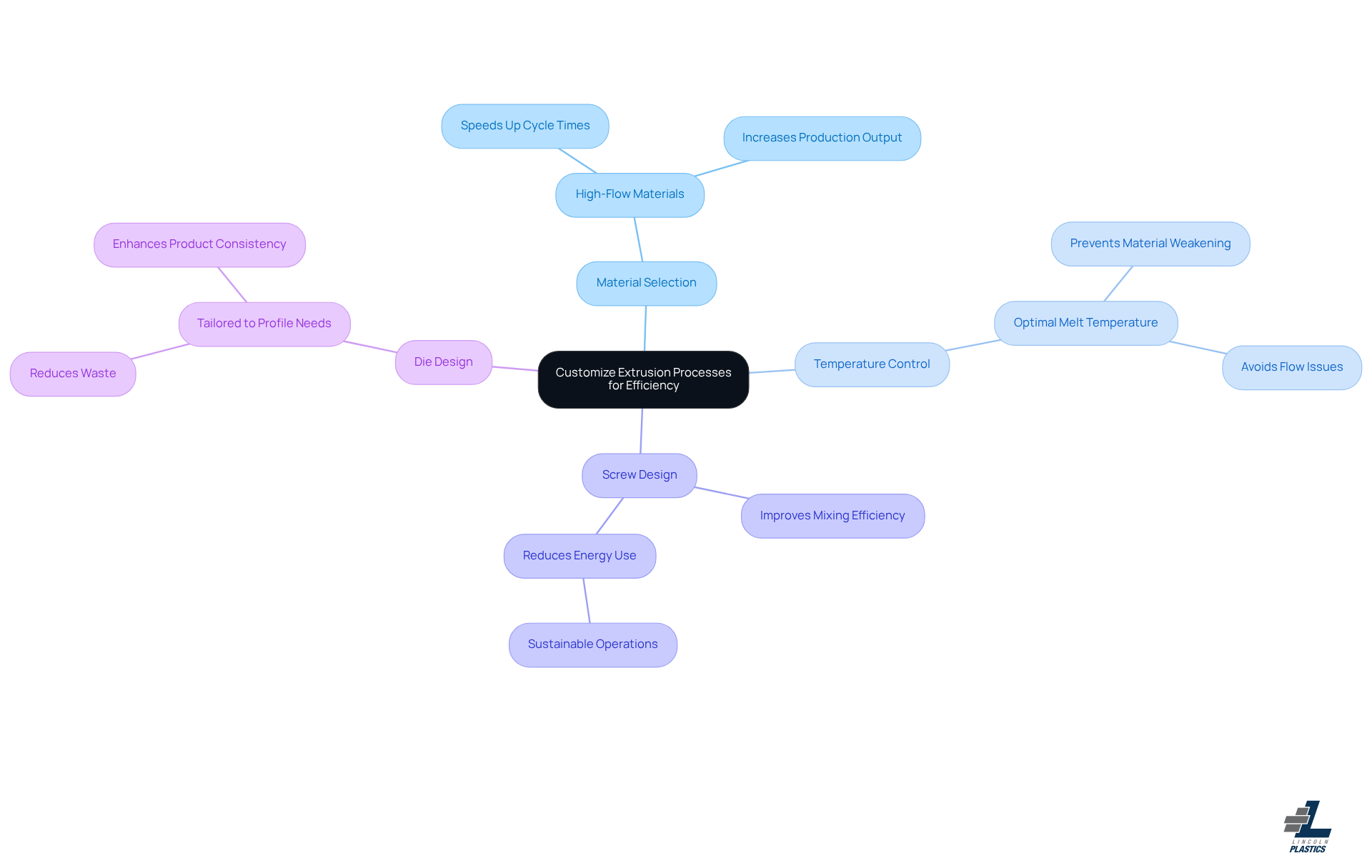
Customizing extrusion processes is super important if you want to boost efficiency and productivity. Let’s dive into some key strategies that can really make a difference:
- Material Selection: Choosing the right polymer is crucial based on what you need it to do. For example, selecting the right material can really speed up cycle times during extrusion, which means you get more done in less time.
- Temperature Control: Keeping an eye on temperature throughout the extrusion process is key. Too much heat can weaken materials, while not enough can cause processing and quality defects. It might seem tricky to nail down the perfect melt temperature, but getting a handle on the right parameters can help you avoid these pitfalls.
- Screw Design: The design of your extrusion screw is a game changer for mixing and melting efficiency. A well-thought-out screw can improve performance and cut down on energy use, making your operations more sustainable.
- Die Customization: Tailoring the die to meet specific profile needs can cut down on waste and enhance the consistency of the extruded product. This is especially vital in industries where tight tolerances and high uniformity are a must.
By applying these strategies, you can enhance production efficiency, improve product quality, and ramp up profitability. For instance, one manufacturer that revamped its extrusion process saw a 20% boost in throughput and a 15% drop in energy use. That’s a clear win for optimizing your processes!
Implement Rigorous Quality Control Measures
Ensuring the integrity and reliability of plastic items is no small feat, right? That’s why applying strict control measures is so crucial. Let’s dive into some strategies that can really make a difference:
- First things first, always inspect incoming materials thoroughly. You want to make sure they meet the specified standards. This proactive approach can help you avoid flaws in the final product, keeping quality in check from the get-go.
- Now, let’s talk about monitoring. Tracking key parameters like temperature and pressure during production is a game changer. It allows for immediate adjustments to maintain quality. Companies that have embraced advanced monitoring systems often see significant reductions in defects - some even report a 30% decrease in failures!
- Don’t forget about testing your finished items! Implement a solid testing protocol that includes dimensional checks, mechanical testing, and visual inspections. This way, you can catch any defects before they reach your customers. It’s all about ensuring high-quality products make it out the door.
- Establishing feedback mechanisms is another smart move. Learning from defects and continuously improving processes is key. By analyzing defect data, you can pinpoint root causes and take corrective actions to prevent them from happening again.
- Involve your employees in these enhancement initiatives! Their insights and experiences can lead to improvements and improve overall management. After all, who knows the processes better than the people working on them?
- Lastly, consider adopting methodologies like Kaizen and Six Sigma. These models foster a culture of ongoing enhancement, ensuring that excellence remains a priority throughout your organization.
By embracing these practices, manufacturers can cut down on waste and boost customer satisfaction. Integrating real-time monitoring and rigorous inspection protocols not only elevates product quality but also builds trust and reliability with clients. Remember what W. Edwards Deming said: 'Quality is everyone's responsibility.' It really takes a collective effort to achieve excellence in manufacturing!

Conclusion
Mastering the chemical properties of plastics is key to success in manufacturing, right? When you get a handle on these properties, you can make smarter choices about material selection, processing techniques, and product quality. This knowledge not only boosts product performance but also meets customer expectations and industry standards.
Let’s dive into some critical aspects of plastic manufacturing. Think about mechanical strength, chemical resistance, thermal properties, and the role of additives. Plastics can be categorized into:
- Thermoplastics
- Thermosetting materials
- Elastomers
Each brings unique advantages for specific applications. Plus, customizing extrusion processes and implementing solid quality control measures can really optimize production efficiency and ensure high-quality outputs.
As the industry evolves, staying updated on the latest trends in plastic manufacturing - like sustainability and eco-friendly practices - is super important. Manufacturers should embrace these insights, invest in advanced technologies, and prioritize quality control. Why? Because it’s not just about meeting market demands; it’s about exceeding them! By doing this, you can secure a competitive edge and help pave the way for a more sustainable future in plastic production.
Frequently Asked Questions
What are the key mechanical properties of plastics?
Mechanical strength refers to how much stress and strain a plastic can handle without losing its shape. For example, polycarbonate is known for its toughness, making it suitable for durable applications.
How do different plastics react to chemicals?
Different polymers have unique reactions to various chemicals. For instance, polyethylene is resistant to acids and bases, while PVC is commonly used in plumbing due to its corrosion resistance.
Why are thermal properties important in plastics?
Thermal properties, including melting point and thermal stability, are crucial as they determine how hot the material can be processed and whether it can withstand high temperatures.
What role do additives play in synthetic materials?
Additives enhance the properties of synthetic materials, such as UV resistance, flexibility, and flame retardance. Understanding how these additives interact with the base polymer is essential for achieving desired performance.
How does understanding chemical properties benefit manufacturers?
By understanding the chemical properties of plastics, manufacturers can make informed choices about material selection and processing, which improves product performance and customer satisfaction.
List of Sources
- Understand the Chemical Properties of Plastics
- earth.org (https://earth.org/plastic-pollution-quotes)
- A simple chemistry trick could end forever plastic (https://sciencedaily.com/releases/2026/01/260103155038.htm)
- labdepotinc.com (https://labdepotinc.com/articles/exploring-the-chemical-resistance-of-resins-and-polyethylene.html?srsltid=AfmBOorp9Xw1aiq8uBGTLZTArClGUhxEUdDNEshuYjBLGi6wgfEUkc0F)
- mdpi.com (https://mdpi.com/2073-4360/15/11/2529)
- pexco.com (https://pexco.com/the-power-of-high-performance-plastics-in-semiconductor-manufacturing)
- Classify Plastics for Optimal Application
- sciencedirect.com (https://sciencedirect.com/science/article/abs/pii/S0921344921003852)
- Thermosets vs Thermoplastics: How They Differ - Polymershapes (https://polymershapes.com/thermosets-versus-thermoplastics)
- 2026 Trends to Watch: From Red Tape to a Circular Plastics Renaissance (https://scgchemicals.com/en/articles/stories/2026-trends-watch-red-tape-circular-plastics-renaissance)
- Plastic Manufacturing Outlook 2026: Growth, Risks, Talent (https://cornerstone-ms.com/outlook-for-plastic-manufacturing)
- Customize Extrusion Processes for Efficiency
- 2026 Aluminum Extrusion Trends & Outlook | Profile Precision Extrusions (https://profileprecisionextrusions.com/2026-outlook-innovations-and-trends-shaping-the-future-of-aluminum-extrusions)
- ptonline.com (https://ptonline.com/articles/2026-outlook-for-advanced-manufacturing)
- Plastics Extrusion: 4 Critical Statistics to Track for Increased Quality & Plant Profit (https://gaugeadvisor.com/2025/05/26/plastics-extrusion-4-critical-statistics-to-track-for-increased-quality-plant-profit)
- custom-profile.com (https://custom-profile.com/blog/how-changes-in-extrusion-technology-enhance-the-manufacturing-process)
- Implement Rigorous Quality Control Measures
- asq.org (https://asq.org/quality-resources/more-on-quality-quotes?srsltid=AfmBOoqPnUPKum4MlKNh9WqO9Nax6jHGGq8qSUW1F4vD70VBvX7Y-rdd)
- Quotes of Total Quality Management - Azumuta (https://azumuta.com/blog/quotes-of-total-quality-management)
- interplasinsights.com (https://interplasinsights.com/plastic-industry-insights/latest-plastics-industry-insights/case-study-tex-plastics-transforms-production-efficiency)
- inpixon.com (https://inpixon.com/case-studies/cooling-fan-tracking-plastics-manufacturing)
- movley.com (https://movley.com/blog/10-inspiring-quality-inspection-quotes-to-motivate-your-team)
Related posts

Discover essential steps for selecting reliable custom plastic tubing solutions for various industries.


Discover best practices for procuring clear plastic flexible tubing to enhance performance and reliability.
Discover key insights and features of top flexible PVC manufacturers for your business needs.
