

Master Quality Control SPC: Essential Practices for OEM Success
Introduction
In manufacturing, achieving quality isn't just an aspiration; it's a critical factor that determines an OEM's success. Statistical Process Control (SPC) is a game-changer for manufacturers, utilizing data-driven techniques to monitor and enhance production processes. Exploring SPC helps manufacturers find ways to cut costs, improve continuously, and achieve top-notch product quality. But how can OEMs tackle the challenge of implementing SPC tools to overcome quality control hurdles and ensure their products meet high standards?
Define Statistical Process Control and Its Importance in Manufacturing
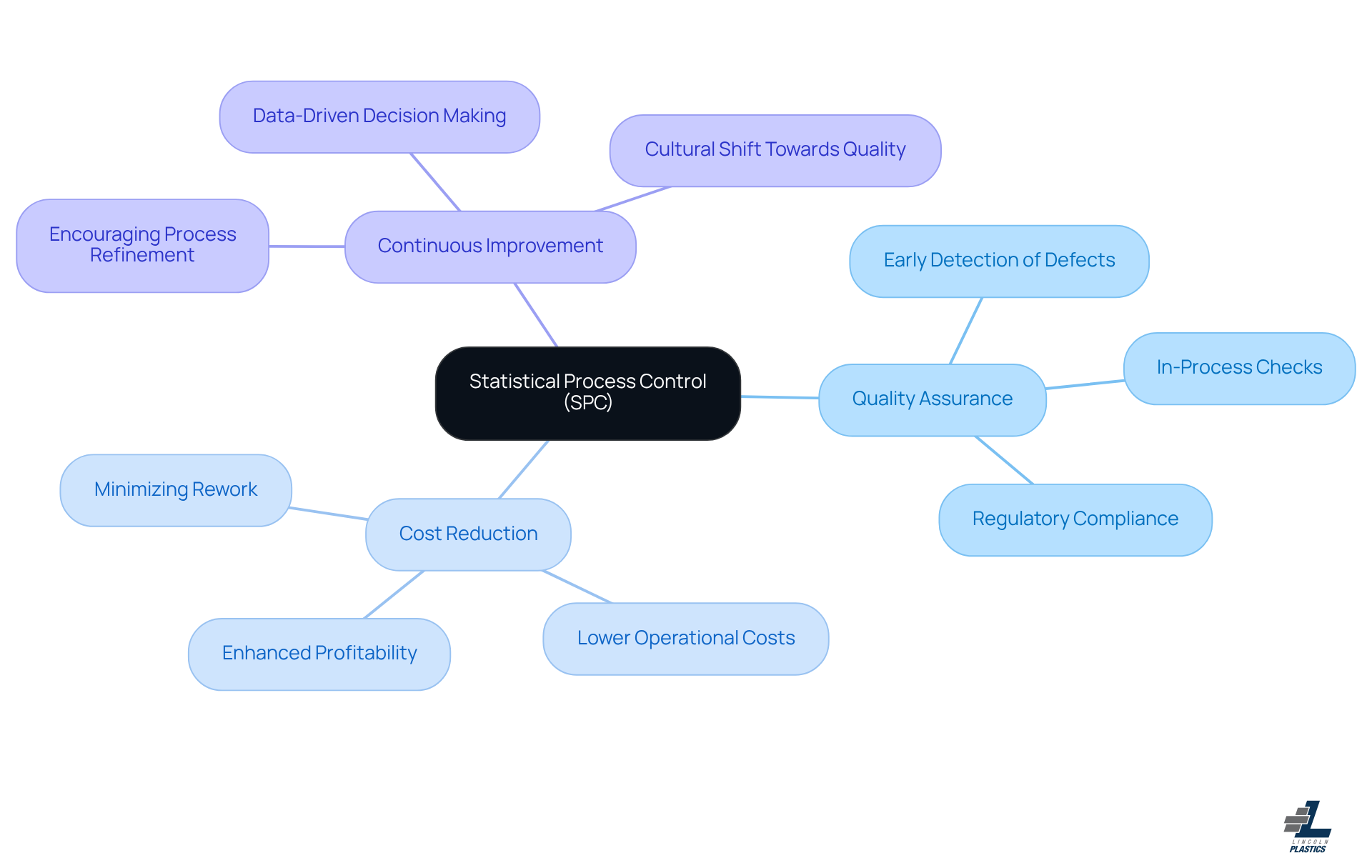
In the competitive landscape of manufacturing, ensuring quality and efficiency is non-negotiable, and quality control SPC is at the forefront of this endeavor. SPC is a data-driven methodology that utilizes statistical techniques to monitor and control manufacturing processes. By analyzing data collected from various production stages, SPC identifies variations that could lead to defects or inefficiencies. This proactive strategy is vital for OEMs, especially in the extrusion sector, where consistent standards are essential.
SPC is crucial in manufacturing for several reasons:
- Quality Assurance: It enables manufacturers to detect deviations from desired quality standards early, facilitating timely interventions that prevent defects. At Lincoln Plastics, our strong management program includes dedicated plans, in-process checks, and comprehensive documentation, ensuring that our rigid profiles and custom flexible profiles meet stringent specifications.
- Cost Reduction: By minimizing defects and rework, SPC significantly lowers operational costs, enhancing overall profitability for our clients who rely on timely delivery of mission-critical components.
- Continuous Improvement: The data-driven aspect of SPC encourages a culture of ongoing enhancement, inspiring teams to refine processes and elevate product standards over time.
In the extrusion sector, where precision and consistency are critical, SPC serves as a foundational tool for ensuring that products meet strict standards. Lincoln Plastics is committed to excellence, supported by our ISO 9001:2015 certification and a quality system that includes comprehensive documentation and regulatory compliance. Our strategic location in Lincoln, Nebraska, enhances our ability to deliver high-quality solutions efficiently, including our capabilities for custom flexible profiles and co-extrusion solutions, such as integrating multiple colors into a single profile. Without quality control SPC, manufacturers risk compromising not only quality but also their reputation and bottom line in an increasingly demanding market.
Utilize Key SPC Tools for Effective Quality Control
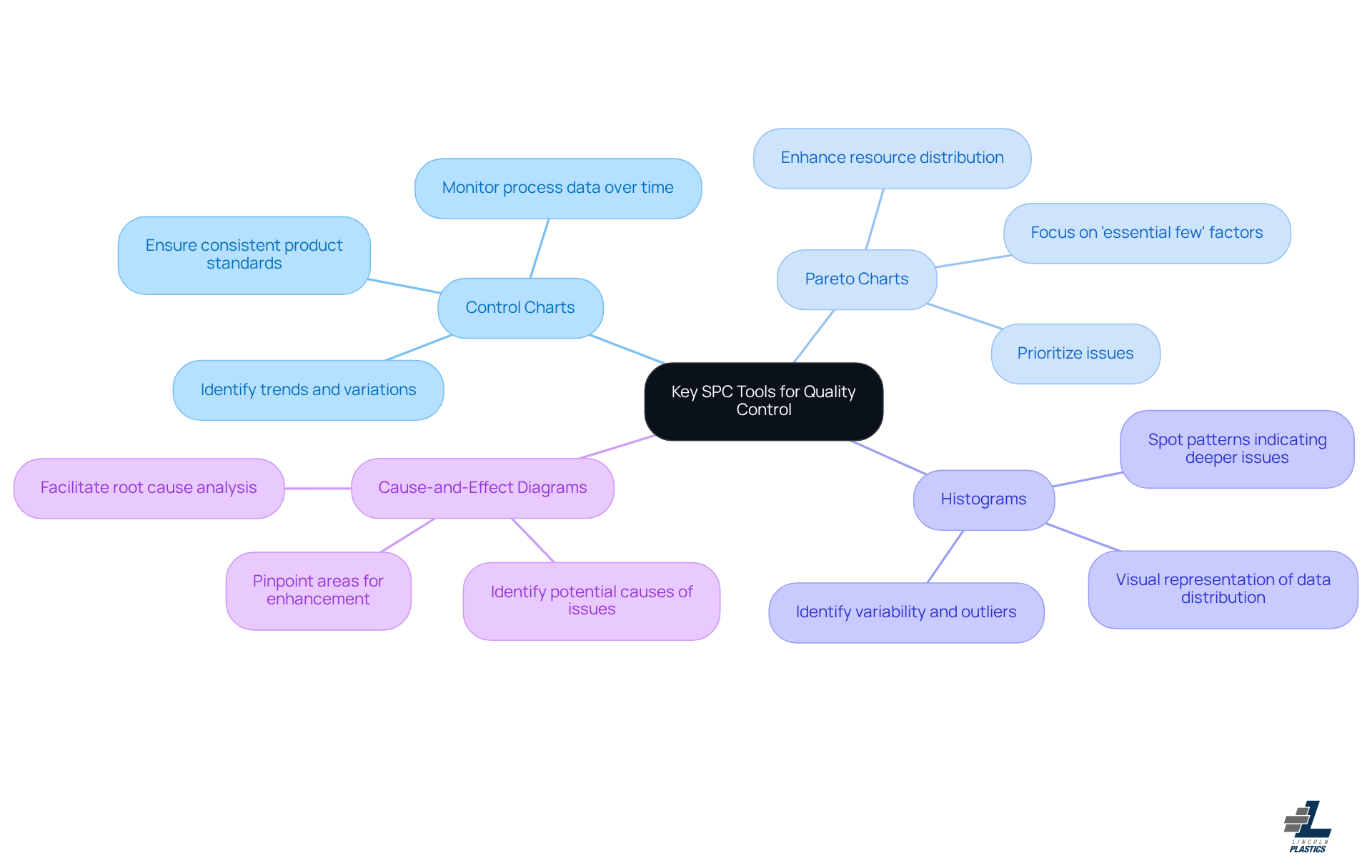
In today's competitive manufacturing landscape, the effective implementation of quality control SPC is essential for maintaining quality and efficiency. To achieve this, manufacturers should utilize a variety of tools designed to monitor and analyze production activities. The following key SPC tools are indispensable for manufacturers looking to enhance their production processes:
- Control Charts: Graphical representations that display process data over time, helping to identify trends and variations. For instance, X-bar and R charts can monitor the mean and range of extruded profiles, ensuring they remain within specified limits. Control charts are crucial for ensuring consistent product standards, as they enable operators to visualize process stability and identify deviations quickly.
- Pareto Charts: These charts prioritize issues by illustrating the most significant factors contributing to defects. By concentrating on the 'essential few' issues, manufacturers can distribute resources more efficiently, resulting in enhanced performance outcomes. This method aligns with the principle that addressing the most significant issues can lead to considerable improvements.
- Histograms: Providing a visual representation of data distribution, histograms enable manufacturers to understand variability in their processes and identify outliers. This insight is crucial for spotting patterns that could indicate deeper issues, allowing for proactive management.
- Cause-and-Effect Diagrams: Also referred to as fishbone diagrams, these tools help teams identify potential causes of performance issues, facilitating root cause analysis. By systematically examining various factors, manufacturers can pinpoint specific areas for enhancement, improving overall reliability.
Incorporating these tools into assurance procedures allows manufacturers to enhance monitoring, detect problems early, and implement corrective measures swiftly. The effectiveness of these tools in quality control SPC is underscored by case studies showing significant reductions in defects and improvements in efficiency, reinforcing their value in achieving operational excellence. Lincoln Plastics, with its ISO 9001:2015 certification, exemplifies a commitment to management excellence, ensuring rigorous standards and in-process checks. Additionally, the company's strategic location in Lincoln, Nebraska, facilitates efficient logistics and quick order turnaround, further enhancing its service to OEMs. As Nick Nickolovski, CMO of Fabrico, states, "Digital SPC tools act as the early warning system for your factory," highlighting their critical role in modern manufacturing. Without embracing these quality control SPC tools, manufacturers risk falling behind in a rapidly evolving industry, which jeopardizes their operational success and customer satisfaction.
Identify and Address Common Quality Control Challenges with SPC
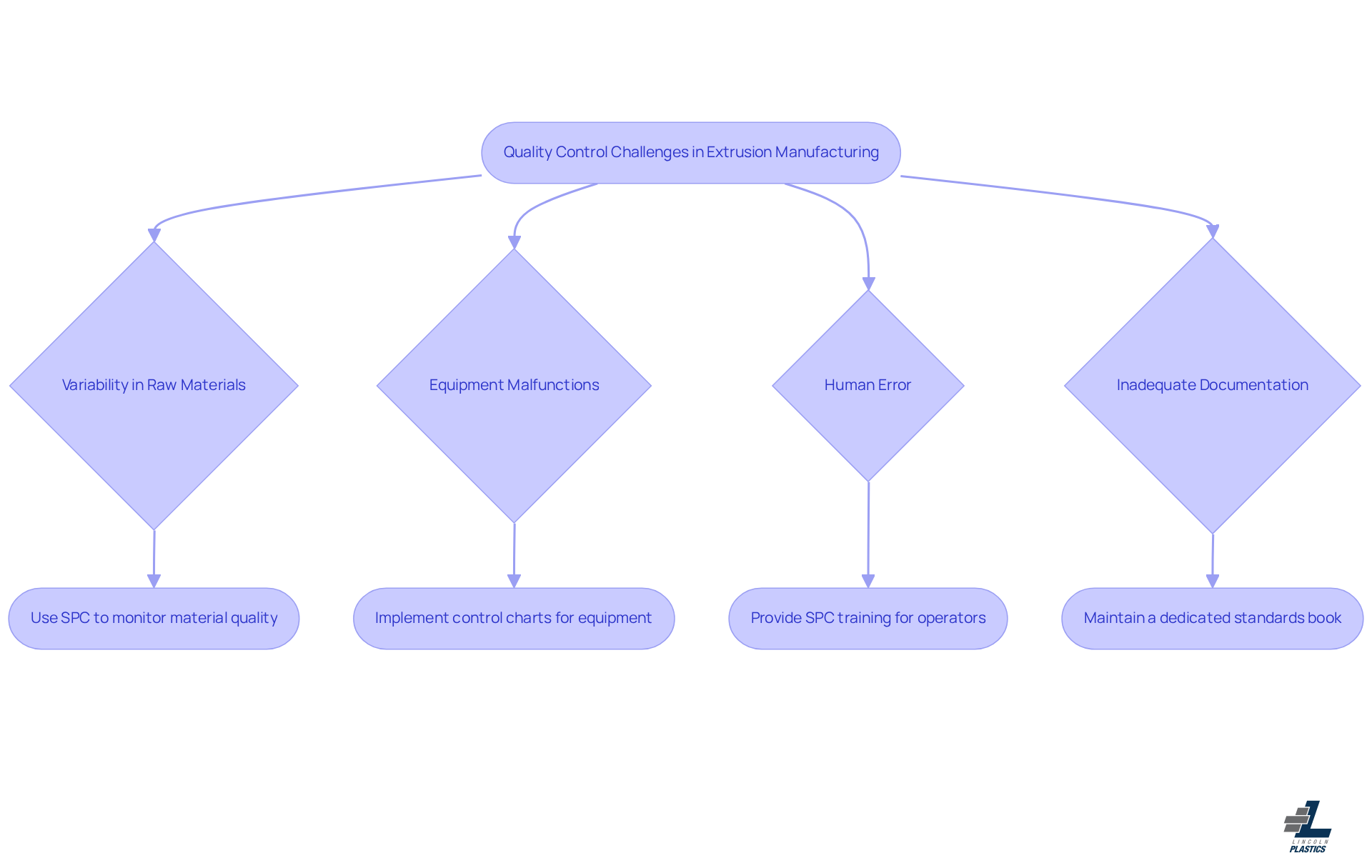
Quality control in extrusion manufacturing is not just a challenge; it's a critical factor that can determine the success of your products. Several common quality control challenges can arise, including:
- Variability in Raw Materials: Fluctuations in the quality of raw materials can lead to inconsistencies in the final product. What happens when raw material quality fluctuates? It can compromise the entire production process, leading to costly reworks and dissatisfied customers. At Lincoln Plastics, we employ quality control SPC to oversee material characteristics and identify variations early in the production cycle, ensuring that our products satisfy the strict standards of OEMs.
- Equipment Malfunctions: Equipment issues can cause defects in extruded profiles. We use control charts to keep a close eye on equipment performance, spotting when maintenance is needed before defects can occur, thereby maintaining the integrity of our manufacturing processes.
- Human Error: Mistakes made by operators can lead to standards issues. Introducing quality control SPC training at Lincoln Plastics helps our team understand the importance of monitoring information and promotes compliance with our strict standards, which are backed by our ISO 9001:2015 certification.
- Inadequate Documentation: Poor record-keeping can hinder control efforts. Quality control SPC emphasizes the significance of data gathering and documentation, ensuring that all performance metrics are tracked and analyzed. At Lincoln Plastics, we maintain a dedicated standards book for each plastic profile, complete with drawings, critical in-process checks, and run documentation to support our commitment to excellence.
By identifying these challenges early and using quality control SPC techniques, we enhance our control processes. This leads to improved product standards and significantly reduces waste. As a result, our commitment to quality not only meets but exceeds OEM expectations, fostering long-term partnerships. Our strategic Midwest location also enables quick order turnaround and efficient logistics, further supporting our OEM partners in agriculture, office management, and tradeshow industries nationwide and internationally. With our proactive approach, we don't just meet standards; we set them, ensuring your products stand out in a competitive market.
Analyze Data for Continuous Improvement in Quality Control
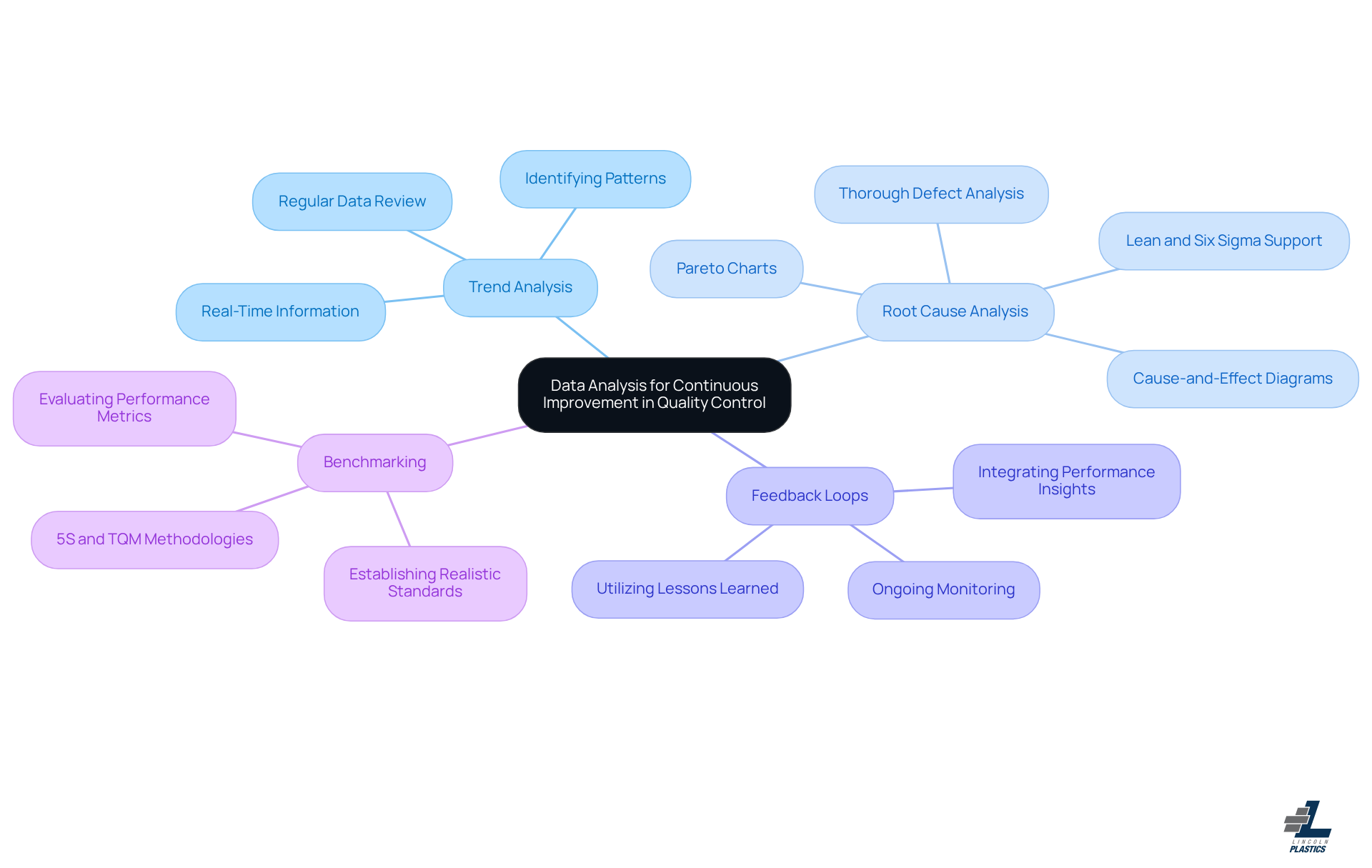
In the fast-paced world of manufacturing, quality control SPC is not just beneficial; it's essential for maintaining control and driving continuous improvement through data analysis. Key strategies for leveraging data analysis include:
- Trend Analysis: Regularly reviewing data trends allows manufacturers to identify patterns that may indicate emerging quality issues. For example, if defect rates start to increase, it may indicate a need for adjustments in procedures. More than half of manufacturing leaders surveyed are looking to improve their continuous enhancement efforts using quality control SPC with real-time information for quicker corrective actions. How can your organization benefit from real-time data analysis?
- Root Cause Analysis: When defects occur, conducting a thorough analysis to determine the underlying causes is essential. Tools like Pareto charts and cause-and-effect diagrams can aid this task, assisting teams in concentrating on the most significant issues. Lean and Six Sigma initiatives can further support this analysis by incorporating quality control SPC to eliminate waste and optimize costs.
- Feedback Loops: Have you considered how feedback systems can integrate performance insights into your production planning? Creating feedback systems that incorporate information from performance evaluation activities ensures that lessons learned are utilized in upcoming production runs. This ongoing monitoring and measurement of outcomes is crucial for assessing progress in quality control SPC and continuous improvement.
- Benchmarking: Evaluating performance metrics against industry standards or historical information can offer insights into areas for enhancement and assist in establishing realistic standards. Moreover, methodologies like 5S and Total Quality Management (TQM) emphasize the importance of quality control SPC, employee involvement, and standardization, which are essential for nurturing a culture of ongoing enhancement.
By systematically analyzing data and implementing findings through quality control SPC, manufacturers can cultivate a culture of continuous improvement, ultimately enhancing both product quality and operational efficiency. Imagine transforming your production processes with actionable insights from data. Embracing data-driven strategies could be the key to staying ahead in an ever-evolving market landscape.
Conclusion
In the competitive landscape of manufacturing, effective quality control through Statistical Process Control (SPC) is not just beneficial; it’s essential for OEM success. Manufacturers can leverage data-driven methodologies to ensure efficiency in their processes. This approach helps guarantee that products meet the highest quality standards. Lincoln Plastics exemplifies this commitment to excellence, utilizing rigorous quality management practices supported by ISO 9001:2015 certification to deliver superior solutions to its clients.
Throughout the article, key practices for mastering quality control SPC have been highlighted. These include the importance of utilizing SPC tools such as:
- control charts
- Pareto charts
- cause-and-effect diagrams
to identify and address common quality challenges. Have you considered how implementing SPC could transform your quality control processes? Additionally, the article emphasizes the significance of data analysis for continuous improvement, showcasing how trend analysis and root cause analysis can lead to enhanced operational efficiency and product quality. Lincoln Plastics' strategic location in Lincoln, Nebraska, further supports its ability to provide timely and effective solutions to OEMs across various industries.
In conclusion, embracing quality control SPC is not merely a best practice; it is a vital strategy for manufacturers aiming to thrive in a competitive landscape. Failing to implement robust quality control measures can lead to lost customers and diminished market share. Taking the first step towards operational excellence starts with a conversation with Lincoln Plastics experts, who can provide tailored solutions to elevate your quality control processes.
Frequently Asked Questions
What is Statistical Process Control (SPC) in manufacturing?
Statistical Process Control (SPC) is a data-driven methodology that uses statistical techniques to monitor and control manufacturing processes, helping to identify variations that could lead to defects or inefficiencies.
Why is SPC important for manufacturers?
SPC is important because it enables early detection of deviations from quality standards, reduces operational costs by minimizing defects and rework, and fosters a culture of continuous improvement within manufacturing processes.
How does SPC contribute to quality assurance?
SPC contributes to quality assurance by allowing manufacturers to detect deviations from desired quality standards early, which facilitates timely interventions to prevent defects.
What role does SPC play in cost reduction?
By minimizing defects and the need for rework, SPC significantly lowers operational costs, enhancing overall profitability for manufacturers and ensuring timely delivery of critical components.
How does SPC encourage continuous improvement in manufacturing?
The data-driven nature of SPC encourages teams to refine processes and elevate product standards over time, fostering a culture of ongoing enhancement.
What specific quality management practices does Lincoln Plastics implement?
Lincoln Plastics implements a strong management program that includes dedicated quality plans, in-process checks, and comprehensive documentation to ensure that their products meet stringent specifications.
What certifications does Lincoln Plastics hold related to quality management?
Lincoln Plastics is ISO 9001:2015 certified, which underscores their commitment to quality management and regulatory compliance.
How does Lincoln Plastics' location impact its manufacturing capabilities?
Lincoln Plastics' strategic location in Lincoln, Nebraska, enhances their ability to deliver high-quality solutions efficiently, including custom flexible profiles and co-extrusion solutions.
What are co-extrusion capabilities at Lincoln Plastics?
Co-extrusion capabilities at Lincoln Plastics allow for the integration of multiple colors or materials into a single profile, enhancing product versatility and appeal.
What risks do manufacturers face without implementing SPC?
Without SPC, manufacturers risk compromising product quality, which can negatively impact their reputation and financial performance in a competitive market.
List of Sources
- Define Statistical Process Control and Its Importance in Manufacturing
- Statistical Process Control (SPC) Charts - A World Class Tool (May 2026) (https://aami.org/event/statistical-process-control-spc-charts-a-world-class-tool-may-2026)
- Statistical Process Control in 2026: The Asset Health Framework (https://f7i.ai/blog/statistical-process-control-spc-the-definitive-guide-to-asset-health-and-reliability-in-2026)
- Is Statistical Process Control Still Relevant for Electronics Manufacturing? (https://wats.com/blog/is-statistical-process-control-still-relevant-for-electronics-manufacturing)
- What is Statistical Process Control (SPC) in Manufacturing? (https://autodesk.com/blogs/design-and-manufacturing/what-is-statistical-process-control-spc-in-manufacturing)
- Complete Guide to AI-Powered SPC in 2026 (https://overview.ai/blog/guide-ai-powered-spc-statistical-process-control-2026)
- Utilize Key SPC Tools for Effective Quality Control
- Statistical Process Control (SPC) Charts - A World Class Tool (May 2026) (https://aami.org/event/statistical-process-control-spc-charts-a-world-class-tool-may-2026)
- Complete Guide to AI-Powered SPC in 2026 (https://overview.ai/blog/guide-ai-powered-spc-statistical-process-control-2026)
- Statistical Process Control in 2026: The Asset Health Framework (https://f7i.ai/blog/statistical-process-control-spc-the-definitive-guide-to-asset-health-and-reliability-in-2026)
- Control Charts in Manufacturing Quality Control (https://dataparc.com/blog/how-to-use-control-charts-to-improve-manufacturing-quality)
- Statistical Process Control (SPC) in Manufacturing: The 2026 Guide (https://fabrico.io/blog/statistical-process-control-spc-manufacturing-guide)
- Identify and Address Common Quality Control Challenges with SPC
- Statistical Process Control (SPC): Improve Quality and Efficiency (https://amrepmexico.com/blog/statistical-process-control)
- Overcoming Common Challenges in Plastic Extrusion Projects (https://inplexllc.com/blog/overcoming-common-challenges-in-plastic-extrusion-projects)
- 5 Proven Practices to Increase Product Quality in Extrusion (https://lincoln-plastics.com/news-post/5-proven-practices-to-increase-product-quality-in-extrusion)
- SPC in Manufacturing: The Key to Quality (https://safetychain.com/blog/food-quality-spc)
- Aluminium Extrusion Production Challenges & Solutions (https://alcircle.com/blog/case-study-addressing-common-challenges-in-aluminium-extrusion-production-with-causes-and-effective-solutions?srsltid=AfmBOoqFgPyeXWc_7LqrwYmldVga7cE3FesVrX37q7RqLyfVTk1Kiiqw)
- Analyze Data for Continuous Improvement in Quality Control
- What is Continuous Improvement in Manufacturing? (https://ptc.com/en/blogs/iiot/continuous-improvement-in-manufacturing?srsltid=AfmBOoqMCAb6xM5GTKiQOhhoaklLN8qzloxWu7PAG66oFS2HvAgsqsHa)
- 4 Best Practices for Effective Process Control Quality in Extrusion (https://lincoln-plastics.com/news-post/4-best-practices-for-effective-process-control-quality-in-extrusion?dcc2137a_page=2)
- The Future of Quality Control - A Look At Upcoming Trends – Metrology and Quality News - Online Magazine (https://metrology.news/the-future-of-quality-control-a-look-at-upcoming-trends)
- Automating Continuous Improvement of Manufacturing Processes (https://automationworld.com/analytics/article/21200782/automating-continuous-improvement-of-manufacturing-processes)
- Data-Driven Quality Control: How Analytics Improves Manufacturing Efficiency - The Digital Foundry at New Kensington (https://digitalfoundrynk.com/data-driven-quality-control-how-analytics-improves-manufacturing-efficiency)


