
Master PP Plastic Products: Best Practices for OEM Purchasing Managers
Introduction
Polypropylene (PP) is really making waves in different industries, thanks to its lightweight, durable, and chemical-resistant qualities. If you’re an OEM purchasing manager, getting to know the ins and outs of this versatile thermoplastic is super important. Why? Because it can really influence your sourcing decisions and how efficiently your operations run.
But here’s the thing: with the growing demand for PP products - especially in packaging and automotive sectors - how do you navigate the tricky waters of material selection, supplier reliability, and cost management? It’s a lot to think about, right? Let’s dive into this together and explore how you can make informed choices that benefit your business.
Understand Polypropylene: Properties and Types
PP is a super adaptable thermoplastic polymer that’s lightweight, chemical-resistant, and durable. You’ll find it mainly in three types: homopolymer, random copolymer, and block copolymer, each with its own special uses.
- Homopolymer: This one’s the most common out there, known for its strength. It’s perfect for tough applications like automotive parts and sturdy packaging solutions that utilize rigid containers, where durability really matters.
- Random Copolymer: Now, this variant steps up the game with better impact resistance. Think of applications such as food containers and films - its ability to stay clear and flexible under different conditions makes it a go-to for packaging that needs to look good and work well.
- Block Copolymer: This type is all about flexibility. You’ll often see it in consumer products, like automotive interiors and consumer products that need to handle a bit of stress.
Understanding these types of plastics is key for purchasing managers. It helps them pick the right material for their specific needs, ensuring optimal performance while keeping costs in check. And guess what? Recent trends show a rising demand for polypropylene, particularly in sustainable packaging, especially in the packaging sector, due to its awesome properties and versatility.

Explore Applications of Polypropylene in Key Industries
Let’s chat about polypropylene, a super versatile thermoplastic that’s making waves across various industries. Why is it so popular? Well, it has some pretty cool properties that make it a go-to choice for many applications.
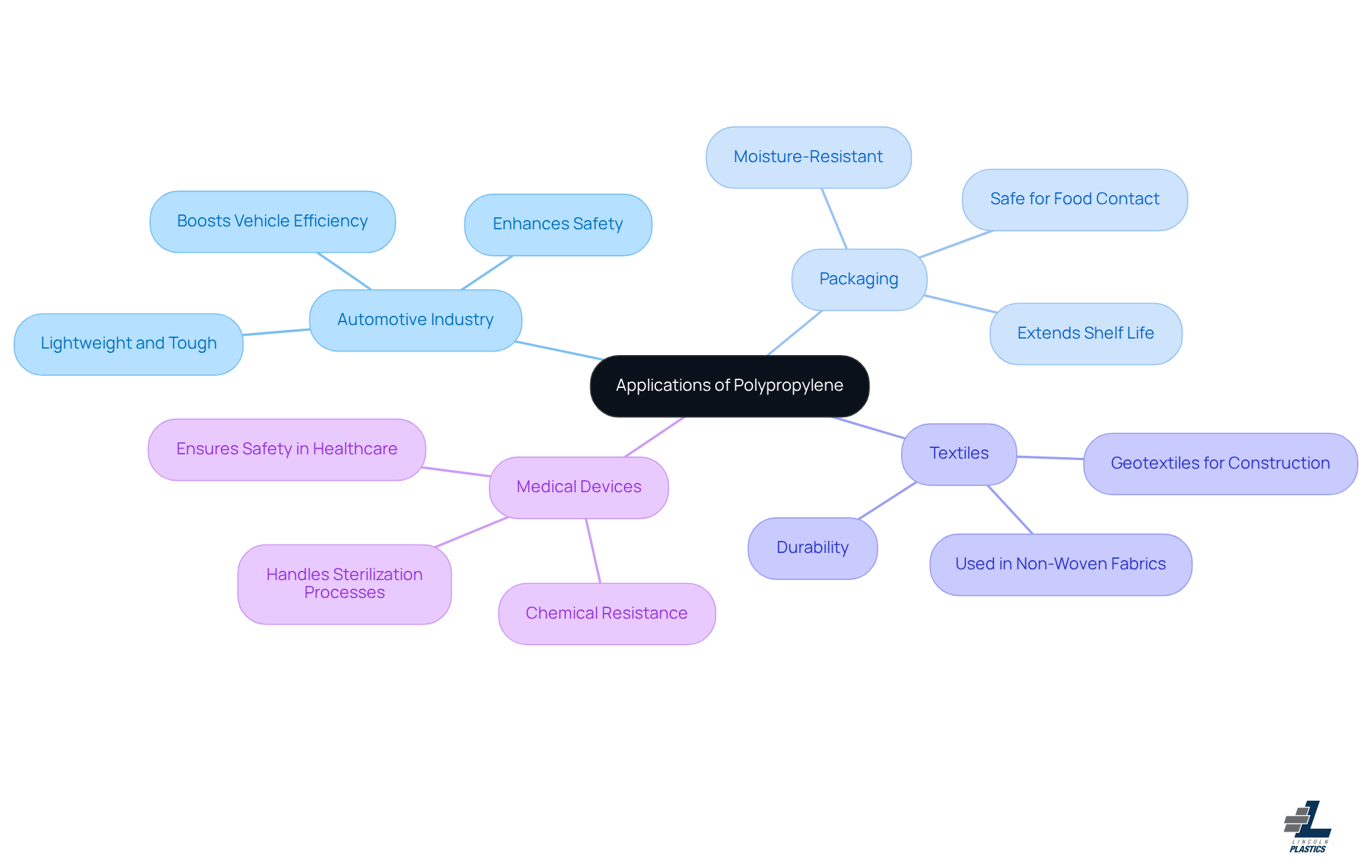
- Automotive parts: Think about bumpers, dashboards, and all those interior parts in your car. Polypropylene is a favorite here because it’s lightweight and tough, which helps boost vehicle efficiency and safety.
- Packaging: Now, if you’ve ever grabbed a food container or a bag, there’s a good chance it’s made from polypropylene. It’s moisture-resistant and safe for food contact, making it perfect for keeping your food fresh and extending its shelf life.
- Textiles: This material also shines in the textile world, especially in clothing. It’s all about durability and functionality!
- Medical devices: And let’s not forget the medical field! Its properties make it a reliable choice for various medical applications, ensuring safety in healthcare settings.
Now, here’s something interesting: recent market insights suggest that the plastics market is set to grow significantly from 2025 to 2030. This growth is largely driven by innovations in both the packaging and automotive sectors. So, if you’re an OEM purchasing manager, it’s a great time to align your strategies with these trends. Think about how you can optimize your processes for better efficiency.
But hey, don’t forget to keep an eye on potential challenges, like fluctuating material costs and supplier reliability, when you’re sourcing this type of plastic. It’s all about staying ahead of the game!
Evaluate Advantages and Disadvantages of Polypropylene
Polypropylene (PP) has a lot going for it, making it a go-to choice in various industries. Let’s break it down:
- Lightweight: With a density between 0.89 and 0.91 g/cm³, polypropylene really helps cut down on shipping costs and boosts product efficiency. It’s perfect for packaging and automotive applications that utilize lightweight materials. Thanks to its chemical resistance, polypropylene shines in uses like food packaging and automotive parts, where they often come into contact with corrosive substances. Cost-effectiveness is a crucial aspect, as polypropylene products are generally priced lower than many other plastics, making them an attractive option for manufacturers aiming to optimize their sourcing strategies.
But, it’s not all sunshine and rainbows. There are some downsides to keep in mind:
- UV Sensitivity: Polypropylene is UV sensitive, which limits its effectiveness outdoors unless it’s treated with UV inhibitors. This can lead to degradation in applications like outdoor furniture and marine ropes.
- Heat Resistance: With a lower heat resistance, polypropylene might not hold up well in high-temperature settings. This can limit its use in specific automotive parts that need to withstand heat.
- Brittleness at Low Temperatures: At extremely low temperatures, this material can become fragile, which can be a problem in chilly environments, leading to potential failures.
- Flammability: Polypropylene is flammable and can help fire spread, so flame retardants are often necessary for applications that require fire resistance.
- Adhesion Issues: Bonding this type of plastic with adhesives can be tricky due to its low surface energy, often requiring special treatments for effective adhesion.
Recent studies have highlighted these limitations, stressing the importance for purchasing managers to weigh the pros and cons when sourcing plastic materials. Industry experts have noted that while the advantages of polypropylene are impressive, their weaknesses in outdoor environments and thermal applications need careful consideration. For example, items left in harsh sunlight without proper protection can wear down quickly, leading to higher replacement costs and operational inefficiencies. Understanding these factors is key to making decisions that meet both performance needs and budget constraints.
And here’s something to keep in mind: the average market price for Low Shrinkage Polypropylene is expected to be USD 1167 per ton in 2025. This gives important context about the pricing of this material.

Implement Best Practices for Sourcing Polypropylene Products
If you're in the business of sourcing polypropylene products, you might be wondering how to streamline the process. Here are some friendly tips that can help you out:
- Vendor Assessment: Start by creating a solid set of criteria for evaluating potential suppliers. Look at their production capabilities, experience, and any relevant certifications like ISO 9001. This way, you can be sure they’ll consistently meet your standards.
- Specifications: It’s super important to clearly define your specifications based on what you need. This clarity helps ensure that the products you source meet your performance expectations, thereby reducing any risks related to material compliance.
- Relationships: Think about partnerships. Strong relationships can really enhance communication and collaboration, leading to better pricing and service reliability. Plus, they’ll be more responsive when your needs change.
- Market Research: Keep an eye on industry trends. Staying informed can help you make strategic purchasing decisions that fit within your budget and operational needs.
By putting these practices into action, you can refine your sourcing strategy for polypropylene products. This way, you’ll be well on your way to acquiring that truly support your operational goals.
Conclusion
Mastering the ins and outs of polypropylene is key for OEM purchasing managers looking to boost their sourcing strategies. When you get a handle on the properties, types, and applications of this versatile thermoplastic, you can make smarter choices that really optimize performance and keep costs in check. Plus, aligning your procurement with the latest market trends helps your organization stay competitive and responsive to what the industry demands.
Now, let’s talk about the different types of polypropylene:
- Homopolymer
- Random copolymer
- Block copolymer
Each one is tailored for specific applications across various industries like automotive, packaging, textiles, and medical devices. It’s important to weigh the advantages, such as being lightweight and resistant to chemicals, against the downsides, like UV sensitivity and bonding challenges. These insights are crucial for OEM purchasing managers to navigate potential pitfalls while maximizing the benefits of polypropylene products.
Ultimately, adopting best practices for sourcing polypropylene-like assessing vendors, setting clear material specifications, and doing your market research-empowers purchasing managers to refine their strategies. By building strong relationships with suppliers and staying in the loop about market dynamics, organizations can secure high-quality polypropylene products that meet their operational needs and drive long-term success. Embracing these practices not only boosts procurement efficiency but also positions companies to thrive in a fast-changing market landscape.
Frequently Asked Questions
What is polypropylene (PP)?
Polypropylene is a lightweight, chemical-resistant, and durable thermoplastic polymer that is highly adaptable.
What are the main types of polypropylene?
The three main types of polypropylene are homopolymer, random copolymer, and block copolymer, each with distinct properties and uses.
What are the characteristics of homopolymer polypropylene?
Homopolymer polypropylene is the most common type, known for its high strength and rigidity, making it suitable for tough applications like automotive parts and sturdy packaging solutions.
What advantages does random copolymer polypropylene offer?
Random copolymer polypropylene provides better impact resistance and flexibility, making it ideal for products like food containers and films that require clarity and flexibility.
Where is block copolymer polypropylene typically used?
Block copolymer polypropylene is known for its durability and flexibility and is often found in high-performance applications such as automotive interiors and consumer products that need to withstand stress.
Why is understanding polypropylene types important for OEM purchasing managers?
Understanding the different types of polypropylene helps OEM purchasing managers select the right material for their specific needs, ensuring optimal performance while managing costs effectively.
What trends are currently observed in the demand for polypropylene products?
There is a rising demand for polypropylene products, particularly random copolymer polypropylene, especially in the packaging sector, due to its excellent properties and versatility.
List of Sources
- Understand Polypropylene: Properties and Types
- fox5sandiego.com (https://fox5sandiego.com/business/press-releases/ein-presswire/873801069/polypropylene-market-is-projected-to-reach-usd-246-77-billion-by-2035-growing-at-a-cagr-of-6-22-from-2026-to-2035)
- globenewswire.com (https://globenewswire.com/news-release/2026/01/05/3212973/28124/en/Polypropylene-Industry-Trends-and-Competition-Analysis-2025-2033-Rising-Demand-in-Construction-Sector-Strengthens-Polypropylene-Usage.html)
- futuremarketinsights.com (https://futuremarketinsights.com/reports/polypropylene-random-copolymers-market)
- chemdo.com (https://chemdo.com/news/what-are-the-different-types-of-polypropylene)
- Polypropylene Containers Market Trends & Size 2026-35 (https://finance.yahoo.com/news/polypropylene-containers-market-trends-size-140000762.html)
- Explore Applications of Polypropylene in Key Industries
- globenewswire.com (https://globenewswire.com/news-release/2026/01/05/3212973/28124/en/Polypropylene-Industry-Trends-and-Competition-Analysis-2025-2033-Rising-Demand-in-Construction-Sector-Strengthens-Polypropylene-Usage.html)
- openpr.com (https://openpr.com/news/4402109/medical-device-plastics-market-2026-latest-innovations)
- enterprisenews.com (https://enterprisenews.com/press-release/story/75305/top-polypropylene-sheet-manufacturers-market-leaders-and-industry-trends-in-2026)
- linkedin.com (https://linkedin.com/pulse/polypropylene-nonwoven-fabrics-market-outlook-shows-expanding-gaaof)
- Evaluate Advantages and Disadvantages of Polypropylene
- plasticstoday.com (https://plasticstoday.com/packaging/lyondellbasell-unveils-new-polypropylene-grade)
- intelmarketresearch.com (https://intelmarketresearch.com/low-shrinkage-polypropylene-market-27479)
- Polypropylene: Benefits, Challenges, and Applications. (https://prototek.com/article/polypropylene-benefits-challenges-and-applications)
- What are the advantages and disadvantages of PP?|News|POLYPVC (https://polypvc.com/news/What-are-the-advantages-and-disadvantages-of-PP.html)
- globenewswire.com (https://globenewswire.com/news-release/2026/01/05/3212973/28124/en/Polypropylene-Industry-Trends-and-Competition-Analysis-2025-2033-Rising-Demand-in-Construction-Sector-Strengthens-Polypropylene-Usage.html)
- Implement Best Practices for Sourcing Polypropylene Products
- Tips for Building a Smarter Resin Purchasing Strategy in 2026 (https://mholland.com/market-insights/tips-for-building-a-smarter-resin-purchasing-strategy-in-2026)
- chemanalyst.com (https://chemanalyst.com/NewsAndDeals/NewsDetails/us-polypropylene-market-turns-firmly-bullish-in-late-january-40983)
- linkedin.com (https://linkedin.com/pulse/top-polypropylene-companies-how-compare-them-2026-evaluation-0cprc)
- 2026 Forecast for U.S. Plastics Procurement - Sterling Plastics (https://sterlingplasticsinc.com/insights/2026-forecast-for-plastics-procurement)
- Polypropylene Containers Market Trends & Size 2026-35 (https://finance.yahoo.com/news/polypropylene-containers-market-trends-size-140000762.html)
Related posts

Right-Sized Production Runs: Flexibility Without the Waste
Lincoln Plastics offers right-sized production runs with a 10-hour minimum — balancing efficiency with flexibility so OEMs avoid oversized orders.


Co-Extrusion: Combining Two Materials for Better Performance
Lincoln Plastics offers co-extrusion, combining two plastics into a single profile for greater design freedom, performance, and cost savings.
Beyond Extrusion: Value-Added Services That Simplify Production
Beyond Extrusion: Value-Added Services That Simplify Production
