
Master Plastic Mechanical Properties: A Guide for OEM Purchasing Managers
Introduction
Selecting the right materials is crucial for OEM purchasing managers aiming to ensure durability and performance in demanding applications. Let’s explore the essential characteristics that define plastic performance, such as tensile, compressive, and flexural strengths. These properties dictate how plastics behave under various stresses, providing invaluable insights for informed decision-making.
What if you could confidently select materials that prevent costly failures? With so many factors influencing these properties, understanding them is key. By mastering these mechanical properties, OEMs can significantly reduce the risk of material failure and enhance overall project success. Mastering these mechanical properties not only safeguards against failures but also drives operational excellence and project success.
Define Mechanical Properties of Plastics and Their Importance
Understanding the plastic mechanical properties is essential for ensuring optimal performance in demanding applications. These characteristics, including tensile resilience, compressive resilience, flexural resilience, toughness, and elasticity, are crucial in determining the plastic mechanical properties of these materials when subjected to applied forces. OEM procurement managers need to understand the plastic mechanical properties of materials to select those that can withstand operational stresses, ensuring durability and performance. For instance, tensile strength measures the maximum pulling force a material can withstand before failure, while compressive strength assesses its ability to resist crushing forces. Furthermore, the favorable plastic mechanical properties of plastics enable them to be bent and molded without breaking, which is essential for numerous applications.
These characteristics ensure that the final products meet specifications and demonstrate reliable plastic mechanical properties in real-world conditions. Engineering plastics, for example, exhibit high abrasion resistance due to their favorable plastic mechanical properties, making them suitable for wear-prone parts like gears and bushings. Their versatility allows them to be utilized in diverse contexts, emphasizing the significance of choosing the appropriate materials for different operational requirements.
Case studies illustrate the practical implications of these properties in OEM applications. In one case, the use of engineering plastics with high tensile resilience and impact resistance highlighted the importance of plastic mechanical properties in automotive components, where durability is paramount. Another instance highlighted the importance of selecting materials with suitable flexural strength and appropriate plastic mechanical properties for packaging solutions, ensuring they can endure handling and transportation stresses without compromising integrity. Moreover, validating resources early in the project can help reduce risks linked to material selection.
Without a clear understanding of these characteristics, how can OEM managers ensure their materials will perform under pressure? By mastering these characteristics, OEM managers can significantly enhance the plastic mechanical properties, which in turn improves product reliability and operational efficiency.

Explore Key Types of Mechanical Properties: Tensile, Compressive, and Flexural Strengths
Understanding the plastic mechanical properties of materials is crucial for ensuring the success of your projects.
- Tensile Strength: This property measures the maximum amount of tensile (pulling) stress that a substance can withstand before failure. It’s essential for applications where materials face stretching forces. Molecular weight and crystallinity play a crucial role in tensile performance. Higher molecular weights enhance durability by crosslinking polymer chains, which restricts chain motion and strengthens intermolecular bonding. For example, nylon, with a tensile capability of approximately 12,000 psi, is widely utilized in various applications due to its flexibility and abrasion resistance, making it a preferred option for many industrial tasks. Polycarbonate, recognized for its good durability and excellent impact resistance, has a tensile capacity of about 9,500 psi and is commonly used in safety glasses and electronic housings.
- Compressive Strength: How much pushing stress can your materials handle before they fail? This property indicates how much compressive stress an object can endure before it deforms or fails. It’s particularly important for components that will bear loads. For instance, polyetheretherketone (PEEK) demonstrates a tensile strength of approximately 14,000 psi and is recognized for its outstanding chemical resistance, making it suitable for high-load applications in aerospace and medical devices.
- Flexural Strength: This property assesses a substance's ability to withstand deformation under load. It’s crucial for applications where bending or flexing occurs, such as in structural components. Understanding these advantages helps OEM managers make informed choices about resource selection based on specific application requirements.
Case studies further illustrate the importance of these properties. For example, a failure in a high-load application utilizing UHMWPE, which has a tensile capacity of approximately 3,500 psi, highlighted the material's limitations under pressure and heat, resulting in performance issues. This underscores the necessity for careful selection of resources based on their plastic mechanical properties, particularly tensile and compressive capabilities, to ensure reliability in challenging environments. By prioritizing the right material properties, you can safeguard your projects against unforeseen failures.
- Yield Strength: Yield strength measures the stress a material can endure without permanent deformation, usually assessed at a 0.2% offset on a stress-strain curve. This characteristic is essential for choosing materials in engineering applications to ensure structures can withstand specific loads without permanent deformation. As Chin Trento observes, "When you comprehend the functional characteristics of these plastics, you can make improved choices regarding selection.

Understand Testing Methods for Mechanical Properties: Ensuring Quality and Reliability
In the world of custom plastic extrusion, ensuring the plastic mechanical properties of materials is essential. To achieve this, various standardized testing methods are employed:
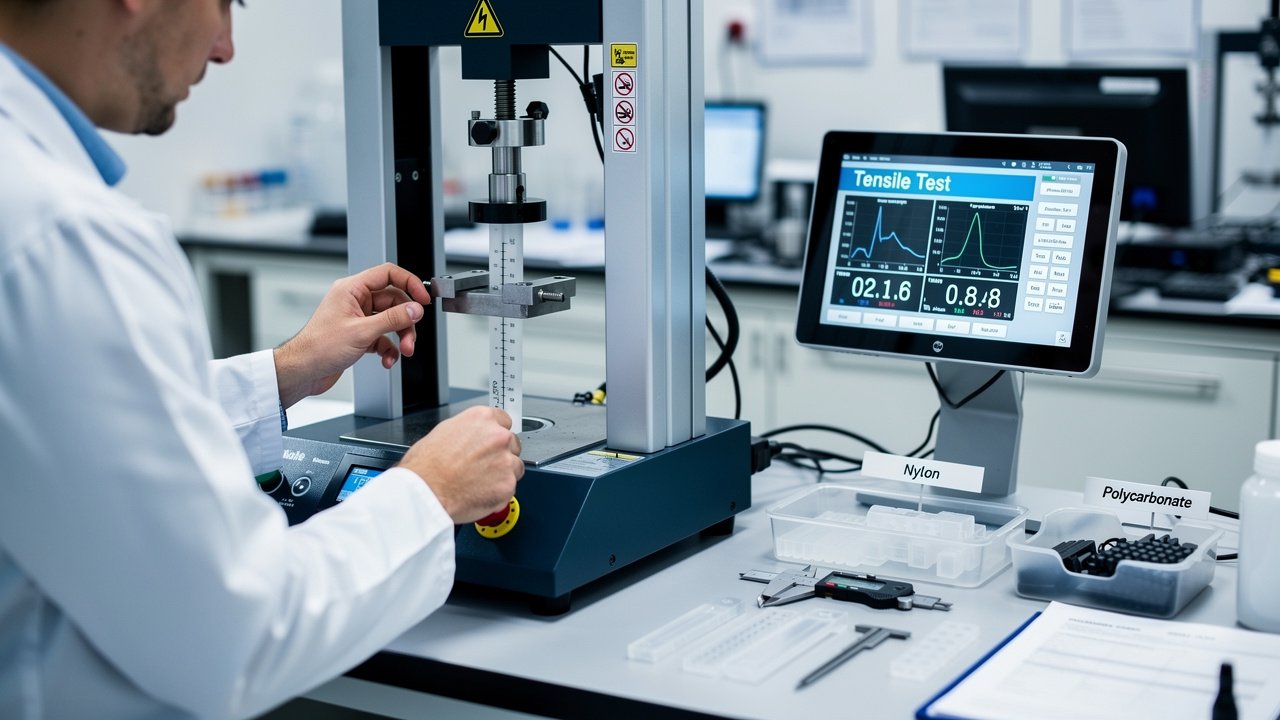
- Tensile Testing (ASTM D638): This method measures how a substance reacts to forces that attempt to pull it apart. It offers information on tensile resistance, elongation, and modulus of elasticity.
- Compressive Testing (ASTM D695): This test assesses how a substance reacts under compressive loads, determining its compressive capacity and yield point.
- Flexural Testing (ASTM D790): This method evaluates a substance's ability to withstand deformation under load, offering insights into its flexural strength and modulus.
These testing methods are essential for verifying that the materials used in production will demonstrate the required plastic mechanical properties in their intended applications. Without rigorous testing, the reliability of your products could be at stake, leading to costly failures in the field.

Identify Factors Affecting Mechanical Properties: Environmental and Material Considerations
Understanding the factors that influence the plastic mechanical properties is crucial for ensuring product reliability and performance. Several key elements play a significant role:
- Temperature: How do temperature changes impact the durability of your plastic products? Elevated temperatures may diminish durability and stiffness, while reduced temperatures can render materials brittle.
- Humidity can alter the plastic mechanical properties by affecting moisture absorption, which impacts the durability and flexibility of certain plastics.
- The kind of resin and any additives utilized in the material composition can significantly influence plastic mechanical properties. For example, adding fillers can enhance strength but may also affect flexibility.
- Processing conditions, including temperature and pressure during the extrusion process, can influence the final plastic mechanical properties of the extruded product. By grasping these influences, you can ensure your materials perform reliably in their intended environments. With this knowledge, you can confidently select materials that meet your specific performance requirements.

Conclusion
Navigating the complexities of material selection can be daunting for OEM purchasing managers. Understanding the mechanical properties of plastics is crucial for optimizing product performance and reliability. By mastering properties such as tensile, compressive, and flexural strengths, managers can make informed decisions that enhance the durability and functionality of their products across various applications. Selecting materials that withstand operational stresses isn’t just technical; it’s a strategic advantage that can greatly influence project success.
Throughout this article, we’ve highlighted key insights on the importance of mechanical properties in plastic selection. We discussed how:
- Tensile strength measures a material's resistance to pulling forces.
- Compressive strength assesses its ability to endure crushing loads.
- Flexural strength evaluates its performance under bending stresses.
Additionally, we emphasized the significance of rigorous testing methods, such as ASTM standards, to ensure that materials meet necessary quality benchmarks. Understanding the environmental and material factors that influence these properties further empowers OEM managers to choose the right plastics for their specific needs.
In conclusion, mastering plastic mechanical properties is essential for ensuring product reliability and operational efficiency. As OEM purchasing managers navigate the complexities of material selection, partnering with experts who provide tailored solutions is crucial. Engaging with Lincoln Plastics, known for its commitment to quality and excellence, can help streamline the procurement process and enhance product performance. Choosing the right partner can be the difference between project success and costly setbacks.
Frequently Asked Questions
What are the key mechanical properties of plastics?
The key mechanical properties of plastics include tensile resilience, compressive resilience, flexural resilience, toughness, and elasticity. These properties determine how plastics perform under applied forces.
Why is it important for OEM procurement managers to understand plastic mechanical properties?
Understanding plastic mechanical properties is crucial for OEM procurement managers to select materials that can withstand operational stresses, ensuring durability and optimal performance in demanding applications.
What does tensile strength measure in plastics?
Tensile strength measures the maximum pulling force a plastic material can withstand before failure.
How does compressive strength relate to plastic materials?
Compressive strength assesses a plastic material's ability to resist crushing forces.
What advantages do favorable plastic mechanical properties provide?
Favorable plastic mechanical properties allow plastics to be bent and molded without breaking, which is essential for various applications.
Can you provide examples of applications where mechanical properties are critical?
Yes, engineering plastics exhibit high abrasion resistance, making them suitable for wear-prone parts like gears and bushings. Additionally, automotive components require materials with high tensile resilience and impact resistance for durability.
How do mechanical properties affect packaging solutions?
Selecting materials with suitable flexural strength and appropriate mechanical properties is vital for packaging solutions to endure handling and transportation stresses without compromising integrity.
What is the significance of validating resources early in a project?
Validating resources early in a project helps reduce risks linked to material selection, ensuring that the chosen materials will perform effectively under pressure.
How can OEM managers enhance product reliability and operational efficiency?
By mastering the understanding of plastic mechanical properties, OEM managers can significantly enhance product reliability and operational efficiency.
List of Sources
- Define Mechanical Properties of Plastics and Their Importance
- The Mechanical Properties of Plastics (https://qualitymag.com/articles/95839-the-mechanical-properties-of-plastics)
- Thermal and Mechanical Properties of Plastics and Their Applications in Manufacturing | ELASTEC JSC (https://elastecjsc.com/en/news/thermal-and-mechanical-properties-of-plastics)
- Injection Molding Plastic Materials: Types, Properties, and Applications - Technology Org (https://technology.org/2026/04/07/injection-molding-plastic-materials-types-properties-and-applications)
- All About Engineering Plastics: Definition, Importance, Uses, Properties, and Types (https://xometry.com/resources/materials/all-about-engineering-plastics)
- Master Plastics for Extrusion: Key Practices for OEM Purchasing Managers (https://lincoln-plastics.com/news-post/master-plastics-for-extrusion-key-practices-for-oem-purchasing-managers?dcc2137a_page=4)
- Explore Key Types of Mechanical Properties: Tensile, Compressive, and Flexural Strengths
- Recent Efforts on the Compressive and Tensile Strength Behavior of Thermoplastic-Based Recycled Aggregate Concrete toward Sustainability in Construction Materials (https://techscience.com/sdhm/v20n1/65354/html)
- Top 5 High Tensile Strength Plastics Explained (https://samaterials.com/blog/top-5-high-tensile-strength-plastics-explained.html)
- Tensile strength at yield: Types, factors, applications, & tests (https://specialchem.com/plastics/guide/strength-at-yield-tensile)
- Types of Plastics Based on Tensile, Compressive, and Flexural Strength | Plastic Ball Bearings all Made in Japan Kashima Bearings, Inc. Japan (https://kashimabearings.com/columns/types-of-plastics-based-on-tensile-compressive-and-flexural-strength)
- Understand Testing Methods for Mechanical Properties: Ensuring Quality and Reliability
- ASTM D638 Tensile Properties of Plastics | Instron (https://instron.com/en/testing-solutions/astm-standards/astm-d638)
- Mechanical Testing of Plastic Materials | Measurlabs (https://measurlabs.com/blog/mechanical-testing-of-plastic-materials)
- Plastic Material Properties Testing Guide | Applications & ASTM Methods (https://infinitalab.com/blog/plastic-material-properties-testing-applications?srsltid=AfmBOor1c2hHbg6J7RnKRG16HJcaHq9iQLefK5ld5P07PJ72jdOKsIS_)
- Identify Factors Affecting Mechanical Properties: Environmental and Material Considerations
- The Mechanical Properties of Plastics (https://qualitymag.com/articles/95839-the-mechanical-properties-of-plastics)
- Thermal and Mechanical Properties of Plastics and Their Applications in Manufacturing | ELASTEC JSC (https://elastecjsc.com/en/news/thermal-and-mechanical-properties-of-plastics)
- Blog LabsCubed | How Temperature and Humidity Affects Tensile Strength in Plastics (https://labscubed.com/post/how-temperature-and-humidity-affects-tensile-strength-in-plastics)
- Understanding the Impact of Plastic Properties on Product Durability (https://goldengatemolders.com/post/understanding-the-impact-of-plastic-properties-on-product-durability)
Related posts

Why Custom Pipe Extrusion Matters More Than Ever
Standard pipe sizes don’t always work. Learn how Lincoln Plastics delivers custom diameters, wall thicknesses, and finishes in right-sized runs.


Reducing Trip Hazards with Custom Cord Management
Loose cords are more than messy — they’re a safety hazard. Lincoln Plastics’ custom cord covers and Flexiduct solutions improve safety and efficiency.
The Power of Custom Plastic Profiles for OEMs
Off-the-shelf profiles force compromises. Learn how Lincoln Plastics designs custom extruded profiles for OEMs with exact specs and right-sized runs.
