
Master Mechanical Properties of Plastic for Informed OEM Decisions
Introduction
Understanding the mechanical properties of plastics isn’t just a technical necessity; it’s a strategic advantage for Original Equipment Manufacturers (OEMs) facing the tricky world of material selection. Think about it: these properties - like tensile strength and thermal stability - are key to figuring out how well a product will hold up under different conditions. They directly impact durability and safety, right?
But with so many options out there, how can OEMs be sure they’re making the right choices for their specific applications? You might be wondering about that! This article dives into the essential mechanical properties of plastics, the testing methods that showcase their capabilities, and some best practices for picking the perfect materials to boost product performance and reliability. Let’s get started!
Define Mechanical Properties of Plastics and Their Importance
Let’s dive into the topic. These traits are all about how materials react to different forces and conditions. Key characteristics include tensile strength, impact resistance, elasticity, and thermal stability. For OEMs, understanding the mechanical properties is crucial because they directly impact the performance, durability, and safety of the final products.
Think about it: tensile strength is a must for components that face a lot of stress. On the flip side, impact resistance is essential for products that might get jolted or bumped around. Did you know that certain engineering plastics, like polypropylene and PVC, demonstrate superior performance compared to commodity plastics? This makes them ideal for tough applications in industrial machinery and automotive parts.
A representative from Xometry once said, "Engineering plastics are known for their durability compared to commodity plastics." This really highlights why they’re perfect for demanding environments. Plus, case studies back this up! In the world of industrial OEM machinery, components made from high-impact-resistant plastics have shown greater durability, which means fewer replacements and less maintenance.
And it doesn’t stop there! In practice, using plastics with excellent tensile strength has led to innovative designs. This allows for lighter designs without sacrificing structural integrity. So, by really getting to know the mechanical properties, OEMs can make smart choices that fit their operational needs and product specs. This ultimately boosts their manufacturing processes and product offerings.
So, what do you think? Understanding these properties can really make a difference in your projects!

Explore Key Mechanical Properties: Tensile Strength, Impact Resistance, and Thermal Stability
- Ever wondered how much pulling stress a material can handle before it gives in? That’s what tensile strength is all about! It’s super important for things like cable management systems, where components face stretching forces. Lincoln Plastics' products are built to deliver outstanding performance, so you can count on them even in tough environments.
- Let’s talk about impact resistance. This is all about how well a plastic can soak up energy during a bump without breaking apart. Think about products that might get jolted around, like protective covers for machinery. That’s where materials like flexible PVC and polypropylene shine. Lincoln Plastics has got your back with solutions that offer top-notch impact resistance, keeping your business assets safe.
- Now, how about thermal stability? This tells us how well a material can hold up when the heat is on. For example, in agricultural irrigation systems, materials like polyethylene need to handle different temperatures without falling apart. Lincoln Plastics' products are designed for thermal stability, making them perfect for OEM irrigation products and more.
Understanding these characteristics helps manufacturers create products that not only meet performance standards but also enhance the durability of their products. So, what do you think? Ready to explore how these features can benefit your projects?

Understand Testing Methods for Evaluating Mechanical Properties of Plastics
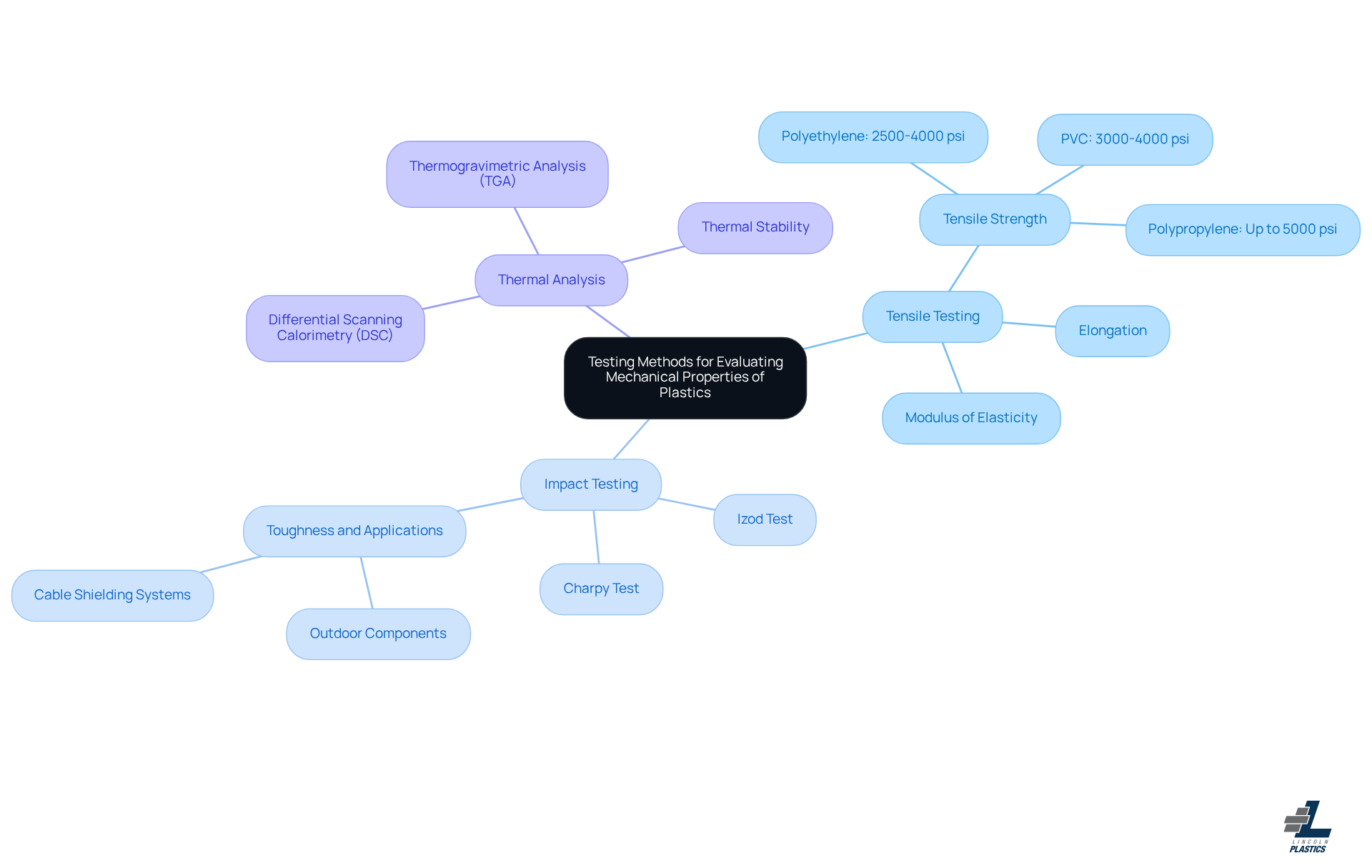
Tensile testing is a key method used to evaluate the mechanical properties of plastics. Basically, it involves applying a uniaxial load to a sample until it breaks. This helps us measure things like tensile strength, elongation, and yield strength. Why does this matter? Well, these parameters are crucial for understanding how materials will behave under stress, especially when safety considerations are on the line. For example, the tensile strengths of common plastics like PVC, polyethylene, and polypropylene can really vary. PVC usually shows a tensile strength of about 3,000 to 4,000 psi, while polyethylene falls between 2,500 and 4,000 psi, and polypropylene can go up to 5,000 psi. This variability can impact their suitability for specific industrial applications.
Now, let’s talk about impact testing. This method looks at a material's toughness by measuring how well it can absorb energy during a collision. The Charpy and Izod tests are popular ways to do this. These tests are super important for applications where materials need to withstand sudden forces without failing. Think about outdoor components or cable shielding systems - these materials need to be tough to ensure they last in demanding environments. A study found that some types of polypropylene can absorb a lot of energy without breaking, making them great for outdoor use.
In addition to tensile and impact testing, we also have thermal analysis methods like Differential Scanning Calorimetry (DSC) and Thermogravimetric Analysis (TGA). These methods help us evaluate the thermal properties of plastics. Why is this important? Because we need to choose materials that can handle specific temperature ranges without losing their integrity. For instance, materials that keep their characteristics at high temperatures are essential for industrial machinery that often gets hot.
By using these testing techniques, OEMs can ensure that the materials they select not only meet their specifications but also perform reliably in their intended applications. This thorough approach to material testing is vital for upholding quality standards in the production of components across various industries.
Apply Knowledge: Selecting Plastics Based on Mechanical Properties for OEM Applications
When you're picking plastics for OEM applications, it helps to keep a few things in mind:
- Evaluate Requirements: First off, think about what you really need. Are you looking for durability, or maybe impact resistance for protective casings? Understanding the specific properties is key.
- Consult Data Sheets: Next, take a look at the data sheets from your resin suppliers. Check out the mechanical properties that they list. You want to find properties that match your needs, like UV resistance for outdoor components.
- Prototype Testing: Before you make any final decisions, it’s a good idea to run some tests. This way, you can see how your chosen material performs in real-world conditions. It’s a crucial step to ensure everything meets your operational requirements.
- Collaborate with Experts: Don’t hesitate to reach out to professionals, like those at Lincoln Plastics. They can offer valuable insights into manufacturability, tolerances, and performance. Their expertise can really help you optimize design and production processes.
By following these steps, you can confidently choose the right plastics that meet your needs while also boosting the overall performance and reliability of your products. So, what do you think? Ready to dive into your next project?

Conclusion
So, let’s wrap this up! Understanding the mechanical properties of plastics isn’t just a nice-to-have; it’s crucial for making smart choices in OEM applications. Think about it: properties like tensile strength, impact resistance, and thermal stability are key players in how well products perform, how reliable they are, and, of course, their safety. When OEMs get a handle on these characteristics, they can pick materials that not only fit their needs but also boost the overall quality of what they offer.
Throughout this article, we’ve shared some important insights on how these mechanical properties affect material selection. For instance, tensile strength is a big deal for load-bearing components, while impact resistance is essential for protective applications. And let’s not forget thermal stability, which is vital for withstanding different environmental conditions. Plus, we highlighted some effective testing methods, like tensile and impact testing, that are super important for evaluating materials before making those final choices.
In conclusion, having a solid grasp of mechanical properties is not just helpful; it’s essential for OEMs looking to optimize their product designs and manufacturing processes. By assessing their requirements, checking out data sheets, running prototype tests, and teaming up with industry experts, manufacturers can make smart decisions that lead to better product performance and longevity. Embracing these practices ensures that the plastics they choose will meet the demands of their applications, ultimately paving the way for success in the competitive world of plastic manufacturing. So, what are you waiting for? Dive in and start making those informed choices!
Frequently Asked Questions
What are the mechanical properties of plastics?
The mechanical properties of plastics include tensile strength, shock resistance, elasticity, and thermal stability.
Why are the mechanical properties of plastic important for OEMs?
They are crucial because they directly impact the performance, durability, and safety of the final products.
What role does tensile strength play in plastic components?
High tensile strength is essential for components that face a lot of stress, ensuring they can withstand demanding conditions.
How does shock resistance benefit plastic products?
Shock resistance is important for products that might get jolted or bumped around, helping to maintain their integrity and functionality.
What are engineering plastics, and how do they compare to commodity plastics?
Engineering plastics, like polypropylene and PVC, demonstrate superior mechanical properties compared to commodity plastics, making them ideal for tough applications in industrial machinery and cable protection systems.
What advantage do engineering plastics offer in demanding environments?
They have high impact strength, which contributes to greater durability in components, leading to fewer replacements and less maintenance.
How do mechanical properties of plastics affect cable protection systems?
Using plastics with excellent tensile strength in cable protection systems leads to better performance and efficiency, allowing for lighter designs without sacrificing structural integrity.
How can understanding mechanical properties of plastics benefit OEMs?
By understanding these traits, OEMs can make informed decisions that align with their operational needs and product specifications, ultimately enhancing their manufacturing processes and product offerings.
List of Sources
- Define Mechanical Properties of Plastics and Their Importance
- All About Engineering Plastics: Definition, Importance, Uses, Properties, and Types (https://xometry.com/resources/materials/all-about-engineering-plastics)
- Why OEMs Are Rethinking Metal in Favor of Plastic (https://gemstarmfg.com/education/rethinking-metal-in-favor-of-plastic)
- piedmontplastics.com (https://piedmontplastics.com/blog/engineered-plastics-manufacturing?srsltid=AfmBOorkxw-aqkFgFcaf-xWfrRTvcnodP8yqMF0teILEeTb8mfULxDpB)
- thaiduongplastics.com (https://thaiduongplastics.com/en/news/thermal-and-mechanical-properties-of-plastics)
- goldengatemolders.com (https://goldengatemolders.com/post/the-impact-of-plastic-properties-on-engineering-applications)
- Understand Testing Methods for Evaluating Mechanical Properties of Plastics
- hobartbrothers.com (https://hobartbrothers.com/resources/technical-articles/what-is-tensile-testing-and-why-is-it-important)
- industrialphysics.com (https://industrialphysics.com/knowledgebase/articles/why-is-tensile-testing-important)
- researchgate.net (https://researchgate.net/publication/362593388_Statistical_Analysis_of_Tensile_Strength_and_Flexural_Strength_Data_from_Universal_Testing_Machine)
- standards.iteh.ai (https://standards.iteh.ai/articles/blog/latest-news/plastics-standard-anisotropy-jan-2026?srsltid=AfmBOopOc5GtRBokxT5vW972Ive8IjhDqapqEMm2UwkwSb_GlqzElxlA)
- Tensile strength at yield: Types, factors, applications, & tests (https://specialchem.com/plastics/guide/strength-at-yield-tensile)
Related posts

Discover essential steps for selecting reliable custom plastic tubing solutions for various industries.


Discover best practices for procuring clear plastic flexible tubing to enhance performance and reliability.
Discover key insights and features of top flexible PVC manufacturers for your business needs.
