
Master Logo Printing on Plastic: 4 Essential Steps for Success
Introduction
Mastering the art of logo printing on plastic is super important for brands that want to leave a mark. With so many types of plastic and printing techniques out there, figuring out the best practices can really boost the quality and durability of your printed logos. But here’s the catch: navigating the ins and outs of material selection, surface prep, and curing processes can be tricky. Each step is key to getting those stunning results you’re after.
So, what are the essential steps that can turn a simple logo into a vibrant, long-lasting emblem? Let’s dive in and explore how you can make your logo pop!
Identify Suitable Plastic Materials for Logo Printing
Let’s kick things off by looking at the different plastic materials you can use for branding. You’ve got some great options out there:
- PVC: This one’s a favorite! PVC is super durable and versatile, making it a go-to for signage and promotional items. If you’re after something that’ll last, PVC is your best bet. Fun fact: the PVC market is expected to hit $89.2 billion by 2032, growing at a steady pace of 3.85% from 2026 to 2032. That’s some serious demand!
- Acrylic: If clarity is what you’re after, acrylic is the way to go. It’s perfect for displays, ensuring your designs pop with vibrant colors and sharp details. Industry experts often recommend it for projects that need that visual wow factor.
- Polypropylene: Lightweight and moisture-resistant, PP is great for all sorts of applications, especially where durability and flexibility are key - think packaging and promotional products. Many successful branding projects have tapped into PP for its adaptability.
- HDPE: Known for its strength and impact resistance, HDPE is a solid choice for outdoor products. It’s tough enough to handle the elements, making it ideal for logos that need to stand the test of time.
When you’re picking a material for logo printing, consider what you’ll be using it for, the environment it’ll be in, and the technique you plan to use. For example, screen printing works wonders on flat surfaces like acrylic, while pad printing methods shine on curved surfaces, like those bottles made from polypropylene. Understanding these factors will help ensure your design project hits the mark and meets your branding needs, particularly when it comes to visibility.

Explore Printing Methods for Plastic Logos
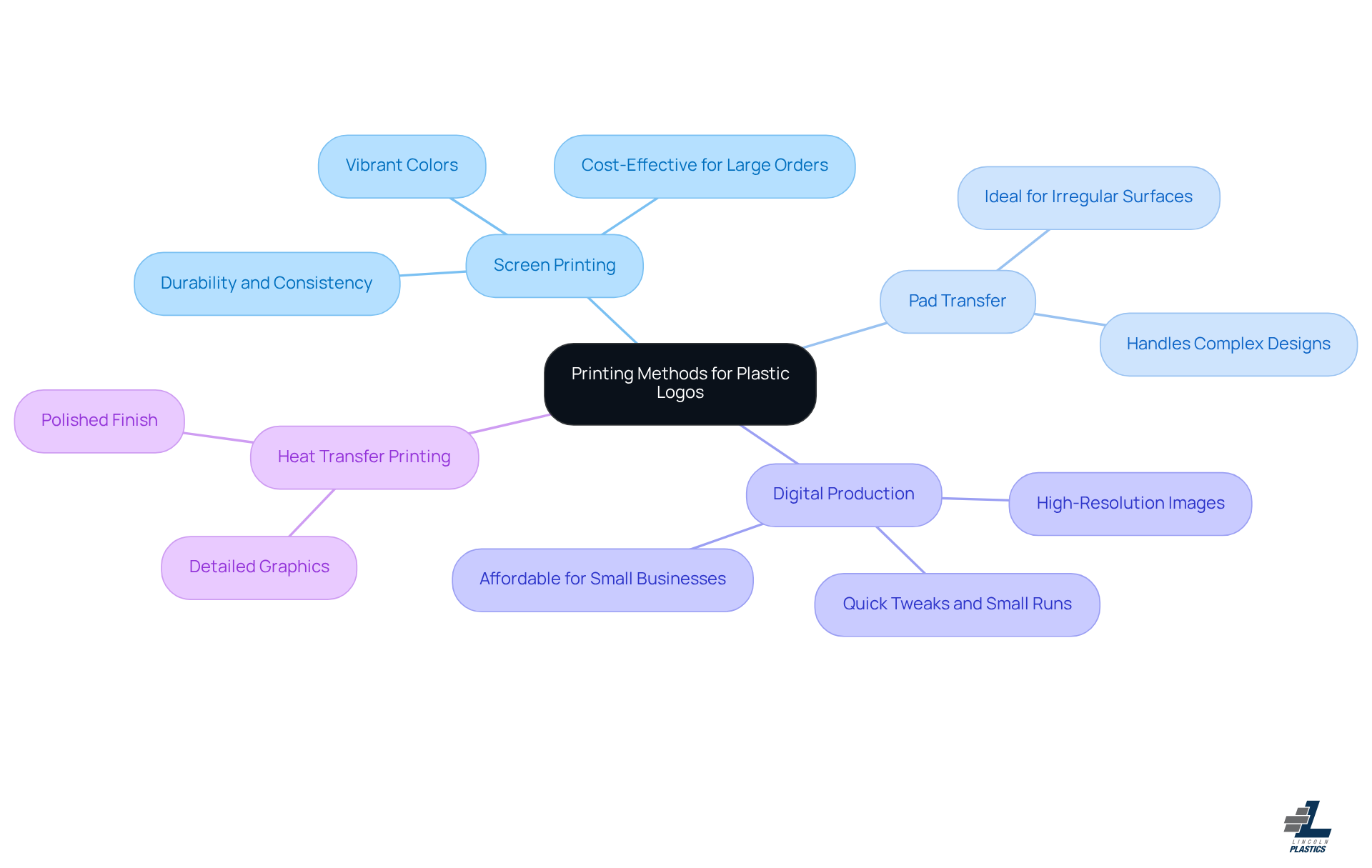
When it comes to logo printing, you might be wondering which method is best for your needs. There are several standout options, each with its own perks:
- Screen Printing: This method is a champ when it comes to vibrant colors and is super cost-effective for larger orders. It uses a mesh screen to transfer ink, ensuring durability and consistency across bulk orders. If you’re looking to boost your brand visibility with logos, this is a go-to choice. Fun fact: 70% of customers say they buy a product just because of its packaging! That really highlights how crucial branding is.
- Pad Printing: Got irregular surfaces? Pad printing is your friend! It uses a silicone pad to transfer ink from a plate to the product, making it perfect for all sorts of shapes, including concave and cylindrical items. If you have a complex design in mind, this method can handle it with ease.
- Digital Production: If customization is what you’re after, digital production is the way to go. It’s ideal for small runs or intricate designs and allows for quick tweaks without needing screens or plates. Plus, small businesses can snag a bunch of branded gear without breaking the bank, as digital production is pretty affordable compared to other materials.
- Heat Transfer: This technique is all about transferring a design from special paper onto plastic using heat. It’s fantastic for detailed graphics and is often used for promotional items, giving a polished finish that really enhances brand appeal.
So, how do you choose the right method? Think about your project requirements like volume, design complexity, and budget. Each method has its strengths, and knowing these can really amp up your branding. And don’t forget to clean the plastic area before you start-this ensures the best results! As Adham W. puts it, consider printed goods as a way to create tiny, traveling billboards for your company.
Prepare the Plastic Surface for Optimal Printing
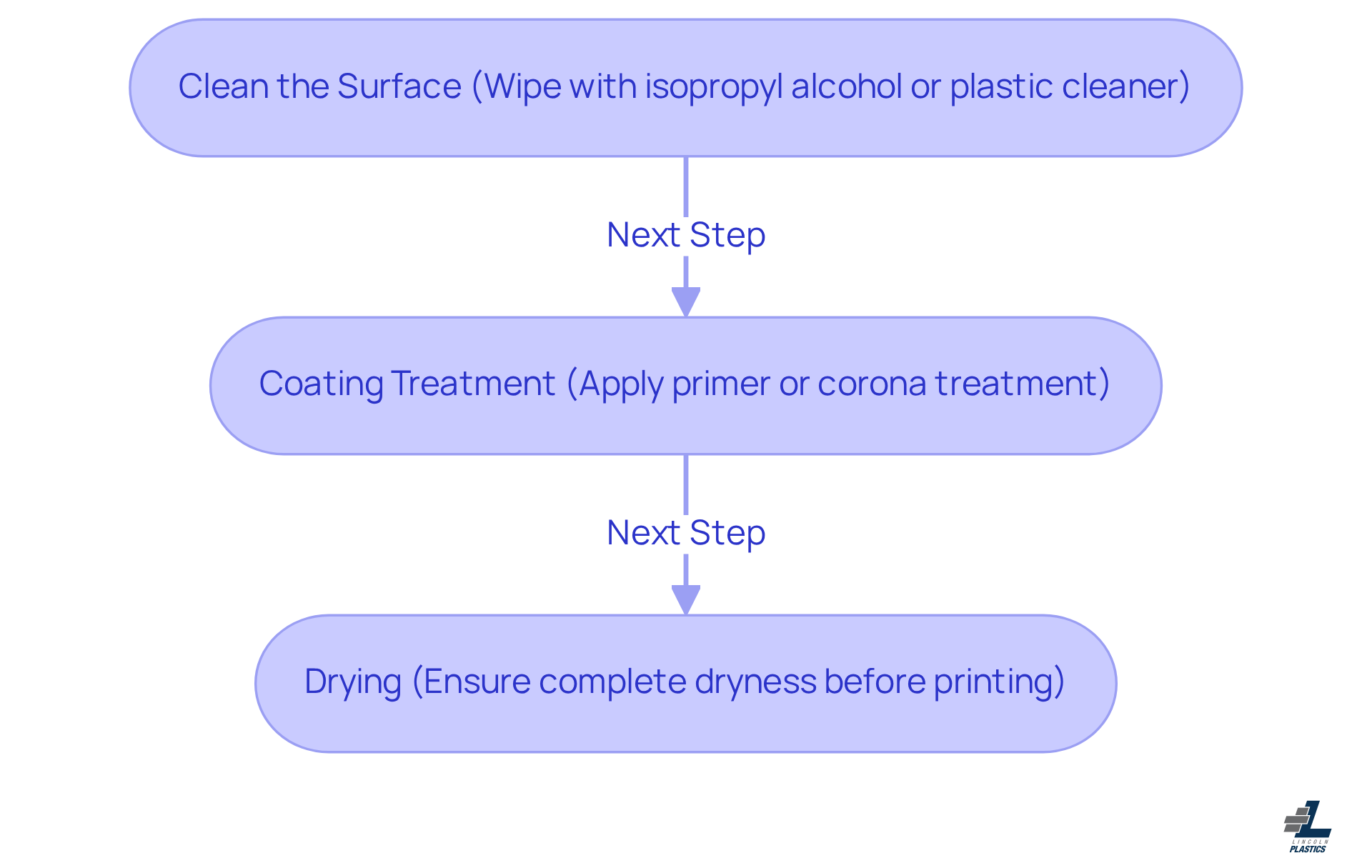
To get the best results in logo printing, you really need to prepare your material carefully. Let’s break down the essential steps:
- Clean the Surface: First things first, grab some isopropyl alcohol or a specialized plastic cleaner. You want to remove dirt, oils, or residues. This step is super important because any contaminants can mess with adhesion, which means poor quality.
- Coating Treatment: Depending on the type of plastic you’re working with, applying a primer or using a surface treatment can really boost the adhesion. Why does this matter? Well, that increase in energy helps the ink stick better, creating a stronger bond between the ink and the plastic. Research shows that treating the surface can enhance the energy of polymers, making them more receptive to coatings and inks. As industry experts say, "a substrate's surface energy should be at least 5 mN/m above the tension of the adhesive used" to ensure a solid bond.
- Drying: Before you dive into the printing process, make sure everything is completely dry. Moisture can really mess things up, leading to issues like ink smudging or peeling later on.
By following these best practices, you not only boost the longevity of your printed design but also keep it looking great throughout its life. Successful projects, especially those that use high-quality materials, show that thorough preparation can lead to big improvements in print quality and durability. So, don’t skip this critical step!
Finalize and Cure the Printed Logo on Plastic
To wrap up your logo printing process, let’s go through some essential steps together:
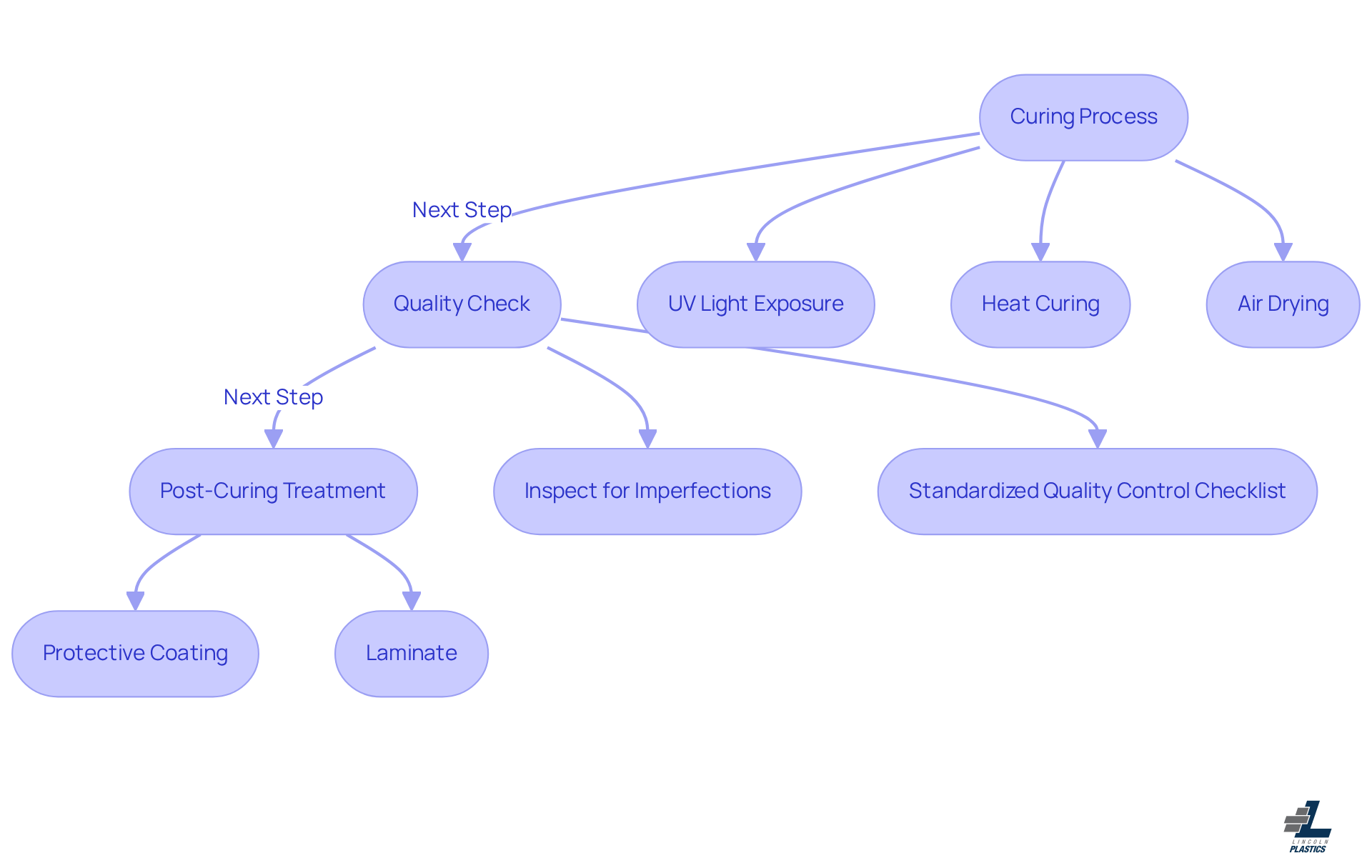
- Curing method: So, the method really depends on how you printed it. For example, if you used UV printing, you’ll need to expose it to UV light. This sets the ink right away, giving you a solid finish. Heat curing is another popular choice, especially for solvent-based inks. And if you’re using certain water-based inks, air drying might just do the trick. Just remember, prepping the surface well is super important. If you skip this step, you might end up with issues like adhesion failure or edge defects.
- Quality check: Now, let’s talk about checking your printed emblem. It’s a good idea to inspect it closely for any imperfections or inconsistencies. Look out for color accuracy and clarity. Did you know that low ink viscosity or too much pressure from the squeegee can lead to edge defects and blurring? Keeping a standardized checklist can really help maintain consistency across batches, making sure each design hits the mark.
- Protective layer: To make your printed design last longer, think about adding a clear coat or laminate. This extra layer not only boosts durability but also keeps it looking great over time. If you use UVLED ink for this, you’ll really enhance the quality and durability of your print.
By following these steps, you can make sure your logo printing on plastic looks fantastic and stands up to various environmental factors. Ready to give it a try?
Conclusion
Mastering the art of logo printing on plastic can feel a bit tricky, right? It’s all about understanding the materials, methods, and prep techniques. When you pick the right plastic substrate and the best printing method, you can create vibrant, durable logos that truly represent your brand. Let’s break down some essential steps to help you succeed in this specialized branding area.
-
First off, choosing the right plastic material is key. Think about options like PVC, acrylic, or polypropylene-each one has its own perks for different applications. You might be wondering which one is best for you. Don’t worry; we’ll dive into that!
-
We’ll also explore various printing methods, like screen printing, pad transfer, digital production, and heat transfer. Each method has its strengths and ideal use cases, so you’ll know exactly what to use.
-
Now, let’s talk about preparation. Cleaning, treating, and drying the plastic surface is super important for achieving high-quality prints that last. You wouldn’t want your hard work to fade away, right? So, make sure you give this step the attention it deserves.
Ultimately, the importance of meticulous preparation and the right curing methods can’t be overstated. By following these essential steps, you can ensure your logos not only look fantastic but also withstand the daily grind. Embracing these practices will boost your brand visibility and leave a lasting impression on consumers. So, are you ready to take your logo printing to the next level?
Frequently Asked Questions
What are the suitable plastic materials for logo printing?
The suitable plastic materials for logo printing include Polyvinyl Chloride (PVC), Acrylic, Polypropylene (PP), and High-Density Polyethylene (HDPE).
What are the characteristics of Polyvinyl Chloride (PVC)?
PVC is durable and versatile, making it a popular choice for signage and promotional items. It is expected to have significant market growth, indicating strong demand.
Why is Acrylic recommended for logo printing?
Acrylic is known for its clarity and is ideal for high-quality displays, allowing designs to showcase vibrant colors and sharp details, making it perfect for projects that require a visual impact.
What advantages does Polypropylene (PP) offer?
Polypropylene is lightweight, moisture-resistant, and adaptable, making it suitable for various applications, particularly in packaging and promotional products.
What makes High-Density Polyethylene (HDPE) a good choice for outdoor products?
HDPE is strong and impact-resistant, making it an excellent option for outdoor products that need to withstand harsh environmental conditions.
What factors should be considered when choosing a plastic material for logo printing?
Consider the intended use of the product, the environment it will be in, and the printing technique you plan to use, such as UV technology for rigid plastics or pad methods for curved surfaces.
List of Sources
- Identify Suitable Plastic Materials for Logo Printing
- primoprint.com (https://primoprint.com/blog/12-graphic-design-quotes-that-will-inspire-you-to-create-great-work?srsltid=AfmBOorCNH1KiAylc8TXu8AalEV0nOcG2Vg1eNOFvOAEP6kimNRF2v3t)
- isellpackaging.com (https://isellpackaging.com/inspirational-product-packaging-quotes-from-industry-experts)
- verifiedmarketresearch.com (https://verifiedmarketresearch.com/product/polyvinyl-chloride-pvc-market)
- packagingdigest.com (https://packagingdigest.com/careers-education-training/words-of-wisdom-from-your-packaging-peers-gallery)
- antinapromo.com (https://antinapromo.com/Case_Studies.htm)
- Explore Printing Methods for Plastic Logos
- j-mold.com (https://j-mold.com/info-detail/the-benefits-of-screen-printing-for-enhancing-product-appearance)
- isellpackaging.com (https://isellpackaging.com/inspirational-product-packaging-quotes-from-industry-experts)
- theceocreative.com (https://theceocreative.com/how-to-print-logos-on-plastic)
- Prepare the Plastic Surface for Optimal Printing
- dgmfmoldclamps.com (https://dgmfmoldclamps.com/what-are-the-surface-treatment-processes-for-plastic-products)
- eupegypt.com (https://eupegypt.com/blog/how-to-print-on-plastic-bottles)
- esma.com (https://esma.com/news/other-news/general?start=5)
- tantec.com (https://tantec.com/adhesion-and-surface-treatment-of-plastic)
- forgeway.com (https://forgeway.com/learning/blog/plastic-bonding-101-guide)
- Finalize and Cure the Printed Logo on Plastic
- smarttechfl.com (https://smarttechfl.com/blog/commercial-printing-packaging-trends-2025)
- ubscode.com (https://ubscode.com/en/news/the-most-suitable-printing-methods-for-each-material-2)
- anguil.com (https://anguil.com/case_studies_category/printing-packaging)
- beskamold.com (https://beskamold.com/silk-screen-printing-on-plastic)
- proto3000.com (https://proto3000.com/resources/case_studies/visual-firsts-sweet-spot)


