
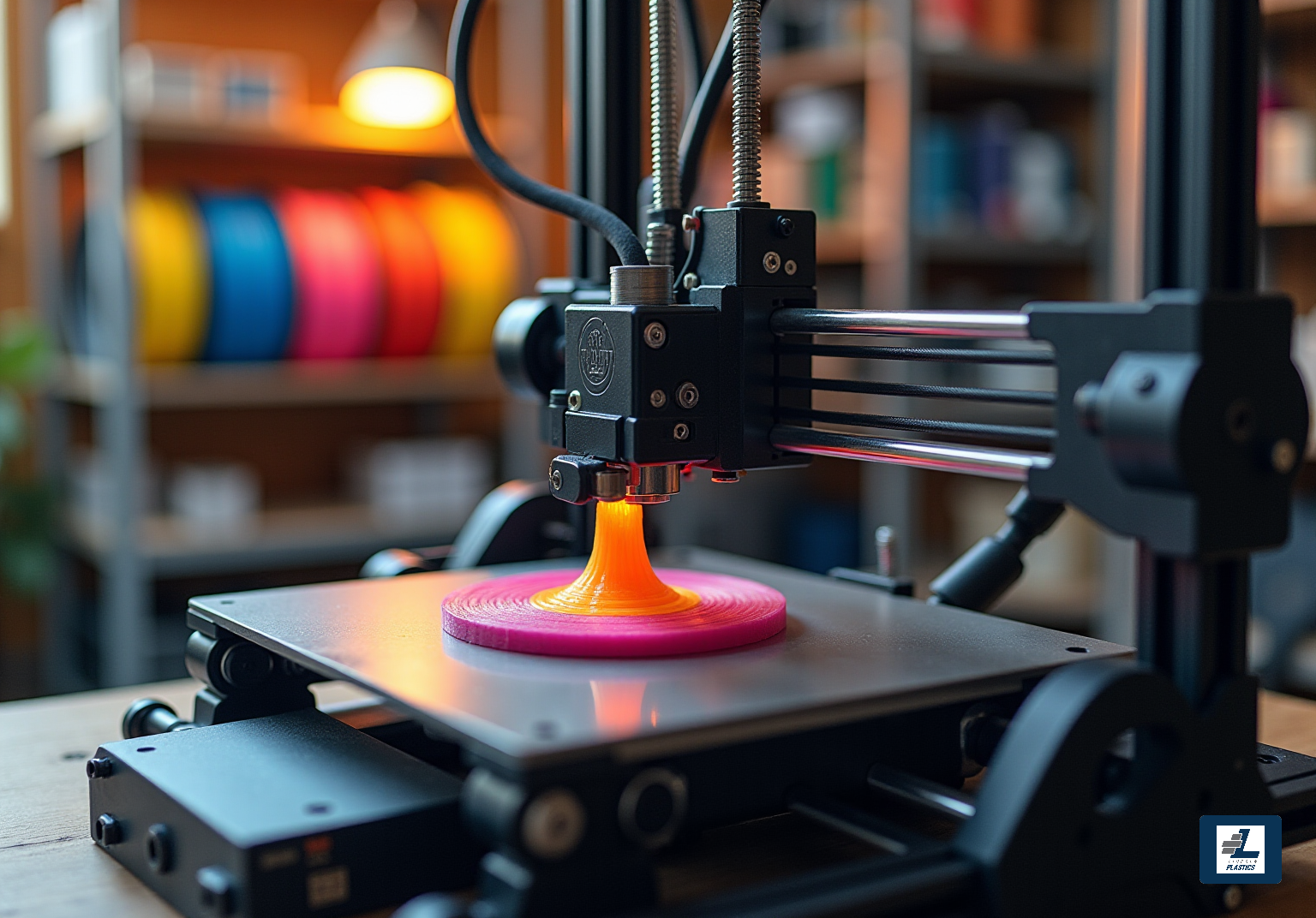
Master Extrusion Printing: Essential Steps for Optimization
Introduction
Extrusion printing is really shaking things up in modern manufacturing, turning thermoplastic materials into all sorts of cool three-dimensional designs. In this article, we’re going to dive into the key steps for optimizing this exciting process. We’ll chat about:
- Material selection
- Safety protocols
- Post-processing techniques
But here’s the thing: as the demand for precision and quality keeps climbing, how do you tackle the complexities of extrusion printing to get the best results?
Let’s explore some optimization strategies together! By doing so, we’ll uncover the secrets to boosting both efficiency and output quality in your extrusion printing projects.
Understand Extrusion Printing Basics
Extrusion fabrication is a cool manufacturing method where we heat up materials and push them through a nozzle to create three-dimensional shapes. Let’s break down some key components of this process:
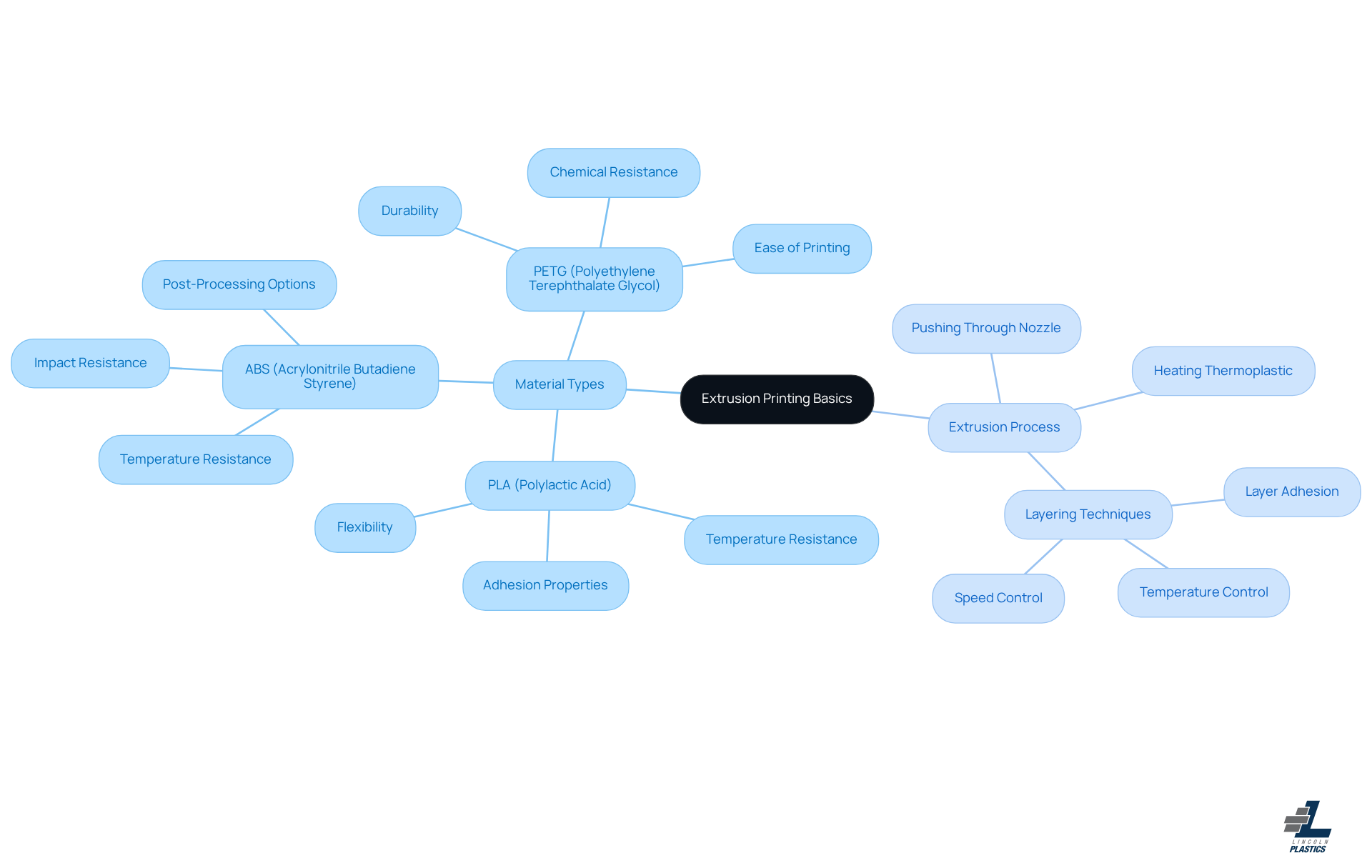
- Material Types: You might be wondering what materials we use. The most common thermoplastics used in extrusion printing include PLA (Polylactic Acid), ABS (Acrylonitrile Butadiene Styrene), and PETG (Polyethylene Terephthalate Glycol). Each of these has its own unique traits that can really affect how we print, like strength, flexibility, and how well they stick together. Here at Lincoln Plastics, we work closely with OEMs to make sure the materials we choose meet all quality standards. We even source colors that match for consistency across manufacturers!
- The Process: Now, let’s talk about how the extrusion process works. It all starts with heating the selected thermoplastic until it’s nice and pliable. Then, we push it through a nozzle, layer by layer, to build the final object. The method of extrusion provides us with precise control over how the material flows and the thickness of each layer, which is super important for achieving the right dimensions and surface finish. Our quality system is robust, with dedicated checks and documentation to ensure that everything meets those critical dimensions, backed by our engineering expertise.
Mastering the layering technique in extrusion printing is essential for creating strong and visually appealing printed parts. Each layer needs to stick well to the one before it to avoid issues like warping or delamination. Understanding how temperature, speed, and material properties interact is crucial for optimizing print speed and overall print quality. At Lincoln Plastics, we use various check gauges to ensure a perfect fit for end use, reinforcing our commitment to quality in every step of the manufacturing process.
By getting familiar with these essential elements, you’ll be ready to dive into techniques that can really boost the effectiveness and quality of your projects!
Identify Safety Requirements for Extrusion Printing
Before you kick off any extrusion printing project, let’s chat about some important safety requirements you really shouldn’t overlook:
- Safety gear: First things first, always wear gloves, goggles, and a face shield. Trust me, these will help protect you from burns and splashes.
- Ventilation: Now, let’s talk about ventilation. Proper airflow is essential. You don’t want to be exposed to fumes that might pop up during the production process.
- Emergency procedures: It’s also a good idea to familiarize yourself with emergency shutdown procedures. And hey, keep a first aid kit handy, just in case!
- Material safety: Lastly, don’t forget to review the SDS for all the substances you’re using. It’s super important to understand their hazards and safe handling practices.
By sticking to these guidelines, you’re not just following rules; you’re ensuring safety and cutting down on the risk of accidents. So, let’s keep safety a priority!
Explore Traditional Post-Processing Techniques
After printing, you might be wondering how to make your print shine. There are several traditional techniques that can really enhance what you've created:
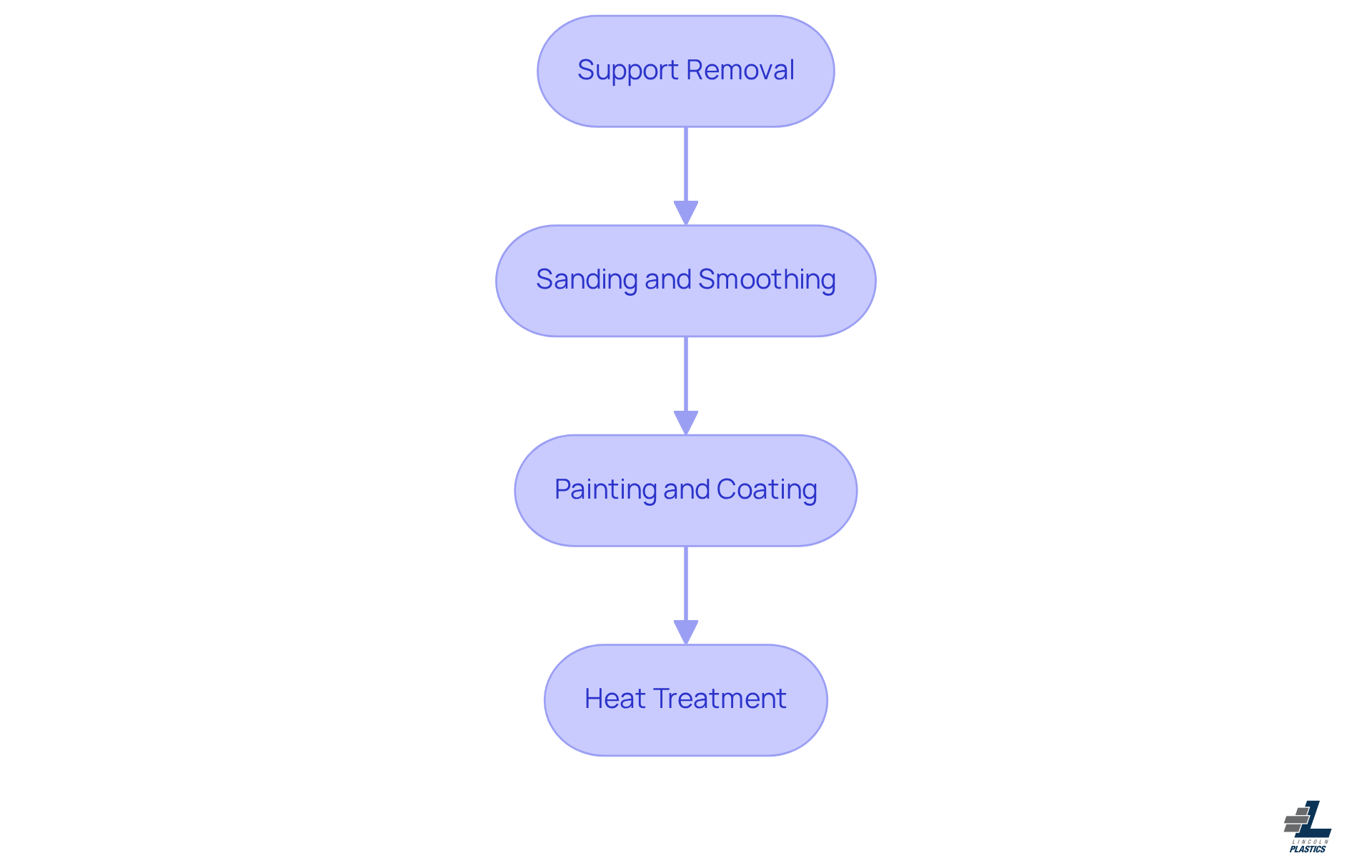
- Support Removal: First things first, carefully take off any support structures. This reveals the final shape of your print. You can do this by hand or use some handy tools, just be sure to avoid damaging the printed part.
- Sanding: Now, let’s talk about sanding. Using sandpaper or smoothing agents is key to achieving a smooth finish. Not only does this step make your print look better, but it also boosts its performance. Did you know that sanding can significantly increase bond strength? For example, sanded Wood-PLA achieved a bond strength of 2.98 MPa, while untreated Wood-PLA was only 0.45 MPa. Industry experts really stress that a smooth surface is crucial for adhesion, as it helps with adhesion and cuts down on potential failure points.
- Painting and Coating: Next up, consider applying paint or a protective coating. This not only enhances the appearance but also adds durability. Just make sure the coating is compatible with the material you’re using to avoid any nasty reactions.
- Heat Treatment: For some materials, applying heat can really boost strength and reduce internal stresses. But be careful! This process needs to be done right to prevent warping or other distortions.
By implementing these techniques, you can significantly elevate the quality of your printed parts, making them more suitable for functional applications. So, why not give them a try?
Mitigate Risks in Material Extrusion Post-Processing
When it comes to safety in material extrusion printing, it’s all about being smart and careful. Here are some tips that can really make a difference:
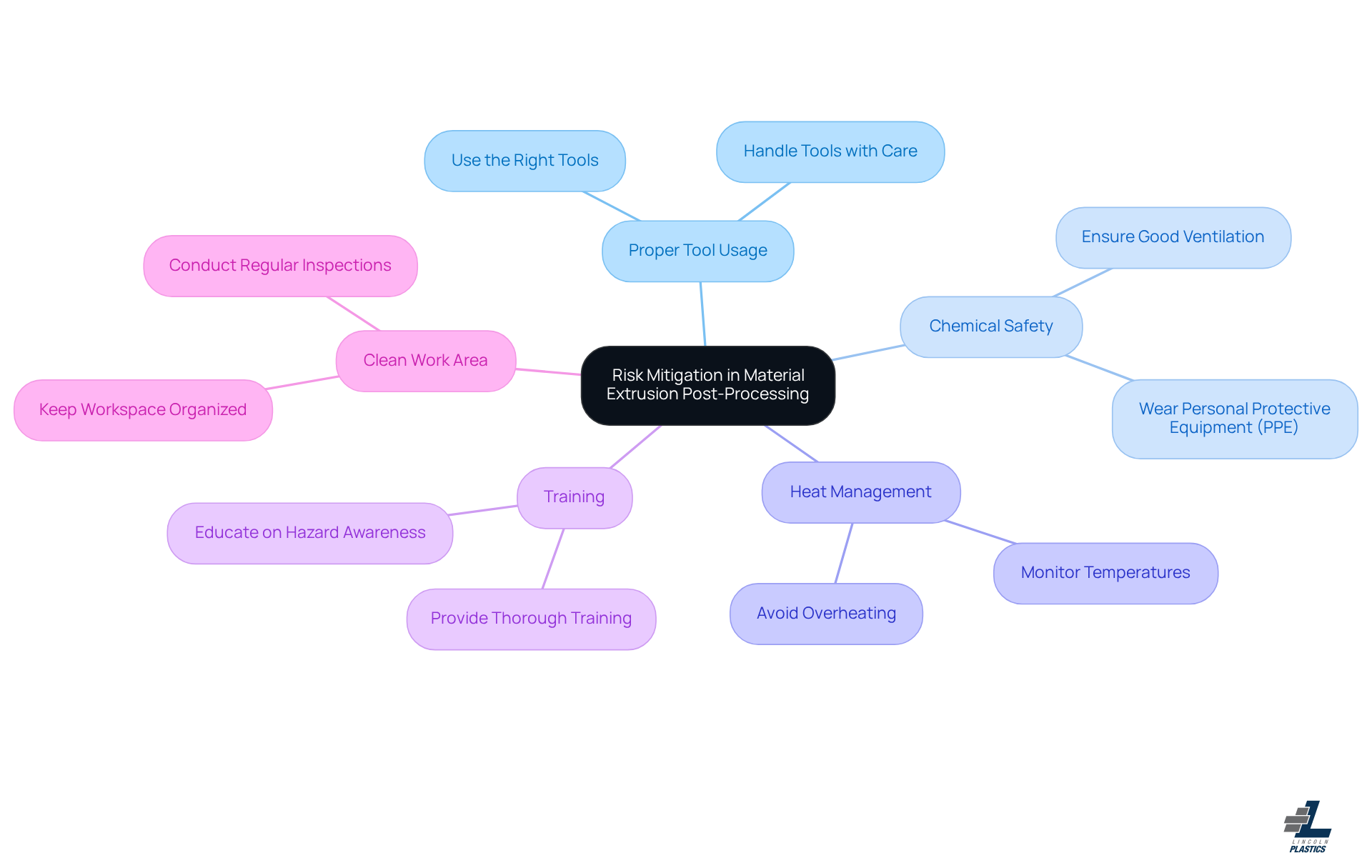
- Always use the right tools for the job. For example, if you’re cutting supports, grab those sharp blades made just for that. Handle them with care to keep accidents at bay.
- Working with solvents or adhesives? Make sure your workspace is well-ventilated and don’t forget your personal protective equipment. This helps keep inhalation and skin exposure risks low.
- Heat guns and ovens can be tricky. Keep an eye on those temperatures to avoid overheating, which could lead to fires or damage to your materials.
- It’s crucial to provide thorough training for everyone involved. Make sure all operators know how to handle substances and tools safely. This way, they’ll be aware of potential hazards and how to tackle them.
- A tidy workspace is a safe workspace! Keeping things organized helps prevent slips, trips, and falls—common hazards in industrial settings.
By putting these strategies into practice, you can really cut down on risks and improve safety in your workplace. Did you know that around 19,000 to 24,000 people get injured each year in industrial accidents related to machine operation? That’s why these safety measures are so important!
Gather Essential Tools and Resources for Optimization
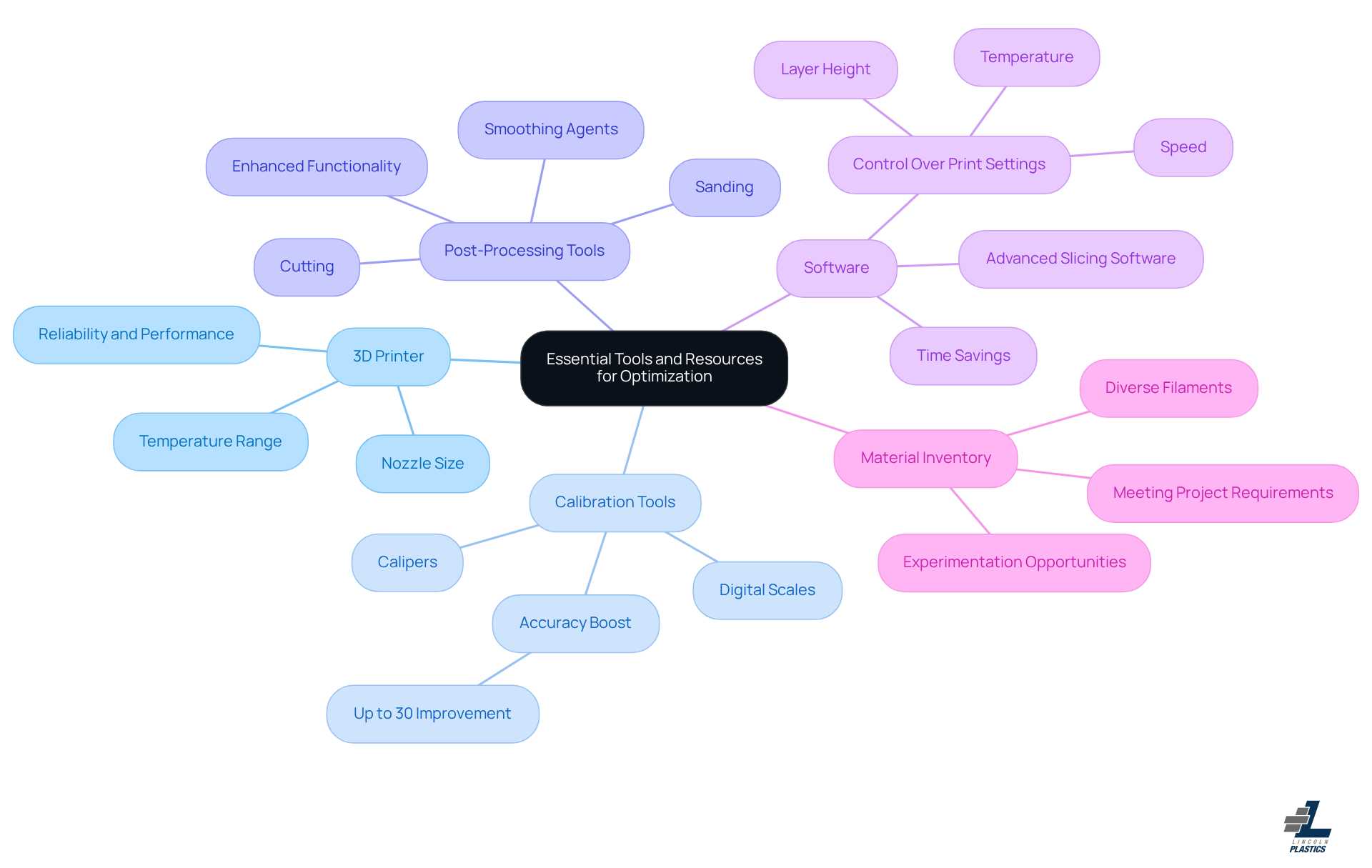
If you’re looking to optimize your process of extrusion printing, you’ll want to gather some essential tools. Let’s dive into what you need!
- 3D Printer: First things first, pick a printer that can handle the specific materials. Think about nozzle size and temperature range - these factors really impact print quality and material compatibility. By 2025, some of the top 3D printers for thermoplastics will be from manufacturers known for their reliability and performance. Have you checked out the latest models?
- Measuring Tools: Grab some calipers and digital scales to ensure your filament dimensions are spot on. Did you know that proper calibration can boost accuracy in output by up to 30%? That’s a game changer!
- Post-Processing Tools: Once your prints are done, you’ll want to refine them. Equip yourself with sanders, cutters, and smoothing agents. Effective post-processing can really enhance both the look and functionality of your final product. Who doesn’t want a polished finish?
- Software: Now, let’s talk about software. You’ll need software that gives you precise control over print settings like layer height, speed, and temperature. This is crucial for getting the best results and can save you a ton of time on adjustments. Industry leaders stress the importance of using the right software to make the most of your 3D printer.
- Material Inventory: Finally, keep a handy inventory. This lets you experiment with different properties and finishes, which is great for innovation in design and functionality. It’s all about meeting those specific project requirements, right?
By gathering these tools and resources, you’ll be fully prepared to improve your process. Get ready for high-quality results and efficient production!
Conclusion
Mastering extrusion printing can feel a bit overwhelming, right? But once you get a handle on the basics - like the processes, safety measures, and post-processing techniques - it all starts to click. Understanding how to choose the right materials, the extrusion process itself, and why layer adhesion matters can really boost the quality of your projects. Plus, keeping safety in mind with the right equipment and procedures means you can let your creativity flow without worrying about your well-being.
Now, let’s talk about the tools you’ll need. From 3D printers to calibration devices, having the right gear is crucial for getting the best results. And don’t forget about post-processing! Techniques like sanding, painting, and heat treatment are key to refining your final product. Implementing some risk mitigation strategies during this phase not only keeps you safe but also protects the integrity of your printed parts.
Ultimately, optimizing your extrusion printing skills is a journey of learning and adapting. Embracing new tech and best practices can really empower you to explore what’s possible in 3D printing. So, stay curious and equipped with the right resources! You’ll elevate your extrusion printing game, leading to innovative designs and high-quality outputs that truly stand out in the industry.
Frequently Asked Questions
What is extrusion printing?
Extrusion printing is a manufacturing method where thermoplastic materials are heated and pushed through a nozzle to create three-dimensional shapes.
What types of materials are commonly used in extrusion printing?
The most common thermoplastics used in extrusion printing include PLA (Polylactic Acid), ABS (Acrylonitrile Butadiene Styrene), and PETG (Polyethylene Terephthalate Glycol).
How does the extrusion process work?
The extrusion process begins by heating the selected thermoplastic until it is pliable, then pushing it through a nozzle layer by layer to build the final object, allowing for precise control over material flow and layer thickness.
Why is mastering the layering technique important in extrusion printing?
Mastering the layering technique is essential for creating strong and visually appealing printed parts, as each layer needs to adhere well to avoid issues like warping or delamination.
What safety equipment should be used during extrusion printing?
It is important to wear heat-resistant gloves, safety goggles, and a face shield to protect against burns and splashes.
Why is ventilation important in extrusion printing?
Proper ventilation is crucial to avoid inhaling fumes that may arise during the production process.
What emergency procedures should be followed in extrusion printing?
Familiarizing yourself with emergency shutdown procedures and having fire extinguishers readily available are important safety measures.
What are Safety Data Sheets (SDS) and why are they important?
Safety Data Sheets provide information on hazards and safe handling practices for substances used in extrusion printing, and reviewing them is essential for ensuring safety.
List of Sources
- Understand Extrusion Printing Basics
- statista.com (https://statista.com/topics/1969/additive-manufacturing-and-3d-printing?srsltid=AfmBOorcTcJ3LBao3OD7TE6RIZwHYuHXmMjnVtdWhEMUJgOGEos05p1F)
- supplychaintoday.com (https://supplychaintoday.com/best-3d-printing-quotes)
- deliberatedirections.com (https://deliberatedirections.com/3d-printing-quotes-industry-experts)
- marketsandmarkets.com (https://marketsandmarkets.com/Market-Reports/3d-printing-materials-market-1295.html)
- engineering.jhu.edu (https://engineering.jhu.edu/case/news/advancing-3d-printing-one-layer-at-time-a-new-look-at-multimaterial-extrusion-technologies)
- Identify Safety Requirements for Extrusion Printing
- alveo3d.com (https://alveo3d.com/en/abs-plastic-health-risks-3d-printing)
- Assessing personal protective equipment usage and its correlation with knowledge, attitudes, performance, and safety culture among workers in small and medium-sized enterprises - PMC (https://pmc.ncbi.nlm.nih.gov/articles/PMC11270978)
- scribd.com (https://scribd.com/document/460610008/BOSH-Manual-Narrative-Handout-docx)
- eoxs.com (https://eoxs.com/new_blog/effective-safety-in-extrusion-essential-measures-for-worker-protection)
- Explore Traditional Post-Processing Techniques
- proto3000.com (https://proto3000.com/resources/case_studies/3d-printed-tooling-saves-time-cuts-costs)
- deliberatedirections.com (https://deliberatedirections.com/3d-printing-quotes-industry-experts)
- sciencedirect.com (https://sciencedirect.com/science/article/abs/pii/S1755581722002048)
- mdpi.com (https://mdpi.com/2073-4360/13/8/1211)
- protolabs.com (https://protolabs.com/resources/blog/improve-3d-printing-surface-quality)
- Mitigate Risks in Material Extrusion Post-Processing
- amfg.ai (https://amfg.ai/2017/06/09/make-post-processing-safer)
- eoxs.com (https://eoxs.com/new_blog/worker-safety-in-extrusion-operations-best-practices-and-protective-strategies)
- pmc.ncbi.nlm.nih.gov (https://pmc.ncbi.nlm.nih.gov/articles/PMC4867852)
- safetyandhealthmagazine.com (https://safetyandhealthmagazine.com/articles/27401-harmful-chemicals-in-classrooms-tied-to-3d-printer-emissions-study)
- Gather Essential Tools and Resources for Optimization
- proto3000.com (https://proto3000.com/resources/case_studies/lumenium-desktop-metal-rapid-prototyping)
- researchgate.net (https://researchgate.net/publication/343210059_An_investigation_of_additive_manufacturing_technologies_for_development_of_end-use_components_A_case_study)
- ipo.llnl.gov (https://ipo.llnl.gov/ipo-technologies/advanced-manufacturing/machine-learning-informed-control-systems-extrusion)
Related posts

Why Custom Pipe Extrusion Matters More Than Ever
Standard pipe sizes don’t always work. Learn how Lincoln Plastics delivers custom diameters, wall thicknesses, and finishes in right-sized runs.


Reducing Trip Hazards with Custom Cord Management
Loose cords are more than messy — they’re a safety hazard. Lincoln Plastics’ custom cord covers and Flexiduct solutions improve safety and efficiency.
The Power of Custom Plastic Profiles for OEMs
Off-the-shelf profiles force compromises. Learn how Lincoln Plastics designs custom extruded profiles for OEMs with exact specs and right-sized runs.
