
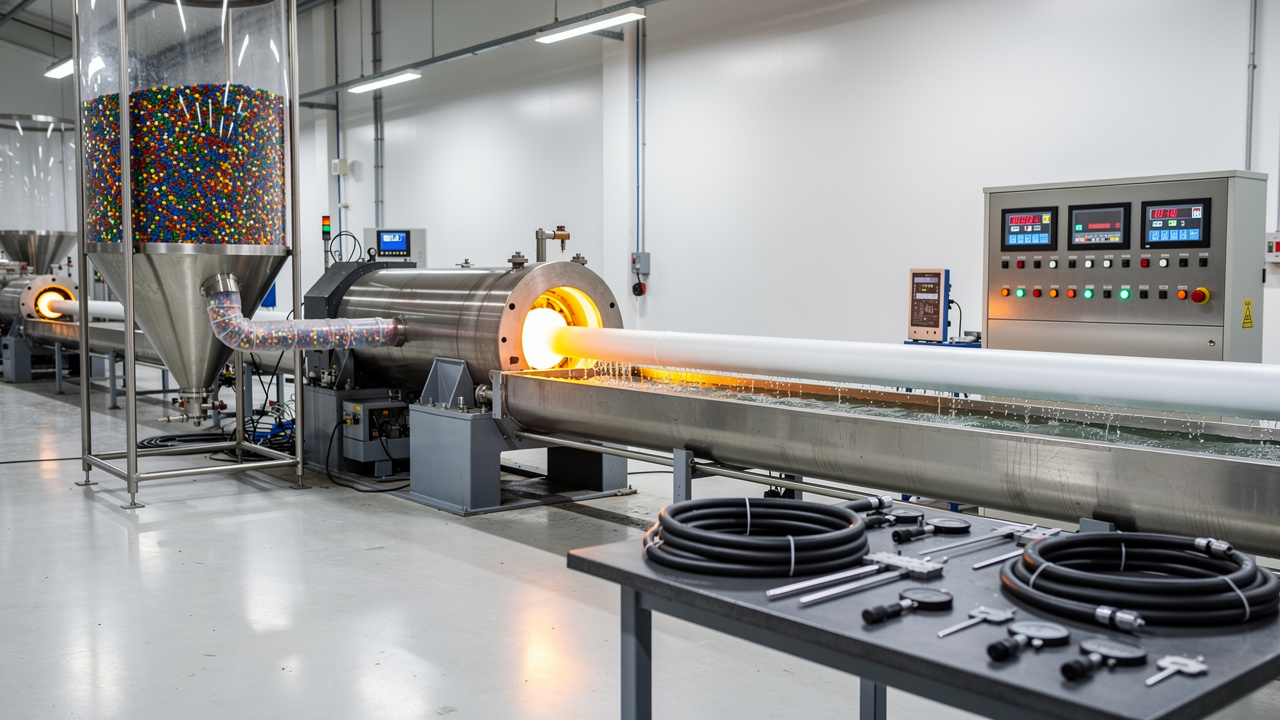
Master Extrusion HDPE: A Complete Guide to the Process and Quality Control
Introduction
High-Density Polyethylene (HDPE) stands as a pivotal material in industrial applications, yet its successful use hinges on mastering the extrusion process and maintaining stringent quality control. Manufacturers are increasingly turning to HDPE for its superior properties, but mastering the extrusion process and ensuring quality control is crucial for success.
This guide delves into the step-by-step HDPE extrusion process, highlighting best practices and key parameters that ensure product excellence.
What challenges do manufacturers face when quality control falters, and how can they effectively navigate these issues to protect their products? Exploring these questions will illuminate the path to mastering HDPE extrusion and achieving unparalleled results.
By addressing these challenges head-on, manufacturers can safeguard their products' integrity and elevate their operational standards.
Explore HDPE: Properties and Importance in Extrusion
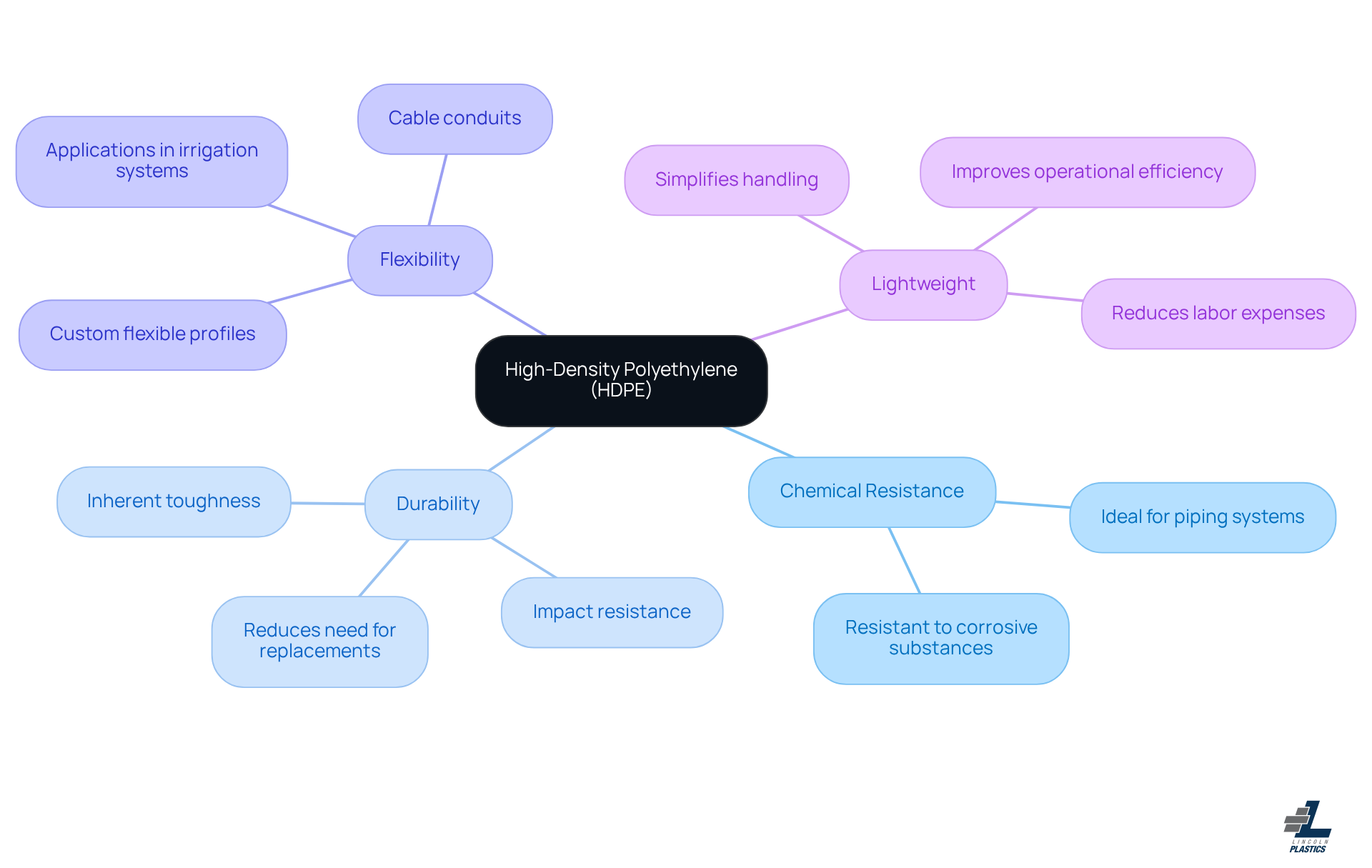
High-Density Polyethylene stands out as a thermoplastic with an exceptional strength-to-density ratio, making it a top choice for industrial applications. Key properties of HDPE include:
- Chemical Resistance: HDPE demonstrates strong resistance to a wide range of chemicals, making it ideal for piping systems that transport corrosive substances, ensuring safety and longevity.
- Durability: Its inherent toughness and impact resistance contribute to its longevity in demanding environments, reducing the need for frequent replacements.
- Flexibility: While primarily rigid, this material can be engineered for flexibility, accommodating diverse applications such as irrigation systems and cable conduits that require adaptability. At Lincoln Plastics, we focus on custom flexible profiles, offering tailored solutions like flexible cord covers that not only organize cables but also enhance workplace safety.
- Lightweight: The lightweight characteristic of high-density polyethylene simplifies handling and installation tasks, ultimately reducing labor expenses and improving operational efficiency.
These properties are crucial when selecting high-density polyethylene for extrusion HDPE processes. They significantly influence the material's performance in specific applications, such as OEM products for center pivot systems and custom profiles for cable management solutions. Recent advancements in extrusion HDPE techniques, including ultrasonic-assisted processing, not only enhance the barrier performance of HDPE but also create new market opportunities in sustainable packaging and other sectors. With Lincoln Plastics' commitment to quality, backed by ISO 9001:2015 certification and rigorous quality management plans, including dedicated quality books and in-process checks, you’re not just choosing a product; you’re investing in a solution that guarantees performance and reliability in every application.
Detail the HDPE Pipe Extrusion Process: Step-by-Step Guide
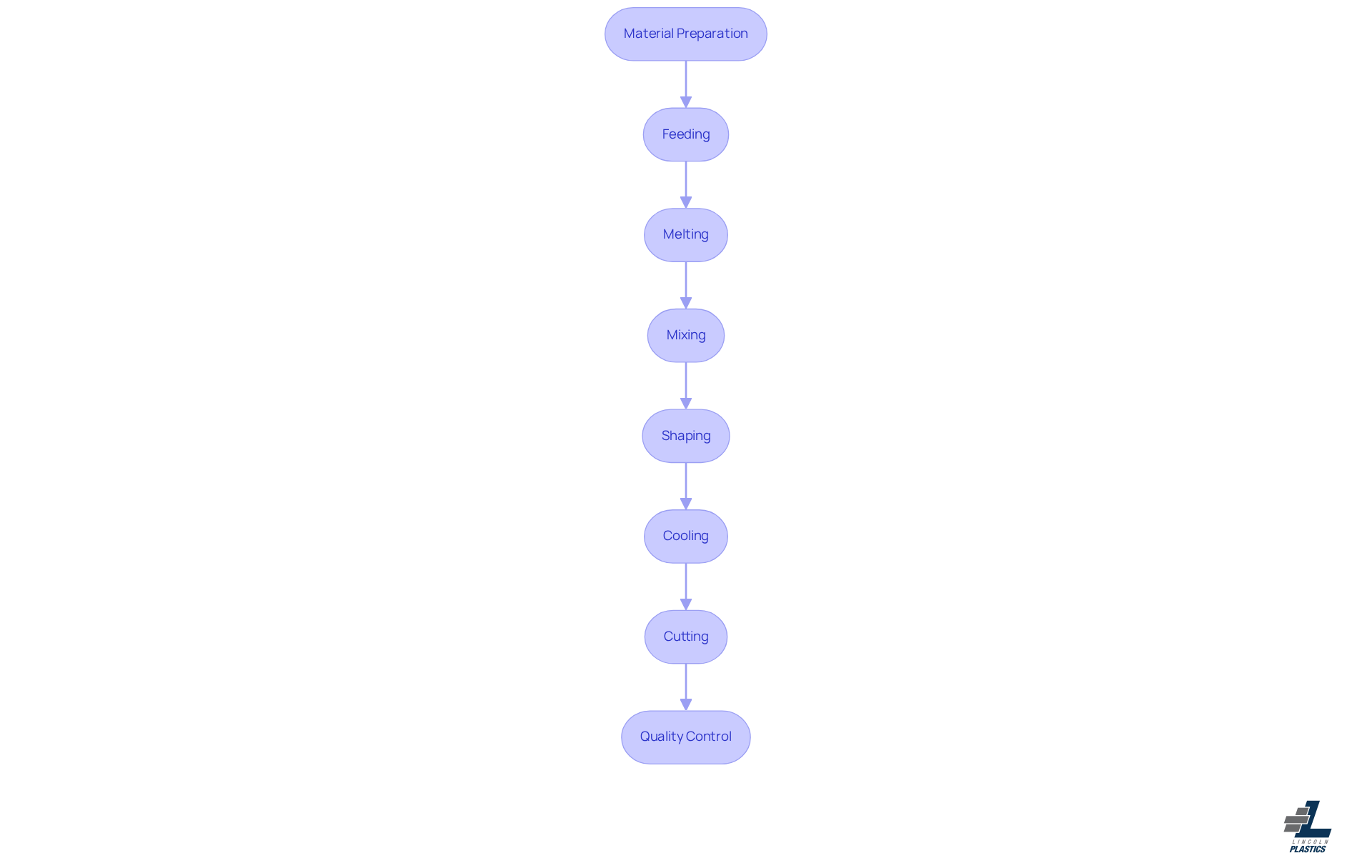
The extrusion HDPE process is a meticulous journey that transforms raw materials into reliable, high-quality pipes essential for various applications. It consists of several essential steps that ensure the production of top-notch polyethylene pipes:
- Material Preparation: Start by sourcing high-quality polyethylene pellets, inspecting them for contaminants to ensure they meet required specifications.
- Feeding: Load the plastic pellets into the extruder's hopper, where they are gravity-fed into the barrel.
- Melting: The extruder's screw rotates, conveying the pellets through a heated barrel, typically maintaining a temperature between 180°C to 220°C to melt the material.
- Mixing: As the pellets melt, thorough mixing occurs to ensure uniformity in the molten material.
- Shaping: The molten HDPE is forced through a die, forming it into the desired tube profile.
- Cooling: The extruded tube is cooled using water baths or air cooling systems, solidifying its shape.
- Cutting: Once cooled, the tube is cut to the required lengths for various applications.
- Quality Control: Throughout the process, critical parameters such as temperature, pressure, and flow rate are monitored to ensure product consistency and quality.
By meticulously following these steps, manufacturers can ensure the production of top-notch polyethylene pipes using extrusion HDPE that meet industry standards. These pipes are commonly utilized in applications like drinking water supply, gas distribution, and agricultural irrigation. Recent trends indicate that the high-density polyethylene tubing market is projected to grow significantly, reaching USD 30.9 billion by 2034, driven by urbanization and infrastructure investments. Moreover, the efficiency of the extrusion method can be improved by optimizing the extruder's design, which can result in a 10% increase in output with an optimized length-to-diameter (L/D) ratio of 40D. This focus on efficiency not only improves production rates but also contributes to better profit margins, which typically range from 20-30% in the industry. By embracing these advancements, manufacturers can not only meet the rising demand but also enhance their competitive edge in a rapidly evolving market.
Analyze Key Parameters for Quality Control in HDPE Extrusion
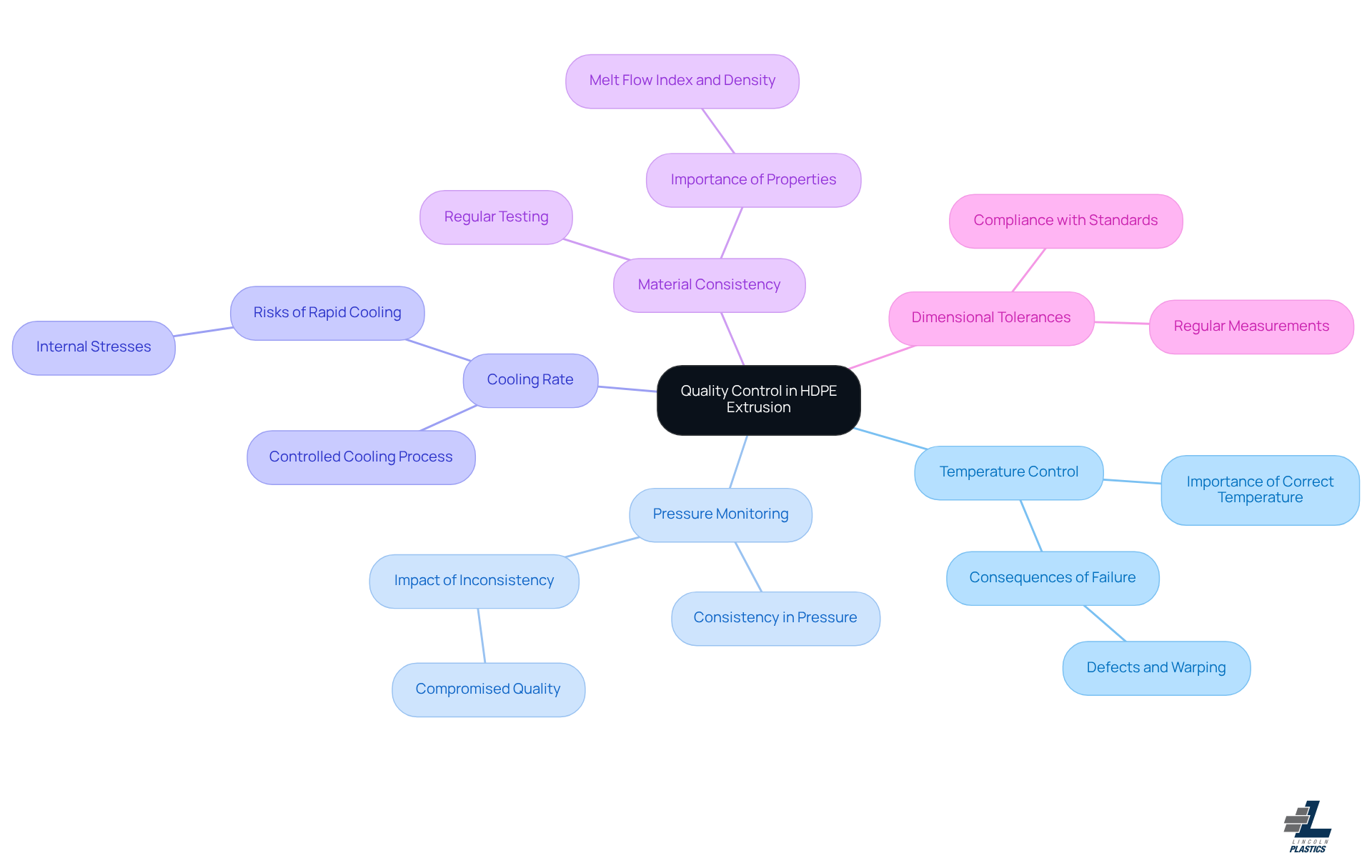
To achieve the highest quality in extruded HDPE pipes, meticulous attention to several key parameters is non-negotiable:
- Temperature Control: Maintaining the correct temperature during melting and extrusion is crucial. What happens when temperature control fails? Defects arise, impacting your project's success. Effective temperature management is essential to avoid issues like warping, which can compromise the integrity of the final product.
- Pressure Monitoring: Consistent pressure during the extrusion HDPE procedure is essential for preserving the integrity of the profile. Inconsistent pressure leads to compromised quality, affecting your bottom line. Fluctuations can result in inconsistencies that affect the overall quality of the extruded pipes.
- Cooling Rate: The cooling process must be controlled to prevent warping or dimensional changes in the final product. Rapid or uneven cooling can lead to internal stresses that may cause failures in the field.
- Material Consistency: Regular testing of the extrusion HDPE material for melt flow index and density ensures that the properties of the material remain within specified limits. This consistency is critical for achieving the desired performance characteristics in the final product.
- Dimensional Tolerances: Regular measurements of the extruded pipe's diameter and wall thickness are essential to ensure compliance with industry standards. Adhering to these tolerances is crucial for applications that require precise fit and function.
At Lincoln Plastics in Nebraska, we partner with OEMs to ensure every product meets rigorous standards, including special checks for ‘fit and function’. We take pride in our ISO 9001:2015 certified assurance system, which includes a detailed manual for your plastic profile with drawings, critical in-process checks, and run documentation. Applying strict standards of control at every phase of the extrusion HDPE method reduces flaws and guarantees the creation of superior polyethylene pipes. Statistics suggest that producers who follow strict control protocols, like those described in our assurance case study, see a significant reduction in production waste and a rise in customer satisfaction. By prioritizing these quality control measures, you not only enhance product reliability but also secure your reputation in the industry.
Identify Challenges in HDPE Extrusion and Solutions
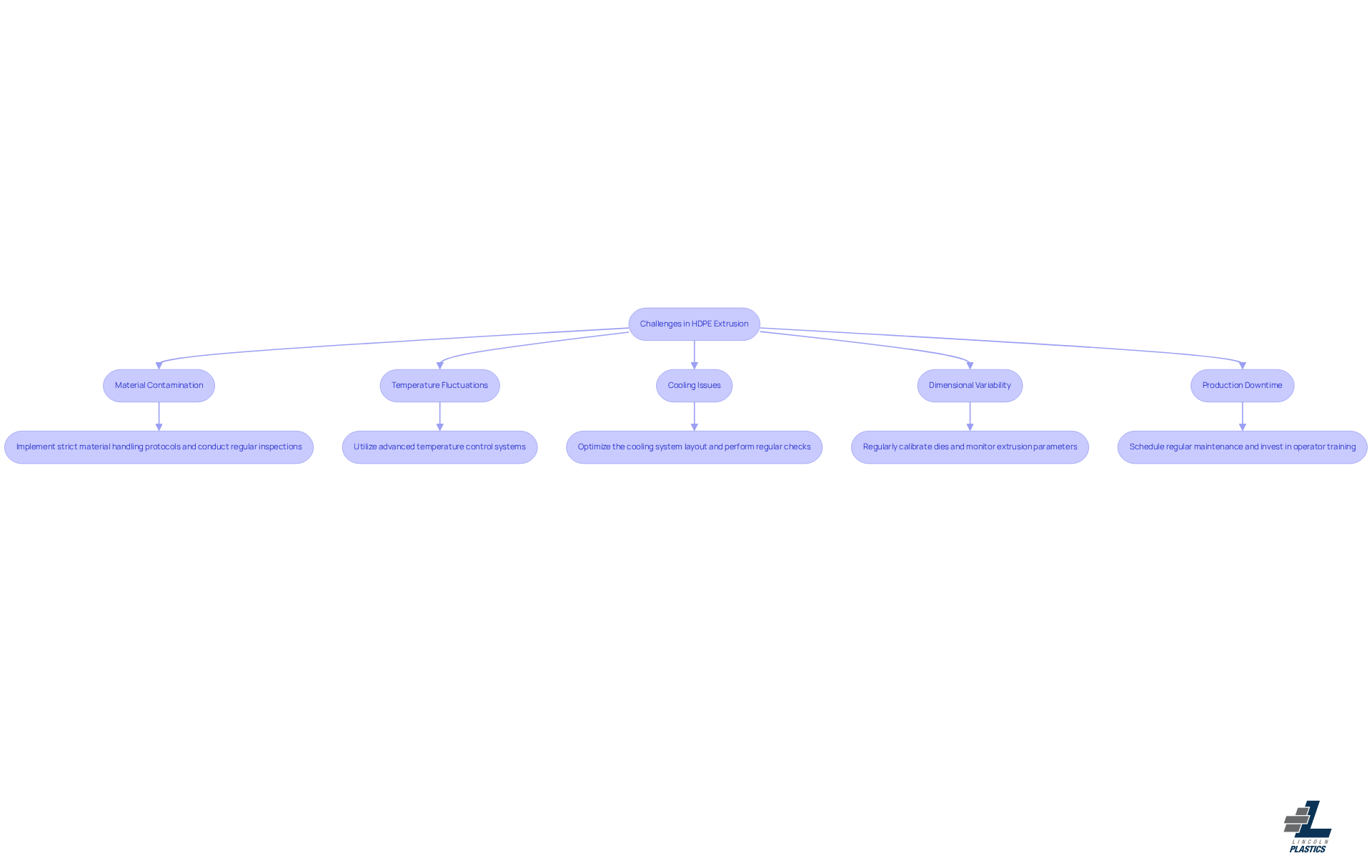
Navigating the complexities of extrusion HDPE requires a keen understanding of the challenges that can undermine the quality of the product and the efficiency of production. Key issues include:
- Material Contamination: Contaminants can compromise the integrity of your products, leading to costly defects such as bubbles and uneven surfaces. Solution: Implement strict material handling protocols and conduct regular inspections to ensure the purity of raw materials.
- Temperature Fluctuations: Inconsistent temperatures can cause variations in product standards, leading to dimensional drift. Solution: Utilize advanced temperature control systems to maintain stability throughout the extrusion procedure, ensuring uniform heating and cooling.
- Cooling Issues: Inadequate cooling can result in warping or dimensional inaccuracies, affecting the final product's integrity. Solution: Optimize the cooling system layout and perform regular checks for blockages to ensure effective heat removal.
- Dimensional Variability: Variations in wall thickness can occur due to improper die settings, leading to non-compliance with specifications. Solution: Regularly calibrate dies and closely monitor extrusion parameters to maintain consistent dimensions.
- Production Downtime: Equipment failures can halt production, leading to significant losses. Solution: Schedule regular maintenance and invest in operator training to empower staff to handle minor issues promptly.
By addressing these challenges head-on, manufacturers can enhance product quality and streamline their operations for greater profitability through extrusion HDPE. For instance, case studies have shown that implementing rigorous material handling protocols can reduce contamination-related defects by over 30%, while optimized cooling systems have led to a 25% decrease in dimensional inaccuracies. These improvements not only boost product quality but also contribute to overall operational efficiency. Embracing these solutions not only safeguards product integrity but also positions your operations for sustained success in a competitive market.
Conclusion
Mastering the HDPE extrusion process is not just essential; it’s a competitive necessity for producing high-quality products that meet diverse industrial demands. In this guide, we’ve delved into the critical aspects of HDPE, from its remarkable properties to the intricate steps involved in the extrusion process. Emphasizing quality control and rigorous measures shows that a commitment to excellence is crucial in this field.
Key insights discussed include:
- The detailed step-by-step process of HDPE pipe extrusion
- The significance of monitoring key parameters such as temperature and pressure
- The challenges manufacturers often struggle with, along with effective solutions
- The role of Lincoln Plastics in ensuring quality through ISO 9001:2015 certification and dedicated quality management plans
Without a trusted partner, manufacturers risk compromising product quality and performance.
In conclusion, the journey of HDPE extrusion is not just about the technicalities; it’s about delivering reliable, high-performance solutions that meet customer needs. Embracing best practices and maintaining stringent quality control measures can significantly enhance product reliability and operational efficiency. If you want to elevate your HDPE extrusion capabilities, connect with Lincoln Plastics experts for tailored solutions and quotes. It’s your first step toward excellence in this competitive market.
Frequently Asked Questions
What is High-Density Polyethylene (HDPE)?
High-Density Polyethylene (HDPE) is a thermoplastic known for its exceptional strength-to-density ratio, making it a preferred material for various industrial applications.
What are the key properties of HDPE?
Key properties of HDPE include chemical resistance, durability, flexibility, and lightweight characteristics. These properties make it suitable for applications such as piping systems, irrigation, and cable management.
How does HDPE demonstrate chemical resistance?
HDPE shows strong resistance to a wide range of chemicals, making it ideal for piping systems that transport corrosive substances, ensuring safety and longevity.
Why is durability important in HDPE?
The inherent toughness and impact resistance of HDPE contribute to its longevity in demanding environments, reducing the need for frequent replacements.
Can HDPE be flexible?
Yes, while HDPE is primarily rigid, it can be engineered for flexibility, accommodating diverse applications such as irrigation systems and cable conduits.
How does Lincoln Plastics utilize HDPE?
Lincoln Plastics focuses on custom flexible profiles, offering tailored solutions like flexible cord covers that help organize cables and enhance workplace safety.
What advantages does the lightweight nature of HDPE provide?
The lightweight characteristic of HDPE simplifies handling and installation tasks, ultimately reducing labor expenses and improving operational efficiency.
What recent advancements have been made in HDPE extrusion techniques?
Recent advancements include ultrasonic-assisted processing, which enhances the barrier performance of HDPE and creates new market opportunities in sustainable packaging and other sectors.
How does Lincoln Plastics ensure quality in its HDPE products?
Lincoln Plastics is ISO 9001:2015 certified and follows rigorous quality management plans, including dedicated quality books and in-process checks, ensuring performance and reliability in every application.
Why should I choose Lincoln Plastics for HDPE solutions?
By choosing Lincoln Plastics, you are investing in a solution that guarantees performance and reliability, backed by a commitment to quality and customer partnership.
List of Sources
- Explore HDPE: Properties and Importance in Extrusion
- The Extrusion Industry in 2026-2027: Innovations, Trends, and Opportunities (https://plextrusions.com/extrusion-blog/the-extrusion-industry-in-2026-2027-innovations-trends-and-opportunities)
- HDPE Price Forecast 2026: Global Prices Face Diverging Regional Trends (https://openpr.com/news/4606634/hdpe-price-forecast-2026-global-prices-face-diverging-regional)
- Ultrasonic-Assisted Extrusion: A New Route to High-Barrier HDPE (https://plasticsengineering.org/2026/06/ultrasonic-assisted-extrusion-a-new-route-to-high-barrier-hdpe-011357)
- Evaluating Profitability: The HDPE Extrusion Line Market Report and Its Projected CAGR of 6.5% from 2026 to 2033 (https://linkedin.com/pulse/evaluating-profitability-hdpe-extrusion-line-74hhe)
- Detail the HDPE Pipe Extrusion Process: Step-by-Step Guide
- PE HDPE Pipe Extrusion Line - MIDTECH (https://midtech-mc.com/pe-hdpe-pipe-extrusion-line)
- HDPE Pipe Manufacturing Plant Cost, DPR 2026, Setup Report (https://imarcgroup.com/hdpe-pipe-manufacturing-plant-project-report)
- HDPE Pipe Extrusion Machines for Infrastructure Boom: Features, Applications & Buying Guide - TwinScrew (https://twinscrew.net/en/article/HDPE-and-Plastic-Pipe-Extrusion-Machine-Demand.html)
- Pipe Extrusion Lines Market Analysis 2026, Market Size, Share, Growth, CAGR, Forecast, Trends, Revenue, Industry Experts, Consultation, Online/Offline Surveys, Market Analysis and Proprietary database (https://cognitivemarketresearch.com/pipe-extrusion-lines-market-report)
- News - Understanding the HDPE Extrusion Process (https://faygounion.com/news/understanding-the-hdpe-extrusion-process)
- Analyze Key Parameters for Quality Control in HDPE Extrusion
- 4 Best Practices for Effective Process Control Quality in Extrusion (https://lincoln-plastics.com/news-post/4-best-practices-for-effective-process-control-quality-in-extrusion)
- How Temperature Impacts Plastic Extrusion (https://paulmurphyplastics.com/industry-news-blog/how-temperature-impacts-plastic-extrusion)
- Quality Control and Testing Procedures - Plastic Extrusion Technologies (https://plasticextrusiontech.net/quality-control-and-testing-procedures-in-plastic-extrusions)
- Temperature Control in Extrusion: Why It’s Critical | Bausano (https://bausano.com/en/press-and-news/temperature-control-in-extrusion)
- One moment, please... (https://condaleplastics.com/extrusion-advice/plastic-extrusion-a-guide-to-quality-control)
- Identify Challenges in HDPE Extrusion and Solutions
- Extrusion Troubleshooting: Root Causes & Expert Engineering Solutions (https://jwellanhui.com/extrusion-troubleshooting-root-causes-expert-engineering-solutions)
- Plastics Extrusion: 4 Critical Statistics to Track for Increased Quality & Plant Profit (https://gaugeadvisor.com/plastics-extrusion-4-critical-statistics-to-track-for-increased-quality-plant-profit)
- The Extrusion Industry in 2026-2027: Innovations, Trends, and Opportunities (https://plextrusions.com/extrusion-blog/the-extrusion-industry-in-2026-2027-innovations-trends-and-opportunities)
- Extrusion 2026 Registration Opens (https://ptonline.com/news/extrusion-2026-registration-opens)


