
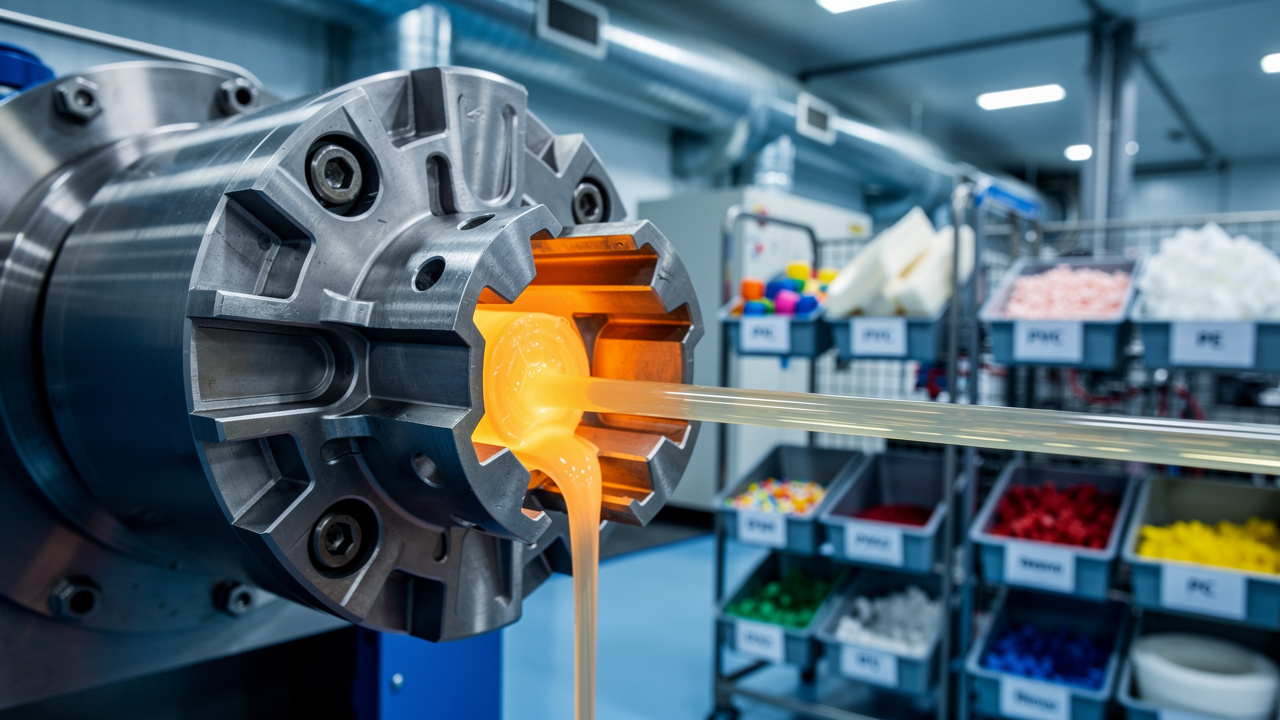
Master Extrusion Design: 4 Steps for OEM Managers to Succeed
Introduction
Mastering extrusion design is not just beneficial; it's crucial for OEM managers striving for excellence in product quality and manufacturing efficiency. This guide will walk you through the essential steps to master extrusion design, from selecting the right materials to optimizing designs for manufacturability.
Navigating the design process can be fraught with challenges. How can managers ensure their projects meet expectations and stand out in a competitive landscape?
By exploring best practices and leveraging the expertise of Lincoln Plastics, OEM managers can transform potential pitfalls into stepping stones for success.
Understand the Fundamentals of Extrusion Design
To excel in shaping design, OEM managers must grasp the core principles of the shaping process. This entails understanding how substances are heated and pushed through a die to form specific shapes. Key concepts include:
- Material Properties: Familiarize yourself with the characteristics of common extrusion materials such as PVC, polyethylene, and polypropylene. Each material possesses unique properties that significantly influence its behavior during the extrusion process. For instance, the strength-to-weight ratio of aluminum makes it ideal for applications in aerospace and automotive sectors, where lightweight yet durable components are essential.
- Die Design: Discover the essential function of the die in forming the extruded item. The die's geometry directly influences the final profile, making it crucial to comprehend how to create or choose the suitable die for specific applications. Effective extrusion design can enhance the efficiency of the shaping process and improve quality.
- Process Variables: Understand the key factors influencing the shaping process: temperature, pressure, and cooling rates. These variables play a crucial role in determining the quality and consistency of the final outcome. Are you aware of how these variables impact your production? Progress in automation and robotics in production lines, along with AI systems, have enhanced material transport and positioning, thus reducing human error and improving safety while ensuring consistency in items.
At Lincoln Plastics, we ensure our shaping processes uphold the highest quality standards, supported by our ISO 9001:2015 certification. Our dedicated quality management program includes comprehensive quality plans, in-process checks, and the use of multiple types of check gauges to ensure a proper end-use fit. We also have the capability to source colors that meet your Pantone specifications for consistency across manufacturers. Without this knowledge, projects may face delays and increased costs, while mastering these fundamentals leads to better outcomes. By understanding these principles, you can enhance product design and manufacturing efficiency, ultimately achieving superior results in your projects.

Select Appropriate Materials and Surface Finishes
Selecting the right substances and surface finishes is crucial for the success of your extrusion project. Here are the steps to guide your selection:
- Identify Application Requirements: Determine the specific needs of your application, including mechanical properties, environmental resistance, and aesthetic considerations. Understanding these factors helps you choose resources that meet performance expectations.
- Consult with Resin Suppliers: Engage with resin suppliers to gain insights into the properties of various materials. For instance, PVC is favored for its rigidity, while polyethylene is known for its flexibility and impact resistance. Have you considered how choosing the right resin can impact the performance of your final product? As highlighted by industry specialists, "Choosing the appropriate resin is essential for attaining the desired performance traits in your final item."
- Consider Surface Finishes: Determine the desired surface finish for your item. Options such as matte, glossy, or textured finishes can significantly influence both the appearance and functionality of the final item. For example, a matte finish may be preferred for aesthetic reasons in consumer products, while a glossy finish might be more suitable for applications requiring easy cleaning. Recent trends indicate a growing preference for textured finishes in consumer goods, enhancing grip and tactile appeal.
- Evaluate Cost Implications: Analyze the expenses related to resources and finishes in relation to your budget. While some resources may have a higher initial expense, they can provide long-term savings through improved durability and decreased maintenance requirements. Choosing poorly can result in expensive production delays and product failures. As emphasized in recent case studies, 'Investing in higher-quality resources can lead to significant reductions in lifecycle costs due to lower maintenance and replacement rates.'
By following these steps, OEM managers can ensure that their material and finish choices align with both performance and budgetary objectives. Making informed choices today can prevent costly setbacks tomorrow.

Optimize Design for Manufacturing Efficiency
To maximize manufacturing efficiency in your extrusion design, consider these proven strategies:
- Simplify Geometry: Aim for creations that minimize complexity. In extrusion design, simple shapes are easier to extrude and often result in lower production costs. Successful projects have shown that streamlined profiles in extrusion design not only enhance manufacturability but also reduce the likelihood of defects.
- Maintain Uniform Wall Thickness: Are you aware that inconsistent wall thickness can jeopardize your product's integrity? Ensure that wall thickness is consistent throughout the extrusion design profile. Variations can lead to defects, increased production time, and potential structural weaknesses. Proper wall construction is critical; an effective extrusion design must prevent excessive thickness that can cause internal stresses and warping, while also ensuring sufficient thickness to maintain durability.
- Incorporate Design for Assembly (DFA) Principles: Imagine reducing assembly time and costs while boosting efficiency. Utilize an extrusion design to create parts that can be easily assembled, reducing the need for additional components and labor. This approach simplifies the assembly process and enhances overall efficiency.
- Utilize Simulation Tools: Leverage CAD and simulation software to visualize the shaping process and identify potential issues before production begins. This strategy helps refine models to align with the capabilities of extrusion design.
- Collaborate with Lincoln Plastics' extrusion design experts to discover modifications that boost manufacturability. Engaging with specialists early in the planning phase can yield valuable suggestions that enhance both performance and cost-efficiency. Additionally, Lincoln Plastics' ISO 9001:2015 certification and dedicated quality management plans, including quality books and in-process checks, ensure that your products meet all quality requirements. Our capabilities in co-extrusion enable multi-color or multi-material profiles, further enhancing your creative options.
By implementing these strategies, you can elevate your production process and ensure your projects succeed. For tailored solutions, contact Lincoln Plastics today.

Avoid Common Design Mistakes in Extrusion
To ensure a successful extrusion project, OEM managers must recognize and avoid common design mistakes that can jeopardize product integrity:
- Ignoring Wall Thickness Variations: Uneven wall thickness can lead to weak points in the extruded product, significantly impacting its strength and durability. Aiming for uniformity is essential, as variations can cause distortions and premature failures in real-world applications. Lincoln Plastics emphasizes that the quality of an extruded plastic profile is directly related to the level of control over the flow and cooling of the extrusion materials as they are processed.
- Overcomplicating Creations: Intricate structures can elevate production time and expenses. Simplifying layouts wherever possible streamlines the manufacturing process and reduces the risk of errors during production. Designers should focus on performance requirements rather than adding unnecessary features that do not enhance functionality. Why not engage with Lincoln Plastics' manufacturing teams early on? They can offer insights that save you time and money.
- Neglecting Substance Behavior: Different substances exhibit varying behaviors during extrusion. Failing to account for these differences can result in defects and inconsistencies. Consulting with Lincoln Plastics' specialists for guidance on selection based on the operating environment is crucial. What happens when you overlook critical material behaviors? Ignoring factors such as thermal expansion and chemical resistance can lead to failures, and Lincoln Plastics can assist in providing material specification sheets to aid in this decision-making process.
- Not Involving Manufacturing Input Early: Collaborating with manufacturing teams during the planning phase offers valuable insights that can avert expensive errors later on. This oversight can result in expensive production errors that could have been easily avoided. Collaboration is essential to ensuring that creations are manufacturable and meet performance requirements. Designs created without early input from Lincoln Plastics often include features that are difficult, inefficient, or costly to produce.
- Neglecting Tolerances: Clearly specifying tolerances for essential features early in the development process is crucial to prevent rework and guarantee quality. Standard wall thickness tolerances, such as +/- 0.25 mm for thicknesses between 0.00 - 2.0 mm, +/- 0.30 mm for 2.01 - 3.18 mm, and +/- 0.38 mm for 3.19 - 5.0 mm, should be adhered to for optimal results. Lincoln Plastics' robust quality management program, including ISO 9001:2015 certification, dedicated quality books, and in-process checks, ensures that these tolerances are maintained, preventing wasted resin costs that can amount to tens of thousands of dollars across high-volume runs.
By recognizing these common pitfalls and leveraging Lincoln Plastics' expertise, OEM managers can improve their design processes and achieve superior results in extrusion projects. Contact Lincoln Plastics today to ensure your designs are not only innovative but also manufacturable and cost-effective.

Conclusion
Many OEM managers struggle to balance quality with cost-effectiveness in their extrusion projects. Mastering extrusion design is crucial for enhancing product quality and manufacturing efficiency. By understanding the fundamental principles of extrusion, selecting appropriate materials, optimizing designs for manufacturability, and avoiding common pitfalls, managers can significantly improve their project outcomes. Lincoln Plastics' ISO 9001:2015 certification shows our dedication to quality management, which is crucial for successful extrusion projects.
Key insights from this guide highlight the necessity of grasping material properties, die design, and process variables to ensure successful extrusion projects. Additionally, the careful selection of materials and surface finishes, along with strategies to simplify designs and maintain uniform wall thickness, can lead to substantial cost savings and enhanced product performance. Working with Lincoln Plastics' experts can help you tackle these challenges head-on, ensuring that your designs are not only innovative but also practical and efficient.
Ultimately, the significance of effective extrusion design is clear. By implementing the best practices outlined in this guide and collaborating with Lincoln Plastics, OEM managers can achieve superior results that meet both performance and budgetary objectives. Reaching out to Lincoln Plastics can turn your extrusion challenges into opportunities for innovation and efficiency.
Frequently Asked Questions
What are the core principles of the extrusion process?
The core principles of the extrusion process include understanding material properties, die design, and process variables such as temperature, pressure, and cooling rates. These factors significantly influence the shaping and quality of the final product.
Why is it important to understand material properties in extrusion?
Understanding material properties is crucial because different materials, such as PVC, polyethylene, and polypropylene, have unique characteristics that affect their behavior during the extrusion process. This knowledge helps in selecting the right material for specific applications.
What role does die design play in the extrusion process?
Die design is essential as it directly influences the geometry of the extruded item. Choosing or creating the appropriate die is crucial for achieving the desired profile and enhancing the efficiency and quality of the shaping process.
What are the key process variables that affect extrusion?
The key process variables that affect extrusion include temperature, pressure, and cooling rates. These variables are critical in determining the quality and consistency of the final product.
How does automation and robotics impact the extrusion process?
Automation and robotics improve material transport and positioning, reducing human error and enhancing safety. They also ensure consistency in the production of extruded items.
What quality management practices does Lincoln Plastics implement in its extrusion processes?
Lincoln Plastics implements a dedicated quality management program that includes comprehensive quality plans, in-process checks, and the use of multiple types of check gauges to ensure proper end-use fit. The company is also ISO 9001:2015 certified, emphasizing its commitment to quality.
Can Lincoln Plastics meet specific color requirements for extrusion?
Yes, Lincoln Plastics has the capability to source colors that meet Pantone specifications, ensuring consistency across manufacturers.
What are the benefits of mastering the fundamentals of extrusion design?
Mastering the fundamentals of extrusion design leads to better product design and manufacturing efficiency, ultimately resulting in superior outcomes and reduced delays and costs in projects.
List of Sources
- Understand the Fundamentals of Extrusion Design
- 2026 Aluminum Extrusion Trends & Outlook | Profile Precision Extrusions (https://profileprecisionextrusions.com/2026-outlook-innovations-and-trends-shaping-the-future-of-aluminum-extrusions)
- Aluminum Extrusion Market to Hit US$ 170 Billion by 2030 at 7.2% CAGR -- Latest Report by Wissen Research (https://prnewswire.com/news-releases/aluminum-extrusion-market-to-hit-us-170-billion-by-2030-at-7-2-cagr--latest-report-by-wissen-research-302777859.html)
- The Future of Aluminum: How Extrusion Technology is Transforming Industries - National Industries | Aluminium Manufacturing Company in India. (https://nationalindustries.world/2025/01/02/the-future-of-aluminum-how-extrusion-technology-is-transforming-industries)
- Aluminum Extrusion Market Set to Hit USD 202.23 Billion by 2035, Driven by Rising Demand for Lightweight and Sustainable Materials | Report by SNS Insider (https://finance.yahoo.com/news/aluminum-extrusion-market-set-hit-123000832.html)
- North American Extruders Remain Resilient Amid Challenging Market - Light Metal Age Magazine (https://lightmetalage.com/news/industry-news/extrusion/north-american-extruders-remain-resilient-amid-challenging-market)
- Select Appropriate Materials and Surface Finishes
- Choosing the Right Materials for Plastic Extrusion - Rocal Extrusions (https://rocalextrusions.co.uk/news/choosing-the-right-materials-for-plastic-extrusion)
- Extrusion 2026 Registration Opens (https://ptonline.com/news/extrusion-2026-registration-opens)
- Choosing the Right Plastic for Your Extrusion (https://paulmurphyplastics.com/industry-news-blog/choosing-the-right-plastic-for-your-extrusion)
- EXTRUSION: The Online Magazine for Plastics Processing Industry Professionals (https://extrusion-info.com)
- Optimize Design for Manufacturing Efficiency
- Why Wall Thickness Matters in Plastic Extrusion | Inplex (https://inplexllc.com/blog/why-wall-thickness-matters-in-plastic-extrusion)
- Aluminum Extrusion Increases Options to Optimize the Supply Chain, Par (https://designnews.com/industry/aluminum-extrusion-increases-options-to-optimize-the-supply-chain-part-2)
- North American Extruders Remain Resilient Amid Challenging Market - Light Metal Age Magazine (https://lightmetalage.com/news/industry-news/extrusion/north-american-extruders-remain-resilient-amid-challenging-market)
- Laser System Video Library | Laser Marking Technologies (https://acquamachine.com/blog/optimize-alu-extrusion-for-global-sourcing-2026)
- Plastics Extrusion: 4 Critical Statistics to Track for Increased Quality & Plant Profit (https://gaugeadvisor.com/2025/05/26/plastics-extrusion-4-critical-statistics-to-track-for-increased-quality-plant-profit)
- Avoid Common Design Mistakes in Extrusion
- 5 Common Mistakes in Custom Extrusion Design and How to Avoid Them (https://inplexllc.com/blog/5-common-mistakes-in-custom-extrusion-design-and-how-to-avoid-them)
- Plastic Extrusion Wall Thickness | Gemini Group Blog (https://geminigroup.net/plastic-extrusion-wall-thickness)
- What Plastic Extrusion Companies Today Get Wrong — and How to Avoid Common Errors - Port Erie Plastics | Solutions in Plastics Processing (https://porterie.com/blog/what-plastic-extrusion-companies-today-get-wrong-and-how-to-avoid-common-errors)
- Plastics Extrusion: 4 Critical Statistics to Track for Increased Quality & Plant Profit (https://gaugeadvisor.com/2025/05/26/plastics-extrusion-4-critical-statistics-to-track-for-increased-quality-plant-profit)
- Fix Thickness Variations in Extruded Sheet (https://ptonline.com/articles/fix-thickness-variations-in-extruded-sheet)
Related posts

Discover essential steps for selecting reliable custom plastic tubing solutions for various industries.


Discover best practices for procuring clear plastic flexible tubing to enhance performance and reliability.
Discover key insights and features of top flexible PVC manufacturers for your business needs.
