
Master Extruding Plastic: Key Steps for OEM Success
Introduction
Mastering the art of plastic extrusion is crucial for manufacturers who want to stand out in the competitive world of OEM processes. Let’s face it, transforming raw materials into top-notch plastic products can be quite the challenge! This guide will walk you through the essential steps, from setting up your machines to picking the right materials and troubleshooting those pesky issues that pop up.
But here’s the thing: with technology evolving at lightning speed, how can manufacturers not just keep up but also fine-tune their operations for peak efficiency and quality? You might be wondering what it takes to stay ahead in this game. Well, let’s dive in and explore!
Understand the Basics of Plastic Extrusion
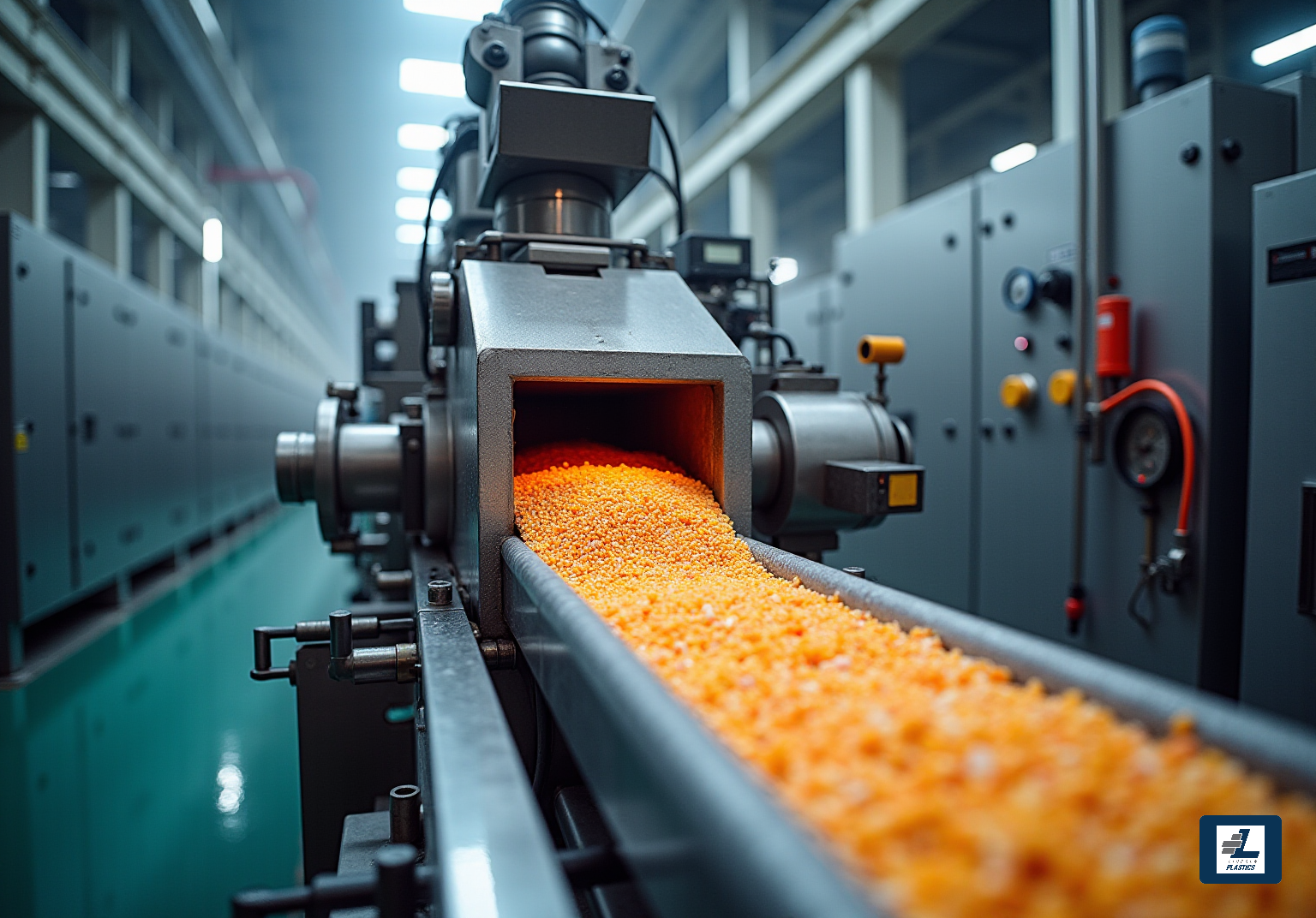
The extrusion process is crucial in manufacturing, as it transforms raw plastic materials into continuous profiles that are essential for various applications. It all starts with raw plastic, usually in pellet or granule form, that gets fed into an extruder for processing. Inside that extruder, a rotating screw is responsible for pushing the material through a heated barrel, where it melts and mixes. Then, the extruder forces the molten material through a die, which you need.
Now, let’s break down some key components of the extrusion process:
- Extruder: This is the machine that melts and shapes the plastic. It’s packed with advanced technology.
- Die: Think of this as the specialized tool that determines the shape of the extruded item. Recent innovations in die design are making it easier to enhance flow and cut down on waste.
- Cooling System: After the plastic exits the die, this system solidifies it, ensuring it has the right dimensions and a smooth surface finish.
At Lincoln Plastics, we’re all about manufacturing a variety of products, including options tailored just for you. Plus, we offer services that let you customize your profiles, like adding a contrasting color. We pride ourselves on timely delivery and maintaining high standards, backed by a strong assurance system that includes essential in-process evaluations and documentation to ensure everything meets OEM specifications.
Understanding these elements and their roles is key to successful extrusion. And guess what? Recent advancements, like AI-integrated control systems, are set to shake things up in the industry. They could reduce resource waste by up to 15% and boost quality. As industry leaders often say, innovation is vital for manufacturers looking to make the most of these exciting advancements.

Select Appropriate Materials for Extrusion
Select Appropriate Materials for Extrusion
Choosing the right resources for extrusion is super important if you want the final product to meet those tough performance standards. So, let’s break it down into some easy steps:
-
Identify Application Requirements: First off, think about what you need. What are the requirements for your end product? Getting a grip on these requirements is key to hitting that sweet spot of performance.
-
Common Materials: Now, let’s look at some common materials used in extrusion:
- Thermoplastic Elastomers: This one’s a favorite! It’s flexible and has great chemical resistance, making it perfect for all sorts of applications.
- PVC: If you need something rigid and durable for applications involving construction, PVC is your go-to. It’s especially great for pipes and profiles, particularly in construction and plumbing.
- Polypropylene (PP): Lightweight and fatigue-resistant, PP is a versatile choice that works well in many situations, particularly in the process of manufacturing.
-
Additives: Depending on what you need, adding some extras can really enhance performance. Think UV resistance or flame retardancy - these can make a big difference in performance under various conditions.
-
Compatibility: It’s crucial to ensure that the materials you choose are compatible with the application intended. This helps avoid any hiccups during production and keeps your product’s integrity intact.
By following these steps, you can effectively choose materials that not only enhance performance but also boost the durability of your products. And hey, current trends show that innovative materials, especially polyethylene, are really taking the lead in the market. Staying updated on material characteristics and innovations is key to keeping your edge in plastic processing. So, what are you waiting for? Dive into the world of materials and make informed choices that will elevate your products!

Set Up and Operate the Extrusion Machine
Setting up and running a machine for plastic extrusion can feel a bit daunting, right? But don’t worry! Just follow these simple steps, and you’ll be on your way to involving successful production.
First up, prepare the machine. Make sure the extruder used for production is squeaky clean and free of any leftover materials from previous jobs. Give everything a good once-over to check for wear and tear. This little step can save you from bigger headaches down the line.
Next, load the substance. Fill that hopper with your chosen plastic for extrusion, ensuring it’s dry and clean. Moisture can really mess things up, leading to defects in your final product. Nobody wants that!
Now, let’s talk temperature and speed. Adjust the settings based on what your material needs for processing. The screw speed should match your desired output rate. If these settings are off, you might end up wasting resin and time.
Ready to start? Power on the machine and keep a close eye on the parameters during the initial stages of production. It’s crucial to keep them within the right ranges. Remember, Lincoln Plastics emphasizes the importance of monitoring temperature, especially for ‘fit and function’ to ensure your products meet all standards.
Be prepared to adjust as needed. Operators should stay alert and ready to adjust the temperature, speed, and pressure when necessary based on what they observe. Regular checks for defects or inconsistencies are key to maintaining quality. Using tools like calipers and micrometers can help ensure everything fits just right, reinforcing Lincoln Plastics' commitment for OEMs.
By following these practices, you’re not just simplifying the process of extrusion; you’re optimizing it too! For example, using in-line thickness gauges gives you real-time data, helping you avoid excessive thickness and waste. Keeping an eye close to your target can really cut down on material costs. As Matthew Baker puts it, "If you only tracked one number, this would be it. Consider average diameter and wall thickness for round shapes as your resin spending meter."
Mastering these operational procedures can lead to optimal performance and profitability in your operations. Plus, understanding the standard deviation of your production process is vital. It helps gauge variability and can really impact quality control. Keeping these metrics in check means more consistent and cost-effective production.
And hey, Lincoln Plastics can easily source colors that match your Pantone specifications, ensuring consistency across manufacturers. That way, you can meet all your aesthetic requirements too!

Troubleshoot Common Extrusion Challenges
can really throw a wrench in the works, leading to defects and inefficiencies. Let’s dive into some typical issues and how to tackle them:
- Inconsistent Output: Ever noticed fluctuations in temperature or ? That’s a common culprit. The fix? and keep an eye on those feed rates to stick to OEM specs.
- Surface Defects: Rough surfaces or discoloration can pop up if are off. So, what’s the solution? Adjust the temperature and make sure the barrel heats evenly. Lincoln Plastics really stresses the importance of keeping those top-notch.
- Die Swell: This one’s tricky! Die swell happens when the extrudate expands as it exits the die, which can lead to dimensional inaccuracies. To minimize this, and tweak processing conditions to ensure those hit the critical dimensions set by OEMs.
- Blockages: Nothing halts production faster than material getting stuck in the die or barrel. The answer? Regular cleaning and checking for blockages. Lincoln Plastics has strict standards in place to keep these issues at bay.
By staying proactive and troubleshooting these common challenges, you can really enhance your processes of extruding plastic and boost product quality. And remember, Lincoln Plastics has a solid to back you up!

Conclusion
Mastering the art of plastic extrusion is key for OEMs looking to thrive in today’s competitive manufacturing scene. It’s not just about turning raw materials into precise profiles; it’s about really understanding the machinery and materials you’re working with, and committing to quality and efficiency every step of the way.
So, what have we covered in this guide? We’ve looked at the basics of plastic extrusion, how to pick the right materials, and how to set up and operate extrusion machines effectively. Remember, choosing the right materials based on what you need is crucial. Plus, keeping your machines in tip-top shape and knowing how to troubleshoot common issues can make a world of difference. By putting these strategies into action, you can boost product quality, cut down on waste, and stick to industry standards.
Now, let’s talk about the journey ahead. Successful plastic extrusion isn’t a one-and-done deal; it’s an ongoing process. Staying in the loop about new tech and market trends is essential. Have you thought about how innovations like AI-integrated control systems could really ramp up your efficiency and quality? As the industry keeps evolving, taking proactive steps to refine your processes and tackle challenges will not only raise your production standards but also help you stand out in the market.
Frequently Asked Questions
What is the process of plastic extrusion?
Plastic extrusion is a manufacturing process that transforms raw plastic materials, typically in pellet or granule form, into continuous profiles by feeding them into an extruder, where they are melted, mixed, and shaped through a die.
What are the main components of the extrusion process?
The main components of the extrusion process include the extruder, which melts and shapes the plastic; the die, which determines the shape of the extruded item; and the cooling system, which solidifies the plastic after it exits the die.
How does the extruder work in the plastic extrusion process?
The extruder is a machine equipped with advanced technology that melts and shapes the plastic using a rotating screw to push the material through a heated barrel, where it is mixed and melted before being extruded through a die.
What role does the die play in plastic extrusion?
The die is a specialized tool that determines the shape of the extruded item, and recent innovations in die design have improved flow and reduced waste during the extrusion process.
What is the purpose of the cooling system in plastic extrusion?
The cooling system solidifies the plastic after it exits the die, ensuring that it has the correct dimensions and a smooth surface finish.
What kind of products does Lincoln Plastics manufacture?
Lincoln Plastics manufactures a variety of flexible profiles, including customized options through co-extrusion solutions that allow for features like contrasting colors.
How does Lincoln Plastics ensure quality in their manufacturing process?
Lincoln Plastics maintains high standards through a strong assurance system that includes essential in-process evaluations and documentation to ensure compliance with OEM specifications.
What recent advancements are influencing the plastic extrusion industry?
Recent advancements, such as AI-integrated control systems, are expected to reduce resource waste by up to 15% and enhance quality in the plastic extrusion process.
List of Sources
- Understand the Basics of Plastic Extrusion
- Plastics Extrusion: 4 Critical Statistics to Track for Increased Quality & Plant Profit (https://gaugeadvisor.com/2025/05/26/plastics-extrusion-4-critical-statistics-to-track-for-increased-quality-plant-profit)
- Understanding the Extrusion Process in Manufacturing: Key Insights (https://lincoln-plastics.com/news-post/understanding-the-extrusion-process-in-manufacturing-key-insights)
- kangjumachine.com (https://kangjumachine.com/plastic-extrusion-industry-2026.html)
- Interplas Insights | Latest Plastics Extrusion Machinery News (https://interplasinsights.com/plastics-machinery/plastics-extrusion-machinery-news)
- Plastics Extrusion Market Research Report 2034 (https://dataintelo.com/report/plastics-extrusion-market)
- Select Appropriate Materials for Extrusion
- 3devo.com (https://3devo.com/explore-case-studies)
- Plastics Extrusion: 4 Critical Statistics to Track for Increased Quality & Plant Profit (https://gaugeadvisor.com/2025/05/26/plastics-extrusion-4-critical-statistics-to-track-for-increased-quality-plant-profit)
- todayinsci.com (https://todayinsci.com/QuotationsCategories/M_Cat/Material-Quotations.htm)
- Plastics Extruded Market Size to Worth USD 259.21 Billion by 2034 (https://finance.yahoo.com/news/plastics-extruded-market-size-worth-142300951.html)
- Set Up and Operate the Extrusion Machine
- 5 Best Practices for the Manufacturing Process of Extrusion (https://lincoln-plastics.com/news-post/5-best-practices-for-the-manufacturing-process-of-extrusion)
- Plastics Extrusion: 4 Critical Statistics to Track for Increased Quality & Plant Profit (https://gaugeadvisor.com/2025/05/26/plastics-extrusion-4-critical-statistics-to-track-for-increased-quality-plant-profit)
- Troubleshoot Common Extrusion Challenges
- Plastics Extrusion: 4 Critical Statistics to Track for Increased Quality & Plant Profit (https://gaugeadvisor.com/2025/05/26/plastics-extrusion-4-critical-statistics-to-track-for-increased-quality-plant-profit)
- Common problems in the plastic extrusion process | Bausano (https://bausano.com/en/press-and-news/common-problems-in-the-plastic-extrusion-process)
- sciencedirect.com (https://sciencedirect.com/book/9781569907757/troubleshooting-the-extrusion-process)
- Overcoming Common Challenges in Plastic Extrusion Projects (https://inplexllc.com/blog/overcoming-common-challenges-in-plastic-extrusion-projects)
- amazon.com (https://amazon.com/Troubleshooting-Extrusion-Process-Systematic-Approach/dp/1569903204)
Related posts

Plastic Extrusion for Energy & Infrastructure Projects
Lincoln Plastics provides durable, custom extrusion solutions for energy and infrastructure projects, from conduit to tubing to protective profiles.


Made in the Midwest: Why Location Matters
Lincoln Plastics’ Midwest location provides faster shipping, lower freight costs, and the reliability OEMs need in a manufacturing partner.
How Extrusion Supports OEM Supply Chains
Lincoln Plastics helps OEMs strengthen supply chains with flexible production runs, reliable delivery, and custom extrusion solutions.
