
Master Advanced Plastic Extrusion: Best Practices for OEM Success
Introduction
In the competitive landscape of manufacturing, mastering plastic extrusion is crucial for driving innovation and efficiency across industries. This method not only streamlines production but also enhances product functionality, making it essential for OEMs striving for efficiency and innovation.
Manufacturers must navigate the complexities of balancing innovation with quality assurance as the demand for lightweight and sustainable materials grows. Embracing advanced practices in plastic extrusion is not just an option; it's a necessity for staying ahead in a demanding market.
Understand Plastic Extrusion: Definition and Importance
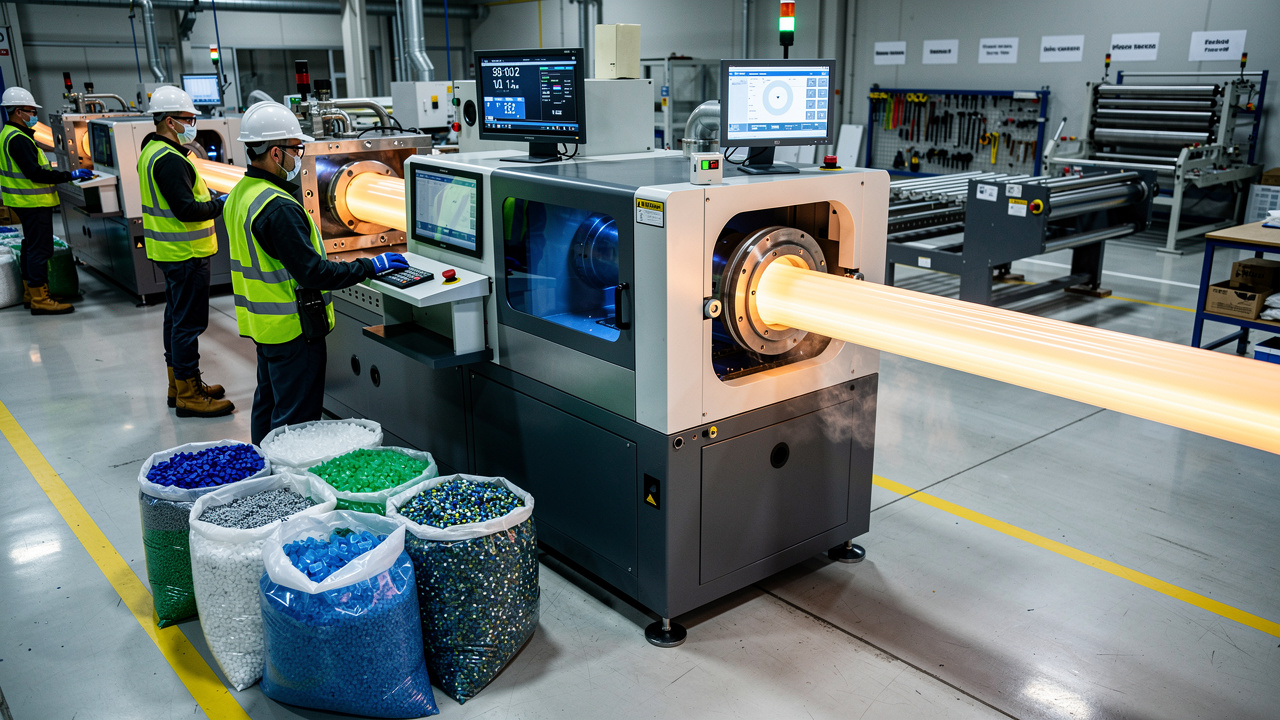
In a rapidly evolving manufacturing landscape, synthetic material shaping stands out as a game-changer for industries seeking precision and efficiency. This process transforms raw substances into continuous profiles through a high-volume manufacturing method using a die. It's essential for creating a diverse range of items, including pipes, tubes, and custom profiles across various sectors. Its significance lies in the ability to create intricate shapes with precision and consistency, making it a favored method for OEMs in agriculture, construction, and automotive industries.
What advantages does polymer extrusion bring to your operations? It enhances product functionality while simultaneously reducing production costs, which is vital for maintaining a competitive advantage. As consumer preferences shift and regulatory pressures mount, how can manufacturers keep pace with the growing demand for lightweight and sustainable materials? Current trends indicate that the extruded materials market is anticipated to attain $184.41 billion, with a compound annual growth rate of 3.91% until 2034, emphasizing the sector's transition towards eco-friendly practices.
Real-world applications of plastic shaping in the automotive industry exemplify its versatility. Manufacturers are increasingly employing advanced plastic extrusion to create lightweight components that enhance fuel efficiency and lower emissions. Failing to adopt these advancements could mean missing out on significant improvements in production efficiency and waste reduction, putting manufacturers at a disadvantage. Recent advancements in technology, such as the integration of IoT sensors and AI-driven predictive maintenance, are further optimizing production processes, improving control standards, and minimizing waste.
Specialist views highlight the benefits of polymer shaping for OEMs, especially regarding operational efficiency and product innovation. By leveraging advanced mixing units and automated systems, manufacturers can achieve significant improvements in production speed and quality, ultimately leading to better market responsiveness and customer satisfaction. Comprehending these dynamics enables manufacturers to utilize the full potential of plastic shaping, ensuring they stay at the forefront of their industries. Without embracing these advancements, manufacturers risk losing their competitive edge in an increasingly demanding market.

Select Appropriate Materials for Your Extrusion Projects
Selecting the right materials is crucial for achieving peak performance and longevity in your projects. PVC, polyethylene, and polypropylene are among the most commonly used materials, each offering distinct properties tailored to various applications.
- PVC is recognized for its rigidity and excellent chemical resistance, making it suitable for structural components that require strength and durability.
- In contrast, polyethylene is preferred for its flexibility and impact resistance, which are essential for applications that demand resilience under stress.
Understanding the key factors - mechanical strength, thermal stability, and environmental resistance - is essential when selecting materials.
- For instance, polypropylene is often favored in applications requiring lightweight yet strong materials, particularly in agricultural and construction settings.
With so many materials to choose from, how do you ensure you're making the right choice? Working closely with resin suppliers can help you uncover the performance traits of these materials, ensuring you make informed choices. This strategic method not only improves item functionality but also safeguards your investment in manufacturing success.

Implement Quality Control Measures for Consistent Results
To achieve excellence in plastic extrusion, robust control measures are non-negotiable. Establishing in-process monitoring systems is crucial for tracking critical parameters such as temperature, pressure, and flow rate. Routine evaluations of raw materials for purity and compatibility, along with dimensional assessments on completed items, ensure compliance with specifications.
At Lincoln Plastics, we implement a comprehensive management program to uphold our standards, which encompasses specialized manuals and in-process inspections to ensure that all items satisfy rigorous criteria. Furthermore, the use of statistical process control (SPC) methods is especially efficient in detecting trends and variations in production.
How can manufacturers ensure the highest quality in their extrusion processes? Companies that integrate SPC into their operations often see significant reductions in defect rates and waste, ultimately enhancing product performance and customer satisfaction. By emphasizing control standards and recording efforts, manufacturers can reduce defects and enhance operational efficiency, resulting in a stronger market position.
However, neglecting regular training can lead to costly mistakes in production, undermining the effectiveness of these measures. As Matthew Baker, founder of Gauge Advisor LLC, states, "Profitability in polymer shaping is directly linked to statistical process control (SPC)." This integration not only reduces defects but also boosts overall profitability. Without a commitment to quality control, manufacturers risk falling behind in a competitive market.

Leverage Customization for Enhanced Product Functionality
Customization in plastic extrusion is not just an option; it's a necessity for manufacturers aiming to meet specific operational demands. This capability allows manufacturers to integrate features like seals or gaskets directly into profiles. As a result, functionality and performance are significantly enhanced.
Lincoln Plastics employs advanced co-extrusion techniques, enabling the creation of multi-color or multi-material profiles that improve properties such as flexibility, UV resistance, and moisture barriers. Leveraging these advanced techniques helps manufacturers stand out in a competitive market. This responsiveness to market demands drives customer satisfaction and fosters innovation in product development.
Furthermore, Lincoln Plastics' rigorous quality management program, including:
- ISO 9001:2015 certification
- Dedicated quality books
- In-process checks
ensures that all custom solutions meet the highest standards of fit and function. With a commitment to quality and innovation, Lincoln Plastics positions itself as a leader in meeting the evolving needs of its customers.

Conclusion
In the competitive world of manufacturing, the mastery of advanced plastic extrusion is not just beneficial; it's essential for OEMs seeking to excel. This process enhances product functionality while significantly reducing production costs, making it a vital component for maintaining a competitive edge. As industries evolve, manufacturers must adapt to new technologies and materials to meet the growing demand for innovative and sustainable solutions.
Key insights from this discussion highlight the importance of:
- Selecting appropriate materials
- Implementing rigorous quality control measures
- Leveraging customization options
Understanding the unique properties of materials like PVC, polyethylene, and polypropylene helps manufacturers optimize their extrusion projects for better performance and longevity. Furthermore, robust quality management practices, such as those employed by Lincoln Plastics, ensure that products consistently meet high standards, ultimately leading to increased customer satisfaction and market responsiveness.
However, many manufacturers struggle to keep pace with rapid technological advancements, making it crucial to embrace these best practices to thrive. Engaging with experts at Lincoln Plastics can provide tailored solutions and insights that enhance operational efficiency and product innovation. By adopting these strategies, manufacturers can not only survive but thrive in a competitive landscape.
Frequently Asked Questions
What is plastic extrusion and why is it important?
Plastic extrusion is a manufacturing process that transforms raw materials into continuous profiles using a die. It is important because it allows for the creation of intricate shapes with precision and consistency, making it essential for various industries such as agriculture, construction, and automotive.
What advantages does polymer extrusion offer to manufacturers?
Polymer extrusion enhances product functionality while reducing production costs, which is crucial for maintaining a competitive advantage in the market.
What are the current trends in the extruded materials market?
The extruded materials market is projected to reach $184.41 billion, with a compound annual growth rate of 3.91% until 2034, indicating a shift towards lightweight and sustainable materials in response to consumer preferences and regulatory pressures.
How is plastic extrusion applied in the automotive industry?
In the automotive industry, advanced plastic extrusion is used to create lightweight components that improve fuel efficiency and reduce emissions, showcasing the versatility of the process.
What technological advancements are influencing plastic extrusion?
Recent advancements include the integration of IoT sensors and AI-driven predictive maintenance, which optimize production processes, enhance control standards, and minimize waste.
How can manufacturers improve operational efficiency through polymer shaping?
By leveraging advanced mixing units and automated systems, manufacturers can significantly enhance production speed and quality, leading to better market responsiveness and customer satisfaction.
What risks do manufacturers face if they do not adopt advancements in plastic extrusion?
Manufacturers that fail to embrace advancements in plastic extrusion risk losing their competitive edge in an increasingly demanding market, potentially missing out on improvements in production efficiency and waste reduction.
List of Sources
- Understand Plastic Extrusion: Definition and Importance
- Plastics Extrusion: 4 Critical Statistics to Track for Increased Quality & Plant Profit (https://gaugeadvisor.com/2025/05/26/plastics-extrusion-4-critical-statistics-to-track-for-increased-quality-plant-profit)
- Emerging Trends Shaping Plastic Extruders in 2026 (https://audop.com/c/emerging-trends-shaping-plastic-extruders-in-2026.htm)
- Revolutionising Plastic Extrusion: The Role of Chemical Recycling - Condale Plastics (https://condaleplastics.com/company-news/revolutionising-plastic-extrusion-the-role-of-chemical-recycling)
- Plastic Extrusion News and Press Releases | Bausano (https://bausano.com/en/press-and-news?q=NEWS)
- Select Appropriate Materials for Your Extrusion Projects
- 10 Essential Insights on Plastic Extrusion Tubing for OEMs (https://lincoln-plastics.com/news-post/10-essential-insights-on-plastic-extrusion-tubing-for-oe-ms)
- Interplas Insights | Latest Plastics Extrusion Machinery News (https://interplasinsights.com/plastics-machinery/plastics-extrusion-machinery-news)
- Choosing the Right Plastic for Your Extrusion (https://paulmurphyplastics.com/industry-news-blog/choosing-the-right-plastic-for-your-extrusion)
- Industry News (https://paulmurphyplastics.com/industry-news-blog)
- Implement Quality Control Measures for Consistent Results
- 4 Best Practices for Quality Extrusion in Your Supply Chain (https://lincoln-plastics.com/news-post/4-best-practices-for-quality-extrusion-in-your-supply-chain)
- Plastics Extrusion: 4 Critical Statistics to Track for Increased Quality & Plant Profit (https://gaugeadvisor.com/2025/05/26/plastics-extrusion-4-critical-statistics-to-track-for-increased-quality-plant-profit)
- Quality Control in Plastic Manufacturing: How to Improve Your QC Process for Optimum Results (https://pti.tech/2024/01/18/quality-control-in-plastic-manufacturing-how-to-improve-your-qc-process-for-optimum-results)
- Quality Control in Plastic Extrusion for Consistent Results | Rocal (https://rocalextrusions.co.uk/news/quality-control-in-plastic-extrusion-to-ensure-consistent-results)
- Leverage Customization for Enhanced Product Functionality
- Plastic Co-Extrusion: What It Is and Examples | Bausano (https://bausano.com/en/press-and-news/plastic-co-extrusion-process-what-is-it-and-examples)
- Redefining Durability and Customization with Coextrusion Technology (https://windowanddoor.com/article/redefining-durability-and-customization-coextrusion-technology)
- Custom Plastic Extrusion Design: Flexibility, Innovations & Future (https://lakelandplastics.com/design-flexibility-in-custom-plastic-extru)
- Plastic Extrusion Equipment Market Size, Forecast - 2035 (https://marketresearchfuture.com/reports/plastic-extrusion-equipment-market-40180)
- Plastics Extruded Market Size to Worth USD 259.21 Billion by 2034 (https://finance.yahoo.com/news/plastics-extruded-market-size-worth-142300951.html)
Related posts

Discover essential steps for selecting reliable custom plastic tubing solutions for various industries.


Discover best practices for procuring clear plastic flexible tubing to enhance performance and reliability.
Discover key insights and features of top flexible PVC manufacturers for your business needs.
