

Evaluate Plastic Transparent vs. Alternatives for OEM Needs
Introduction
Choosing the right materials for original equipment manufacturer (OEM) applications can feel like a daunting task, right? It’s a big decision that can really impact how well your product performs and its sustainability. Plastic transparent materials are popular for their clarity and versatility, but let’s not forget about alternatives like glass and metals. They come with their own set of advantages and challenges.
As the push for innovative and eco-friendly solutions grows, you might be wondering: how can OEMs navigate this complex material selection landscape? It’s all about finding that sweet spot between functionality, cost, and environmental impact. In this exploration, we’ll dive into the characteristics of both plastic transparent materials and their alternatives. By the end, you’ll have some insights that empower you to make informed choices for your projects.
Understanding Plastic Transparent Materials: Key Properties and Applications
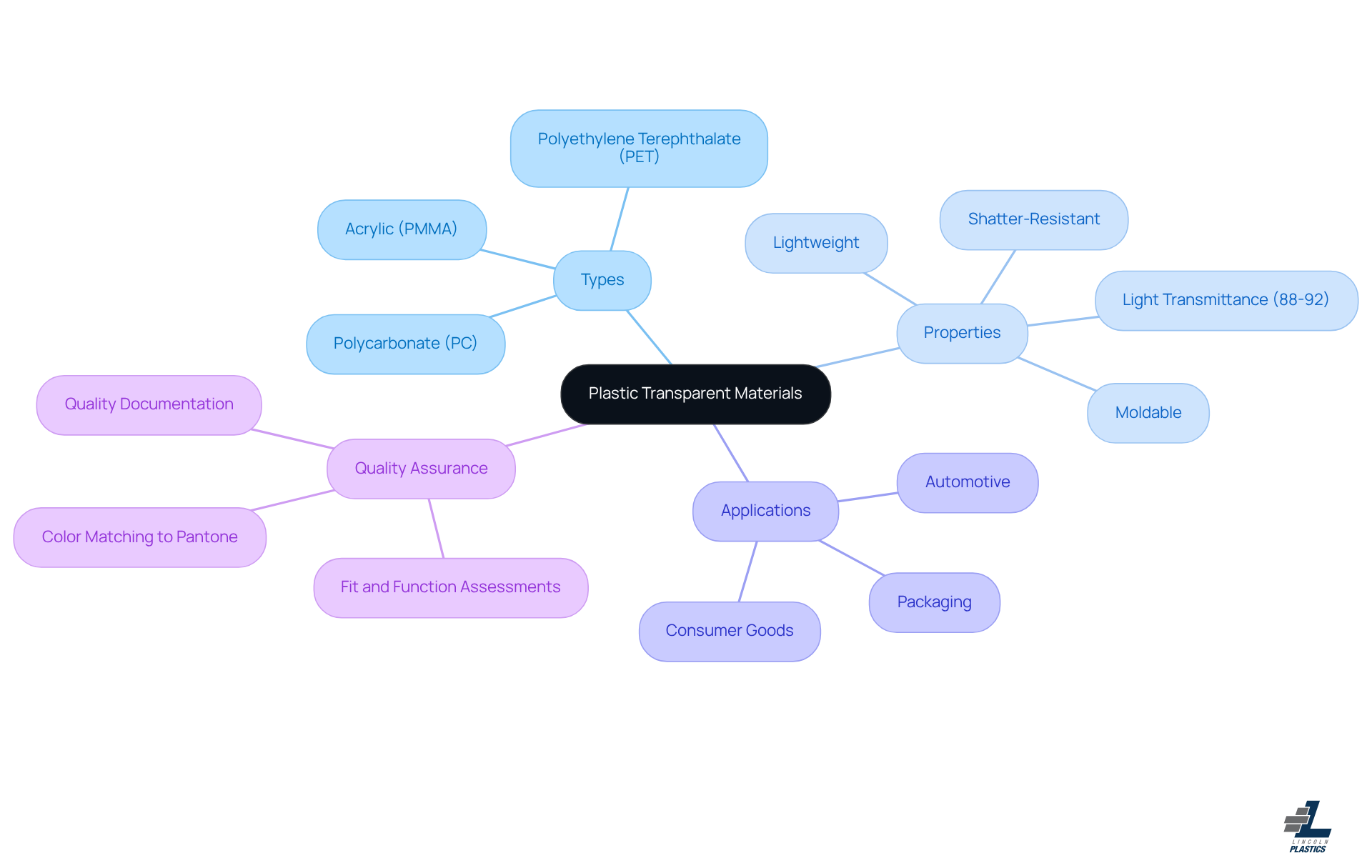
Have you ever thought about the materials that make our everyday products so reliable? Polycarbonate (PC), Acrylic (PMMA), and Polyethylene Terephthalate (PET) are pretty amazing. They boast excellent optical clarity, which is impressive! Not only are they lightweight and shatter-resistant, but they’re also super moldable, making it easy to create intricate designs for all sorts of applications from automotive to packaging and consumer goods.
Their clarity and durability really shine when it comes to visibility and safety, which are crucial for consumer products, especially when utilizing transparent enclosures. And guess what? You can even enhance these materials with UV stabilizers and protective coatings, extending their lifespan in outdoor and high-stress environments. For example, Polycarbonate is often used in safety goggles because it can take a hit, while Acrylic is a go-to in retail for product displays thanks to its clarity and easy fabrication.
At Lincoln Plastics, we work hand-in-hand with OEMs to ensure these materials, which are plastic transparent, meet all specifications. We conduct specific assessments for 'fit and function' using various check gauges to guarantee a proper end-use fit. Plus, we can easily source colors that match your Pantone specifications, ensuring consistency across manufacturers. Our robust quality system includes a comprehensive documentation process, complete with drawings, critical in-process checks, and run documentation.
And let’s not forget about the recent innovations in these materials! New technologies are driving their adoption across various sectors, helping them meet the evolving needs of OEM applications. Industry leaders are really emphasizing the importance of these resources in modern manufacturing, highlighting their role in creating visually appealing and practical products. So, what do you think? Are you ready to explore how these materials can enhance your projects?
Exploring Alternative Materials: Characteristics and Use Cases
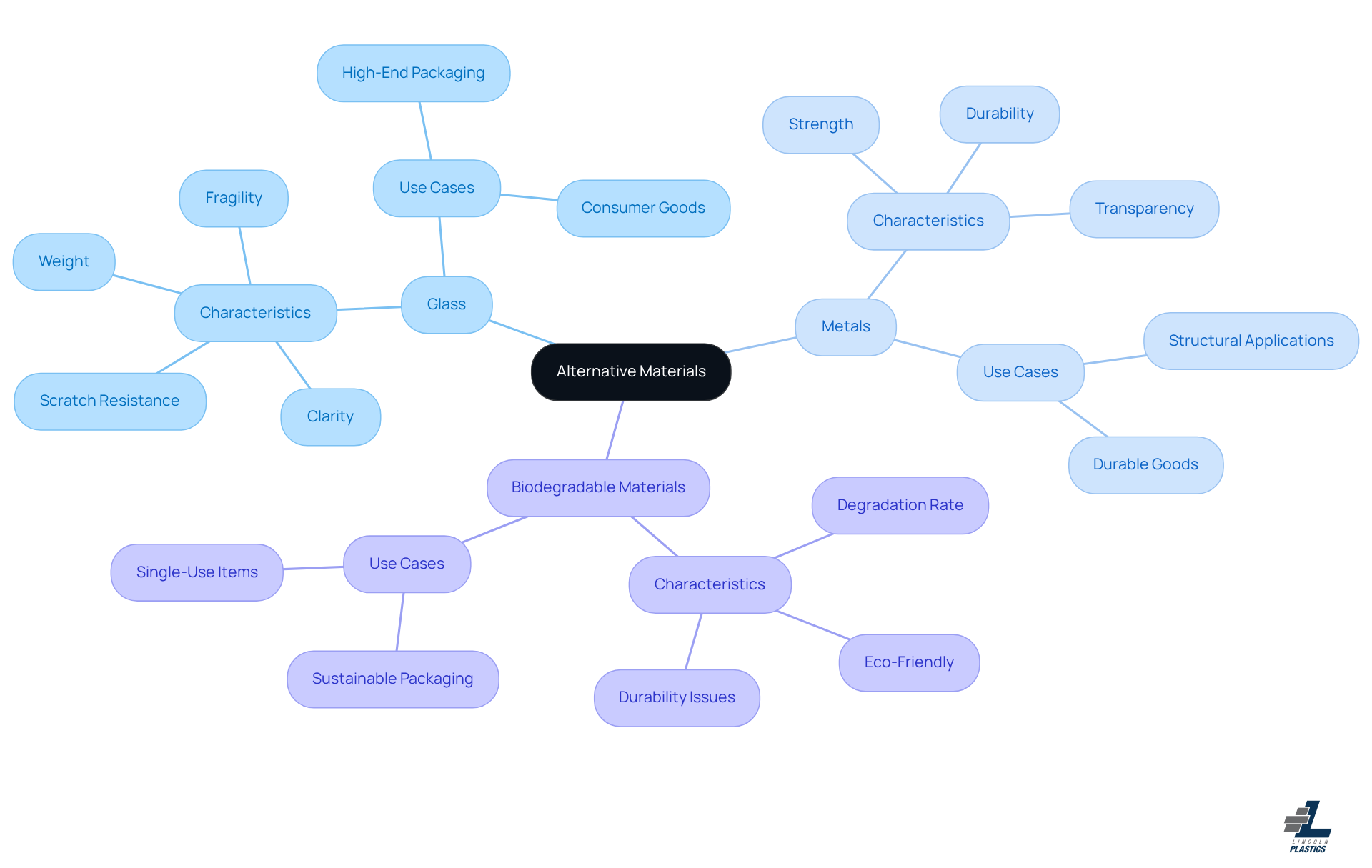
When it comes to alternative materials, you might think of glass, metals, and even ceramics. Each of these materials has its own unique traits that can really affect how suitable they are for OEM uses. For instance, glass is transparent, which makes it a great choice for products where visibility is key. But, let’s be real - its weight and fragility can be a bit of a hassle in situations where you need something durable and lightweight.
Now, to the table. However, they don’t offer transparency, which can limit their use in scenarios where seeing through the material is crucial. On the flip side, bioplastics are eco-friendly, but they often don’t perform as well as traditional plastics. Sure, they help with sustainability, but their durability and plastic transparent quality might not cut it for many applications. For example, research shows that bioplastics might not withstand the same stress and environmental conditions as conventional synthetics, which could compromise product integrity.
Speaking of real-world examples, think about acrylics. They’re often used in displays because they look great, but their weight can really hike up shipping costs - sometimes tripling or quadrupling expenses compared to plastic! And while metals are a go-to for their durability in structural applications, they might not be the best fit for items that need to be seen clearly, like consumer goods.
So, what’s the takeaway? Choosing among these alternatives really comes down to carefully evaluating your specific project needs. You’ll want to balance performance, cost, and visibility. It’s all about finding that sweet spot that works for you!
Comparison Criteria: Evaluating Suitability for OEM Applications
When you're picking materials for OEM applications, there are a few key things you really want to think about:
- Cost: This isn’t just about what you pay upfront; it also includes long-term expenses. Keeping an eye on your budget is super important!
- Durability: You want materials that can handle wear and tear, impacts, and whatever the environment throws at them. Longevity and reliability are key here.
- Weight: The weight of a material can really affect shipping costs and how you design your product. It’s definitely something to keep in mind.
- Transparency: If visibility is important for your application, you’ll need to choose carefully. The clarity of the material is essential.
- Sustainability: Sustainability is a big deal these days! You’ll want to consider how your materials are sourced. Fun fact: the carbon footprint is actually 3.8 times lower than other options, making them a more sustainable choice.
- Manufacturability: How easy is it to process and shape these materials? This is crucial for keeping your production workflow smooth.
By keeping these criteria in mind, OEMs can make smart choices that not only meet their performance needs but also align with their business goals. So, what materials are you considering for your next project?

Side-by-Side Comparison: Advantages and Disadvantages of Each Material
Let’s dive into some materials you might be considering! Each has its own perks and quirks, so it’s good to know what you’re getting into.
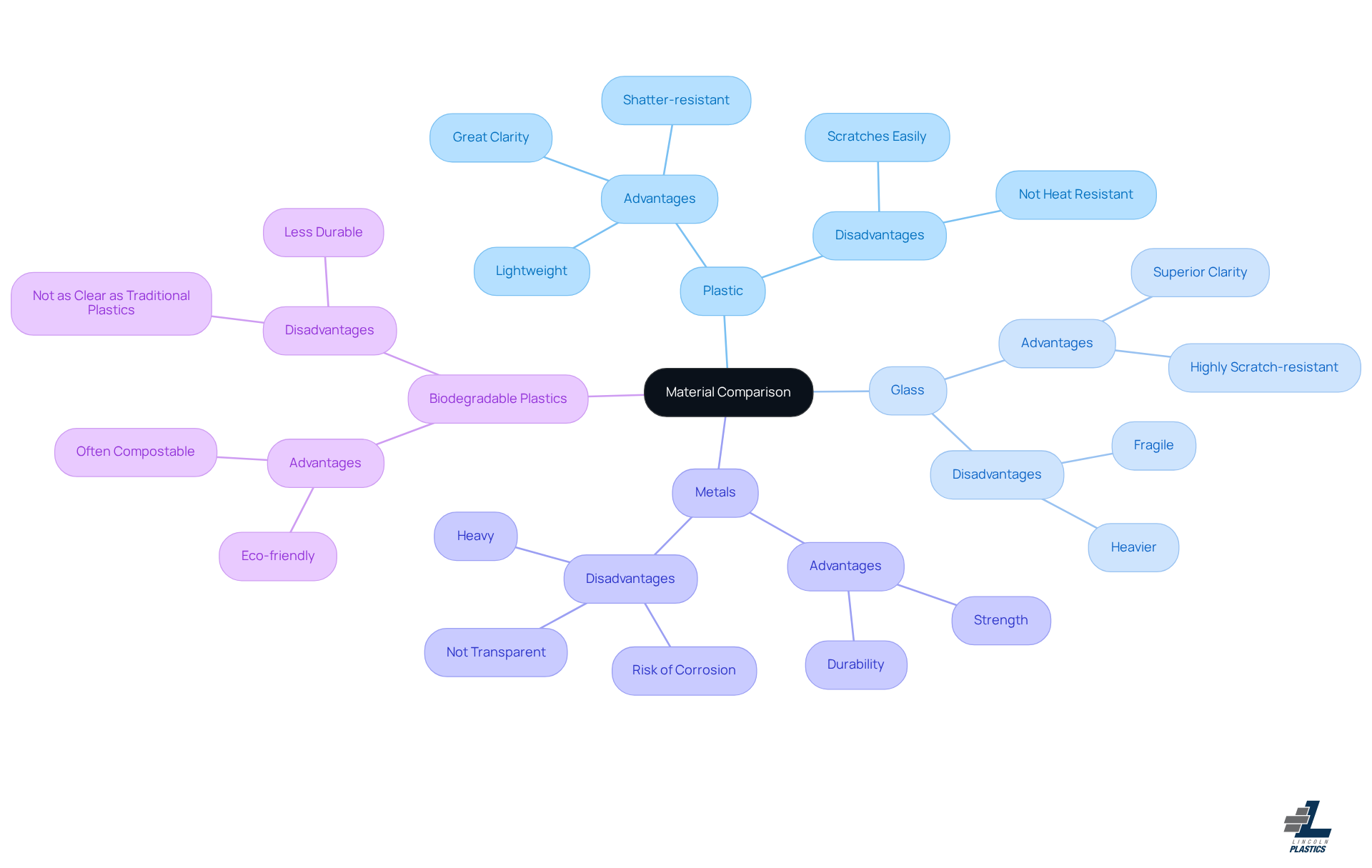
Plastics are a popular choice. They’re lightweight and shatter-resistant, plus they offer great clarity thanks to their optical properties. But, watch out! They can scratch easily and don’t handle heat too well. Now, if you’re after something with durability, Glass might catch your eye. It’s highly scratch-resistant, which is a big plus. Just keep in mind, it’s heavier and can be a bit fragile, making it tricky to mold into certain shapes. Then we have Metals. These guys are all about strength. They’re tough as nails! However, they’re not transparent, and they can be a bit heavy. Plus, there’s always the risk of corrosion to think about. Lastly, let’s talk about bioplastics. They’re sustainable and often compostable, which is fantastic for the planet! But, they might not be as durable or clear as traditional plastics.
So, which material speaks to you? Each has its own story, and understanding them can help you make the best choice for your needs!
Conclusion and Recommendations: Making Informed Material Choices for OEMs
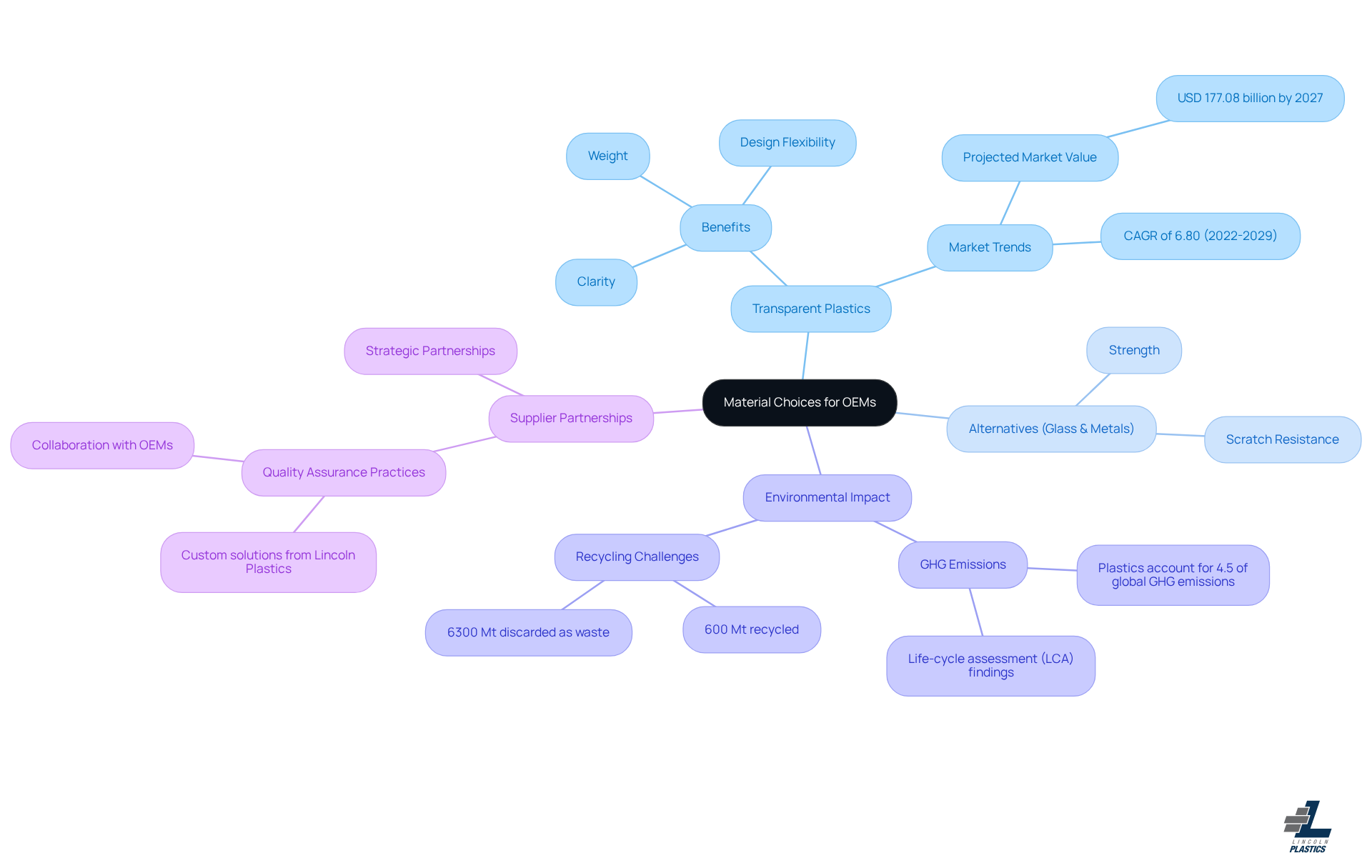
So, when it comes to choosing between plastic transparent materials and other materials, it really boils down to what you need for your specific application and goals. Transparent plastics offer great perks - such as weight, clarity, and design flexibility - which makes them a solid choice for a wide range of applications, particularly in the packaging and automotive sectors. Did you know that the demand for these materials is increasing? That just shows how crucial these materials are becoming in OEM projects.
But hey, there are times when alternatives are better, especially if strength and scratch resistance are top priorities. It’s super important for OEMs to take a good look at their project needs and weigh them against these factors. This way, they can make smart choices that enhance performance and sustainability.
And let’s not forget about the environment! Plastics account for about 4.5% of global GHG emissions, so it’s worth considering the ecological impact of your choices. Companies like Lincoln Plastics can really help streamline this process. They ensure that the materials you choose not only meet quality standards but also fit seamlessly into your operations.
Lincoln Plastics collaborates closely with OEMs to make sure their products tick all the quality boxes. They use various check gauges to guarantee a proper fit for end-use. Plus, they can source colors that match Pantone specifications, ensuring consistency across different manufacturers. Their documentation, featuring a dedicated quality book for each plastic profile, complete with drawings, critical in-process checks, and run documentation, is invaluable.
As industry leaders often say, "Quality is key." So, why not take that step today?
Conclusion
Choosing the right materials for OEM applications? That’s a big deal! It can really affect how well your product performs, how much it costs, and even how friendly it is to the environment. Plastic transparent materials are super appealing because they’re lightweight, clear, and versatile. You’ll find them popping up in all sorts of industries, especially packaging and automotive. As the market for clear polymers keeps expanding, it’s crucial for OEMs to get to know these materials inside and out to keep up with what consumers want.
Now, let’s dive into some key points. We’ve compared plastic transparent materials with alternatives like glass, metals, and even biodegradable options. Each of these materials has its own perks and drawbacks, which is why it’s so important for OEMs to think carefully about their project needs. Factors like durability, weight, transparency, and environmental impact should all be on your radar. And don’t forget the value of teaming up with experienced suppliers like Lincoln Plastics. They can offer insights that help you meet quality standards.
Ultimately, making smart material choices is key to achieving manufacturing excellence and sustainability. As trends in the industry shift, OEMs should definitely look into innovative materials and form partnerships that fit their goals. By taking a thorough look at material properties and what they mean for your projects, you can boost product performance and contribute to a greener future. So, what are you waiting for? Let’s get started on making those informed choices!
Frequently Asked Questions
What are plastic transparent materials, and what are some examples?
Plastic transparent materials include Polycarbonate (PC), Acrylic (PMMA), and Polyethylene Terephthalate (PET). They are known for their impressive light transmittance rates, which range between 88% and 92%.
What are the key properties of plastic transparent materials?
These materials are lightweight, shatter-resistant, and highly moldable, allowing for intricate designs. They also offer clarity and durability, making them suitable for various applications.
In what applications are plastic transparent materials commonly used?
They are used in automotive, packaging, consumer goods, safety gear (like face shields and goggles), and retail displays due to their visibility and safety features.
How can the lifespan of plastic transparent materials be enhanced?
The lifespan can be extended with UV resistance and protective coatings, making them more suitable for outdoor and high-stress environments.
How does Lincoln Plastics ensure quality in their plastic transparent materials?
Lincoln Plastics conducts specific assessments for 'fit and function' using various check gauges to guarantee proper end-use fit and can source colors that match Pantone specifications. They maintain a robust quality system that includes a dedicated quality book for each plastic profile.
What are some recent innovations in plastic transparent materials?
Improvements in production methods and the introduction of eco-friendly options are driving the adoption of these materials, helping them meet the evolving needs of OEM applications.
What are some alternatives to plastic transparent materials?
Alternatives include glass, metals, and biodegradable options. Each has unique properties that affect their suitability for OEM uses.
What are the advantages and disadvantages of using glass as an alternative material?
Glass is known for its clarity and scratch resistance, making it suitable for visibility. However, it is heavier and more fragile, which can be a disadvantage in applications requiring durability.
How do metals compare to plastic transparent materials?
Metals like aluminum offer strength and durability but do not provide transparency, limiting their use in applications where visibility is essential.
What are the characteristics of biodegradable materials as alternatives?
Biodegradable materials are eco-friendly but often lack the durability and transparency needed for many OEM applications compared to traditional plastics.
What factors should be considered when choosing between plastic transparent materials and their alternatives?
It's important to evaluate specific project needs, balancing performance, cost, and environmental impact to find the best material for the application.
List of Sources
- Understanding Plastic Transparent Materials: Key Properties and Applications
- linkedin.com (https://linkedin.com/pulse/innovative-uses-transparent-plastics-product-design-bz9ac)
- Transparent Plastics: Latest Technology Updates and End-use Applications (https://specialchem.com/plastics/guide/transparent-plastic-materials-applications-innovations)
- US Polycarbonate Manufacturing Gets Major Boost (https://plasticstoday.com/extrusion-film-sheet/us-polycarbonate-manufacturing-gets-major-boost)
- plasticstoday.com (https://plasticstoday.com/automotive-mobility/covestro-partners-to-drive-innovation-in-transparent-automotive-materials)
- gudmould.com (https://gudmould.com/news/1077.html)
- Exploring Alternative Materials: Characteristics and Use Cases
- news10.com (https://news10.com/business/press-releases/ein-presswire/871759093/refillable-and-eco-friendly-glass-packaging-gains-essential-role-for-sustainable-brands)
- anthropocenemagazine.org (https://anthropocenemagazine.org/2025/04/clearly-cool-a-transparent-paper-based-material-could-replace-single-use-plastics)
- newscientist.com (https://newscientist.com/article/2475826-plant-based-waterproof-material-could-replace-single-use-plastics)
- sciencedaily.com (https://sciencedaily.com/releases/2025/07/250721223831.htm)
- containerandpackaging.com (https://containerandpackaging.com/resources/plastic_vs_glass_packaging?srsltid=AfmBOor_4oZfLRIu_nt_H9HJQMeynz5v1o_XeTJB8Ro7mRDJYmorYgfC)
- Comparison Criteria: Evaluating Suitability for OEM Applications
- pmmi.org (https://pmmi.org/report/2025-the-new-material-world-packaging-s-path-toward-sustainability)
- lincoln-plastics.com (https://lincoln-plastics.com/news-post/transparent-plastic-vs-traditional-materials-key-benefits-for-oe-ms?dcc2137a_page=27)
- vinylinfo.org (https://vinylinfo.org/news/plastics-reduce-environmental-cost-nearly-4x-compared-to-alternatives)
- linkedin.com (https://linkedin.com/pulse/oem-resolutions-2025-ralf-klaassen-jctwe)
- Side-by-Side Comparison: Advantages and Disadvantages of Each Material
- lincoln-plastics.com (https://lincoln-plastics.com/news-post/10-innovative-bio-plastic-solutions-for-sustainable-manufacturing?dcc2137a_page=18)
- earth.org (https://earth.org/plastic-pollution-quotes)
- carbonbright.co (https://carbonbright.co/insight/glass-vs-plastic-packaging-which-is-better)
- labmanager.com (https://labmanager.com/biodegradable-plastic-has-higher-tensile-strength-than-petroleum-based-plastic-27690)
- Conclusion and Recommendations: Making Informed Material Choices for OEMs
- databridgemarketresearch.com (https://databridgemarketresearch.com/reports/global-transparent-plastic-market?srsltid=AfmBOopEsHssTb7KsAzYOecQ81-IJV4jnhSqAXawxFmEiED9he-EGv9Q)
- packagingsolutions.amcor.com (https://packagingsolutions.amcor.com/en/news/articles/plastic-or-glass-how-do-you-decide)
- lincoln-plastics.com (https://lincoln-plastics.com/news-post/10-benefits-of-clear-pvc-plastic-for-oem-purchasing-managers?dcc2137a_page=17)
- deliberatedirections.com (https://deliberatedirections.com/manufacturing-excellence-quotes-industry-leaders)
- pubs.acs.org (https://pubs.acs.org/doi/10.1021/acs.est.3c05191)
Related posts

Why Custom Pipe Extrusion Matters More Than Ever
Standard pipe sizes don’t always work. Learn how Lincoln Plastics delivers custom diameters, wall thicknesses, and finishes in right-sized runs.


Reducing Trip Hazards with Custom Cord Management
Loose cords are more than messy — they’re a safety hazard. Lincoln Plastics’ custom cord covers and Flexiduct solutions improve safety and efficiency.
The Power of Custom Plastic Profiles for OEMs
Off-the-shelf profiles force compromises. Learn how Lincoln Plastics designs custom extruded profiles for OEMs with exact specs and right-sized runs.
