
Comparing the Hardest Plastics: Properties, Applications, and Costs
Introduction
Rigid plastics are pretty fascinating, right? They’re essential in so many industries, from automotive to construction. When you dive into the hardest plastics - like polycarbonate, ABS, and PVC - you start to see just how valuable they are. Manufacturers can gain some serious insights into their unique properties, applications, and costs.
But here’s the thing: with so many options out there, how do you choose the right material for your needs? It’s all about balancing durability, flexibility, and supplier reliability. You might be wondering, what’s the best way to navigate these complexities?
This exploration will shine a light on the characteristics of hard plastics. We’ll look at their suitability for various applications and the key considerations to keep in mind when making informed choices. So, let’s jump in!
Overview of Hard Plastics: Types and Characteristics
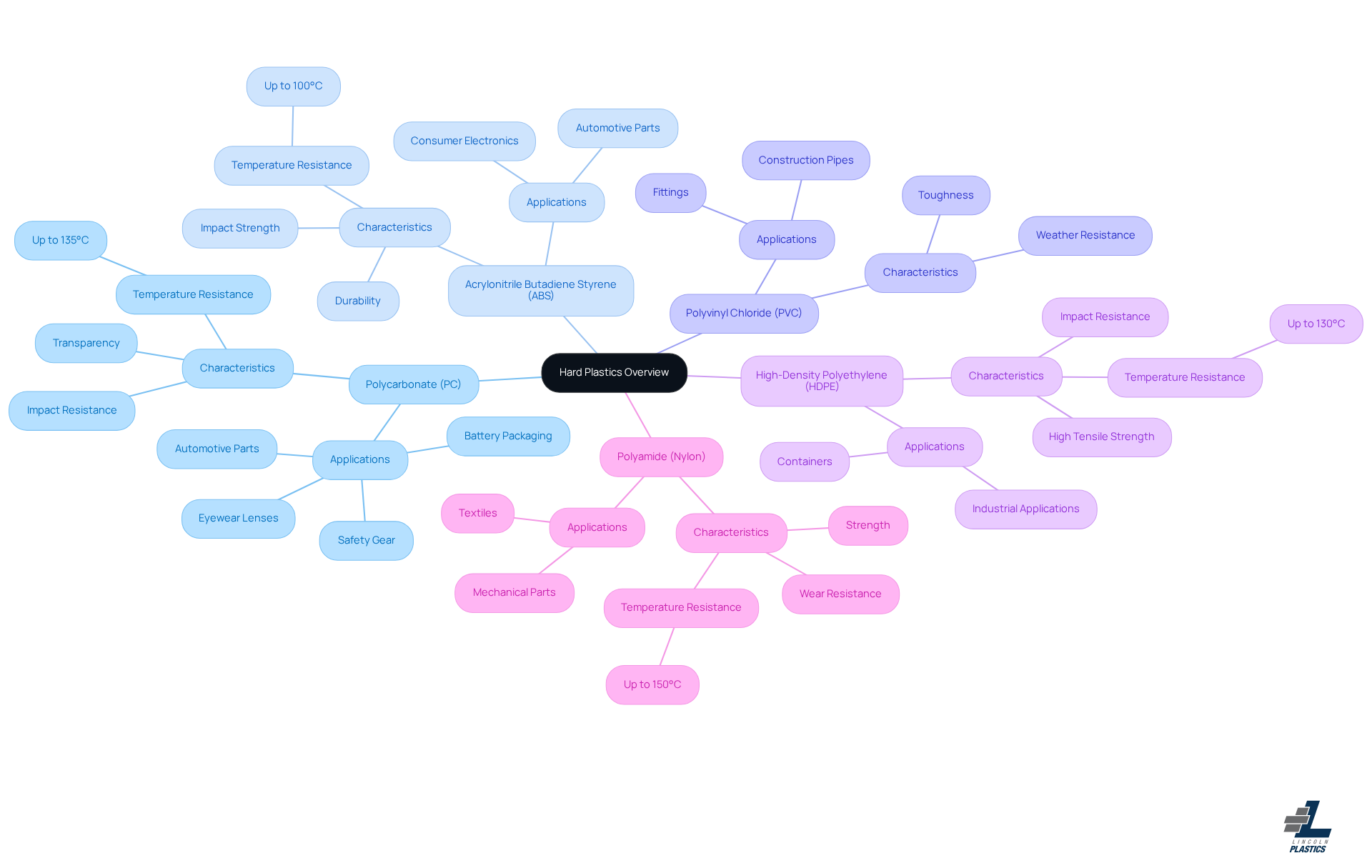
When it comes to hard plastics, the hardest plastic options available have unique traits that make them perfect for different tasks. Let’s dive into some of the most common types:
- Polycarbonate (PC): This one’s a superstar! Known for its incredible strength and crystal-clear transparency, it’s ideal for things like eyewear lenses, safety gear, and car parts. You might be surprised to learn that it’s also making waves in automotive and structural components for electric vehicles, helping to keep things lightweight and fuel-efficient. Plus, it can handle temperatures up to 135°C, which is pretty impressive for high-performance applications. Did you know the global market is expected to hit USD 19,590 million by 2032? That’s a clear sign of its growing importance across various industries.
- Acrylonitrile Butadiene Styrene (ABS): If you’re looking for durability and impact strength, ABS is your friend. It’s perfect for automotive parts and consumer electronics, performing well even at temperatures up to 100°C. So, whether it’s for your car or your favorite gadget, ABS has got you covered.
- Rigid Polyvinyl Chloride (PVC): Rigid PVC is a staple in construction, especially for pipes and fittings. Why? Because it’s tough and can withstand the elements like a champ. If you need something that lasts, PVC is a solid choice.
- High-Density Polyethylene (HDPE): This one’s known for its high tensile strength and durability. You’ll often find HDPE in containers and various industrial applications. It can handle temperatures up to 130°C, making it versatile for many uses.
- Nylon: Last but not least, nylon is famous for its wear resistance and strength. It’s commonly used in mechanical parts and textiles, functioning well at temperatures reaching 150°C. So, if you need something tough for gears or bearings, nylon is the way to go.
Each type of hardest plastic has its own special characteristics that really influence how well it performs in different applications. That’s why it’s super important for manufacturers to pick the right material based on what they need and the specific demands of their projects. And hey, with sustainability trends on the rise - like bioplastics and closed-loop recycling systems - there’s a lot to consider in today’s industry!
Comparative Analysis of Properties: Strength, Flexibility, and Durability
When it comes to the hardest plastic, there are three key properties you really want to keep an eye on: strength, flexibility, and durability. Let’s break these down a bit.
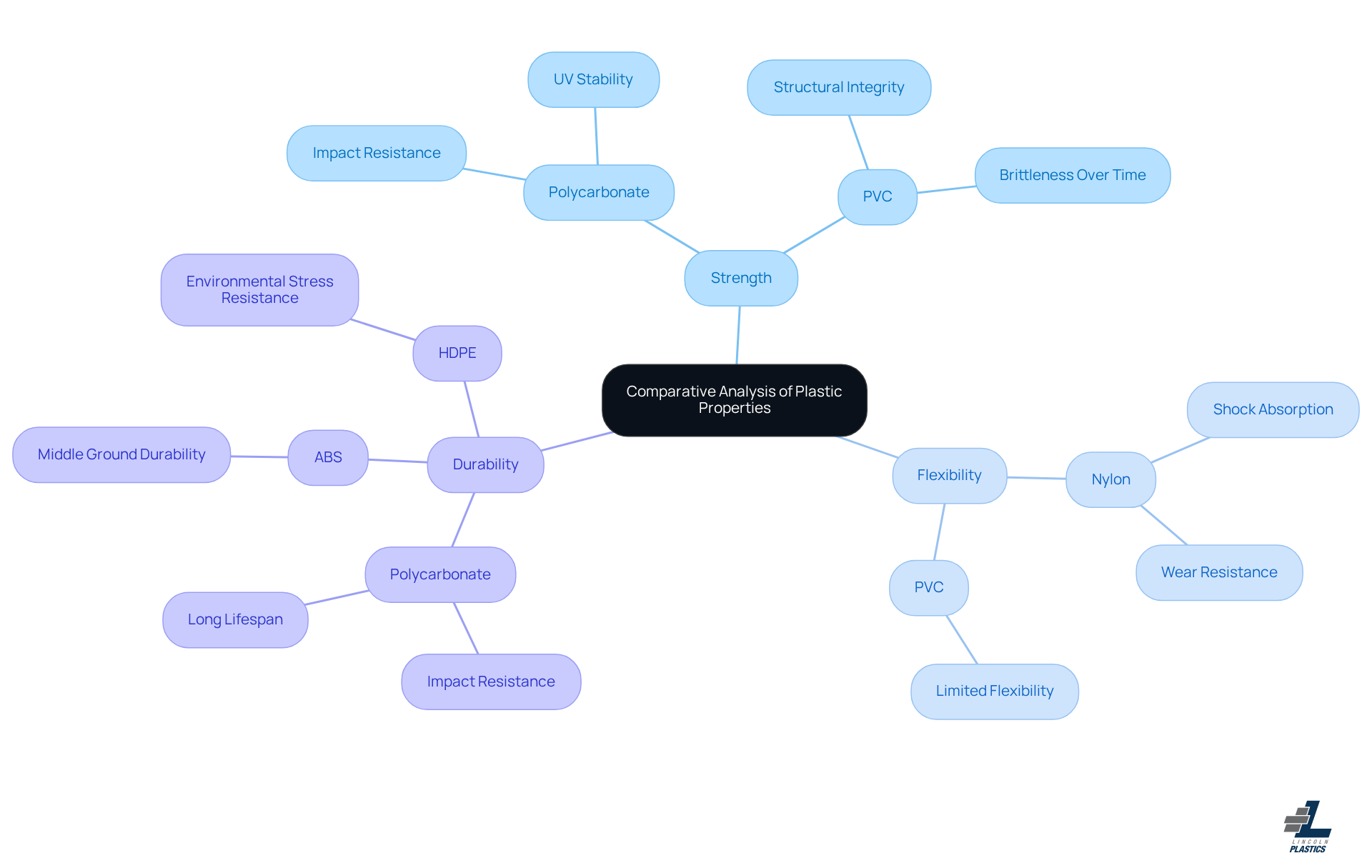
Durability: Polycarbonate boasts an impact resistance that’s up to 250 times stronger than glass! That makes it a go-to for safety glasses. Now, ABS is decent in the durability department, but it can scratch more easily, which might affect how it looks and how long it lasts. HDPE is tough too, but it’s a bit more flexible compared to materials like PVC, which is known for its strength and structural integrity in tough situations. Fun fact: the global plastic market is projected to grow from $24.06 billion in 2024 to $25.39 billion in 2025. That’s a clear sign of its growing importance across various industries.
Application Suitability: Let’s talk about nylon. It’s pretty much the superstar when it comes to toughness. It can absorb shocks and resist wear, making it perfect for parts like gears and bearings. For instance, in the automotive world, nylon helps create components that can handle dynamic loads. On the flip side, PVC is a bit rigid, which limits its application in situations where bending or shaping is needed. That can really affect its versatility in changing environments.
Durability (again): Both polycarbonate and HDPE are considered some of the hardest plastic materials, demonstrating a fantastic ability to withstand impacts and environmental stress. Polycarbonate can yellow when exposed to UV light unless it’s treated with protective coatings. ABS finds a nice middle ground between durability and flexibility, making it a solid choice for various applications. Engineers have noted that polycarbonate outperforms PVC, especially in harsh conditions.
So, what does all this mean for you? This breakdown highlights the strengths and weaknesses of each material, giving you the insights you need to make informed decisions when selecting the right polymer for your specific needs.
Application Suitability: Choosing the Right Plastic for Your Needs
Choosing the right hard material for your project can feel a bit overwhelming, right? But don’t worry! Let’s break it down together. Here’s a friendly overview of some hard plastics and where they shine:
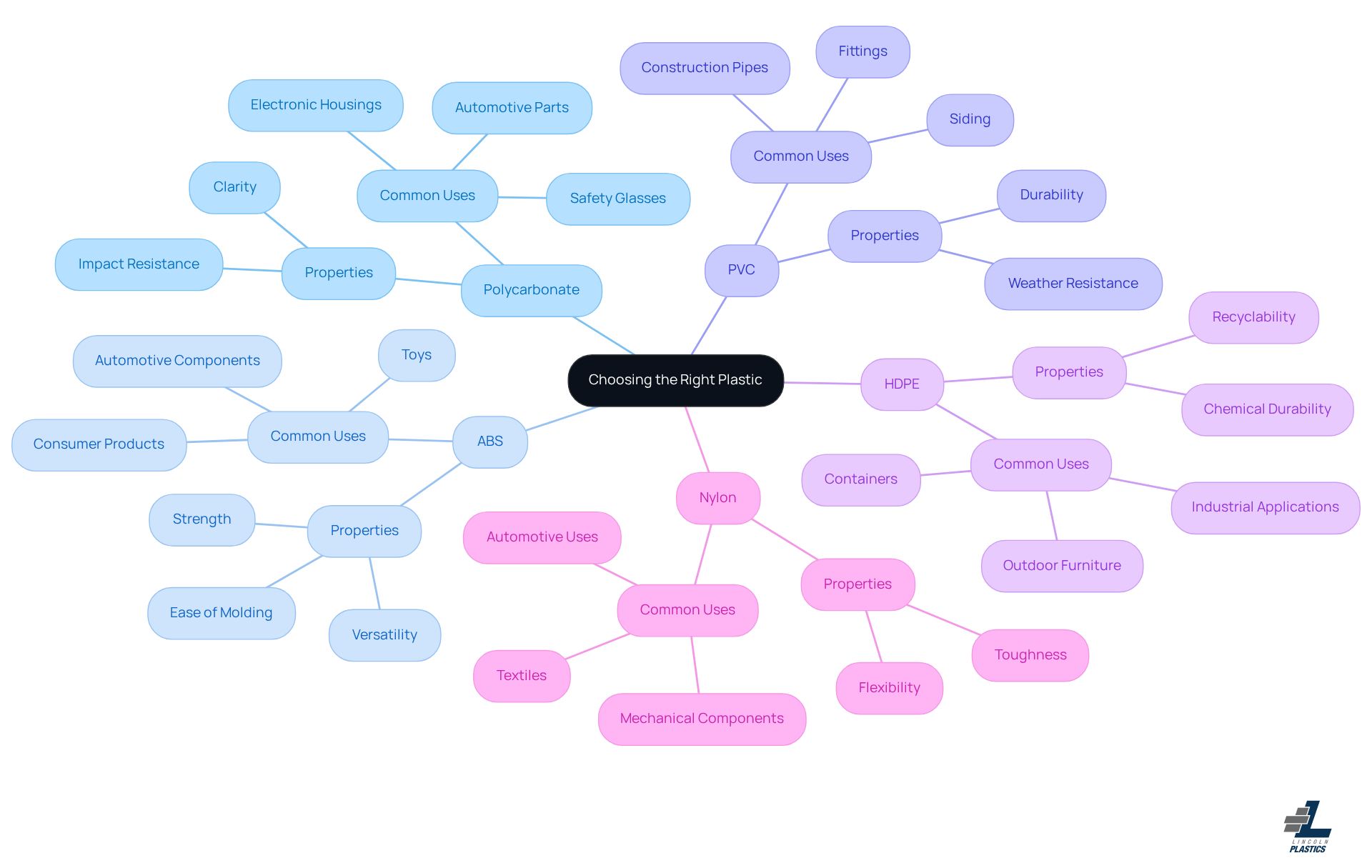
- Polycarbonate: This one’s a superstar when it comes to strength and clarity. You’ll find it in safety glasses, automotive parts, and electronic housings. If you need durability, polycarbonate is your go-to.
- ABS: Talk about versatility! ABS is found everywhere—from consumer products to automotive components and even toys. It strikes a great balance between strength and flexibility. Plus, it’s super easy to mold, giving you that smooth, glossy finish perfect for things like LEGO bricks and electronic casings.
- PVC: If you’re looking for something that can stand up to the elements, PVC is your best bet. It’s widely used in construction for pipes, fittings, and siding. Its durability, thanks to its chemical resistance, makes it a reliable choice for all sorts of weather conditions.
- Polypropylene: This is great for industrial applications and outdoor furniture. It’s strong and made of the same material, which is also chemically durable, and guess what? It’s recyclable! That makes it a great pick for eco-friendly manufacturing.
- Nylon: You’ll often find nylon in clothing, textiles, and automotive uses. It’s flexible and tough, making it perfect for high-stress environments.
So, why does this matter? Well, aligning the right material with its intended use is crucial. It helps manufacturers achieve the best performance and longevity for their products. By understanding these materials, you can make informed choices that boost product quality and reliability.
Now, what do you think? Ready to dive into your project with the right material?
Cost Considerations and Supplier Reliability: Evaluating Your Options
When it comes to choosing rigid materials for manufacturing, cost and quality are super important. Let’s break down some key points to consider:
- Cost factors: You know how pricing varies? It all depends on the type of material, market demand, and what suppliers are charging. For instance, materials like polycarbonate, recognized as one of the hardest plastics, might cost more than standard ABS or PVC, but their durability can totally justify that extra expense, especially in applications where longevity is key. Just to give you an idea, the total shipments from the U.S. polymer industry hit $550.7 billion in 2024! That really shows how big this sector is and why it’s crucial to make informed choices about material costs.
- Supplier selection: Now, let’s talk about why picking a reliable supplier matters. It’s all about ensuring you get consistent quality and performance. At Lincoln Plastics, we partner closely with OEMs to make sure their products meet all specifications, including special checks for ‘fit and function’. We use various check gauges to guarantee a proper end-use fit. Plus, our quality system is pretty robust, featuring a dedicated quality book for your material profile, complete with drawings, critical in-process checks, and run documentation. And if you need specific colors, we can easily source those to match your Pantone specs for consistency across manufacturers. When choosing a supplier, think about their reputation, quality assurance processes, and how well they can meet your specific material needs. Engaging with suppliers who have a solid track record can really help reduce risks related to production delays and quality issues. As industry experts say, "Quality is key," which really highlights how crucial reliability is for keeping operations running smoothly.
By taking a close look at both cost and quality, manufacturers can fine-tune their procurement strategies. This way, they can ensure they’re getting the best bang for their buck while still upholding high standards.

Conclusion
When it comes to picking the toughest plastics for different applications, knowing their unique properties is key. Each type of hard plastic, whether it’s polycarbonate or nylon, has its own set of characteristics that make it suitable for specific tasks. By diving into the distinct advantages and limitations of these materials, manufacturers can make smarter choices that boost product performance and longevity.
So, what are the key properties of hard plastics? Well, we’ve got:
- Strength
- Flexibility
- Durability
Polycarbonate really shines with its impact resistance, while nylon is the go-to for flexibility. Then there’s ABS and PVC, which strike a nice balance between durability and cost-effectiveness, making them favorites across various industries. Plus, let’s not forget about cost and supplier reliability - these factors are crucial for strategic procurement, ensuring quality and efficiency in production.
Ultimately, choosing the right hard plastic should match the specific needs of your project. Think about performance requirements, environmental factors, and budget constraints. As the industry keeps evolving, staying updated on the latest developments in hard plastics can empower manufacturers to innovate and keep that competitive edge. And remember, engaging with reliable suppliers who really understand these materials can further enhance the quality and success of your projects.
Frequently Asked Questions
What are the hardest types of plastics mentioned in the article?
The hardest types of plastics mentioned are Polycarbonate (PC), Acrylonitrile Butadiene Styrene (ABS), Polyvinyl Chloride (PVC), High-Density Polyethylene (HDPE), and Polyamide (Nylon).
What are the key characteristics of Polycarbonate (PC)?
Polycarbonate is known for its incredible impact resistance, crystal-clear transparency, and ability to withstand temperatures up to 135°C. It is commonly used in eyewear lenses, safety gear, car parts, battery packaging, and structural components for electric vehicles.
What applications is Acrylonitrile Butadiene Styrene (ABS) commonly used for?
ABS is commonly used for automotive parts and consumer electronics due to its durability and impact strength, performing well at temperatures up to 100°C.
Why is Polyvinyl Chloride (PVC) popular in construction?
Rigid PVC is popular in construction for pipes and fittings because of its toughness and ability to withstand environmental elements.
What are the characteristics of High-Density Polyethylene (HDPE)?
HDPE is known for its high tensile strength and impact resistance, making it suitable for containers and various industrial applications. It can handle temperatures up to 130°C.
What is the significance of Polyamide (Nylon) in manufacturing?
Nylon is recognized for its wear resistance and strength, commonly used in mechanical parts and textiles. It functions well at temperatures reaching 150°C, making it ideal for gears and bearings.
Why is it important for manufacturers to choose the right type of plastic?
Different types of hard plastics have unique characteristics that influence their performance in various applications. Choosing the right material is crucial based on specific project needs and demands.
What sustainability trends are mentioned in relation to hard plastics?
The article mentions trends such as bio-based polycarbonate and closed-loop recycling systems, highlighting the growing importance of sustainability in the plastics industry.
List of Sources
- Overview of Hard Plastics: Types and Characteristics
- unqpc.com (https://unqpc.com/the-future-of-polycarbonate-trends-to-watch-in-2025)
- piedmontplastics.com (https://piedmontplastics.com/blog/engineering-plastics-comparison?srsltid=AfmBOopxCcoe6kRhBJ70jC8hbHmju9M_ArByispTLw1pjIaelYMVUPJM)
- solutions.covestro.com (https://solutions.covestro.com/en/highlights/articles/stories/2025/polycarbonate-from-bpa)
- openpr.com (https://openpr.com/news/4289311/polycarbonate-market-trends-technologies-and-forecast)
- intelmarketresearch.com (https://intelmarketresearch.com/polycarbonate-market-13985)
- Comparative Analysis of Properties: Strength, Flexibility, and Durability
- pv-magazine.com (https://pv-magazine.com/2025/10/10/kaust-explores-polymer-alternatives-to-glass-for-solar-panel-covers)
- curbellplastics.com (https://curbellplastics.com/materials/plastics/polycarbonate?srsltid=AfmBOopHRKEtUcRK8Gr69gO67VA7MjfwCeYE1oU15Lt4mVdzn6DREXDS)
- openpr.com (https://openpr.com/news/4289311/polycarbonate-market-trends-technologies-and-forecast)
- xometry.com (https://xometry.com/resources/materials/hdpe-vs-abs)
- stabilitamerica.com (https://stabilitamerica.com/blog/how-durable-is-polycarbonate)
- Application Suitability: Choosing the Right Plastic for Your Needs
- intelmarketresearch.com (https://intelmarketresearch.com/acrylonitrile-butadiene-styrene-2025-2032-186-959)
- plasticzoneinc.com (https://plasticzoneinc.com/5-types-of-plastics-and-their-applications)
- recyclingtoday.org (https://recyclingtoday.org/blogs/news/abs-plastic-and-its-advantages)
- xometry.com (https://xometry.com/resources/materials/hdpe-vs-abs)
- bluegatorpro.com (https://bluegatorpro.com/blogs/news/comparing-hdpe-to-other-plastic-materials-which-one-is-best-for-your-needs?srsltid=AfmBOop0a2RFQm1mNtJDMi5LjopuVXEzdau_T0mkHmXwOW8-XU3Ejzcq)
- Cost Considerations and Supplier Reliability: Evaluating Your Options
- plasticsindustry.org (https://plasticsindustry.org/newsroom/2025-size-and-impact-report-u-s-plastics-industry-remains-robust-impactful-and-vital)
- ptonline.com (https://ptonline.com/articles/april-2025-mixed-bag-for-prices-of-volume-resins)
- stout.com (https://stout.com/en/insights/industry-update/plastics-industry-update-fall-2025)
- fred.stlouisfed.org (https://fred.stlouisfed.org/series/PCU325211325211)
Related posts

Why Custom Pipe Extrusion Matters More Than Ever
Standard pipe sizes don’t always work. Learn how Lincoln Plastics delivers custom diameters, wall thicknesses, and finishes in right-sized runs.


Reducing Trip Hazards with Custom Cord Management
Loose cords are more than messy — they’re a safety hazard. Lincoln Plastics’ custom cord covers and Flexiduct solutions improve safety and efficiency.
The Power of Custom Plastic Profiles for OEMs
Off-the-shelf profiles force compromises. Learn how Lincoln Plastics designs custom extruded profiles for OEMs with exact specs and right-sized runs.
