
Compare Plastic Material Types: Key Properties and Selection Tips
Introduction
In a world where plastic innovation drives industry, manufacturers face the daunting task of selecting the right materials. The world of plastics is a dynamic realm where innovation meets necessity, shaping industries from agriculture to construction. With a vast array of plastic material types available, understanding their unique properties and applications is essential for optimizing production efficiency and sustainability.
How can manufacturers confidently navigate the overwhelming choices in plastic materials? This article explores the key properties of various plastics together, offering insights and practical tips for making informed decisions in extrusion processes that drive modern manufacturing forward.
Understand Plastic: Definition and Importance
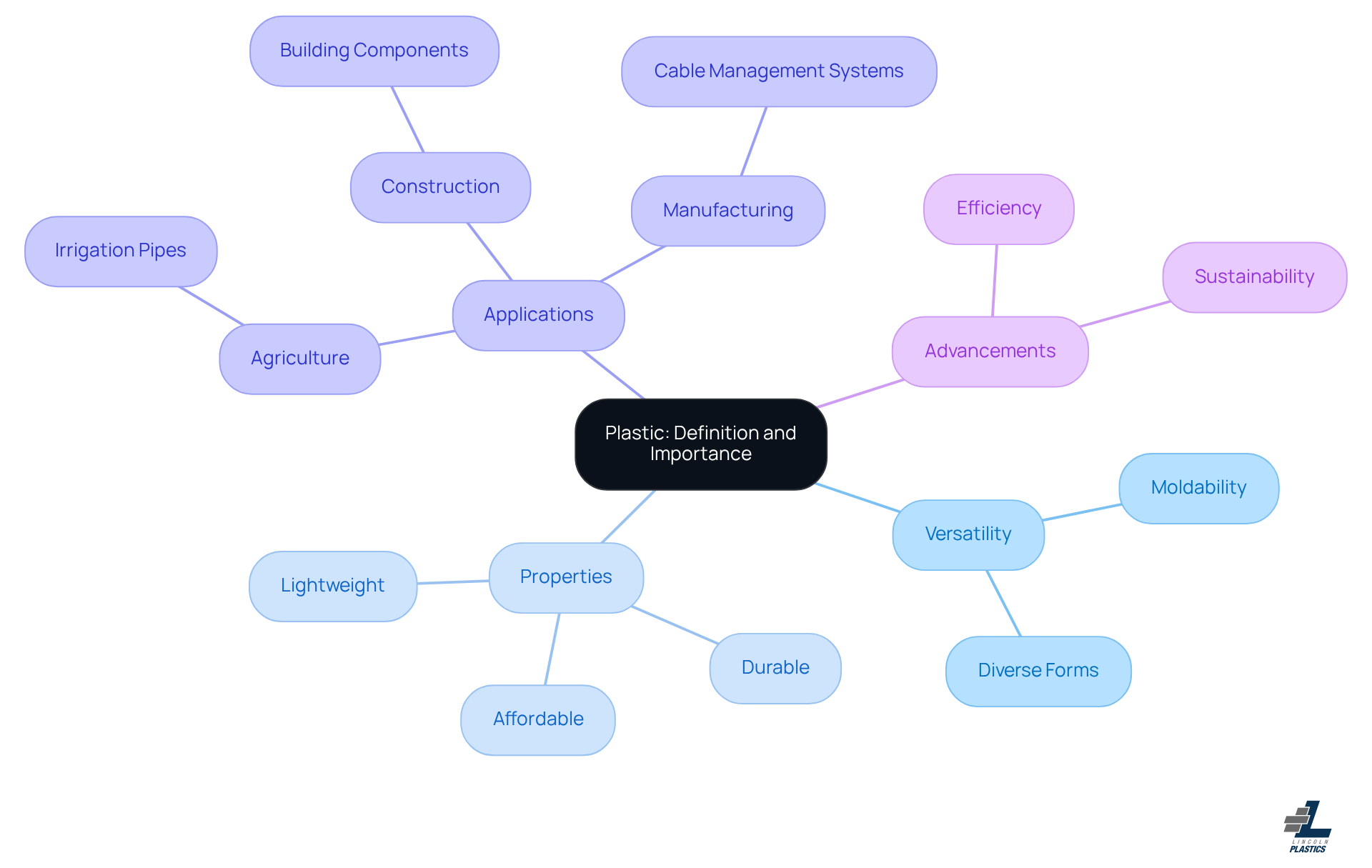
Imagine a world where the versatility of plastic shapes the future of industries, driving innovation and efficiency. Plastic material types are synthetic materials composed of polymers, which consist of long chains of molecules that can be molded into diverse shapes and forms. This inherent versatility of plastic material types makes synthetic materials essential in extrusion processes, enabling the creation of profiles, tubes, and components that fulfill critical roles across industries such as agriculture, construction, and manufacturing.
How crucial is it that materials are lightweight, durable, and affordable to meet the demands of modern industries? These properties are particularly vital for applications like irrigation pipes and cable management systems, where reliability and performance are paramount.
Recent advancements in synthetic substances have further enhanced their applicability, with innovations tailored to improve efficiency and sustainability in agricultural practices and construction projects. These advancements not only enhance efficiency but also redefine sustainability in agricultural practices and construction projects, setting new industry standards.
For instance, the creation of specialized profiles has streamlined irrigation systems, while durable components are increasingly utilized in building structures to enhance energy efficiency and reduce maintenance expenses.
As we move towards 2026, embracing advanced plastic materials will not just be a choice but a necessity for sustainable growth in manufacturing.
Explore Major Plastic Types: Thermoplastics vs. Thermosets
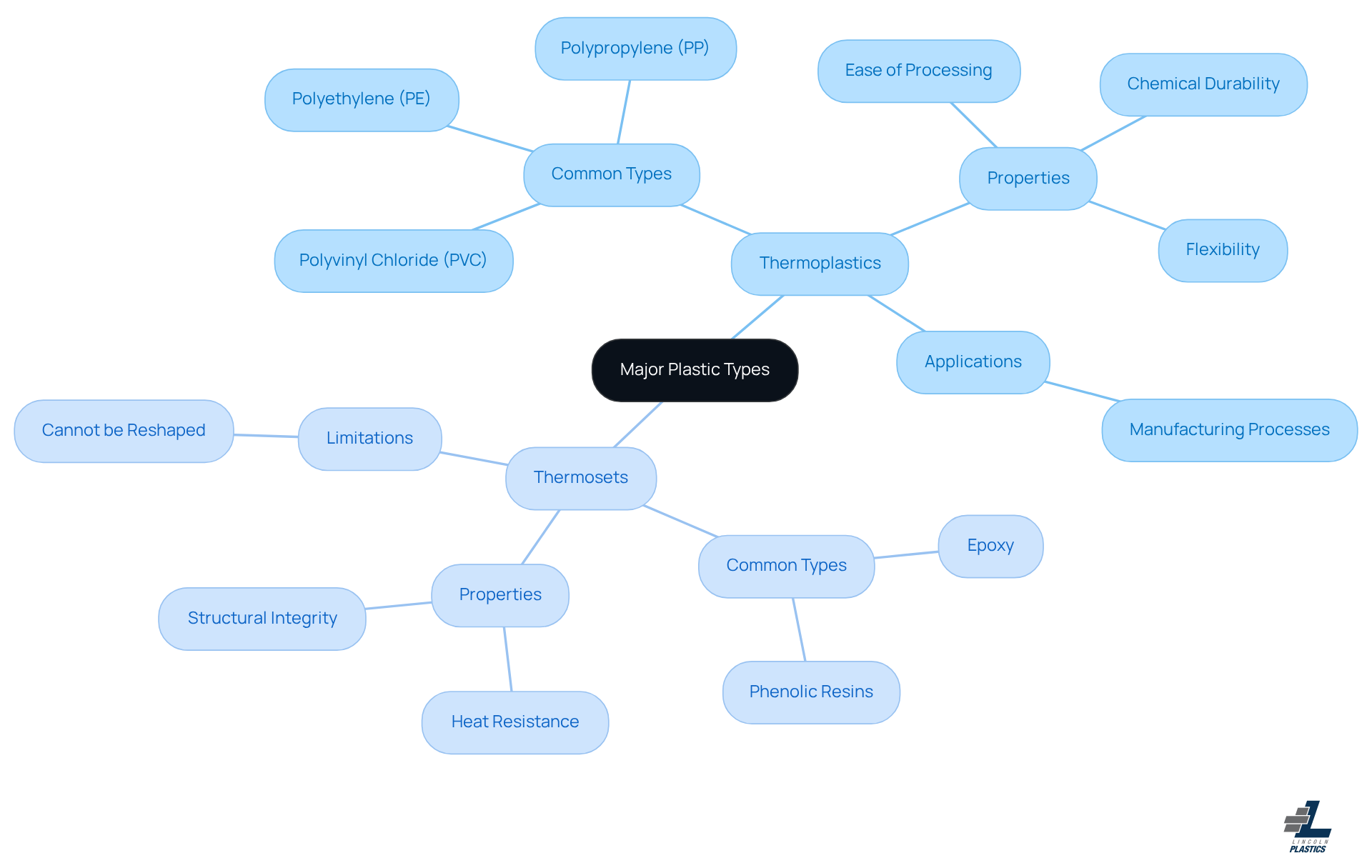
When it comes to extrusion processes, the choice of material can make or break your production efficiency. Thermoplastics are versatile substances that can be repeatedly melted and reshaped, making them particularly suitable for extrusion. Common thermoplastics like polyethylene (PE), polypropylene (PP), and polyvinyl chloride (PVC) are valued for their flexibility, chemical durability, and ease of processing. Their flexibility and effectiveness make these substances widely used in various manufacturing processes.
In contrast, thermosets, such as epoxy and phenolic resins, undergo a chemical transformation when heated, resulting in a rigid structure that cannot be remolded. While thermosets offer remarkable heat resistance and structural integrity, their inability to be reshaped limits their use in extrusion processes. Choosing the right material can be daunting, especially with so many options available. Understanding the differences in plastic material types helps you choose the right material for your extrusion needs, particularly in industries that demand durable and flexible components.
Thermoplastics stand out in extrusion processes due to their reworkability and non-flammability. This makes them a preferred choice in many manufacturing scenarios. Failing to select the right material could lead to inefficiencies and increased costs in production. Opting for thermoplastics not only enhances production efficiency but also ensures the durability and flexibility your projects demand.
Compare Common Plastics: Properties, Pros, and Cons
Choosing the right plastic material types is crucial for ensuring the durability and effectiveness of your products.
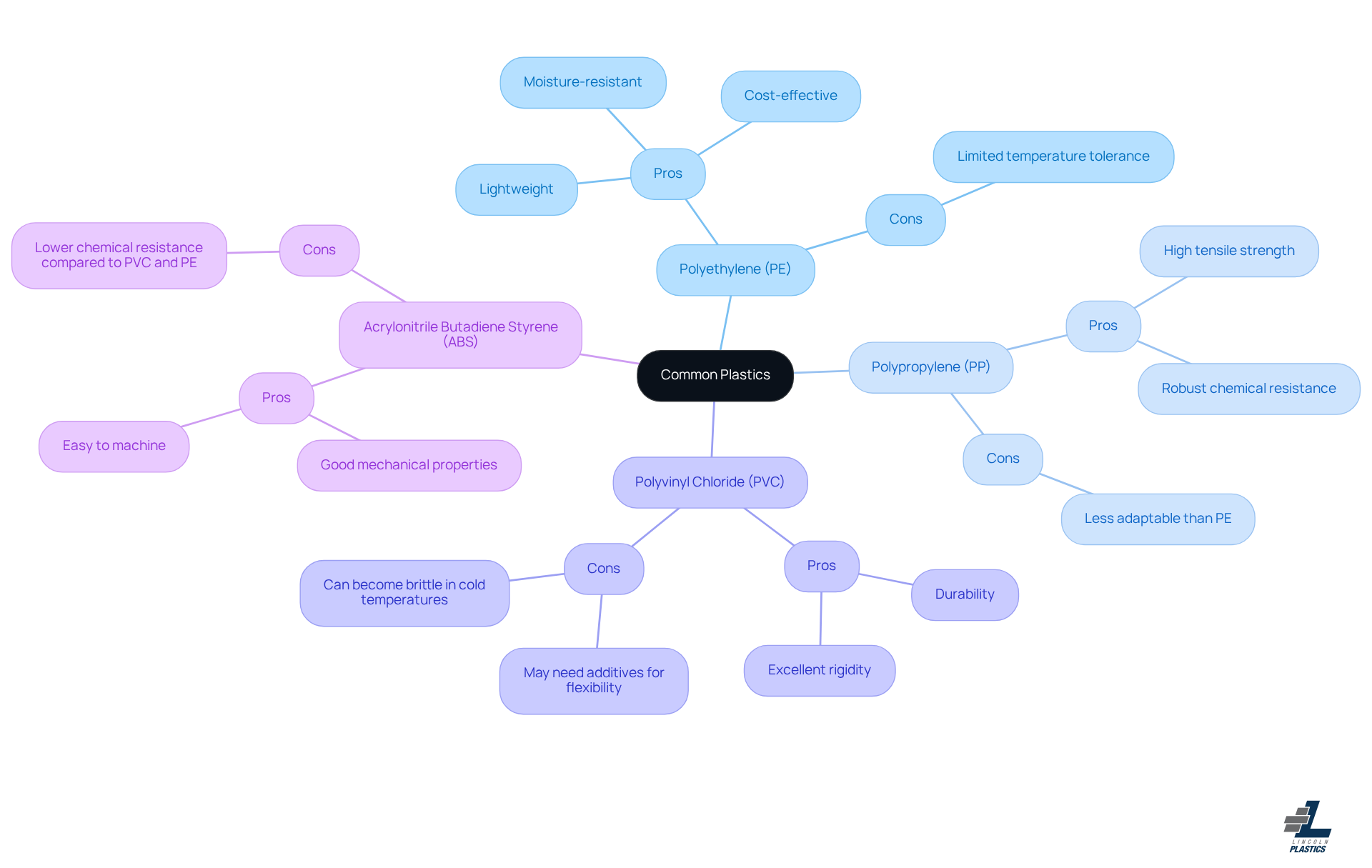
- Polyethylene (PE): Renowned for its exceptional chemical durability and versatility, PE is a top choice for applications like irrigation tubes and cable organization systems. Pros: It's lightweight, cost-effective, and moisture-resistant. Cons: However, its limited temperature tolerance may restrict its use in high-heat environments.
- Polypropylene (PP): This material stands out for its impressive impact durability, making it a favored option in automotive and industrial applications. Pros: It boasts high tensile strength and robust chemical resistance. Cons: On the downside, it's less adaptable than PE, which could limit its use in scenarios requiring significant bending or shaping.
- Polyvinyl Chloride (PVC): A highly versatile plastic available in both rigid and flexible forms, PVC is commonly used in construction and electrical applications. Pros: It offers excellent rigidity and durability, making it ideal for structural components. Cons: Yet, it can become brittle in cold temperatures and may need additives to enhance flexibility, complicating processing.
- Acrylonitrile Butadiene Styrene (ABS): Known for its durability and impact strength, ABS is frequently used in consumer goods and various industrial applications. Pros: It provides good mechanical properties and is easy to machine, streamlining manufacturing processes. Cons: However, it exhibits lower chemical resistance compared to PVC and PE, which may limit its use in chemically aggressive environments.
By understanding these characteristics, manufacturers can confidently select the best material for their extrusion needs, ensuring optimal performance and longevity in their products.
Select the Right Plastic: Key Considerations for Your Application
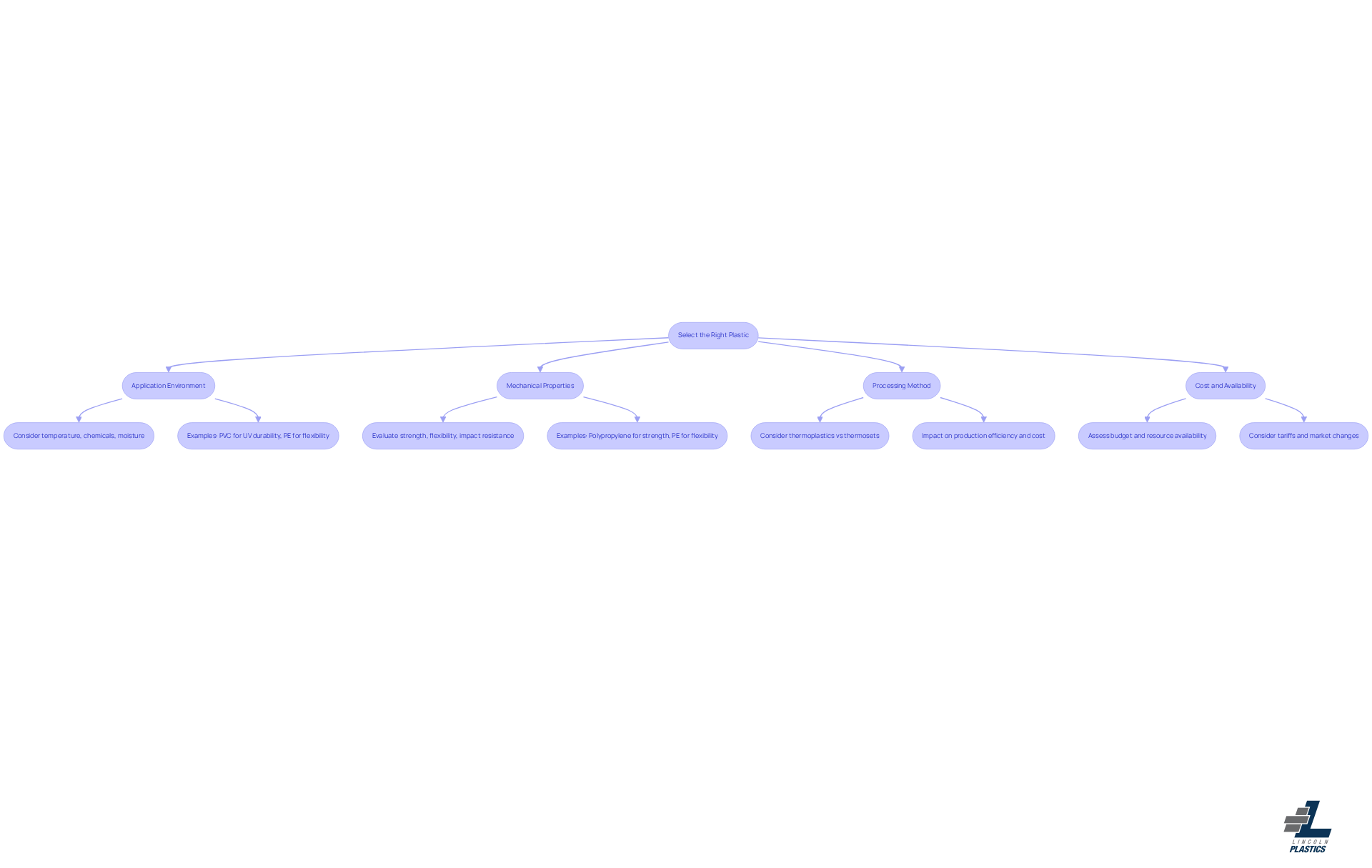
Choosing the right plastic material types for your extrusion application is crucial for ensuring both performance and sustainability. Consider the following key factors:
- Application Environment: Assess the conditions the product will face, including temperature extremes, exposure to chemicals, and moisture levels. For example, PVC is perfect for outdoor uses because of its UV durability, while polyethylene (PE) is more appropriate for settings needing flexibility. It's important to note that various plastic material types can take anywhere from 450 to 1,000 years to break down completely, emphasizing the importance of sustainability in material selection.
- Mechanical Properties: Evaluate the required strength, flexibility, and impact resistance. If high tensile strength is needed, polypropylene may be the best choice, whereas polyethylene is preferable for applications requiring flexibility. Are you aware that the U.S. plastics market is projected to grow at around 2.5% CAGR in the coming years? This suggests a strong demand for various plastic products.
- Processing Method: Consider how the substance will be processed. Thermoplastics are generally easier to extrude than thermosets, which require more complex processing techniques. This distinction can affect production efficiency and cost.
- Cost and Availability: Consider your budget and the accessibility of resources. While certain high-performance materials may provide superior characteristics, they can also be more costly and harder to obtain. Expect moderate price inflation for many resins in 2026, which could impact procurement strategies. Furthermore, the Section 122 tariffs may affect resource costs, making it crucial to remain updated on possible changes in the market.
When you evaluate these aspects carefully, you can choose the right plastic material types for your extrusion needs, which ultimately results in enhanced product performance and customer satisfaction. As the industry evolves, your choices today will shape the future of your products and their impact on the environment.
Conclusion
Choosing the right plastic material is not just a decision; it's a critical factor that can make or break your production efficiency. Understanding the various types of plastic materials and their properties is essential for making informed decisions in industrial applications. This article highlights the critical role of plastics, particularly thermoplastics and thermosets, in enhancing production efficiency and sustainability. With a focus on the unique characteristics of common plastics such as polyethylene, polypropylene, PVC, and ABS, it becomes clear that selecting the right material is pivotal for achieving optimal performance in extrusion processes.
Key insights from the discussion include the advantages and limitations of each plastic type, emphasizing their suitability for specific applications. For instance, thermoplastics offer flexibility and reworkability, making them ideal for various manufacturing scenarios. On the other hand, thermosets provide structural integrity and heat resistance for more specialized uses. Additionally, considerations such as application environment, mechanical properties, processing methods, and cost play a significant role in the selection process. With so many options available, how do you ensure you're making the right choice? This reinforces the need for a strategic approach to material choice.
Failing to choose the appropriate plastic can lead to inefficiencies and increased costs in production. As industries continue to evolve, the importance of selecting the right plastic material cannot be overstated. Embracing advanced plastic types not only ensures product durability and effectiveness but also contributes to sustainable practices in manufacturing. By prioritizing thoughtful material selection, businesses can enhance their operational efficiency and align with the growing demand for environmentally responsible solutions in the marketplace. In a landscape where sustainability and efficiency are paramount, the right material choice can set your business apart from the competition.
Frequently Asked Questions
What is plastic and what are its main components?
Plastic is a synthetic material composed of polymers, which are long chains of molecules that can be molded into diverse shapes and forms.
Why is plastic considered essential in various industries?
Plastic's versatility makes it crucial in extrusion processes, allowing for the creation of profiles, tubes, and components that play critical roles in industries such as agriculture, construction, and manufacturing.
What properties make plastic materials suitable for modern industrial applications?
The lightweight, durable, and affordable nature of plastic materials is vital for applications like irrigation pipes and cable management systems, where reliability and performance are essential.
How have recent advancements in synthetic materials impacted industries?
Recent advancements have improved the efficiency and sustainability of synthetic materials, enhancing their applicability in agricultural practices and construction projects, and setting new industry standards.
Can you provide examples of how plastic materials are used in agriculture and construction?
Specialized profiles have streamlined irrigation systems, while durable plastic components are increasingly used in building structures to enhance energy efficiency and reduce maintenance expenses.
What is the outlook for the use of advanced plastic materials by 2026?
Embracing advanced plastic materials will be necessary for sustainable growth in manufacturing as we move towards 2026.
List of Sources
- Understand Plastic: Definition and Importance
- Custom Plastic Extrusion Case Studies | SFR Industries (https://sfrindustries.com/case_studies)
- foodprint.org (https://foodprint.org/blog/plastics-are-everywhere-in-agriculture-why-researchers-are-worried)
- Plastics: Material-Specific Data | US EPA (https://epa.gov/facts-and-figures-about-materials-waste-and-recycling/plastics-material-specific-data)
- The Role of Plastic Extrusion in Modern Manufacturing | Rocal (https://rocalextrusions.co.uk/news/the-role-of-plastic-extrusion-in-modern-manufacturing)
- Explore Major Plastic Types: Thermoplastics vs. Thermosets
- Thermosetting Plastics Market Size & Share, Forecast Report 2035 (https://researchnester.com/reports/thermosetting-plastics-market/5892)
- Thermoplastic vs Thermoset Plastics (https://resources.pcb.cadence.com/blog/2023-thermoplastic-vs-thermoset-plastics)
- cognitivemarketresearch.com (https://cognitivemarketresearch.com/thermosetting-and-thermoplastics-market-report)
- Compare Common Plastics: Properties, Pros, and Cons
- Plastics Industry Faces Cost and Policy Pressures (https://plasticstoday.com/industry-trends/plastics-industry-faces-mounting-challenges-in-2026)
- Plastic Extrusion: Definition, Purpose, How It Works, Advantages, and Examples (https://xometry.com/resources/extrusion/plastic-extrusion)
- hooverpumping.com (https://hooverpumping.com/hoover-hub/blog/hdpe-and-pvc-pipes-and-their-use-for-irrigation)
- Select the Right Plastic: Key Considerations for Your Application
- Plastics Industry Faces Cost and Policy Pressures (https://plasticstoday.com/industry-trends/plastics-industry-faces-mounting-challenges-in-2026)
- Plastic Manufacturing Outlook 2026: Growth, Risks, Talent (https://cornerstone-ms.com/outlook-for-plastic-manufacturing)
- 2026 Forecast for U.S. Plastics Procurement - Sterling Plastics (https://sterlingplasticsinc.com/insights/2026-forecast-for-plastics-procurement)
- Plastics Extrusion: 4 Critical Statistics to Track for Increased Quality & Plant Profit (https://gaugeadvisor.com/2025/05/26/plastics-extrusion-4-critical-statistics-to-track-for-increased-quality-plant-profit)
- What are the Plastic Manufacturing Trends for 2026? (https://linkedin.com/pulse/what-plastic-manufacturing-trends-2026-key-plastics-ltd-d4ekf)


