
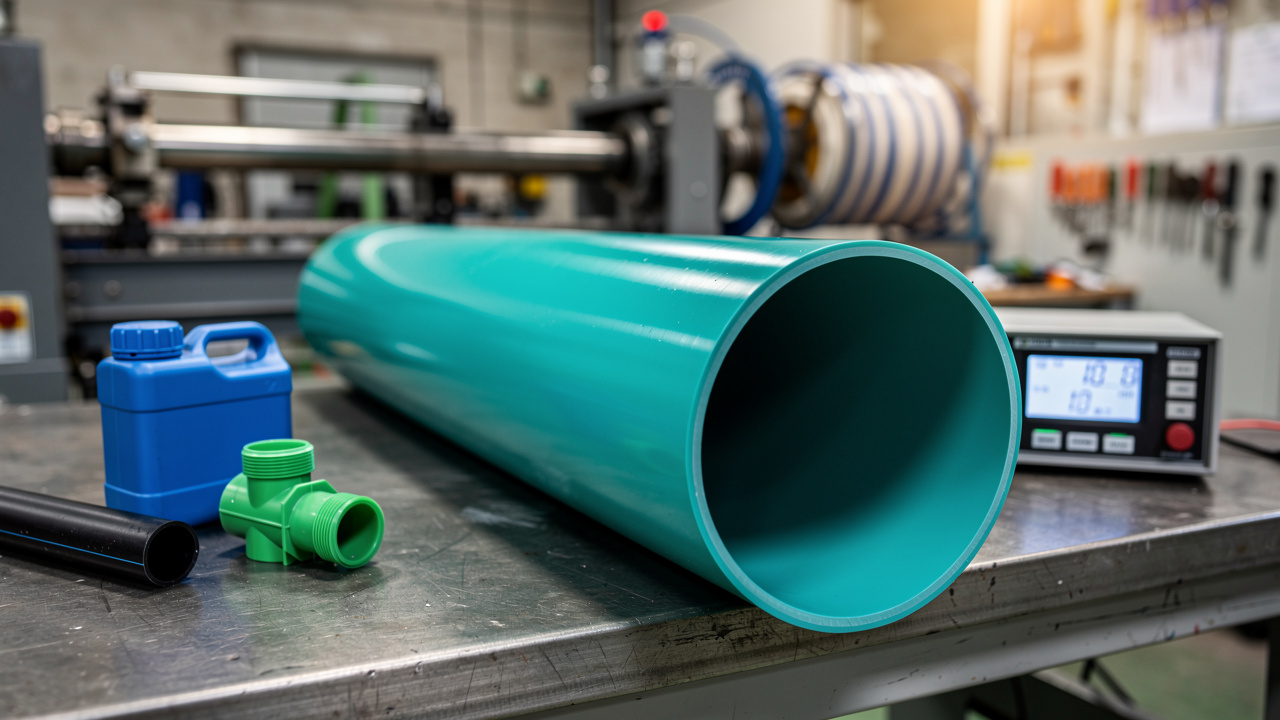
Best Practices for Working with Extruded HDPE in Manufacturing
Introduction
In the realm of modern manufacturing, extruded HDPE stands out as a pivotal material, offering unmatched durability and chemical resistance that can elevate your production capabilities.
As industries increasingly prioritize sustainability and efficiency, manufacturers must recognize the importance of optimizing their processes with this versatile plastic.
Manufacturers often struggle with quality control and market alignment in HDPE extrusion, which can complicate their operations.
What proven strategies can manufacturers adopt to streamline their HDPE processes and exceed customer expectations?
By embracing effective strategies, manufacturers can not only enhance their HDPE processes but also secure a competitive edge in a rapidly evolving market.
Understand HDPE Properties and Benefits
In a world where material performance is paramount, extruded HDPE stands out as a superior choice for manufacturers seeking reliability and efficiency. Known for its remarkable strength-to-density ratio, extruded HDPE is favored in numerous manufacturing applications. Key properties include:
- Durability: HDPE is resistant to impact and can withstand harsh environmental conditions, making it ideal for outdoor applications. It has been used for over 60 years with an excellent safety record specifically for drinking water systems, underscoring its reliability.
- Chemical Resistance: Extruded HDPE demonstrates outstanding resistance to a broad spectrum of chemicals, which is essential for sectors like agriculture and construction. Properly formulated extruded HDPE can have a projected service life of 50-100 years in both buried and exposed applications.
- Lightweight: Despite its strength, extruded HDPE remains lightweight, which reduces shipping costs and simplifies handling.
- Recyclability: The extruded HDPE material is fully recyclable, aligning with sustainability goals in manufacturing. The worldwide market for HDPE is anticipated to reach USD 119.7 billion by 2034, demonstrating a CAGR of 3.44% from 2026 to 2034, fueled by its recyclability and demand in multiple sectors.
With its diverse applications, from piping systems to packaging, extruded HDPE empowers manufacturers to effectively meet a wide range of operational needs. Recent advancements in recycling technologies for extruded HDPE are broadening its uses, further enhancing its appeal in the manufacturing sector. Additionally, UV stabilizer packages are available to protect colored HDPE products where carbon black is unsuitable. It's crucial to note that unprotected HDPE can degrade under UV radiation. For applications requiring food contact, compliance with migration limits and extractables testing is essential to ensure safety and reliability. By opting for HDPE, manufacturers not only ensure quality but also contribute to a more sustainable future in production.

Implement Effective HDPE Extrusion Techniques
To excel in HDPE extrusion, manufacturers must embrace best practices that ensure quality and efficiency:
- Temperature Control: Maintaining precise temperature control is essential throughout the extrusion process. The melting temperature for high-density polyethylene typically ranges from 220°C to 260°C. Consistent thermal management prevents defects such as uneven wall thickness and surface imperfections, which can compromise integrity.
- Screw Design: The choice of screw design significantly influences material flow and mixing. Barrier screws are especially efficient for extruded hdpe, as they enhance melt homogeneity and minimize shear heating, leading to a more consistent outcome.
- Die Design: Proper die design is crucial for minimizing pressure drops and ensuring smooth material flow. A refined die can significantly influence the standard of the final item, enabling uniform dimensions and surface finishes.
- Cooling Techniques: Using effective cooling methods like water baths or air cooling is crucial for keeping the extruded item’s shape and dimensions just right. These techniques help solidify the material quickly, reducing the risk of deformation.
Without these best practices, manufacturers risk costly defects and inefficiencies in their extrusion processes. By adopting these methods, manufacturers can transform their production capabilities and achieve superior results. Case studies have shown that companies implementing advanced temperature control systems and optimized screw designs have significantly improved their production efficiency and product quality, reinforcing the importance of these best practices in the industry. Embracing these practices not only enhances product quality but also positions manufacturers for long-term success in a competitive market.

Establish Robust Quality Control Protocols
Quality control is not just a requirement; it's the backbone of the production of extruded HDPE at Lincoln Plastics, certified to ISO 9001:2015. Manufacturers should implement the following protocols:
- Incoming Material Inspection: Conduct thorough inspections of incoming HDPE resin to check for contaminants, moisture content, and melt flow rate. This step is crucial to ensure that only high-quality materials are used in production.
- In-Process Monitoring: Regularly monitor key parameters such as temperature, pressure, and extrusion speed during production. Utilizing digital controllers can help maintain consistency and detect deviations early.
- Final Product Testing: Conduct thorough testing of the final products to ensure they meet specified tolerances and standards. This may include dimensional checks, tensile strength tests, and visual inspections for surface defects.
- Documentation and Traceability: Keeping detailed records isn't just a formality; it's crucial for tracking progress and driving improvement. This documentation is essential for traceability and continuous improvement.
At Lincoln Plastics, we have a robust management program. It includes dedicated assurance plans and process check sheets. This ensures our rigid profiles meet the exact specifications required by OEMs. We collaborate closely with OEMs to conduct special checks for fit and function. Many manufacturers struggle with ensuring consistent quality in their products made from extruded HDPE. By adopting these measures, they can significantly lower the risk of defects and enhance reliability. According to industry statistics, implementing strict control measures can lead to a reduction in defects by up to 30%, thereby enhancing overall operational efficiency. For instance, a case study on custom cord covers by Lincoln Plastics demonstrated that implementing stringent quality control measures led to a marked reduction in safety hazards and improved operational efficiency in workplaces. Such proactive measures not only ensure compliance with industry standards but also foster trust and reliability in the products offered. Investing in rigorous quality control is not merely about compliance; it's about building a legacy of trust and excellence in the extruded HDPE market.

Align Production with Market Applications
To truly harness the potential of extruded HDPE, manufacturers must align their production capabilities with the specific needs of the market. Key considerations include:
- Identifying Target Industries: Focus on sectors that heavily utilize HDPE, such as agriculture for irrigation pipes, construction for piping systems, and packaging for containers and films. Comprehending the specific requirements of these sectors can direct development and improve market relevance.
- Customization Options: At Lincoln Plastics, we specialize in customizing high-density polyethylene items, including varying thicknesses, colors, and features like UV resistance. This approach can attract a broader customer base and meet specific client requirements. Our capability to source colors that align with Pantone specifications guarantees consistency among manufacturers, enhancing item appeal.
- Market Research: Regular market research is crucial. It keeps manufacturers informed about emerging trends and demands. The High-Density Polyethylene (HDPE) market is estimated to be valued at USD 62,672.6 million in 2026 and is expected to reach USD 88,776.2 million by 2033, growing at a CAGR of 5.1%. This knowledge enables manufacturers to adapt their production strategies to meet evolving market needs effectively.
- Collaboration with OEMs: Partnering with OEMs offers valuable insights into the specific needs of end-users, enabling manufacturers to customize their offerings for optimal performance in real-world applications. At Lincoln Plastics, we collaborate closely with OEMs to guarantee that our offerings satisfy all standards, including specific assessments for ‘fit and function’. Our robust quality management program, certified to ISO 9001:2015, includes dedicated quality plans, in-process checks, and the use of multiple types of check gauges to ensure a proper end-use fit, ensuring that our rigid profiles meet critical dimensions as specified.
However, many manufacturers struggle to keep pace with rapidly changing market demands. By aligning production with market uses, they can improve their competitiveness and ensure that their plastic products meet the changing demands of their customers. The agricultural sector increasingly adopts extruded HDPE for irrigation systems, while the construction industry benefits from the durability and flexibility of extruded HDPE in applications such as geomembranes. As a result, those who adapt will not only survive but thrive in a competitive landscape.

Conclusion
Extruded HDPE stands out as a material that not only meets but exceeds the performance expectations of manufacturers across various industries. Understanding the properties and benefits of HDPE - like its durability, chemical resistance, and recyclability - enables manufacturers to meet diverse operational needs and support sustainability goals. The insights shared in this article highlight the importance of adopting best practices in HDPE extrusion, ensuring that manufacturers can optimize their processes and produce high-quality products.
Key strategies for effective HDPE extrusion include:
- Maintaining precise temperature control
- Selecting the right screw and die designs
- Implementing robust cooling techniques
These practices boost product quality and cut down on defects and inefficiencies, paving the way for greater operational success. Furthermore, establishing rigorous quality control protocols is essential for ensuring that extruded HDPE products meet industry standards and customer expectations. Lincoln Plastics exemplifies this commitment to quality through its ISO 9001:2015 certification and comprehensive quality management program.
Yet, as demand for extruded HDPE grows, many manufacturers find it challenging to align their production capabilities with market needs. By focusing on customization, conducting market research, and collaborating with OEMs, companies can better meet the evolving needs of their customers. Embracing these best practices not only fosters a culture of excellence but also positions manufacturers for long-term success in the dynamic landscape of HDPE production. Engaging with Lincoln Plastics could be the key to unlocking your potential in the competitive world of HDPE manufacturing.
Frequently Asked Questions
What is extruded HDPE and why is it favored in manufacturing?
Extruded HDPE (High-Density Polyethylene) is a material known for its remarkable strength-to-density ratio, making it a superior choice for manufacturers seeking reliability and efficiency in various applications.
What are the key properties of extruded HDPE?
Key properties of extruded HDPE include durability, chemical resistance, lightweight nature, and recyclability. It is resistant to impact, can withstand harsh environmental conditions, and demonstrates outstanding resistance to a broad spectrum of chemicals.
How durable is extruded HDPE?
Extruded HDPE is highly durable, with a proven track record of over 60 years, particularly in drinking water systems. It can withstand harsh environmental conditions, making it ideal for outdoor applications.
What is the projected service life of extruded HDPE?
Properly formulated extruded HDPE can have a projected service life of 50-100 years in both buried and exposed applications.
Why is the lightweight nature of extruded HDPE beneficial?
The lightweight nature of extruded HDPE reduces shipping costs and simplifies handling, making it more efficient for manufacturers.
Is extruded HDPE recyclable?
Yes, extruded HDPE is fully recyclable, aligning with sustainability goals in manufacturing. This recyclability is contributing to a growing market for HDPE, projected to reach USD 119.7 billion by 2034.
What advancements are being made in recycling technologies for extruded HDPE?
Recent advancements in recycling technologies are broadening the uses of extruded HDPE, enhancing its appeal in the manufacturing sector.
How does UV exposure affect extruded HDPE?
Unprotected HDPE can degrade under UV radiation. However, UV stabilizer packages are available to protect colored HDPE products where carbon black is unsuitable.
What compliance is necessary for HDPE applications involving food contact?
For applications requiring food contact, compliance with migration limits and extractables testing is essential to ensure safety and reliability.
How does using HDPE contribute to sustainability in manufacturing?
By opting for HDPE, manufacturers ensure quality while also contributing to a more sustainable future in production due to its recyclability and long service life.
List of Sources
- Understand HDPE Properties and Benefits
- Global High Density Polyethylene (HDPE) Market to Reach USD 119.7 Billion by 2034 (https://imarcgroup.com/global-high-density-polythylene-market)
- HDPE recycled prices spike as market tightens (https://plasticsnews.com/resin-prices/pn-2026-april-recycled-resin-pricing-hdpe)
- Plastic Updates (https://plasticupdates.com/news/hdpe)
- HDPE Guide: Properties, Uses & Applications [2025 Update] (https://lairdplastics.com/resources/hdpe-guide-properties-uses-applications-2025-update?srsltid=AfmBOoqX7y-AlLayIIznz3Cc1sHwxKrBbjFZvys5XkaByjl9bOZc_2cA)
- Implement Effective HDPE Extrusion Techniques
- Optimize HDPE Extrusion: 4 Steps to Enhance Efficiency (https://lincoln-plastics.com/news-post/optimize-hdpe-extrusion-4-steps-to-enhance-efficiency)
- Temperature Control in Extrusion: Why It’s Critical | Bausano (https://bausano.com/en/press-and-news/temperature-control-in-extrusion)
- Shaping the Future: Innovations in Plastic Extrusion Techniques - SeaGate Plastics Company (https://seagateplastics.com/shaping-the-future-innovations-in-plastic-extrusion-techniques)
- HDPE Pipe Extrusion: Process, Uses and Benefits | Bausano (https://bausano.com/en/press-and-news/hdpe-pipe-extrusion)
- Establish Robust Quality Control Protocols
- Plastic Extrusion News and Press Releases | Bausano (https://bausano.com/en/press-and-news?q=NEWS)
- The Extrusion Industry in 2026-2027: Innovations, Trends, and Opportunities (https://plextrusions.com/extrusion-blog/the-extrusion-industry-in-2026-2027-innovations-trends-and-opportunities)
- The Importance of Quality Control in Plastic Extrusion Manufacturing - Craftedplastics (https://craftedplastics.com/blog/the-importance-of-quality-control-in-plastic-extrusion-manufacturing)
- Optimize HDPE Extrusion: 4 Steps to Enhance Efficiency (https://lincoln-plastics.com/news-post/optimize-hdpe-extrusion-4-steps-to-enhance-efficiency)
- Align Production with Market Applications
- High Density Polyethylene (HDPE) Market Size & Trends, 2033 (https://coherentmarketinsights.com/industry-reports/high-density-polyethylene-hdpe-market)
- Innovative Applications of High-Density Polyethylene (HDPE) in Construction, Agriculture, and Industry|News|POLYPVC (https://polypvc.com/news/Innovative-Applications-of-HighDensity-Polyethylene-HDPE-in-Construction-Agriculture-and-Industry.html)
- HDPE Piping Solutions to Update the Nation’s Infrastructure (https://blog.unitedpolysystems.com/blog/hdpe-piping-solutions-to-update-infrastructur)
- HDPE Market Demand to Reach 78,900 KT by 2034, Growing at 3.1% CAGR (https://prismaneconsulting.com/report-details/hdpe-market)


