
Best Practices for Sourcing Plastic Materials in OEM Purchasing
Introduction
In the complex landscape of OEM purchasing, the choice of plastic materials is pivotal for ensuring product excellence and operational success. Manufacturers must grasp the differences between plastics like PVC and polypropylene to optimize their sourcing strategies. OEMs face uncertainty in choosing the right materials due to market volatility and supplier inconsistencies.
How can they ensure the best choices for their projects? Let’s explore some best practices for sourcing plastic materials that can make a real difference, offering insights into effective negotiation strategies and the advantages of custom extrusion solutions. This article will provide OEMs with effective strategies to navigate these challenges.
Identify Key Plastic Types and Their Applications
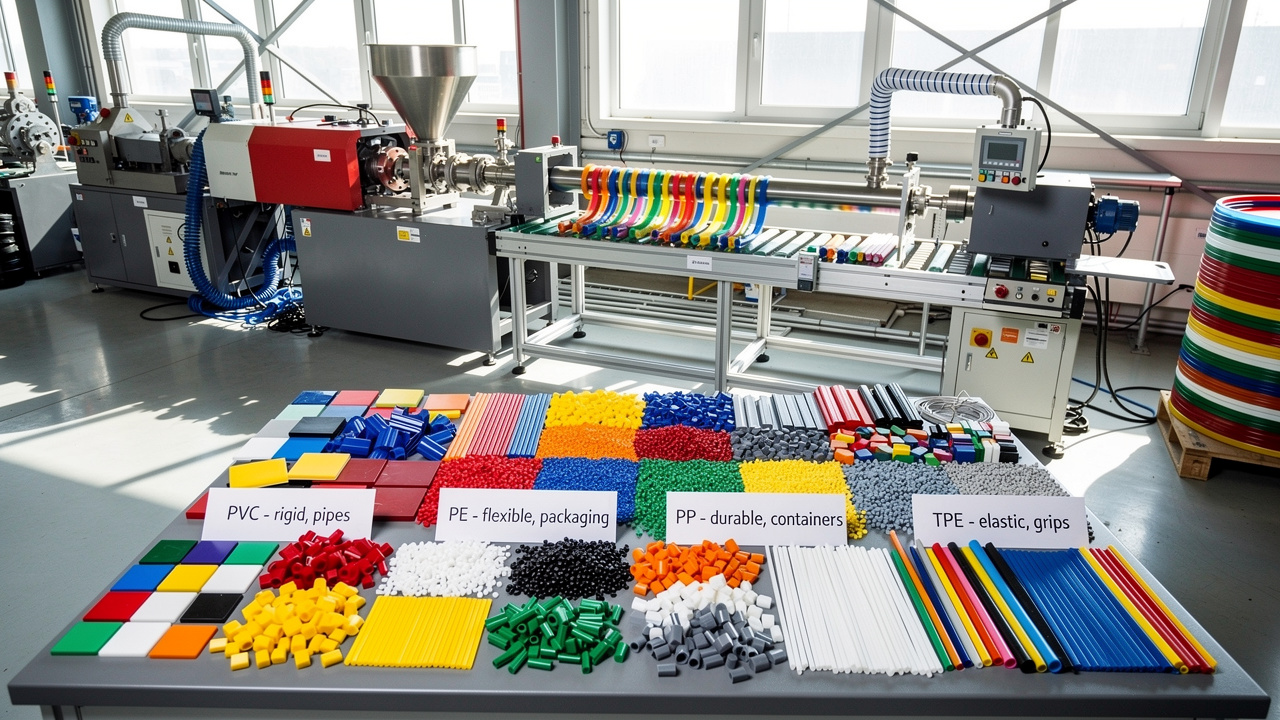
In the competitive landscape of plastic extrusion, selecting the right materials is crucial for success. Several essential materials are frequently employed, each possessing distinct characteristics that render them appropriate for particular uses. Here are some of the most prevalent types:
- Polyvinyl Chloride (PVC): Known for its durability and chemical resistance, PVC is perfect for uses such as pipes, fittings, and profiles in construction and plumbing. Its longevity and low maintenance needs make it a preferred choice for municipal water systems, where it accounts for nearly 58% of new installations due to its resistance to corrosion and high mineral content.
- Polyethylene (PE): Known for its flexibility and toughness, PE is often used in packaging, containers, and various industrial applications, including cable insulation. The substance's lightweight characteristics lead to lower transportation expenses, rendering it an effective choice for OEMs.
- Polypropylene (PP): This material is favored for its lightweight nature and resistance to fatigue, making it suitable for automotive components, packaging, and consumer goods. Its versatility enables a broad spectrum of uses across various sectors.
- Acrylonitrile Butadiene Styrene (ABS): ABS is recognized for its impact resistance and strength, commonly used in consumer electronics and automotive parts. Its ability to withstand harsh conditions makes it a reliable choice for manufacturers seeking durability.
- Thermoplastic Elastomers (TPE): Merging the characteristics of rubber and plastic, TPEs are utilized in contexts demanding flexibility and durability, such as seals and gaskets. Their adaptability makes them appropriate for a range of industrial uses.
At Lincoln Plastics, we focus on standard and custom round plastic profiles. Our flexible manufacturing solutions are designed to meet the unique needs of OEMs. We can co-extrude materials, giving you multi-color or multi-material profiles that improve both functionality and looks. We produce a range of sizes and colors to accommodate various uses, ensuring that our products meet your precise specifications.
Furthermore, our commitment to quality is underscored by our ISO 9001:2015 certification and rigorous quality management plans, which include dedicated quality books and in-process checks to ensure that all products meet the highest standards.
Are you struggling to choose the right plastic for your project? Understanding these materials not only simplifies your selection process but also boosts your product's competitiveness in the market. As the market evolves, staying informed about the latest trends in resource usage, particularly in polyethylene for industrial applications, will be crucial for optimizing procurement strategies. By partnering with Lincoln Plastics, you ensure that your products stand out in quality and performance.

Evaluate Supplier Reliability and Material Cost Trends
Navigating the complexities of sourcing can be daunting, especially when it comes to plastic materials, vendor reliability, and cost trends. Here are key considerations:
- Vendor Performance Metrics: Evaluate vendors based on their historical performance, including on-time delivery rates, quality consistency, and responsiveness to inquiries. Tools like scorecards can help track these metrics over time.
- Market Analysis: Stay informed about market trends affecting plastic materials prices, including fluctuations in oil prices, demand-supply dynamics, and geopolitical factors. Regularly review industry reports and forecasts to anticipate changes.
- Long-Term Relationships: Establishing enduring connections with dependable vendors can result in enhanced pricing, prioritized service, and better cooperation on custom projects. Think about how contracts with performance incentives can strengthen your vendor relationships and enhance collaboration on custom projects.
- Diversification of Providers: Avoid reliance on a single provider by broadening your provider base. This strategy can protect against disruptions and provide leverage in negotiations.
- Cost Management Strategies: Implement strategies such as bulk purchasing or long-term contracts to lock in favorable pricing and reduce costs over time.
By prioritizing these strategies, OEMs not only secure reliable partnerships but also position themselves for long-term success in a competitive market.

Implement Effective Contract Negotiation Strategies
In the competitive landscape of OEM purchasing, mastering contract negotiations is crucial for securing the best terms in sourcing plastic materials. Here are key strategies to enhance your negotiation outcomes:
- Preparation is Key: Before discussions, compile data on market prices, supplier performance, and your purchasing history. This information equips you to negotiate from a position of strength, significantly increasing your chances of favorable terms. Research indicates that organizations investing time in preparation often reduce delays and achieve better results. In fact, the median contract cycle was 42 days in 2025.
- Define Clear Objectives: Clearly outline your goals for the discussion, including pricing, delivery schedules, and quality standards. Having specific objectives helps maintain focus during discussions and directs the bargaining process.
- Build Rapport: Building a good rapport with your vendors can make discussions flow more smoothly. Understanding their needs and constraints fosters goodwill, which can lead to mutually beneficial agreements. As Maarten Smits van Oyen states, 'Strong bargaining begins long before meeting with a supplier.'
- Use a Collaborative Approach: Rather than adopting an adversarial stance, view discussions as a partnership. Discuss how both parties can benefit from the agreement, which can enhance cooperation and lead to better outcomes.
- Be Willing to Walk Away: What happens when negotiations stall and your needs aren't met? Be ready to walk away if necessary. This approach can encourage vendors to rethink their proposals and possibly offer improved conditions. However, be cautious of depending on less expensive vendors, as this can lead to significant issues down the line.
Ultimately, your ability to negotiate effectively can determine the success of your sourcing strategy and the strength of your supplier relationships.

Leverage Custom Extrusion Solutions for Operational Efficiency
Custom extrusion solutions are not just enhancements; they are game-changers for OEMs seeking operational excellence. Key benefits and considerations include:
- Tailored Designs: Custom extrusion allows for the development of profiles that satisfy exact design specifications, ensuring smooth integration into current systems and uses. For instance, Lincoln Plastics designs custom extruded profiles that cater specifically to OEM requirements, including innovative solutions like the Flexiduct for flexible cord management. Are you tired of settling for generic solutions that don't meet your specific needs? With custom designs, you eliminate the compromises often associated with off-the-shelf products.
- Resource Optimization: Working with extrusion specialists at Lincoln Plastics enables OEMs to choose the most suitable plastic materials, effectively balancing performance, cost, and environmental impact. As highlighted by industry specialists, optimizing resource selection is essential for attaining both functionality and sustainability in custom extrusion applications involving plastic materials. Imagine the impact on your bottom line when waste is minimized and turnaround times are reduced.
- Reduced Waste: The custom extrusion process minimizes material waste by producing components that are accurately tailored to specifications, thereby reducing the need for additional machining or adjustments. Data indicates that custom extrusion can lead to a significant reduction in waste, enhancing overall operational efficiency.
- Faster Turnaround Times: Streamlined processes and dedicated production lines at Lincoln Plastics facilitate quicker delivery times, enabling OEMs to meet tight project deadlines efficiently. This agility is essential in today’s fast-paced market environment, supported by Lincoln Plastics' strategic Midwest location that enhances logistics and order fulfillment.
- Enhanced Collaboration: Engaging with extrusion specialists at Lincoln Plastics fosters collaboration, providing OEMs with valuable insights into manufacturability, tolerances, and co-extrusion options. This partnership not only improves the design process but also ensures that the final products meet the highest standards of quality, backed by Lincoln Plastics' ISO 9001:2015 certification and rigorous quality management plans, including dedicated quality books and in-process checks.
By embracing custom extrusion, OEMs position themselves for success in a competitive landscape, ensuring they never compromise on quality or efficiency.

Conclusion
Sourcing plastic materials for OEM applications is a pivotal process that can make or break your product's success. By understanding the different types of plastics and their applications, OEMs can make informed decisions that boost manufacturing capabilities. This article shows just how crucial it is to select the right materials, evaluate supplier reliability, and implement effective negotiation strategies to secure favorable terms.
Key points discussed include the diverse characteristics of essential plastics such as PVC, PE, and PP, which cater to different industrial needs. Additionally, we emphasize the necessity of establishing strong relationships with reliable suppliers and staying updated on market trends to navigate the complexities of sourcing effectively. Furthermore, mastering contract negotiation techniques can lead to better pricing and terms, ultimately benefiting the OEM's bottom line.
Navigating the complexities of material sourcing can often feel overwhelming for OEMs. However, failing to choose the right materials can lead to costly production delays and compromised product quality. In conclusion, sourcing plastic materials isn’t just about procurement; it’s about building partnerships that foster innovation and efficiency. By leveraging custom extrusion solutions from Lincoln Plastics, OEMs can optimize their designs, reduce waste, and enhance operational agility. Choosing Lincoln Plastics as your partner in sourcing can redefine your operational success and keep you ahead of the competition.
Frequently Asked Questions
What are the key types of plastics used in extrusion?
The key types of plastics used in extrusion include Polyvinyl Chloride (PVC), Polyethylene (PE), Polypropylene (PP), Acrylonitrile Butadiene Styrene (ABS), and Thermoplastic Elastomers (TPE). Each type has distinct characteristics suitable for various applications.
What are the applications of Polyvinyl Chloride (PVC)?
PVC is known for its durability and chemical resistance, making it ideal for pipes, fittings, and profiles in construction and plumbing. It is particularly favored for municipal water systems due to its longevity and low maintenance needs.
How is Polyethylene (PE) utilized in industries?
PE is valued for its flexibility and toughness, commonly used in packaging, containers, and industrial applications like cable insulation. Its lightweight nature helps reduce transportation costs, making it effective for OEMs.
What makes Polypropylene (PP) a popular choice for manufacturers?
PP is lightweight and resistant to fatigue, making it suitable for automotive components, packaging, and consumer goods. Its versatility allows for a wide range of applications across different sectors.
In what contexts is Acrylonitrile Butadiene Styrene (ABS) used?
ABS is recognized for its impact resistance and strength, commonly used in consumer electronics and automotive parts. Its durability makes it a reliable choice for manufacturers.
What are Thermoplastic Elastomers (TPE) and their applications?
TPEs combine the properties of rubber and plastic, making them suitable for applications requiring flexibility and durability, such as seals and gaskets. Their adaptability allows for various industrial uses.
How does Lincoln Plastics enhance its plastic profiles?
Lincoln Plastics offers standard and custom round plastic profiles, utilizing flexible manufacturing solutions. They can co-extrude materials to create multi-color or multi-material profiles, enhancing both functionality and aesthetics.
What quality management practices does Lincoln Plastics implement?
Lincoln Plastics is ISO 9001:2015 certified and follows rigorous quality management plans, including dedicated quality books and in-process checks to ensure all products meet high standards.
Why is it important to understand different plastic materials?
Understanding different plastic materials simplifies the selection process and enhances a product's competitiveness in the market. Staying informed about trends, especially in polyethylene for industrial applications, is crucial for optimizing procurement strategies.
How can I get assistance with selecting the right plastic for my project?
You can contact Lincoln Plastics experts for quotes or tailor-made solutions to help you choose the right plastic for your project.
List of Sources
- Identify Key Plastic Types and Their Applications
- PVC Pipe Market Analysis Report 2026: Major Trends, Influencing Factors and Forecast Overview (https://openpr.com/news/4513271/pvc-pipe-market-analysis-report-2026-major-trends-influencing)
- 30+ Pvc Industry Statistics (2026, Verified) (https://wifitalents.com/pvc-industry-statistics)
- PVC Pipes market Size, Share | Industry Statistics, 2034 (https://marketreportsworld.com/market-reports/pvc-pipes-market-14723003)
- PVC poised to reshape the PVF landscape (https://pmmag.com/articles/106261-pvc-poised-to-reshape-the-pvf-landscape)
- Pvc Pipe Industry Statistics (2026): Latest Research (https://worldmetrics.org/pvc-pipe-industry-statistics)
- Evaluate Supplier Reliability and Material Cost Trends
- 2026 Trend Breakdown: Plastics Supply Chain Regionalization (https://mholland.com/market-insights/2026-trend-breakdown-plastics-supply-chain-regionalization)
- Plastics Industry Faces Cost and Policy Pressures (https://plasticstoday.com/industry-trends/plastics-industry-faces-mounting-challenges-in-2026)
- Supply Chain Data Collection in Plastics Manufacturing: Key Trends, Pain Points & Solutions (https://3eco.com/article/supply-chain-data-collection-plastics-manufacturing-trends)
- 2026 Plastics Market in Crisis: Finding Stable Suppliers | PRM-TAIWAN posted on the topic | LinkedIn (https://linkedin.com/posts/prm-taiwan_supplychaincrisis-plasticindustry-b2bmarketing-activity-7445034452927528960-a6Sh)
- 2026 Forecast for U.S. Plastics Procurement - Sterling Plastics (https://sterlingplasticsinc.com/insights/2026-forecast-for-plastics-procurement)
- Implement Effective Contract Negotiation Strategies
- How to Successfully Negotiate as a Buyer in 2026 | Xentys (https://xentys.nl/en/procurement-knowledge/how-to-successfully-negotiate-as-a-buyer-in-2026)
- Negotiations in the News, Week of March 9, 2026 (https://watershedassociates.com/negotiations-in-the-news-week-of-march-9-2026)
- Negotiation Statistics 2026 — 60 Key Figures (https://procurementtactics.com/negotiation-statistics)
- Hospital Partners, Data Sharing or Simply Walking Away: Strategies for Better Medicare Advantage Contracts (https://skillednursingnews.com/2026/06/hospital-partners-data-sharing-or-simply-walking-away-strategies-for-better-medicare-advantage-contracts)
- The Key Procurement Negotiation Strategies for 2026 | GEP Blog (https://gep.com/blog/strategy/key-procurement-negotiation-strategies)
- Leverage Custom Extrusion Solutions for Operational Efficiency
- Aluminum Extrusion Market to Hit US$ 170 Billion by 2030 at 7.2% CAGR -- Latest Report by Wissen Research (https://prnewswire.com/news-releases/aluminum-extrusion-market-to-hit-us-170-billion-by-2030-at-7-2-cagr--latest-report-by-wissen-research-302777859.html)
- 10 Essential Insights on Extrusion Tubing for OEMs (https://lincoln-plastics.com/news-post/10-essential-insights-on-extrusion-tubing-for-oems)
- Key Players Install New Aluminum Extrusion Press Lines and Focus on Technology Advancement (https://marketresearchfuture.com/news/key-players-install-new-aluminum-extrusion-press-lines-and-focus-on-technology-advancement)
- Aluminum Extrusion Profiles for OEMs | Amfas International (https://amfasinternational.com/newsroom/aluminum-extrusion-profiles-types-applications-and-benefits)
Related posts

Plastic Extrusion for Energy & Infrastructure Projects
Lincoln Plastics provides durable, custom extrusion solutions for energy and infrastructure projects, from conduit to tubing to protective profiles.


Made in the Midwest: Why Location Matters
Lincoln Plastics’ Midwest location provides faster shipping, lower freight costs, and the reliability OEMs need in a manufacturing partner.
How Extrusion Supports OEM Supply Chains
Lincoln Plastics helps OEMs strengthen supply chains with flexible production runs, reliable delivery, and custom extrusion solutions.
