
Best Practices for Sourcing ABS Plastic Raw Material Effectively
Introduction
In the competitive landscape of manufacturing, sourcing high-quality ABS plastic raw materials is not just important; it's essential for success. With remarkable properties such as impact resistance, thermal stability, and ease of fabrication, ABS plastic has become a staple across various industries, from automotive to consumer electronics.
But how do manufacturers tackle the complexities of supplier relationships and material specifications? Navigating these challenges can be daunting, yet making informed decisions is crucial for meeting immediate needs and positioning for future growth.
By prioritizing informed sourcing decisions, manufacturers can not only meet current demands but also pave the way for sustainable growth.
Understand ABS Plastic Properties and Characteristics
When it comes to durability and versatility, the ABS plastic raw material stands out as a top choice for manufacturers. This thermoplastic, which is an ABS plastic raw material, is renowned for its exceptional impact resistance, toughness, and ease of processing. It achieves a balance between rigidity and flexibility, making it suitable for a wide range of applications. Key properties include:
- Impact Resistance: ABS can endure significant physical stress, making it ideal for products that demand durability. Studies indicate that ABS maintains its integrity under various impact conditions, with no catastrophic failures observed during testing at velocities up to 6.264 m/s.
- Thermal Stability: It retains its properties across a wide temperature range, typically from -20°C to 80°C, which is crucial for applications exposed to fluctuating environmental conditions.
- Chemical Resistance: ABS exhibits resistance to many chemicals, enhancing its usability in industrial settings where exposure to harsh substances is common.
- Ease of Fabrication: The material can be easily molded, extruded, and machined, supporting various manufacturing processes such as injection molding and CNC machining.
At Lincoln Plastics, we ensure our ABS products meet rigorous standards through a robust management program. Our ISO 9001:2015 certification highlights our dedication to excellence, with focused plans and in-process checks that ensure precision in every batch. We collaborate closely with OEMs to ensure their products meet all quality requirements, including special checks for ‘fit and function’ using multiple types of check gauges. Additionally, we can easily source colors that meet your Pantone specifications for consistency across manufacturers when using ABS plastic raw material. How can understanding these characteristics help producers select the right grade of ABS for their needs? This knowledge guarantees optimal performance in their applications.

Explore Key Applications of ABS Plastic in Manufacturing
Are you aware of the transformative potential of ABS plastic in your manufacturing processes? The advantageous properties of ABS plastic raw material make it extensively utilized across various sectors, making it a preferred choice for manufacturers.
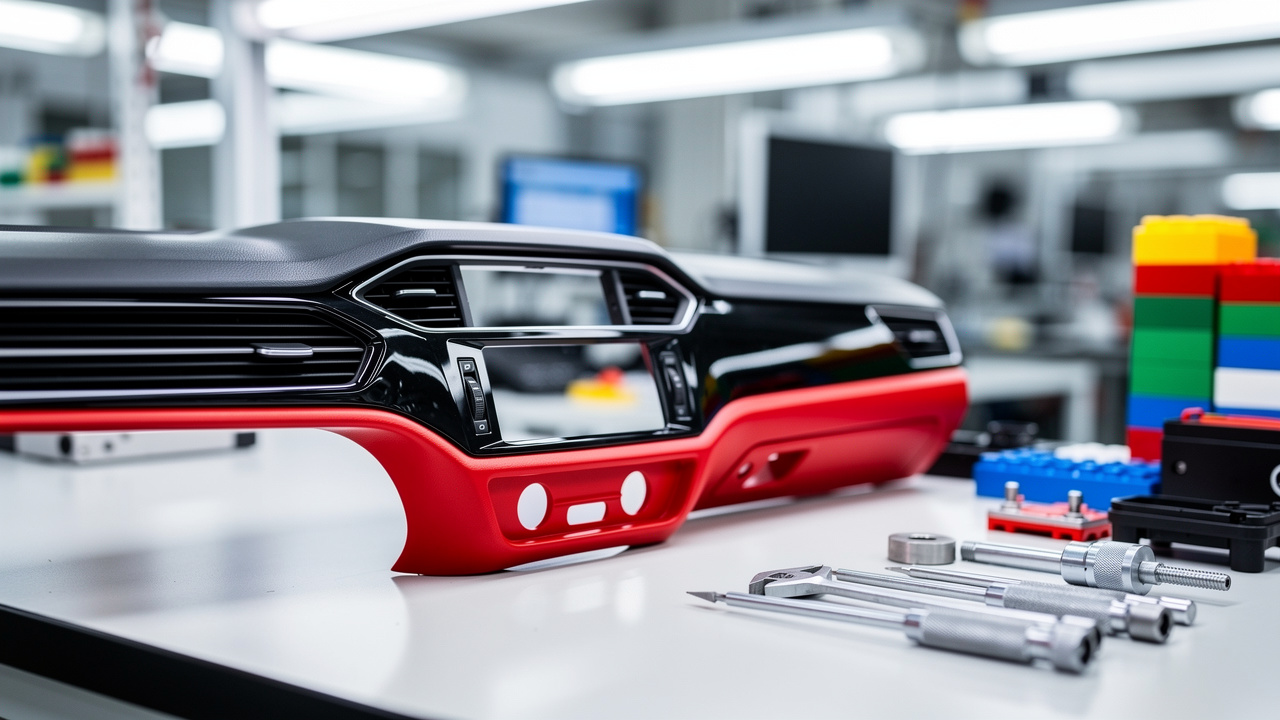
When it comes to automotive parts, ABS plastic stands out for its strength and aesthetic appeal, making it a top choice for dashboards, trims, and panels. Its lightweight nature contributes to improved fuel efficiency and safety in vehicles, with ABS plastics enhancing the durability of components like bumpers and body panels. Notably, ABS is also used in automotive electrical parts, such as battery boxes and fuse boxes, ensuring safety and reliability.
In the realm of consumer electronics, ABS plastic's robustness is crucial for housings and components in electronic devices. As technology advances, the demand for ABS in this sector is expected to rise, particularly for its insulating properties and ability to withstand heat, which are vital for electronic safety and reliability. The overall growth of the plastics market, as reported by Grand View Research, further underscores the significance of ABS in this industry.
ABS is a popular choice for manufacturing toys, including iconic LEGO bricks, due to its safety, versatility, and ability to be molded into intricate shapes.
It is utilized in various machinery components, providing reliable performance in demanding environments, which is essential for maintaining operational efficiency.
ABS is integral to cable management solutions, offering protection and organization for electrical installations, thereby enhancing safety and functionality.
The versatility of ABS plastic raw material is evident across various sectors, making it an essential component for manufacturers aiming to enhance their product ranges. With the market for ABS expected to expand considerably, featuring a 6% compound annual growth rate for ABS plastic sheets from 2016 to 2024, manufacturers are urged to investigate its potential across these various uses. Embracing ABS plastic could redefine your product offerings and position your company for future growth.

Implement Best Practices for Sourcing ABS Plastic
Sourcing high-quality ABS plastic raw material is not just a task; it’s a strategic necessity for manufacturers aiming for excellence.
- Identify Reliable Suppliers: Have you taken the time to thoroughly research potential suppliers? Look for those with solid reputations and quality certifications. Prioritize suppliers with a proven track record in providing ABS plastic raw material, as reliability is crucial for maintaining a consistent supply.
- Evaluate Material Specifications: Are the ABS grades you’re considering truly aligned with your application needs? Focus on key properties like impact resistance, thermal stability, and chemical compatibility. This assessment is vital for achieving optimal performance in your offerings.
- Establish Long-Term Relationships: Cultivating strong relationships with suppliers can yield significant benefits. Better pricing, priority service, and access to innovative materials or technologies are just a few advantages. Long-term partnerships foster collaboration and trust, which can be invaluable during supply chain disruptions.
- Monitor Supply Chain Risks: Navigating the complexities of sourcing ABS plastic raw material can be daunting, especially with fluctuating market conditions. Stay updated on market trends and potential disruptions that could impact your supply chain. Implementing dual sourcing strategies can mitigate risks associated with dependence on a single supplier, ensuring continuity in your operations.
- Conduct Regular Quality Checks: Implement routine inspections of incoming materials to verify compliance with established specifications. Maintaining strict standards throughout the production process is essential for ensuring the integrity and performance of your final items.
By refining your sourcing strategies, you not only secure quality materials but also position your business for long-term success in a competitive market. Lincoln Plastics is equipped to meet additional regulatory requirements beyond ISO 9001, ensuring comprehensive compliance for your projects. For tailored solutions and expert guidance, consider reaching out to Lincoln Plastics in Lincoln, Nebraska, to discuss your specific needs.

Utilize Effective Processing Methods for ABS Plastic
To fully leverage the advantages of ABS plastic in manufacturing, it's essential to implement effective processing methods:
- Injection Molding: This prevalent method for producing ABS parts requires careful mold design. Without careful mold design, manufacturers risk producing defective parts that compromise quality. Properly designed molds can significantly reduce defects, ensuring high-quality outputs.
- Extrusion: Ideal for continuous profiles, extrusion demands consistent temperatures and pressures. Mastering the tube extrusion process is key. It optimizes production efficiency and enhances quality. Recent statistics indicate that maintaining optimal conditions can enhance extrusion efficiency by up to 20%. This method is particularly effective for producing items like pipes and sheets, where precision is crucial. Lincoln Plastics also provides co-extrusion capabilities for multi-color or multi-material profiles, further enhancing versatility. By applying best practices in extrusion, manufacturers can guarantee high-quality outputs that meet the rigorous standards expected in OEM uses.
- Thermoforming: This technique is suitable for shaping ABS sheets into complex forms. Adequate preheating of the material is essential to ensure proper forming without compromising the integrity of the ABS.
- 3D Printing: ABS is favored in additive manufacturing due to its strength and ease of use. Optimizing print settings is vital to reduce warping and enhance layer adhesion, making it a reliable choice for prototyping and low-volume production.
- Post-Processing: Techniques such as sanding, painting, or coating can significantly enhance the aesthetic and functional properties of ABS parts. Make sure any post-processing materials you use are compatible with ABS to avoid degradation.
By applying these processing techniques, manufacturers can enhance the efficiency and quality of their products using ABS plastic raw material. This leads to improved performance across various applications. As the industry progresses, remaining aware of trends like automation's impact on improving standards and efficiency will be crucial for sustaining a competitive edge. Lincoln Plastics, with its ISO 9001:2015 certification and rigorous quality management plans, including dedicated quality books and in-process checks, is committed to supporting OEMs in achieving these goals. By staying ahead of industry trends and embracing best practices, manufacturers can ensure their ABS products meet the highest standards of quality and performance.

Conclusion
Navigating the complexities of sourcing ABS plastic raw materials is essential for manufacturers aiming to enhance product quality and performance. Understanding the properties and applications of ABS is key. It allows businesses to make informed decisions that align with their operational needs. This strategic approach to sourcing not only ensures the acquisition of high-quality materials but also fosters long-term partnerships that can lead to innovation and efficiency.
Key insights from this article highlight the importance of:
- Identifying reliable suppliers
- Evaluating material specifications
- Implementing best practices in processing methods
Focusing on these areas helps manufacturers reduce risks from supply chain disruptions and keep their products intact. Additionally, the versatility of ABS plastic across various applications - from automotive to consumer electronics - underscores its significance in modern manufacturing.
As the demand for ABS continues to grow, companies are encouraged to explore its potential and leverage the expertise of partners like Lincoln Plastics. For tailored solutions and expert guidance, reaching out to Lincoln Plastics can provide the necessary support to navigate the complexities of sourcing and processing ABS effectively. As the landscape of manufacturing evolves, those who adapt their sourcing strategies will not only survive but thrive.
Frequently Asked Questions
What are the key properties of ABS plastic?
ABS plastic is known for its exceptional impact resistance, toughness, thermal stability, chemical resistance, and ease of fabrication. It can endure significant physical stress, retains its properties across a wide temperature range (-20°C to 80°C), resists many chemicals, and can be easily molded, extruded, and machined.
How does ABS plastic perform under impact conditions?
ABS plastic maintains its integrity under various impact conditions, with studies showing no catastrophic failures during testing at velocities up to 6.264 m/s, making it ideal for durable products.
What temperature range can ABS plastic withstand?
ABS plastic retains its properties across a temperature range typically from -20°C to 80°C, which is crucial for applications exposed to fluctuating environmental conditions.
What advantages does ABS plastic offer in terms of chemical resistance?
ABS exhibits resistance to many chemicals, enhancing its usability in industrial settings where exposure to harsh substances is common.
How is ABS plastic fabricated?
ABS plastic can be easily molded, extruded, and machined, supporting various manufacturing processes such as injection molding and CNC machining.
What quality management standards does Lincoln Plastics adhere to?
Lincoln Plastics is ISO 9001:2015 certified, ensuring rigorous quality management through dedicated quality plans and in-process checks to guarantee precision in every batch.
How does Lincoln Plastics ensure product quality for OEMs?
Lincoln Plastics collaborates closely with OEMs to meet all quality requirements, including special checks for ‘fit and function’ using multiple types of check gauges.
Can Lincoln Plastics source specific colors for ABS products?
Yes, Lincoln Plastics can easily source colors that meet Pantone specifications for consistency across manufacturers when using ABS plastic raw material.
Why is it important to understand ABS plastic characteristics for producers?
Understanding the characteristics of ABS plastic helps producers select the right grade for their needs, ensuring optimal performance in their applications.
How can I get in touch with Lincoln Plastics for tailored solutions?
Interested parties can contact Lincoln Plastics experts for quotes or tailor-made solutions to meet their specific needs.
List of Sources
- Understand ABS Plastic Properties and Characteristics
- MIT chemists design impact-resistant plastics (https://news.mit.edu/2026/mit-chemists-design-impact-resistant-plastics-0603)
- Investigation for impact behavior of acrylonitrile-butadiene-styrene amorphous thermoplastic (https://sciencedirect.com/science/article/abs/pii/S0142941820302439)
- ABS Plastic Properties and Uses | Piedmont Plastics (https://piedmontplastics.com/blog/abs-plastic-properties-and-uses?srsltid=AfmBOoo-lMyNHGQ_67gzq-B2drh_9yshc_VCIehdePx3dhqvNp7KfWEd)
- MatWeb - The Online Materials Information Resource (https://matweb.com/search/datasheet.aspx?MatGUID=3a8afcddac864d4b8f58d40570d2e5aa)
- What are the properties of ABS plastic? – Adreco Plastics (https://adrecoplastics.co.uk/abs-plastic-properties)
- Explore Key Applications of ABS Plastic in Manufacturing
- ABS Plastic Sheet Companies Expected to Grow Next 3 Years (https://polymershapes.com/abs-plastic-sheet-companies)
- ABS Plastic: Advantages, Disadvantages, and Applications (https://protolabs.com/materials/abs)
- ABS Injection Molding: Definition, Applications, Process, and Techniques (https://xometry.com/resources/injection-molding/abs-injection-molding)
- The important role of ABS plastic in automobile manufacturing - Cylex plastics (https://cylexplastics.com/the-important-role-of-abs-plastic-in-automobile-manufacturing)
- Is ABS Plastic Suitable for Automotive Applications? (https://novastevensville.com/is-abs-plastic-suitable-for-automotive-applications)
- Implement Best Practices for Sourcing ABS Plastic
- Maximize Efficiency with Extruded ABS Plastic in Manufacturing (https://lincoln-plastics.com/news-post/maximize-efficiency-with-extruded-abs-plastic-in-manufacturing)
- Careers in Plastic Manufacturing at Allied Plastics | Join Our Team (https://vciplastics.com/blog/2026-trends-in-abs-plastic-materials-applications)
- Is the ABS supply gone for good? - MP3 S.r.l. (https://ilpa-mp3.com/en/general-news/is-the-abs-supply-gone-for-good)
- Inside the Intricate World of ABS Plastic: Exploring the Supply Chain and Chemical Process (https://m2materials.com/blogs/news/inside-the-intricate-world-of-abs-plastic-exploring-the-supply-chain-and-chemical-process?srsltid=AfmBOopGv_aD5dmxb4iX93MfYBbM0oonAz8L9l20HkgVhd-LJPb4F1iJ)
- Modified ABS Plastic B2B Buying Guide 2026 (https://seller.alibaba.com/blogs/2026/southeast-asia/plastics-materials/modified-abs-buying-guide-alibaba-b2b)
- Utilize Effective Processing Methods for ABS Plastic
- The Evolving Landscape of Plastic Injection Molding: Trends, Global Capacity, and Expertise (https://linkedin.com/pulse/evolving-landscape-plastic-injection-molding-trends-global-dukhi--65obc)
- The Future Trends of the Injection Molding Industry (https://protoshopinc.com/blog/the-future-trends-of-the-injection-molding-industry)
- 2026 Injection Molding Trends (https://kaysun.com/blog/2026-injection-molding-trends)
- Injection Molding Trends Shaping 2026 — And Why U.S. Manufacturers Are Ahead - Westec Plastics | Premier Medical Injection Molding and Custom Plastic Manufacturers in California (https://westecplastics.com/blogs-news/injection-molding-trends-shaping-2026-and-why-u-s-manufacturers-are-ahead)
- The Future of Injection Molding: Trends and Opportunities (https://advancedplastiform.com/the-future-of-injection-molding)


