
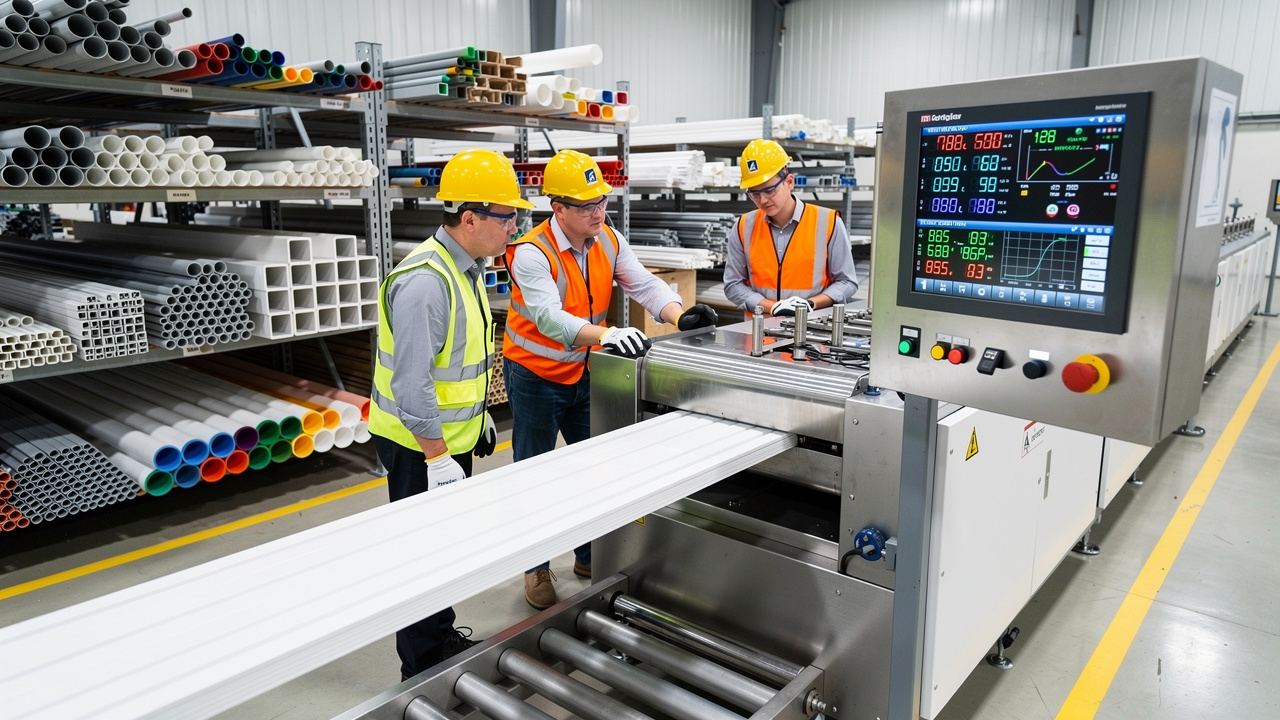
Best Practices for Rigid PVC Extrusion: Optimize Quality and Customization
Introduction
Rigid PVC extrusion stands as a pivotal element in diverse industrial applications, showcasing unmatched properties and adaptability. This article explores best practices that elevate the quality of rigid PVC products while tailoring solutions to meet unique client demands. Yet, as manufacturers pursue excellence, they frequently encounter hurdles in ensuring consistency and streamlining processes.
Are you facing similar challenges? So, what strategies can you implement to ensure your rigid PVC extrusion not only meets but surpasses industry standards?
Understand Rigid PVC: Properties and Applications
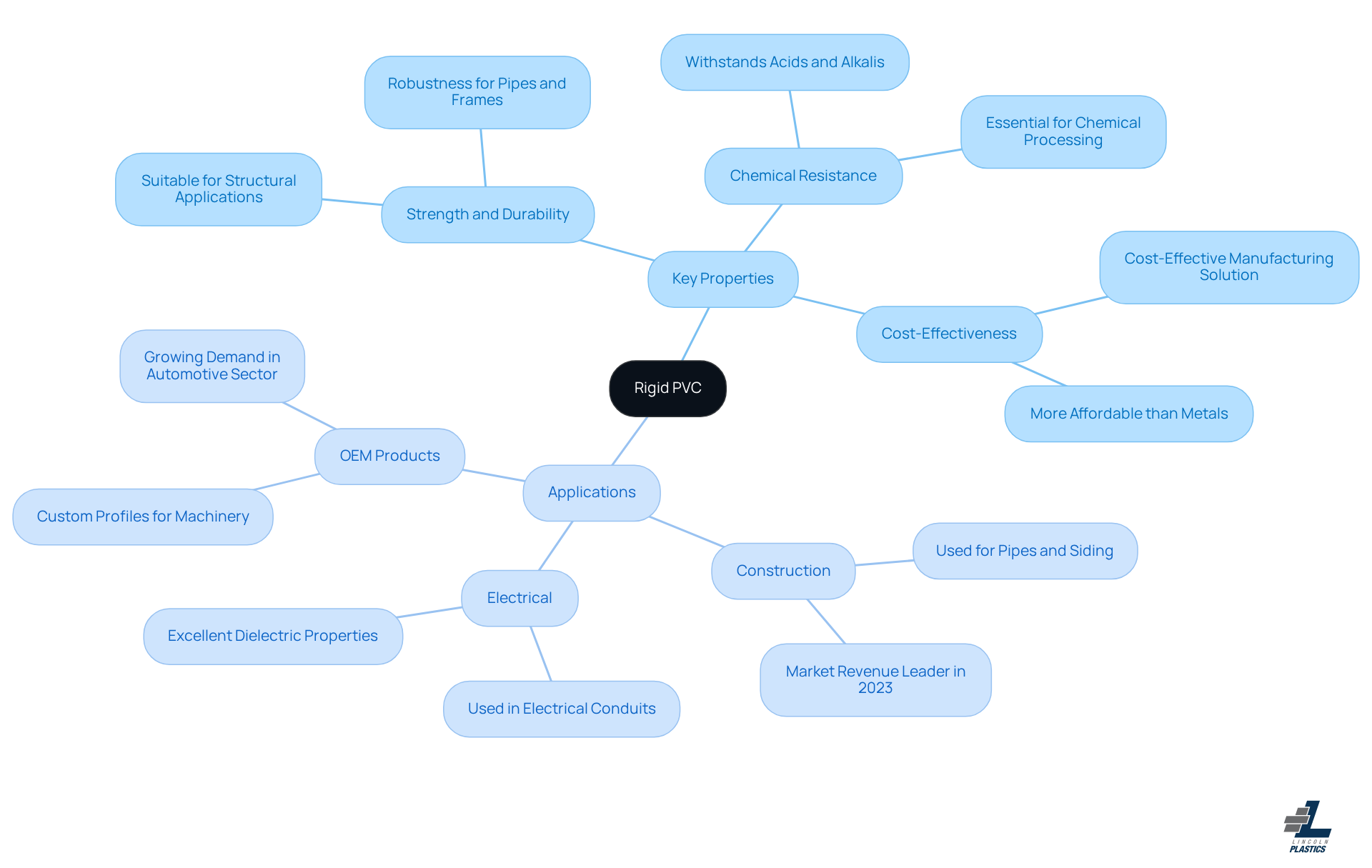
Rigid PVC stands out as a premier thermoplastic, offering unmatched mechanical properties that cater to diverse industrial needs. Its superior tensile strength, impact resistance, and dimensional stability make it a top choice for various applications, especially in construction and industrial sectors.
Key Properties:
- Strength and Durability: Rigid PVC is renowned for its robustness, making it suitable for structural applications such as pipes, window frames, and electrical conduits. At Lincoln, we specialize in crafting both standard and custom round plastic profiles tailored to your needs.
- Chemical Resistance: It effectively withstands exposure to acids, alkalis, and various solvents, which is essential for applications in chemical processing and plumbing.
- Cost-Effectiveness: Compared to metals and other materials, rigid PVC is often more affordable, providing a cost-effective solution for manufacturers.
Applications:
- Construction: Rigid PVC is extensively used for pipes, siding, and window frames due to its strength and weather resistance. The building and construction segment accounted for the largest market revenue share in 2023, driven by urbanization and infrastructure development. Lincoln is committed to quality, backed by our ISO 9001:2015 certification and rigorous management plans that include dedicated quality books and in-process checks. Furthermore, Lincoln's strategic position in Nebraska allows for rapid order processing and effective logistics.
- Electrical: It is commonly utilized in electrical conduits and insulation because of its excellent dielectric properties, ensuring safety and efficiency in electrical applications. Lincoln collaborates closely with OEMs to ensure that our products meet all quality requirements, including special checks for fit and function.
- OEM Products: Many OEMs favor rigid PVC extrusion for custom profiles in machinery and equipment, taking advantage of its versatility and ease of fabrication. The automotive sector, projected to grow at a CAGR of 3.7% from 2024 to 2030, increasingly incorporates rigid PVC extrusion due to its mechanical properties and processing ease. The company also provides co-extrusion capabilities, enabling multi-color or multi-material profiles that satisfy particular customer requirements.
Recent developments indicate that the demand for rigid PVC extrusion remains strong, particularly in the construction and electrical sectors, as companies focus on sustainability and energy efficiency. This focus on sustainability is pushing the PVC market towards innovative solutions, with expectations of a CAGR of 4.5% from 2026 to 2033. For tailored solutions and quotes, OEMs are encouraged to contact Lincoln Plastics experts, who are committed to excellence and customer partnership.
Optimize Extrusion Process: Key Factors and Techniques
To achieve excellence in the extrusion process for rigid PVC, understanding key factors is essential:
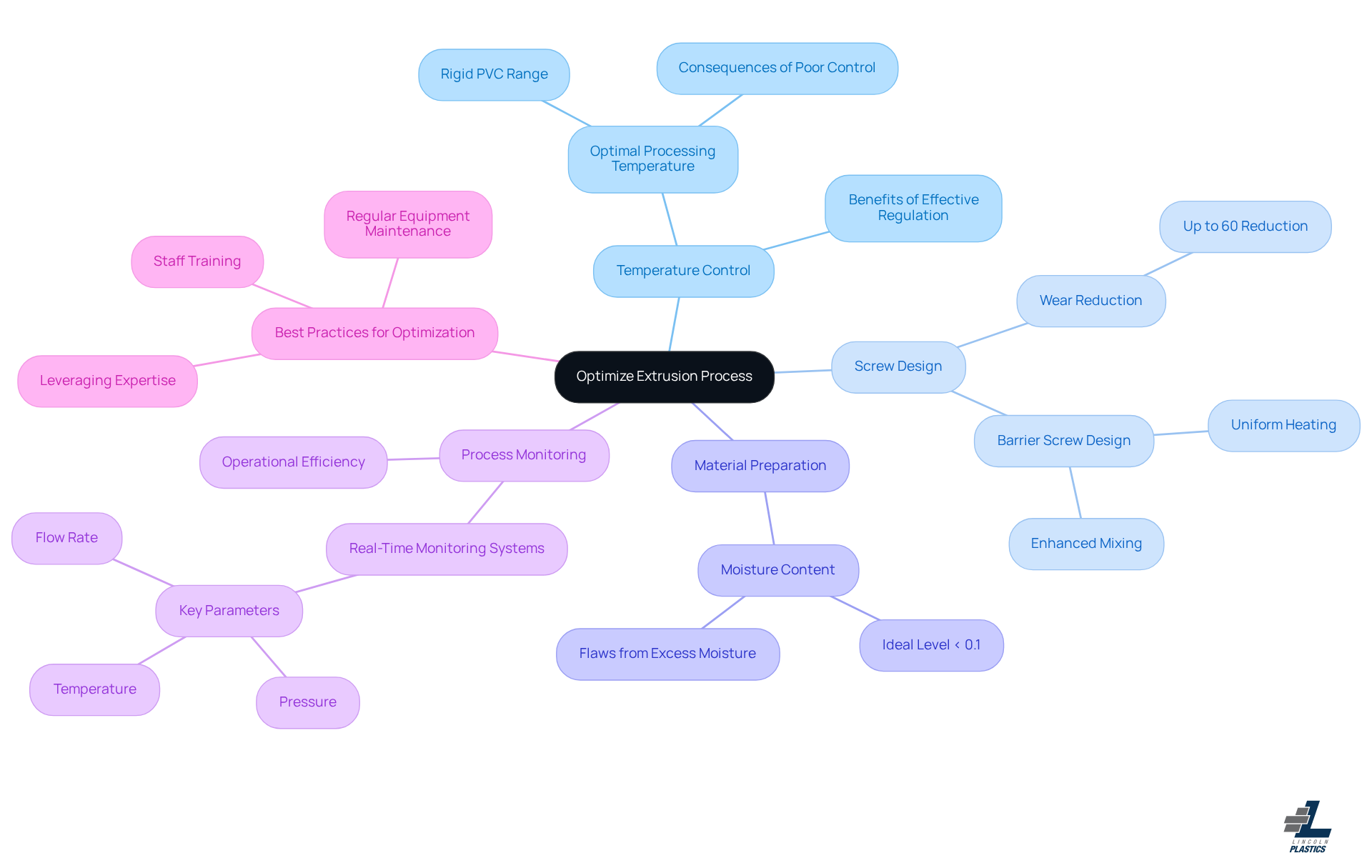
- Temperature Control:
Maintaining the correct melt temperature is crucial. For rigid PVC, optimal processing temperatures typically range from approximately 150°C. What could go wrong if you don’t control temperatures effectively? Operating below this range can lead to poor flow and incomplete melting, while exceeding it may cause material degradation. Imagine the benefits of flawless production runs. Effective temperature regulation is a strategic advantage in rigid PVC extrusion that improves production efficiency and quality, as noted by Bausano: 'Precise temperature control in extrusion isn’t just a technical necessity - it’s a strategic asset.' - Screw Design:
The design of the screw significantly influences material processing. Employing a barrier screw design can enhance mixing and guarantee uniform heating, which is crucial for attaining consistent quality. Optimized screw designs can reduce wear by up to 60% in rigid PVC extrusion, as highlighted in the case study 'Improving Screw Longevity with Design Optimization,' thereby enhancing the longevity of the extrusion system and minimizing downtime. - Material Preparation:
Preparing your PVC material correctly before extrusion is crucial. This involves drying the resin to remove moisture, which can result in flaws such as bubbles and voids in the final item produced through rigid PVC extrusion. Ideally, the moisture content should be less than 0.1% to ensure optimal processing conditions. - Process Monitoring:
Real-time monitoring systems are crucial for tracking key parameters like pressure, temperature, and flow rate. This data enables immediate adjustments to maintain optimal conditions, preventing defects and ensuring high-quality output. Advanced monitoring solutions can significantly enhance operational efficiency and reduce waste, aligning with best practices in the industry. - Best Practices for Optimization:
To boost efficiency and quality in extrusion, OEMs must adopt best practices like regular equipment maintenance, staff training on the latest extrusion technologies, and leveraging Lincoln Plastics' expertise in co-extrusion capabilities for multi-color or multi-material profiles. By focusing on these areas, manufacturers can achieve superior product outcomes and meet the diverse needs of their clients.
For customized solutions and professional advice, OEM Purchasing Managers are encouraged to reach out to our company, where our dedication to excellence and stringent quality management, including our ISO 9001:2015 certification, guarantees that we provide the highest standards in plastic extrusion. By prioritizing these strategies, you can elevate your production standards and stay ahead in the competitive landscape.
Implement Quality Control: Ensuring Consistency in Production
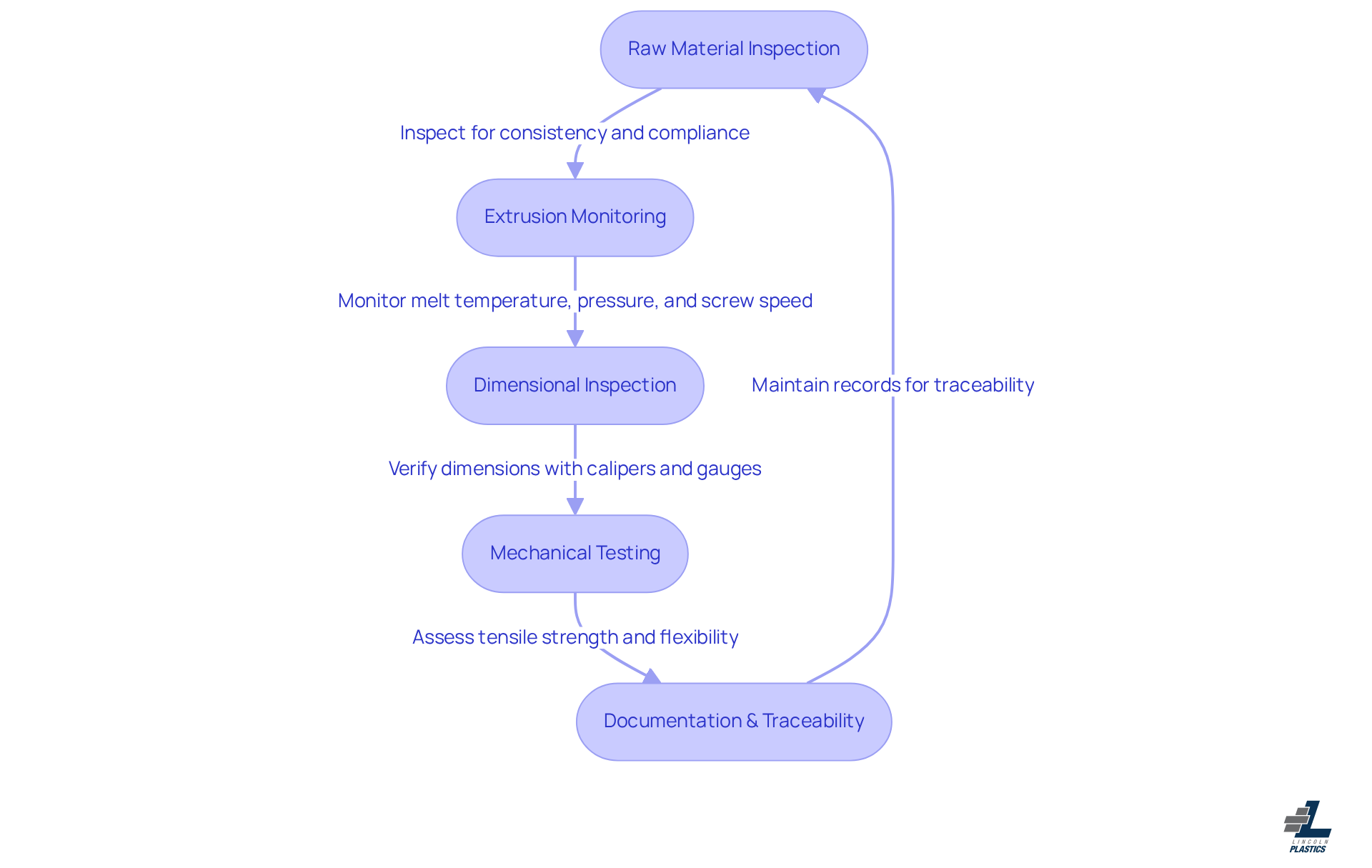
Ensuring the highest quality starts with meticulous raw material inspection, a cornerstone of our production process at Lincoln Plastics. Before production begins, we inspect the raw materials for consistency and compliance with specifications. This includes checking the resin's viscosity, color, and moisture content, ensuring that all materials meet the stringent requirements set forth by our ISO 9001:2015 certified quality management program.
During extrusion, we take proactive measures to continuously monitor critical parameters such as melt temperature, pressure, and screw speed, ensuring optimal performance throughout the process. Utilizing digital controllers, we maintain these parameters within specified limits, significantly reducing the risk of defects. Our collaboration with OEMs includes special checks for ‘fit and function,’ ensuring that the end-use fit is optimal.
How do we ensure our products meet the highest standards? By conducting regular testing of the extruded products to verify they meet dimensional and performance specifications. Common tests include:
- Dimensional Inspection: We use calipers and gauges to verify that the dimensions of the extruded profiles meet design specifications, supported by our dedicated quality book that includes drawings and critical in-process checks.
- Mechanical Testing: Assessing tensile strength, impact resistance, and flexibility ensures the product performs as expected in its application.
Lincoln Plastics upholds a rigorous standard by maintaining detailed records of production parameters and quality control tests, ensuring accountability and excellence in every step of our process. This documentation is essential for traceability and can help identify trends or issues in the production process, reinforcing our commitment to quality and customer satisfaction.
Reach out today to discover how Lincoln Plastics can elevate your projects with our unmatched precision and expertise.
Embrace Customization: Tailoring Solutions for Client Needs
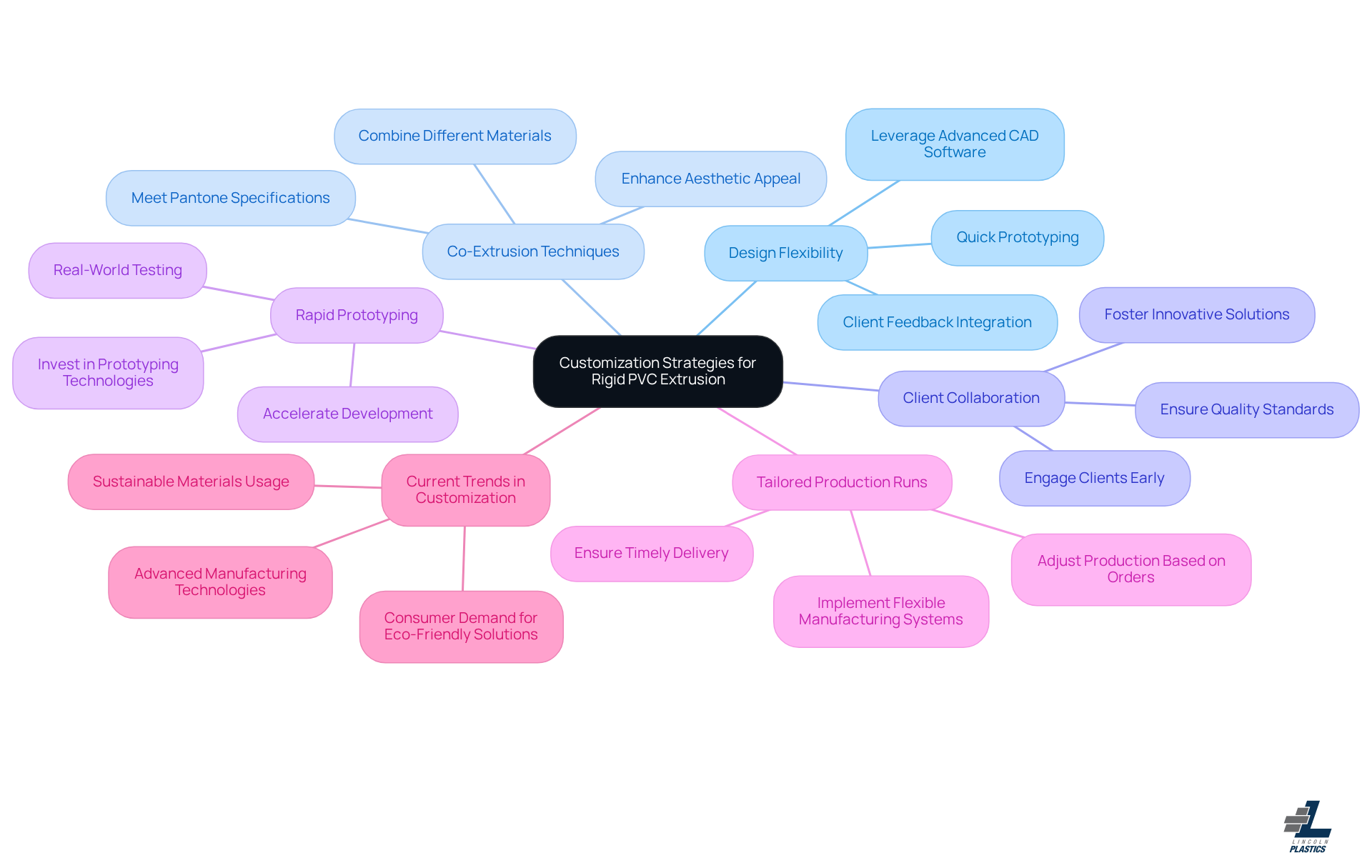
Customization in rigid PVC extrusion is essential for remaining competitive in today's market. Here are effective strategies to embrace customization:
- Design Flexibility: Leverage advanced CAD software to create custom profiles tailored to specific client requirements. This approach allows for quick prototyping and lets us tweak designs based on client feedback, making sure the final product hits the mark.
- Co-Extrusion Techniques: Implement co-extrusion processes to combine different materials or colors within a single profile. This not only enhances aesthetic appeal but also improves performance by integrating flexible components with rigid structures, catering to diverse application needs. Lincoln's company excels in this area, providing the capability to meet Pantone specifications for color consistency across manufacturers.
- Client Collaboration: Engage clients early in the design process to gain insights into their specific needs and challenges. This collaboration fosters innovative solutions that can distinguish your offerings in a competitive market, enhancing overall client satisfaction. At our company, we work closely with OEMs to ensure their items meet all quality standards, including special checks for ‘fit and function’ and compliance with our ISO 9001:2015 certification.
- Rapid Prototyping: Invest in rapid prototyping technologies to quickly produce samples for client approval. This accelerates development and allows for real-world testing. The feedback received leads to final outcomes that closely match client expectations.
- Tailored Production Runs: Be prepared to adjust production runs based on client orders. Implementing flexible manufacturing systems enables accommodation of varying order sizes without compromising efficiency, ensuring timely delivery and responsiveness to market demands. Lincoln's strategic Midwest location enables rapid order turnaround and effective logistics, including less-than-truckload shipping and international delivery.
- Current Trends in Customization: Stay informed about emerging trends in customization, such as the increasing use of sustainable materials and advanced manufacturing technologies. These trends not only enhance product appeal but also align with growing consumer demand for environmentally friendly solutions.
Expert opinions should incorporate insights from industry experts on the importance of customization in rigid PVC extrusion. Their perspectives can provide valuable context and reinforce the significance of the strategies presented.
Case studies should include brief examples that illustrate successful customization strategies in rigid PVC extrusion. These real-world examples can demonstrate the effectiveness of the practices discussed and provide relatable context for OEM Purchasing Managers. Lincoln's robust quality system includes a dedicated quality book for your plastic profile with drawings, critical in-process checks, and run documentation, ensuring precision and compliance for OEMs.
Without embracing these strategies, you risk falling behind in a rapidly evolving industry. For tailored solutions that meet your specific needs, contact Lincoln Plastics today.
Conclusion
In a fiercely competitive market, optimizing the quality and customization of rigid PVC extrusion is not just beneficial - it's essential. Understanding rigid PVC properties and implementing best practices can significantly enhance product performance and meet client needs. Lincoln Plastics is your go-to leader in this field, leveraging its strategic Midwest location and commitment to quality to deliver tailored solutions that align with industry demands.
Key insights from the article highlight the importance of:
- Temperature control
- Screw design
- Process monitoring
in achieving optimal extrusion results. Furthermore, rigorous quality control measures, supported by Lincoln Plastics' ISO 9001:2015 certification, ensure that every product meets the highest standards. The ability to customize profiles through advanced techniques such as co-extrusion further positions Lincoln Plastics as a preferred partner for OEMs across various sectors.
Yet, many manufacturers struggle to embrace these best practices and customization strategies, risking their competitive edge. As the demand for rigid PVC continues to grow, failing to adopt these strategies could result in lost opportunities and diminished competitiveness in the market. We invite manufacturers to connect with Lincoln Plastics for expert guidance and tailored solutions that exceed your expectations. By choosing Lincoln Plastics, you're not just meeting industry standards; you're setting them.
Frequently Asked Questions
What are the key properties of rigid PVC?
Rigid PVC is known for its strength and durability, chemical resistance, and cost-effectiveness. It has superior tensile strength, impact resistance, and dimensional stability, making it suitable for various industrial applications.
In what applications is rigid PVC commonly used?
Rigid PVC is extensively used in construction for pipes, siding, and window frames, as well as in electrical applications for conduits and insulation. It is also favored by OEMs for custom profiles in machinery and equipment.
How does Lincoln Plastics ensure the quality of its rigid PVC products?
Lincoln Plastics is ISO 9001:2015 certified and follows rigorous quality management plans that include dedicated quality books and in-process checks to ensure high standards in product quality.
What advantages does Lincoln Plastics' location provide for its operations?
Lincoln Plastics' strategic location in Lincoln, Nebraska, allows for rapid order processing and effective logistics, including quick turnaround times for shipping.
What is the significance of co-extrusion capabilities at Lincoln Plastics?
Lincoln Plastics offers co-extrusion capabilities, enabling the production of multi-color or multi-material profiles, which allows for customization to meet specific customer requirements.
What trends are influencing the demand for rigid PVC?
The demand for rigid PVC is strong, particularly in the construction and electrical sectors, driven by a focus on sustainability and energy efficiency. The market is expected to grow at a CAGR of 4.5% from 2026 to 2033.
How can OEMs obtain tailored solutions or quotes from Lincoln Plastics?
OEMs are encouraged to contact Lincoln Plastics experts for tailored solutions and quotes, as the company is committed to excellence and customer partnership.
List of Sources
- Understand Rigid PVC: Properties and Applications
- Polyvinyl Chloride Market Size And Share Report, 2024-2030 (https://grandviewresearch.com/industry-analysis/polyvinyl-chloride-pvc-market)
- The Evolution of PVC: From Discovery to Modern Applications - Vinyl (https://vinylinfo.org/news/the-evolution-of-pvc-from-discovery-to-modern-applications)
- Polyvinyl Chloride (PVC) Market Size & Forecast, 2033 (https://persistencemarketresearch.com/market-research/polyvinyl-chloride-market.asp)
- US housing starts and permits down, PVC oversupplied | Latest Market News (https://argusmedia.com/en/news-and-insights/latest-market-news/2733016-us-housing-starts-and-permits-down-pvc-oversupplied)
- Optimize Extrusion Process: Key Factors and Techniques
- Types of screw design for plastic extrusion | Bausano (https://bausano.com/en/press-and-news/types-of-screw-design-for-plastic-extrusion)
- Optimized Extrusion Screw Design Maximizes Throughput, Quality (https://plasticstoday.com/extrusion-pipe-profile/optimized-extrusion-screw-design-maximizes-throughput-quality-in-rigid-pvc-products)
- Temperature Control in Extrusion: Why It’s Critical | Bausano (https://bausano.com/en/press-and-news/temperature-control-in-extrusion)
- Paul Murphy Plastics: Takes Control Over Melt Temperature for Superior Extrusions (https://paulmurphyplastics.com/industry-news-blog/paul-murphy-plastics-takes-control-over-melt-temperature-for-superior-extrusions)
- The Importance of Barrel Temperature Optimization for Plastic Extrusion and Injection Molding - SANTA FE MACHINE WORKS, INC. (https://santafemachine.com/barrels/the-importance-of-barrel-temperature-optimization-for-plastic-extrusion-and-injection-molding)
- Implement Quality Control: Ensuring Consistency in Production
- Master Best Practices for Extruded PVC in Your Production Line (https://lincoln-plastics.com/news-post/master-best-practices-for-extruded-pvc-in-your-production-line)
- Quality Control in Plastic Extrusion for Consistent Results | Rocal (https://rocalextrusions.co.uk/news/quality-control-in-plastic-extrusion-to-ensure-consistent-results)
- 18 years of PVC manufacturing: how our quality control works Price (https://eastbuilding.net/news/18-years-of-pvc-manufacturing:-how-our-quality-control-works.html)
- Quality Control and Testing Procedures - Plastic Extrusion Technologies (https://plasticextrusiontech.net/quality-control-and-testing-procedures-in-plastic-extrusions)
- One moment, please... (https://condaleplastics.com/extrusion-advice/plastic-extrusion-a-guide-to-quality-control)
- Embrace Customization: Tailoring Solutions for Client Needs
- 10 Innovative Examples of Extrusion Transforming Industries (https://lincoln-plastics.com/news-post/10-innovative-examples-of-extrusion-transforming-industries?dcc2137a_page=4)
- Custom Plastic Extrusion Design: Flexibility, Innovations & Future (https://lakelandplastics.com/design-flexibility-in-custom-plastic-extru)
- Best Custom Plastic Extrusion Manufacturers to Watch This Year - Plastic Extruder Supplier & Plastic Pelletizer OEM Factory | Plastic For Pellet Pelletizer Wholesales Custom Twin Screw Extruder Manufacturer China (https://exintellmach.com/best-custom-plastic-extrusion-manufacturers-to-watch-this-year)
- How Co-Extrusion Enhances the Performance of PVC Profiles (https://omegaplastics.com/how-co-extrusion-enhances-the-performance-of-pvc-profiles)
Related posts

Discover best practices for sourcing polycarbonate plastic products effectively and efficiently.


Explore the diverse applications of PVC across industries, showcasing its versatility and benefits.
Explore 10 innovative applications of co-extruded plastics for enhanced performance across industries.
