
5 Best Practices for Polymer Extrusion Technologies in Manufacturing
Introduction
Mastering polymer extrusion technologies is essential for manufacturers aiming to elevate product quality and operational efficiency. By mastering the fundamentals, selecting the right materials, and optimizing processes, companies can unlock significant improvements in their manufacturing capabilities.
Navigating the complexities of polymer extrusion can be daunting for manufacturers, as they must balance technology, quality control, and innovation effectively. How can manufacturers not just meet but surpass industry standards? Without effective strategies, manufacturers risk stagnation in an increasingly competitive landscape.
Understand Polymer Extrusion Fundamentals
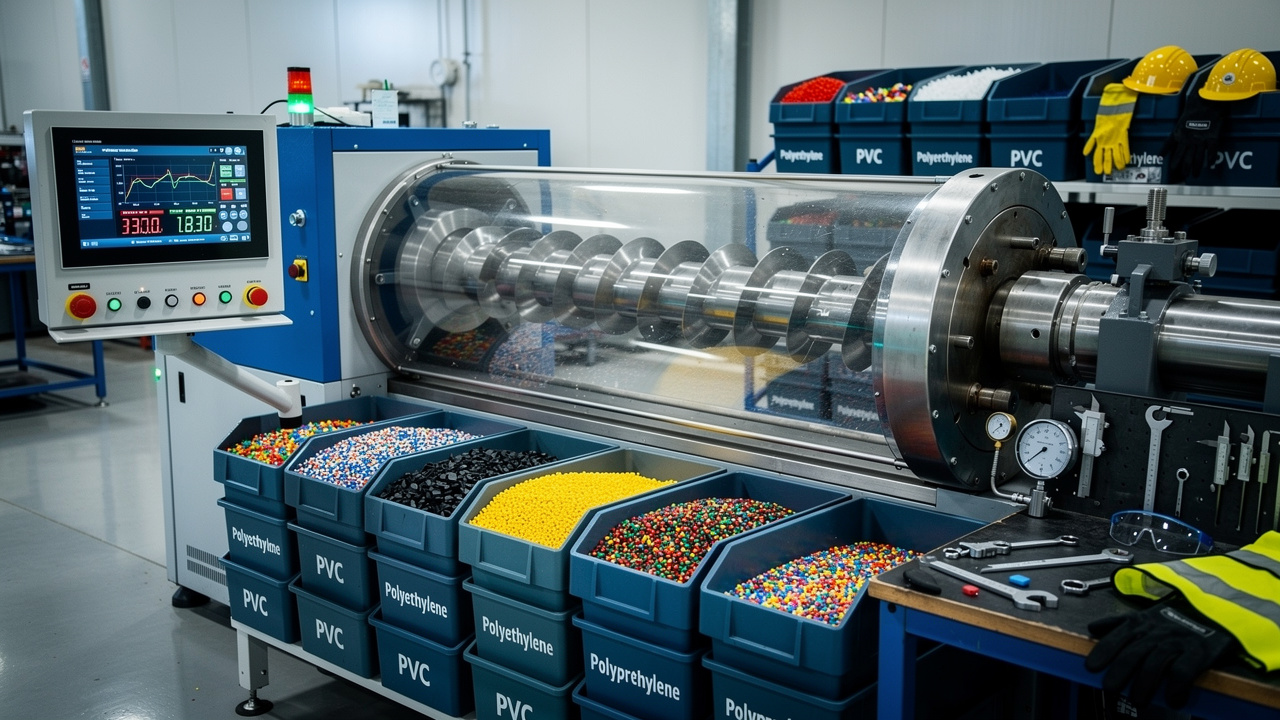
Understanding the intricacies of polymer extrusion technologies is vital for manufacturers aiming to enhance product quality and operational efficiency. Polymer extrusion technologies are continuous manufacturing methods that transform raw plastic materials into a continuous profile through melting and shaping. This process relies on several key components, including the extruder, die, and cooling system.
Understanding how the extruder works, especially the screw's role in melting and mixing the polymer, is key to producing high-quality outputs. Essential factors like temperature, pressure, and screw speed need to be carefully observed and modified to guarantee optimal flow and item excellence. When manufacturers master these fundamentals, they can troubleshoot problems more easily and boost their production efficiency.
Industry leaders emphasize the importance of a deep understanding of shaping mechanics. Have you considered how this knowledge can help you maintain a competitive edge and ensure consistent product standards?
Successful case studies demonstrate that companies utilizing polymer extrusion technologies, advanced screw designs, and real-time monitoring technologies, including statistical process control (SPC), have greatly enhanced their shaping processes, resulting in fewer defects and heightened operational efficiency.
At Lincoln Plastics, we know how important reliable rigid plastic forming solutions are, and we guarantee timely delivery along with strict quality assurance. Our commitment to customization allows us to manufacture a variety of flexible profiles in multiple sizes and materials, including options for co-extrusion, which can incorporate additional colors into the profiles, such as a 'yellow stripe.' This capability is particularly beneficial for OEMs seeking tailored solutions that meet specific application requirements.
With our advanced capabilities, Lincoln Plastics empowers OEMs to achieve their specific application requirements, ensuring they stay ahead in a competitive market.

Select Appropriate Materials for Extrusion
Choosing the appropriate polymer extrusion technologies is essential for achieving peak performance in manufacturing processes. Commonly used materials include PVC, polyethylene, and polypropylene, each with distinct properties tailored for specific applications.
- PVC is renowned for its durability and chemical resistance, making it particularly suitable for outdoor environments and construction elements.
- In contrast, polyethylene is prized for its flexibility and lightweight nature, which enhances its usability in a variety of applications, including packaging and consumer products.
- Polypropylene, known for its excellent mechanical strength and thermal stability, is often utilized in demanding applications where resilience is essential.
What factors should you consider when selecting materials?
- Mechanical strength
- Thermal stability
- Processing temperatures are key.
For instance, PVC generally demands elevated processing temperatures compared to polyethylene, which can affect the selection of equipment and methods. Choosing the wrong polymer in polymer extrusion technologies can lead to performance issues that affect your entire manufacturing process.
Working together with resin providers can offer valuable insights into the performance traits of these materials, ensuring that the chosen polymer aligns with the specific needs of polymer extrusion technologies and their end-use applications. Without this collaboration, you risk compromising product quality and manufacturing efficiency. This strategic approach ensures that your products meet the highest standards while maximizing efficiency in your manufacturing process.

Optimize Extrusion Processes for Efficiency
To truly excel in shaping techniques, manufacturers must confront the challenges of temperature regulation, screw design, and line speed. By consistently monitoring and adjusting these factors, manufacturers can achieve substantial efficiency gains. For instance, maintaining stable barrel temperatures is crucial for achieving a uniform melt flow. Optimizing screw geometry can significantly improve mixing and lower energy consumption. Remember the step-by-step guide on mastering tube shaping? It emphasizes the need for a uniform melt with minimal energy use.
In addition to these technical considerations, Lincoln Plastics offers innovative solutions like the Flexiduct, a flexible cord management system designed to enhance workplace safety and productivity. By efficiently organizing cords and cables, companies can minimize risks and enhance their operations, further aiding in productivity during the manufacturing phase.
Automation technologies are crucial in optimizing operations. National Industries’ completely automated production lines demonstrate how automation can shorten lead times and improve output standards. Without embracing automation, companies risk falling behind in efficiency and productivity. Case studies show that companies investing in process optimization encounter shorter cycle times and improved standards. Significantly, SML's high-speed extruders illustrate how polymer extrusion technologies can reduce heating power usage by as much as 80%, highlighting the concrete advantages of energy-efficient methods in manufacturing. Furthermore, theoretical maximum energy efficiency values range from 54.2% to 84.2%, depending on the plasticating unit technology and die restriction level, providing a quantitative basis for the claims made about efficiency gains.

Implement Quality Control Measures
In the competitive landscape of polymer extrusion technologies, effective control is not just beneficial; it's essential for maintaining high standards. Effective control hinges on systematically monitoring production parameters and item characteristics. Essential metrics include:
- Regular inspections of melt temperature
- Pressure
- Flow rates
- Testing the physical properties of the extrudate
At Lincoln Plastics, we ensure that our rigid profiles meet critical dimensions through a robust assurance system that includes a dedicated documentation book for each plastic profile, complete with drawings, critical in-process checks, and run documentation. We collaborate closely with OEMs to ensure their items meet all standards, including special checks for ‘fit and function.’
Implementing statistical process control (SPC) has proven invaluable. It enables manufacturers to identify trends and variations in production processes. A significant case analysis in the automotive industry showed a 37% decrease in defect rates within six months of SPC implementation, highlighting its effectiveness in improving standards.
In-line testing techniques further enhance assurance by providing instant feedback on item standards, allowing for swift corrective measures when deviations from specifications arise. Organizations that emphasize these control measures, such as Lincoln Plastics, frequently report considerably lower defect rates and improved customer satisfaction. For example, organizations utilizing SPC have achieved a 30% reduction in quality-related delays across their supply chains, illustrating the tangible benefits of rigorous monitoring and control.
Experts in quality assurance emphasize how crucial these practices are, pointing out that consistent monitoring not only enhances item standards but also aids in operational efficiency. As one specialist mentioned, "The statistical control (SPC) method allows manufacturers to detect variances, trends, and inconsistencies that may affect item excellence." By adopting SPC techniques, manufacturers can ensure that their shaping methods remain capable and well-tuned, with a Cpk goal of 1.33 or higher, which is a standard for capable, well-tuned shaping lines. This ultimately leads to reduced waste and increased profitability, with a 2% yield loss reduction translating to millions in savings annually. By prioritizing rigorous monitoring and control, manufacturers can enhance quality and improve their processes through polymer extrusion technologies to secure their position in the market.

Incorporate Innovative Technologies in Production
In the fast-evolving world of polymer extrusion technologies, cutting-edge innovations are not just enhancements; they are essential for maintaining efficiency and product quality. Automation and data analytics enable real-time monitoring and adjustments. This optimizes production processes and reduces waste.
For instance, intelligent sensors and IoT devices gather crucial data on machine performance and product standards, facilitating predictive maintenance that minimizes downtime and operational costs. Furthermore, advancements like co-extrusion allow manufacturers to create multi-layered products, enhancing functionality and performance.
Companies like Lincoln Plastics, with their Flexiduct flexible cord management solutions, not only enhance workplace safety by eliminating cord hazards but also improve productivity by allowing for better arrangement of desks and equipment. The Flexiduct solution is individually packaged in 6’ pre-split lengths, making it easy to install and ideal for various workplace setups.
Additionally, Lincoln Plastics emphasizes quality assurance through rigorous checks for fit and function, ensuring that their products meet OEM specifications. Leveraging their strategic Midwest location, Lincoln Plastics can enhance supply chain reliability, ensuring timely delivery and lower freight costs for OEMs.
Embracing these innovations in polymer extrusion technologies not only streamlines operations but also positions Lincoln Plastics as a leader in the competitive extrusion market. Without these advancements, manufacturers risk falling behind in efficiency and incurring higher operational costs.
By adopting polymer extrusion technologies, companies can enhance their operations and secure a competitive edge in the extrusion industry. Imagine boosting efficiency and productivity with IoT technologies-research shows that smart factories can increase production capacity by 25% and cut defective items by 50%. By leveraging these advancements, manufacturers can achieve significant gains in operational effectiveness and product reliability.

Conclusion
In the competitive landscape of polymer extrusion, mastering technology is not just beneficial; it's essential for success. Understanding the extrusion process is crucial. Selecting the right materials and optimizing production techniques are equally important. Implementing rigorous quality control measures and embracing innovative technologies can significantly enhance a manufacturer’s competitive edge.
Key insights from this article highlight the importance of these practices:
- A solid grasp of extrusion fundamentals allows for better troubleshooting and efficiency.
- Choosing the right materials ensures that products meet specific application needs.
- Optimizing processes leads to improved energy efficiency and reduced cycle times.
- Maintaining high-quality standards through systematic monitoring and control is essential for minimizing defects and maximizing customer satisfaction.
- Incorporating advanced technologies and automation not only streamlines operations but also positions manufacturers to capitalize on emerging trends in the industry.
The choice to innovate and improve is what will ultimately define a manufacturer’s success in the polymer extrusion industry. By adopting these best practices, manufacturers can enhance their operational effectiveness and secure a sustainable advantage in a rapidly evolving market. Embracing these strategies will lead to higher quality outputs, increased efficiency, and greater profitability, making it imperative for industry players to stay informed and proactive in their approach to polymer extrusion technologies.
Frequently Asked Questions
What is polymer extrusion?
Polymer extrusion is a continuous manufacturing method that transforms raw plastic materials into a continuous profile through melting and shaping.
What are the key components of the polymer extrusion process?
The key components include the extruder, die, and cooling system.
Why is understanding the extruder important?
Understanding the extruder, particularly the screw's role in melting and mixing the polymer, is crucial for producing high-quality outputs.
What factors need to be monitored during the polymer extrusion process?
Essential factors include temperature, pressure, and screw speed, which need to be carefully observed and modified for optimal flow and product quality.
How can mastering polymer extrusion fundamentals benefit manufacturers?
Mastering these fundamentals allows manufacturers to troubleshoot problems more easily and boost their production efficiency.
What role do advanced technologies play in polymer extrusion?
Advanced screw designs and real-time monitoring technologies, such as statistical process control (SPC), can enhance shaping processes, reduce defects, and improve operational efficiency.
What materials are commonly used in polymer extrusion?
Commonly used materials include PVC, polyethylene, and polypropylene, each with distinct properties for specific applications.
What are the characteristics of PVC?
PVC is durable and chemically resistant, making it suitable for outdoor environments and construction elements.
What advantages does polyethylene offer?
Polyethylene is flexible and lightweight, making it ideal for various applications, including packaging and consumer products.
Why is polypropylene used in demanding applications?
Polypropylene is known for its excellent mechanical strength and thermal stability, making it suitable for applications that require resilience.
What factors should be considered when selecting materials for extrusion?
Factors include mechanical strength, thermal stability, and processing temperatures.
How does processing temperature affect material selection?
Different materials, like PVC and polyethylene, require different processing temperatures, which can impact the choice of equipment and methods.
Why is collaboration with resin providers important?
Collaborating with resin providers offers valuable insights into material performance traits, ensuring the selected polymer aligns with specific needs and end-use applications.
What risks are associated with choosing the wrong polymer?
Choosing the wrong polymer can lead to performance issues that compromise product quality and manufacturing efficiency.
List of Sources
- Understand Polymer Extrusion Fundamentals
- Understanding Plastic Extrusion: Applications and Process Insights (https://paulmurphyplastics.com/industry-news-blog/understanding-plastic-extrusion-applications-and-process-insights)
- How to Collect & Interpret Process Data in Extrusion (https://ptonline.com/articles/how-to-collect-interpret-process-data-in-extrusion-part-1(2))
- Plastics Extrusion: 4 Critical Statistics to Track for Increased Quality & Plant Profit (https://gaugeadvisor.com/2025/05/26/plastics-extrusion-4-critical-statistics-to-track-for-increased-quality-plant-profit)
- Emerging Trends Shaping Plastic Extruders in 2026 (https://audop.com/c/emerging-trends-shaping-plastic-extruders-in-2026.htm)
- Select Appropriate Materials for Extrusion
- Choosing Materials for Plastic Extrusion - PET (https://plasticextrusiontech.net/choosing-the-right-materials-for-plastic-extrusion)
- mdpi.com (https://mdpi.com/2413-4155/8/1/18)
- From Polyethylene to PVC: Exploring Common Plastic Extrusion Materials | High-Volume Plastic Profile Extrusion with In-House Tooling|Custom Profile (https://custom-profile.com/blog/from-polyethylene-to-pvc-exploring-common-plastic-extrusion-materials)
- Plastics Extrusion: 4 Critical Statistics to Track for Increased Quality & Plant Profit (https://gaugeadvisor.com/2025/05/26/plastics-extrusion-4-critical-statistics-to-track-for-increased-quality-plant-profit)
- Optimize Extrusion Processes for Efficiency
- The Future of Aluminum: How Extrusion Technology is Transforming Industries - National Industries | Aluminium Manufacturing Company in India. (https://nationalindustries.world/2025/01/02/the-future-of-aluminum-how-extrusion-technology-is-transforming-industries)
- sml.at (https://sml.at/index.php/news/energy-efficient-extrusion-how-can-we-lower-energy-costs)
- academia.edu (https://academia.edu/81207927/Energy_consumption_analysis_in_polymer_extrusion_performance_and_maximum_energy_efficiency_evaluation_of_grooved_feed_and_grooved_plasticating_single_screw_extrusion)
- How Automation is Transforming the Plastic Extrusion Industry | Rayda Plastics (https://rayda.co.uk/blog/how-automation-is-transforming-the-plastic-extrusion-industry)
- Modernization: Ways to Increase Energy Efficiency in Extrusion – Coperion (https://coperion.com/en/news-media/newsletter/2021/plastics-in-focus-edition-042021/energy-efficiency-in-extrusion)
- Implement Quality Control Measures
- Plastics Extrusion: 4 Critical Statistics to Track for Increased Quality & Plant Profit (https://gaugeadvisor.com/2025/05/26/plastics-extrusion-4-critical-statistics-to-track-for-increased-quality-plant-profit)
- Statistical Process Control (SPC): The Ultimate Guide [2025] - SixSigma.us (https://6sigma.us/six-sigma-in-focus/statistical-process-control-spc)
- ignited.in (https://ignited.in/index.php/jast/article/view/15028)
- Incorporate Innovative Technologies in Production
- lincoln-plastics.com (https://lincoln-plastics.com/news-post/10-ways-extrusion-technology-transforms-manufacturing-efficiency?dcc2137a_page=5)
- 32 of the Best AI and Automation Quotes To Inspire Healthcare Leaders - Blog - Akasa (https://akasa.com/blog/automation-quotes)
- Plastics Extrusion: 4 Critical Statistics to Track for Increased Quality & Plant Profit (https://gaugeadvisor.com/2025/05/26/plastics-extrusion-4-critical-statistics-to-track-for-increased-quality-plant-profit)
- mdpi.com (https://mdpi.com/2071-1050/13/22/12506)
Related posts

Discover essential steps for selecting reliable custom plastic tubing solutions for various industries.


Discover best practices for procuring clear plastic flexible tubing to enhance performance and reliability.
Discover key insights and features of top flexible PVC manufacturers for your business needs.
