
5 Best Practices for Mastering Plastic Extrusion Technology
Introduction
Plastic extrusion technology stands as a pivotal force in modern manufacturing, shaping raw materials into high-quality profiles for a variety of industries. As demand for innovative and sustainable solutions surges, navigating the complexities of this process is crucial for producers striving to remain competitive. Which best practices will elevate production efficiency, guarantee quality, and fulfill the unique needs of clients? This article delves into five key strategies that not only enhance operational capabilities but also position manufacturers like Lincoln Plastics at the forefront of the industry. Embracing these strategies is not just beneficial; it’s essential for manufacturers who wish to thrive in an increasingly competitive landscape.
Understand Plastic Extrusion Technology Fundamentals
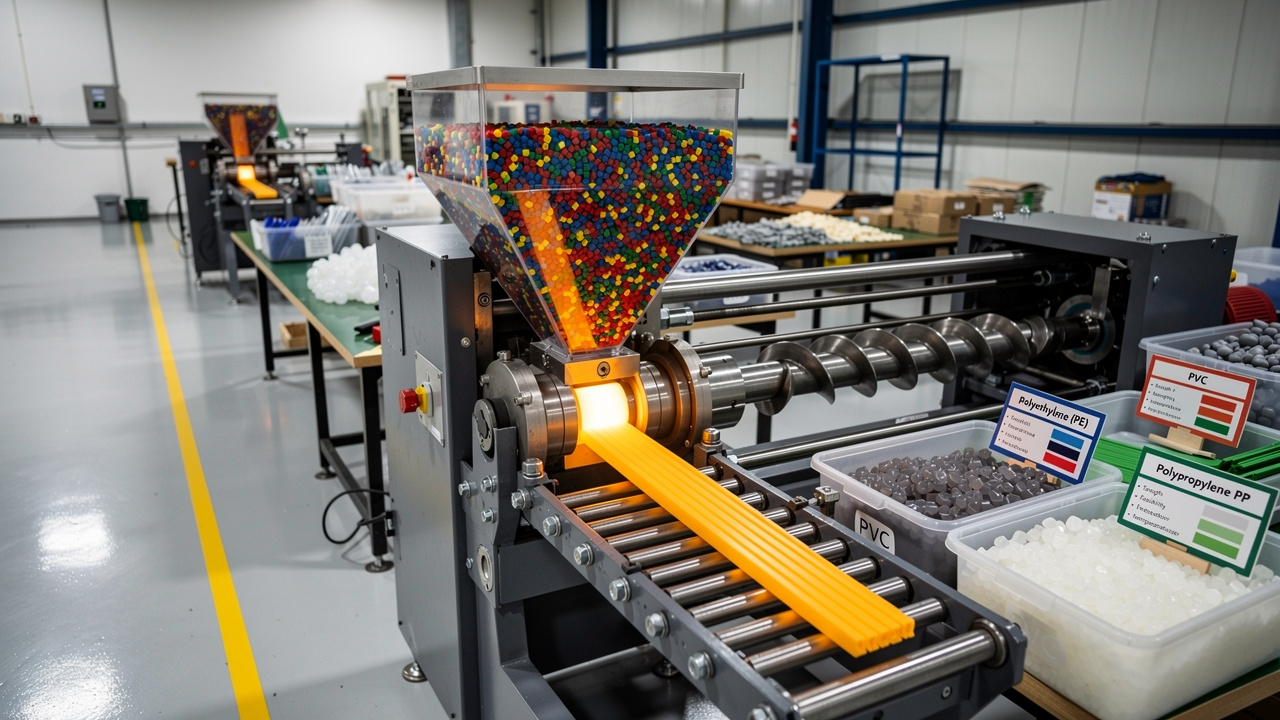
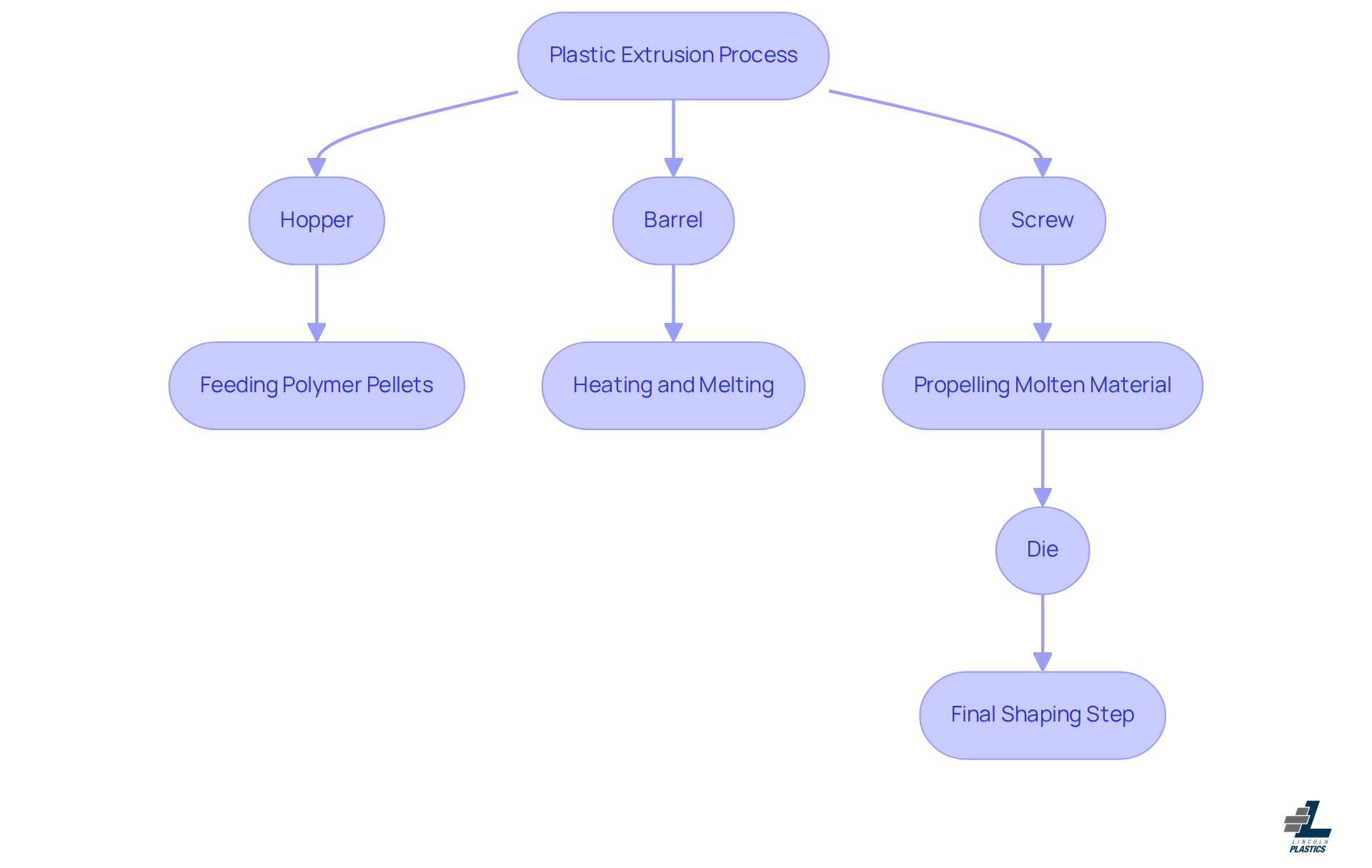
In the world of manufacturing, plastic extrusion technology stands out as a pivotal method for transforming synthetic materials into high-quality profiles. The process of plastic extrusion technology involves melting and forcing materials through a die, utilizing key components like the extruder, which consists of a hopper, barrel, and screw. Initially, polymer pellets are fed into the hopper, where they are heated and melted. The screw then propels the molten material through the die, shaping it into the desired profile.
Key parameters, including temperature, pressure, and screw speed, play a vital role in determining the quality and consistency of products made using plastic extrusion technology. However, achieving the right balance of these parameters can be challenging, often leading to production delays and increased costs. For instance, maintaining optimal temperature is essential for proper melting and flow, while consistent pressure is necessary to achieve uniform wall thickness, critical for product integrity. Recent advancements in plastic extrusion technology have led to enhanced precision and sustainability, with manufacturers increasingly adopting eco-friendly practices and automation to improve efficiency.
Have you considered that the global plastic extrusion machinery market is projected to reach approximately USD 9.8 billion by 2030, growing at a compound annual growth rate (CAGR) of about 5.2% from 2026 onward? This growth is driven by the rising demand for sustainable materials and innovative production techniques. Furthermore, the integration of advanced sensors and AI technologies is expected to reduce defects by 30% and scrap rates by 20-40%, showcasing the industry's commitment to improving operational efficiency and product quality. Understanding these fundamentals is essential for producers looking to improve their shaping processes and satisfy the changing requirements of different industries, such as agriculture and office management. Embracing these advancements is not just an option; it's a necessity for staying competitive in an evolving industry.
Choose Appropriate Materials for Optimal Results
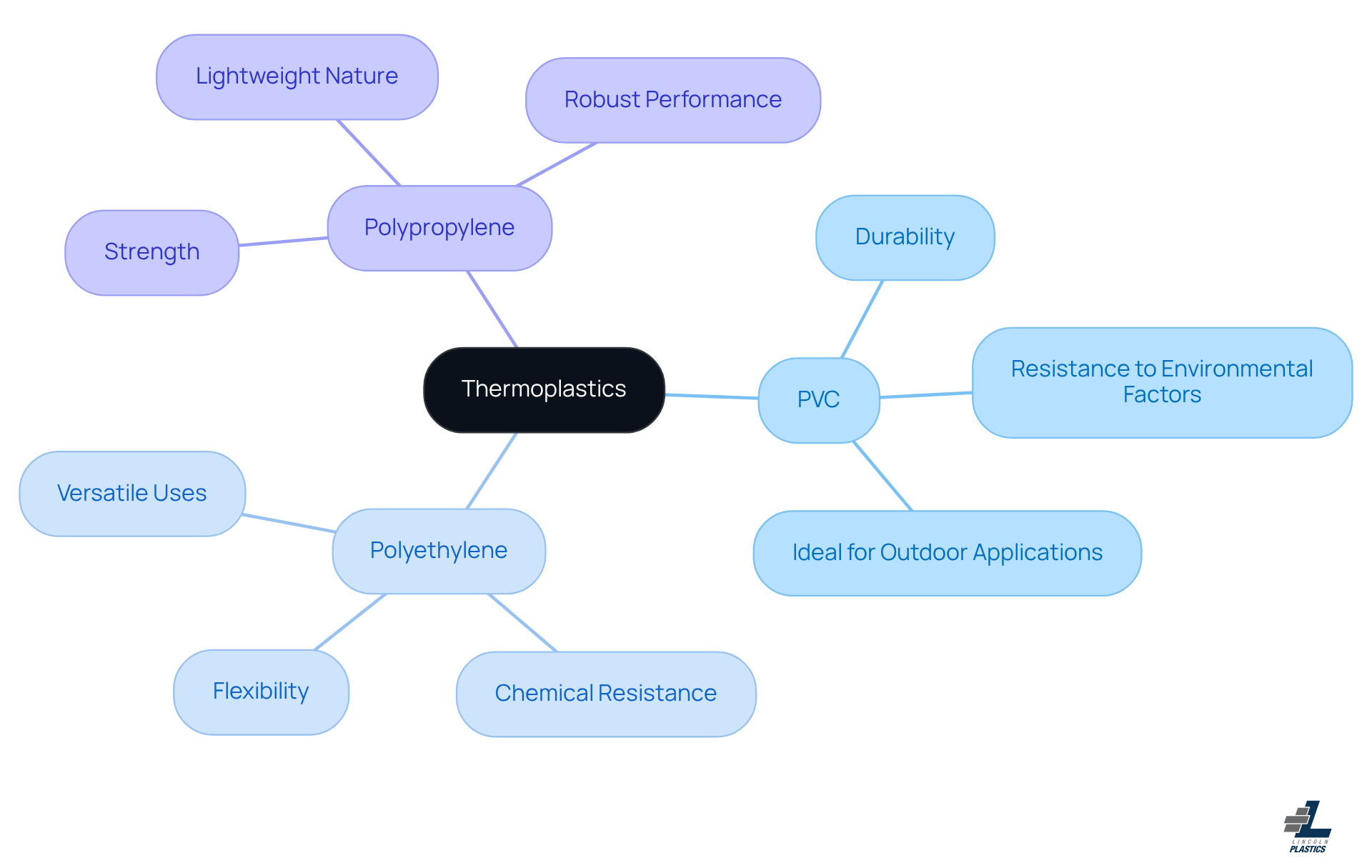
Choosing the right thermoplastic can make or break your project’s success. Effective shaping relies on selecting the appropriate material, with common options like PVC, polyethylene, and polypropylene. Each of these substances has unique characteristics:
- PVC is renowned for its durability and resistance to environmental factors, making it ideal for outdoor applications.
- Polyethylene is favored for its flexibility and chemical resistance, suitable for a variety of uses.
- Polypropylene, known for its strength and lightweight nature, is often utilized in applications that demand robust performance.
When selecting substances, consider the intended use, required mechanical properties, and how well they fit the shaping process. For instance, the construction sector is projected to account for nearly 20% of overall demand for plastic extrusion technology by 2026. This increasing demand highlights that selecting the right material in plastic extrusion technology can greatly affect your project's success.
Collaborating with resin providers can give you key insights into the best materials for your specific needs, ensuring that the final product meets performance expectations. Furthermore, the use of recycled content in thermoplastics is expected to rise by 20%, reflecting a growing trend towards sustainability in resource selection. As industry expert Dr. Linda Gray observes, "Innovation in thermoplastic shaping influences the future of manufacturing." By staying informed about the evolving landscape of thermoplastic substances, including the emergence of bioplastics and compostable alternatives, producers can enhance their shaping processes and improve product functionality. Understanding these materials not only enhances your product's performance but also positions you ahead in a competitive market.
Implement Rigorous Quality Control Protocols
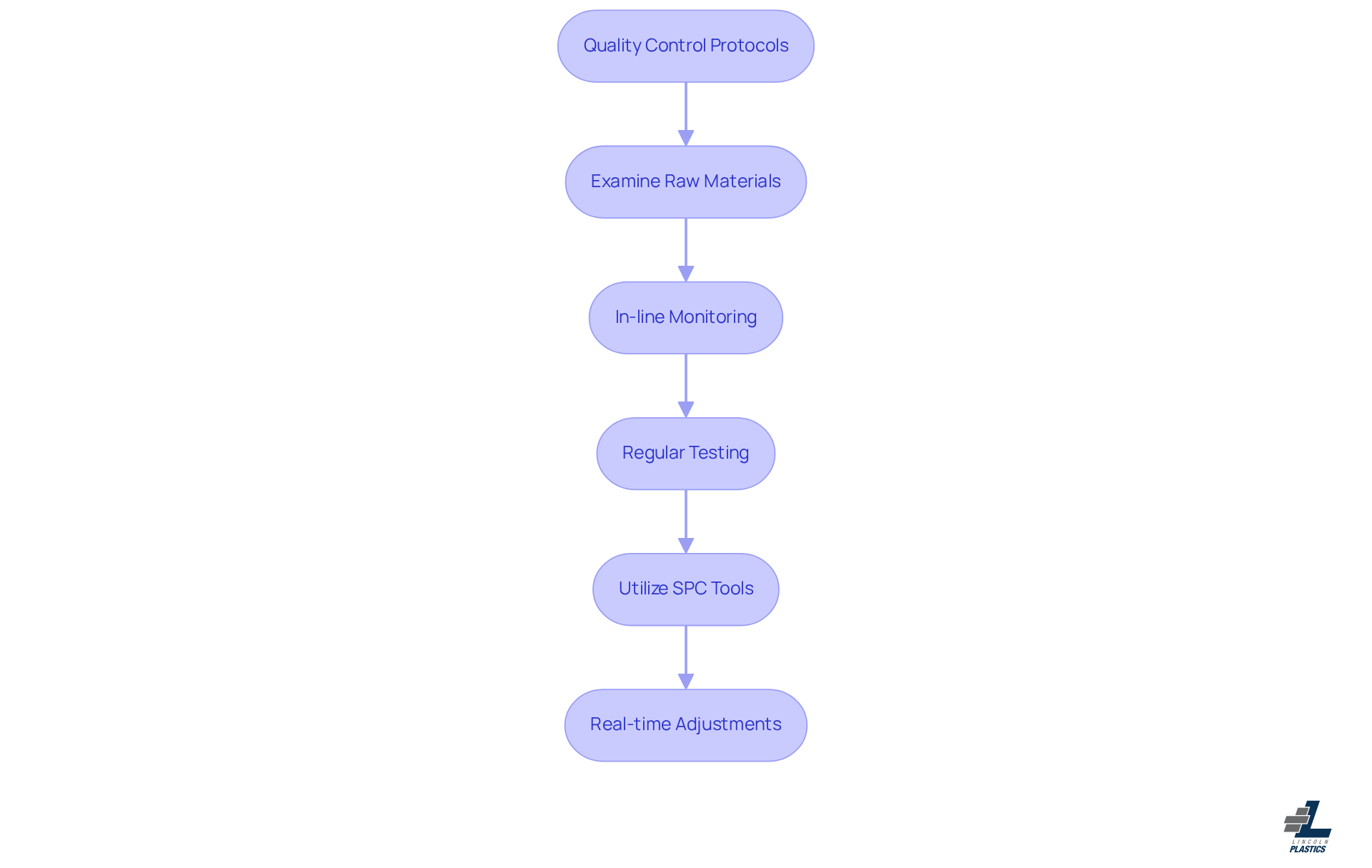
In the competitive world of plastic extrusion technology, quality assurance is not just important; it's essential for success. Quality assurance in plastic extrusion technology ensures that both raw components and finished products comply with strict standards. We begin by carefully examining raw materials to ensure their purity and compatibility with the extrusion process. During production, in-line monitoring systems are crucial for tracking critical parameters such as temperature, pressure, and material flow, which directly affect product quality. How do you ensure that your extruded products meet dimensional accuracy and surface quality standards? Regular testing is vital to confirm they meet client specifications.
Utilizing statistical process control (SPC) tools can significantly enhance management by identifying trends and variations in production. This proactive approach allows for prompt modifications, ensuring consistent standards throughout the production run. For instance, real-time viscosity measurement systems, like the Visco-P, enable operators to dynamically oversee and adjust the production process, resulting in improved product consistency and reduced waste. Case studies have shown that optimizing the compression ratio in extruders can boost yield and profitability, underscoring the importance of stringent control protocols in achieving operational excellence in plastic extrusion technology.
At Lincoln Plastics, we take pride in our management program, which features dedicated plans and process check sheets to uphold our commitment to excellence. Our robust quality system, supported by ISO 9001:2015 certification, includes a dedicated quality book for your polymer profile with drawings, critical in-process checks, and run documentation, ensuring precision and compliance for OEMs. By prioritizing quality assurance, you not only meet client expectations but also position your business for long-term success.
Leverage Customization for Tailored Solutions
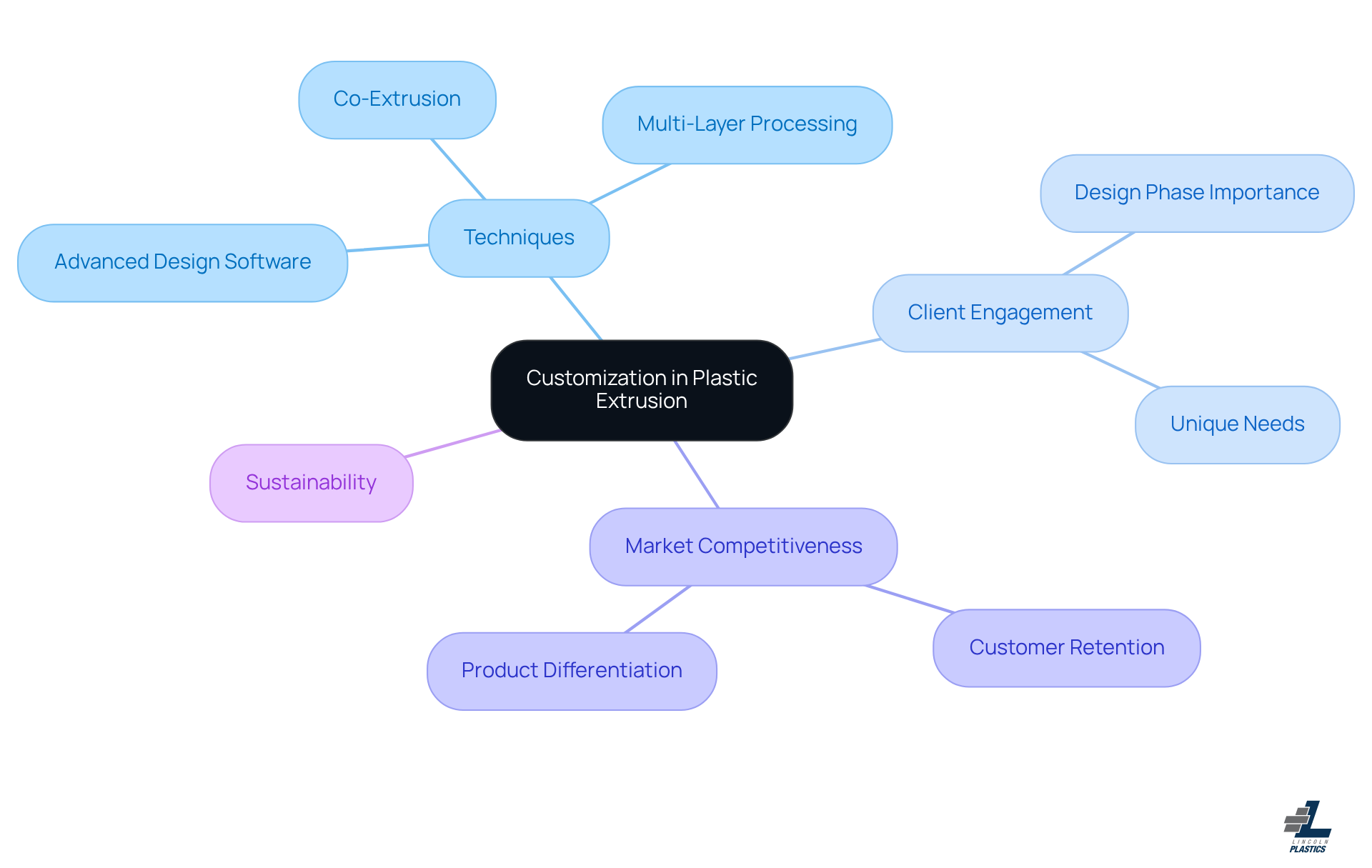
In a market where standard solutions often fall short, plastic extrusion technology for personalization emerges as a game-changer. It allows producers to tailor aspects like form, dimensions, and material to meet specific client needs. For instance, Lincoln Plastics employs co-extrusion techniques to create multi-layered profiles that enhance both functionality and aesthetics. Engaging clients during the design phase isn’t just important - it’s essential for success, helping to pinpoint unique needs and preferences for more effective solutions. Advanced design software is key to crafting intricate profiles that traditional methods often overlook. By prioritizing customization, Lincoln Plastics stands out in a competitive market, better serving its clients and driving customer satisfaction.
Recent trends show a rising demand for customized solutions in plastic extrusion technology within the plastic shaping industry. By 2026, personalization is expected to be a crucial factor in innovation, with producers increasingly adopting advanced technologies such as plastic extrusion technology, multi-layer processing, and co-processing to enhance design flexibility. Statistics reveal that companies focusing on customization report higher customer retention rates and improved market competitiveness. Furthermore, expert insights suggest that customization not only meets specific industry needs but also fosters product differentiation, essential for success in diverse sectors such as agriculture, office management, and tradeshow setups. Additionally, Lincoln Plastics' commitment to quality is underscored by their ISO 9001:2015 certification and rigorous quality management plans, including dedicated quality books and in-process checks. The strategic location of Lincoln Plastics in Lincoln, Nebraska, enables quick order turnaround and efficient logistics, enhancing their service to OEMs nationwide and internationally. The incorporation of chemical recycling into polymer shaping processes is becoming progressively significant, as it improves sustainability and innovation. This shift towards personalization not only enhances product appeal but also drives loyalty among clients. By embracing these innovations, you position your business for success in an ever-evolving landscape. For tailored solutions and quotes, we invite you to contact Lincoln Plastics today.
Enhance Production Efficiency and Turnaround Times
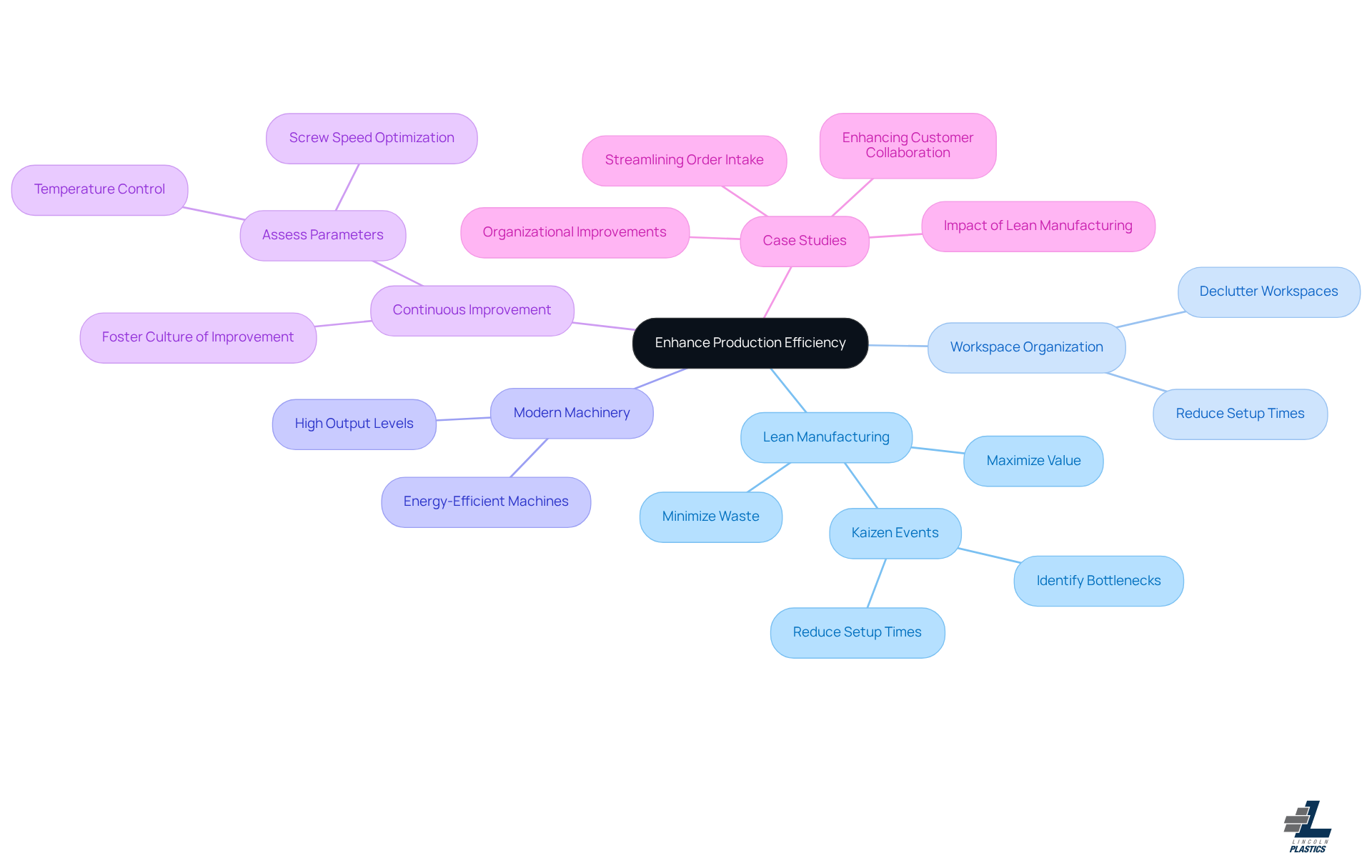
In the competitive landscape of plastic extrusion technology, efficiency is not just an advantage; it's a necessity for survival. To achieve this, implementing lean manufacturing principles is crucial. By minimizing waste and maximizing value, these principles directly contribute to reliable and high-quality production processes, significantly streamlining workflows.
Furthermore, organizing workspaces and reducing setup times are effective strategies that lead to improved productivity. Moreover, investing in modern, energy-efficient manufacturing machines at Lincoln Plastics not only reduces operational costs but also sustains high output levels, reinforcing our commitment to lean principles.
Consistently assessing and refining parameters in plastic extrusion technology, such as temperature and screw speed, can enhance product standards and decrease cycle times. Additionally, fostering a culture of continuous improvement among staff encourages innovative solutions, enhancing efficiency and responsiveness to client needs.
Case studies demonstrate that companies employing kaizen events have successfully reduced setup times and improved overall production flow, showcasing the tangible benefits of these practices. Lincoln Plastics, with its ISO 9001:2015 certification and dedicated quality management plans, exemplifies a commitment to quality and operational excellence.
By prioritizing these strategies, manufacturers not only enhance their operational capabilities but also position themselves as leaders in a demanding market.
Conclusion
In a fiercely competitive market, mastering plastic extrusion technology is not just beneficial; it's essential for survival. Understanding the extrusion process and selecting the right materials are crucial. Implementing quality control protocols and enhancing production efficiency can significantly boost operational capabilities and product offerings. Lincoln Plastics exemplifies these best practices, ensuring high-quality outputs that meet the diverse needs of industries such as agriculture, office management, and tradeshow setups.
Consider the unique advantages of material selection: PVC, polyethylene, and polypropylene each offer distinct benefits that can elevate your products. The commitment to quality through ISO 9001:2015 certification and dedicated quality management plans at Lincoln Plastics further reinforces the necessity of maintaining high standards throughout the production process. Additionally, the strategic location in Lincoln, Nebraska, allows for quick order turnaround and efficient logistics, enhancing service delivery to OEMs both nationally and internationally.
As the demand for customized solutions continues to rise, embracing innovation and personalization in plastic extrusion technology becomes increasingly vital. Failing to adapt may lead to lost opportunities and diminished market presence. By prioritizing these best practices, manufacturers not only enhance their product appeal but also foster customer loyalty and market competitiveness. Choosing Lincoln Plastics as your partner in innovation could be the decisive factor in achieving your business goals in plastic extrusion.
Frequently Asked Questions
What is plastic extrusion technology?
Plastic extrusion technology is a manufacturing method that transforms synthetic materials into high-quality profiles by melting and forcing materials through a die using an extruder, which consists of a hopper, barrel, and screw.
What are the key components of the plastic extrusion process?
The key components include the hopper, where polymer pellets are fed; the barrel, which heats and melts the pellets; and the screw, which propels the molten material through the die to shape it into the desired profile.
What parameters are crucial for the quality of products made through plastic extrusion?
Key parameters include temperature, pressure, and screw speed, which must be balanced to ensure product quality and consistency.
What challenges can arise in the plastic extrusion process?
Achieving the right balance of temperature, pressure, and screw speed can be challenging, potentially leading to production delays and increased costs.
What advancements are being made in plastic extrusion technology?
Recent advancements include enhanced precision, sustainability practices, and the integration of automation and advanced sensors, which improve efficiency and reduce defects and scrap rates.
What is the projected growth of the global plastic extrusion machinery market?
The global plastic extrusion machinery market is projected to reach approximately USD 9.8 billion by 2030, growing at a compound annual growth rate (CAGR) of about 5.2% from 2026 onward.
Why is selecting the right thermoplastic important?
Choosing the appropriate thermoplastic is crucial for project success, as different materials like PVC, polyethylene, and polypropylene have unique characteristics that affect performance and suitability for specific applications.
What are the characteristics of common thermoplastics used in extrusion?
PVC is durable and resistant to environmental factors, polyethylene is flexible and chemically resistant, and polypropylene is strong and lightweight, making each suitable for different applications.
How can collaborating with resin providers benefit producers?
Collaborating with resin providers can offer insights into the best materials for specific needs, ensuring that the final product meets performance expectations.
What trends are influencing material selection in plastic extrusion?
There is a growing trend towards sustainability, with an expected 20% rise in the use of recycled content in thermoplastics and the emergence of bioplastics and compostable alternatives.
List of Sources
- Understand Plastic Extrusion Technology Fundamentals
- Plastic Extrusion News and Press Releases | Bausano (https://bausano.com/en/press-and-news?q=NEWS)
- Extrusion 2026 Registration Opens (https://ptonline.com/news/extrusion-2026-registration-opens)
- Emerging Trends Shaping Plastic Extruders in 2026 (https://audop.com/amp/c/emerging-trends-shaping-plastic-extruders-in-2026.htm)
- Shaping the Future: Innovations in Plastic Extrusion Techniques - SeaGate Plastics Company (https://seagateplastics.com/shaping-the-future-innovations-in-plastic-extrusion-techniques)
- Plastic Extrusion Industry Trends 2026-2030 - JWELL (https://jwell-extruders.com/plastic-extrusion-industry-trends)
- Choose Appropriate Materials for Optimal Results
- Hydraulic-pump-calculator (https://hydraulicbuffer.com/blog/top-thermoplastic-extrusion-trends-for-global-buyers-2026)
- Plastics Extrusion: 4 Critical Statistics to Track for Increased Quality & Plant Profit (https://gaugeadvisor.com/plastics-extrusion-4-critical-statistics-to-track-for-increased-quality-plant-profit)
- Which plastic is right for your extrusion? - Condale Plastics (https://condaleplastics.com/extrusion-advice/which-plastic-is-right-for-your-extrusion)
- From Polyethylene to PVC: Exploring Common Plastic Extrusion Materials | High-Volume Plastic Profile Extrusion with In-House Tooling|Custom Profile (https://custom-profile.com/blog/from-polyethylene-to-pvc-exploring-common-plastic-extrusion-materials)
- Types of Plastic Extrusion Materials (https://paulmurphyplastics.com/industry-news-blog/types-of-plastic-extrusion-materials)
- Implement Rigorous Quality Control Protocols
- 4 Best Practices for Effective Process Control Quality in Extrusion (https://lincoln-plastics.com/news-post/4-best-practices-for-effective-process-control-quality-in-extrusion?dcc2137a_page=2)
- Monitoring extrusion quality inline (https://promix-solutions.com/en/company/news-exhibitions/news-detail/monitoring-extrusion-quality-inline)
- Extrusion 2026 Registration Opens (https://ptonline.com/news/extrusion-2026-registration-opens)
- Quality Control and Testing Procedures - Plastic Extrusion Technologies (https://plasticextrusiontech.net/quality-control-and-testing-procedures-in-plastic-extrusions)
- Polymer Extrusion Monitoring: Real-Time Insights for Better Process Control (https://thermofisher.com/blog/materials/polymer-extrusion-monitoring-real-time-insights-for-better-process-control)
- Leverage Customization for Tailored Solutions
- 4 Best Practices for Collaborating with Extrusion Manufacturing Companies (https://lincoln-plastics.com/news-post/4-best-practices-for-collaborating-with-extrusion-manufacturing-companies?dcc2137a_page=2)
- Shaping the Future: Innovations in Plastic Extrusion Techniques - SeaGate Plastics Company (https://seagateplastics.com/shaping-the-future-innovations-in-plastic-extrusion-techniques)
- Revolutionising Plastic Extrusion: The Role of Chemical Recycling - Condale Plastics (https://condaleplastics.com/company-news/revolutionising-plastic-extrusion-the-role-of-chemical-recycling)
- Custom Plastic Extrusion Design: Flexibility, Innovations & Future (https://lakelandplastics.com/design-flexibility-in-custom-plastic-extru)
- Exploring the Advantages of Co-Extrusion for Different Industries | High-Volume Plastic Profile Extrusion with In-House Tooling|Custom Profile (https://custom-profile.com/blog/exploring-the-advantages-of-co-extrusion-for-different-industries-and-applications)
- Enhance Production Efficiency and Turnaround Times
- How to maintain production efficiency in high-stakes extrusion (https://plasticsmachinerymanufacturing.com/extrusion/article/55307269/how-to-maintain-production-efficiency-in-high-stakes-extrusion)
- 4 Best Practices for Effective Extrusion Manufacturing Solutions (https://lincoln-plastics.com/news-post/4-best-practices-for-effective-extrusion-manufacturing-solutions)
- Next-Gen Plastic Extrusion Driving Efficiency & Sustainability (https://plastics-technology.com/articles/next-gen-plastic-extrusion-innovations-powering-efficiency)
- Put Some ‘Lean’ into Your Profile Extrusion Process (https://ptonline.com/articles/put-some-lean-into-your-profile-extrusion-process)
Related posts

Discover essential practices for selecting a reliable plastic extrusion supplier to meet your needs.


Discover the essential PVC properties that make this versatile material ideal for various applications.
Master the selection of extrusion heads with this comprehensive step-by-step guide for OEMs.
