
4 Steps to Use the Plastic Density Table for Material Selection
Introduction
Navigating the complexities of plastic density is crucial for manufacturers aiming to optimize extrusion processes and achieve superior product performance. The plastic density table serves as a critical tool, enabling manufacturers to enhance product reliability across various applications. Ignoring the nuances of plastic density can result in significant financial losses and product failures.
What strategies can be employed to effectively interpret the plastic density table and make informed decisions that enhance both performance and cost-efficiency? By mastering the plastic density table, you can elevate your production quality and safeguard your bottom line.
Understand Plastic Density and Its Importance
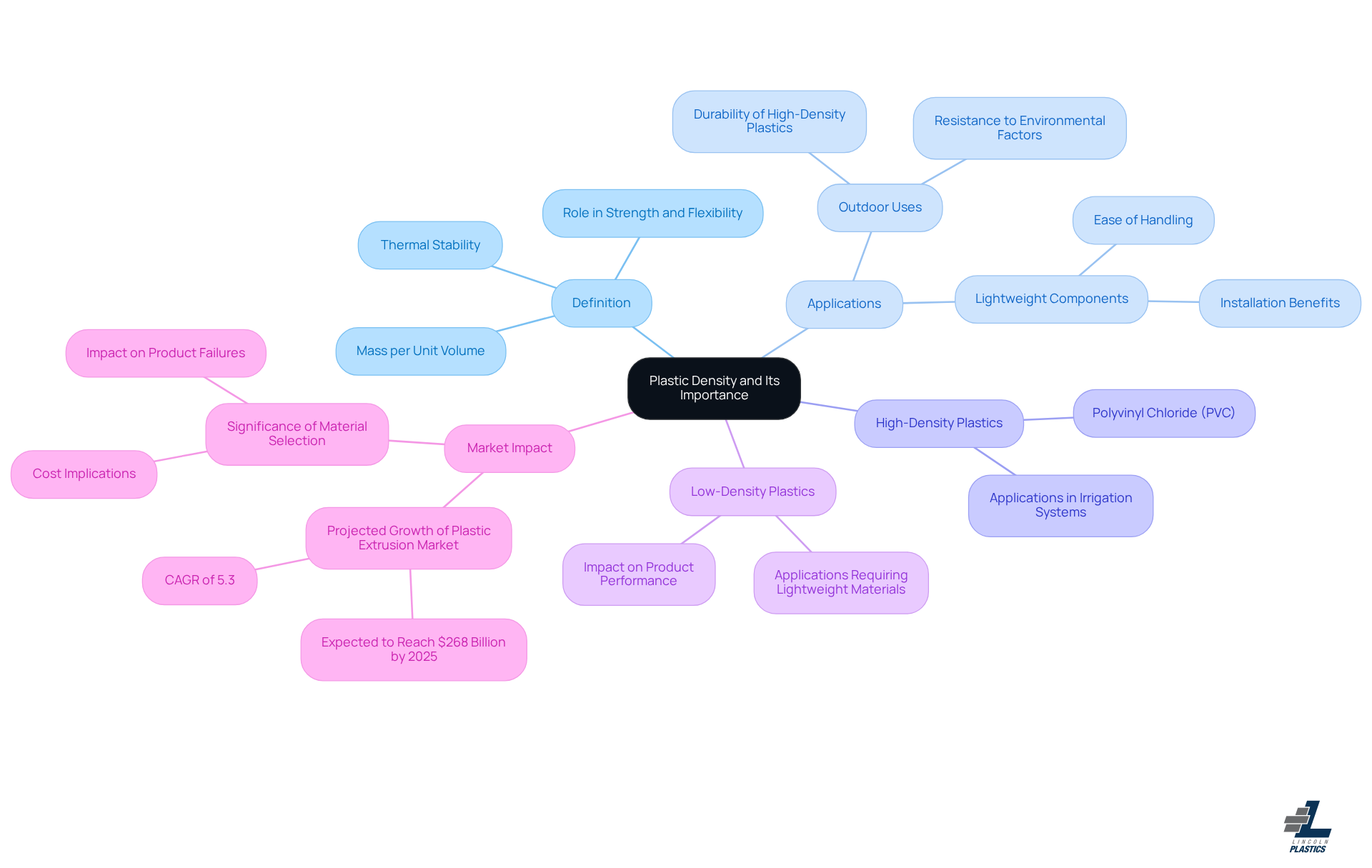
Understanding the plastic density table is crucial for optimizing product performance and ensuring reliability in your applications. The plastic density table defines plastic density as the mass of a substance per unit volume, which plays a pivotal role in determining the strength, flexibility, and thermal stability of plastic products. This property is key for selecting the right components for specific applications.
In forming processes, performance is everything. For instance, high-density substances such as Polyvinyl Chloride (PVC) are preferred for their durability and resistance to environmental factors, making them ideal for outdoor uses like irrigation systems. Lincoln Plastics, a leader in custom profile extrusion since 1948, produces a variety of sizes and substances for flexible profiles, including the capability to co-extrude colors into products, such as flexible cord covers. This capability not only boosts workplace safety but also tackles cable hazards head-on.
In contrast, substances with lower density, as shown in the plastic density table, are often chosen for applications that require lightweight components, enhancing ease of handling and installation. Recent studies indicate that variations in the plastic density table can significantly impact product performance, with higher density correlating to increased strength and rigidity. Without a grasp of density, how can you guarantee your products will perform as needed?
Grasping these implications enables producers to enhance their selection of resources, ultimately boosting product performance and conforming to client specifications. Statistics indicate that the worldwide polymer extrusion market is expected to achieve $268 billion by 2025, highlighting the significance of proper selection of substances in promoting industry growth and innovation. Opting for the wrong density can result in product failures and unexpected costs. The right material selection not only enhances product performance but also drives innovation in the polymer extrusion industry.
Interpret the Plastic Density Table for Material Selection
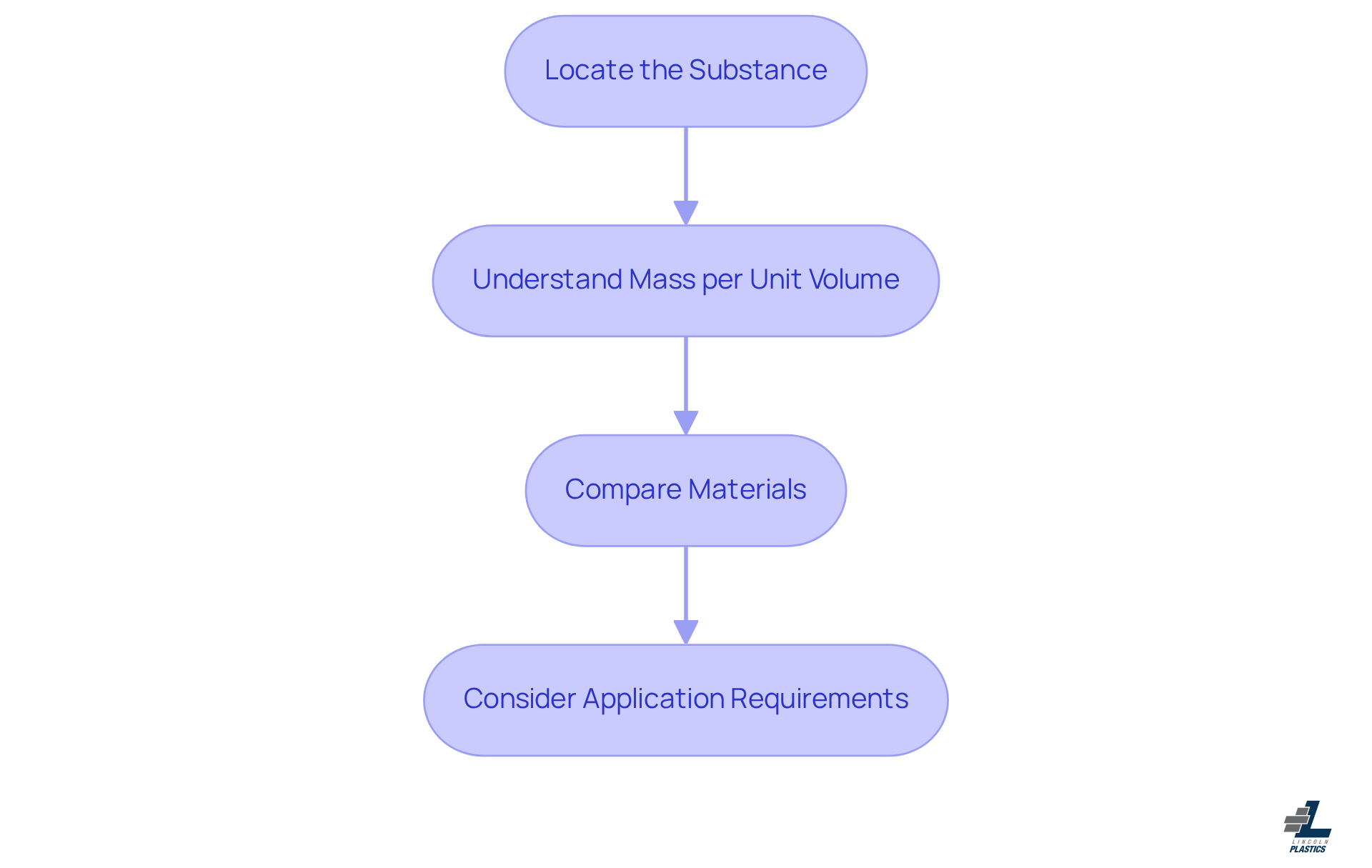
To make informed decisions in plastic extrusion, it is essential to understand the plastic density table.
- Locate the Substance: Identify the specific plastic type you are considering, such as polyethylene (PE) or polypropylene (PP). Each substance will have a related mass value specified in grams per cubic centimeter (g/cm³) or kilograms per cubic meter (kg/m³).
- Understand Mass per Unit Volume: Understand that mass per unit volume shows how much a material weighs compared to its volume. For example, a mass per unit volume of 0.95 g/cm³ indicates that one cubic centimeter of this material weighs 0.95 grams. A small change in mass can lead to substantial cost implications and structural challenges. Grasping these implications is crucial for enhancing your plastic extrusion profile, as it directly influences the plastic density table, production efficiency, and component selection.
- Compare materials by utilizing the mass values from the plastic density table to evaluate various materials according to your application requirements. For instance, low-density polyethylene (LDPE) has a mass per unit volume of about 0.91 to 0.93 g/cm³, whereas high-density polyethylene (HDPE) varies from 0.94 to 0.97 g/cm³. Increased compactness often correlates with greater strength and durability, while reduced compactness may indicate flexibility and lightweight properties. Applying best practices for optimizing your plastic extrusion profile can enhance efficiency and quality in production.
- Consider Application Requirements: Align the mass properties with the specific needs of your application, such as weight limitations or environmental exposure. This guarantees that the chosen substance will function optimally in its intended application. For instance, understanding the compactness of substances can inform choices in sectors such as automotive and aerospace, where weight and strength are essential. By mastering these principles, you can make informed decisions that enhance both performance and cost-effectiveness.
Address Challenges in Material Selection Using Density
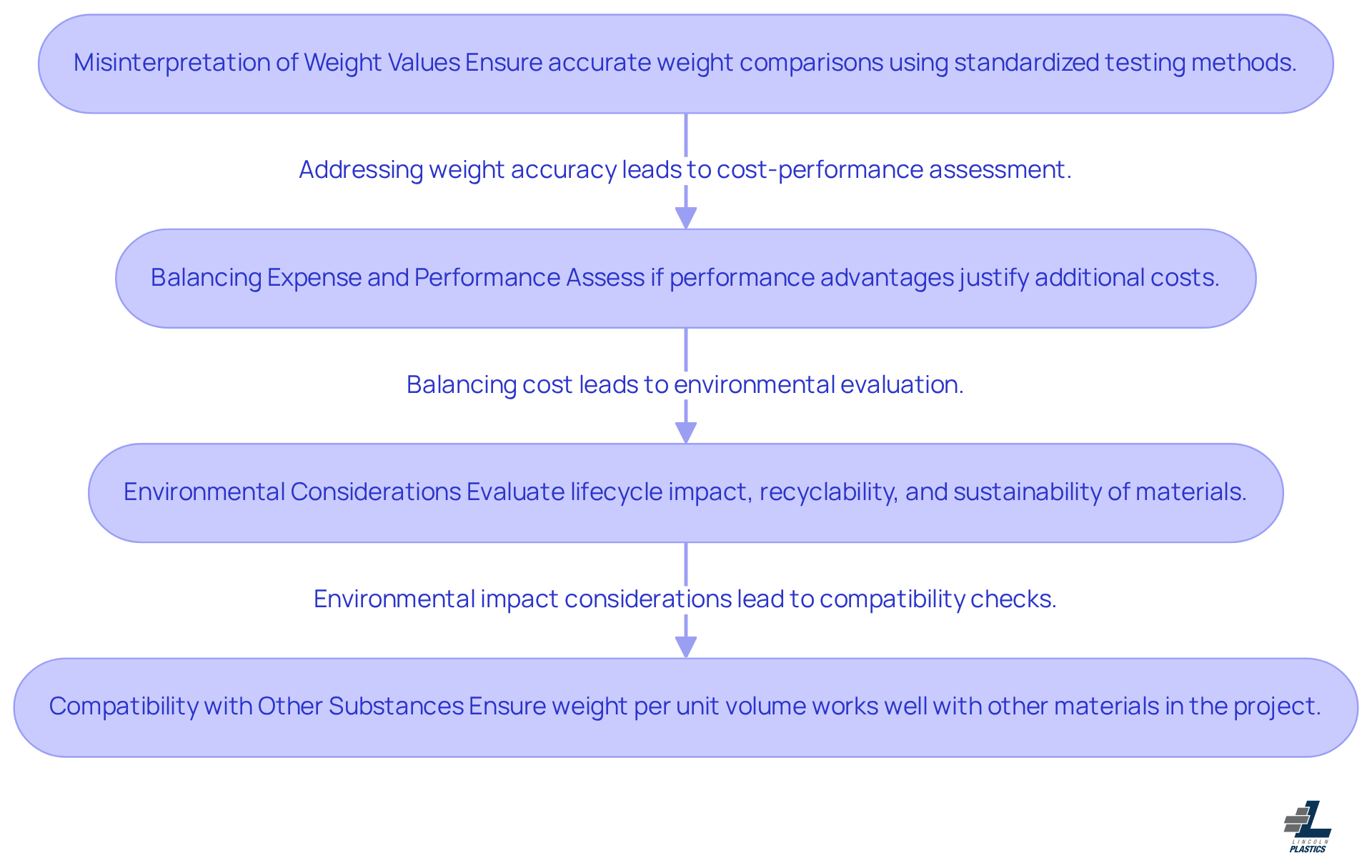
Selecting the right materials based on density is crucial, yet it comes with its own set of challenges that demand careful attention:
- Misinterpretation of Weight Values: Are you confident that your weight comparisons are accurate? It’s essential to compare substances using standardized testing methods, as different approaches can yield varying weight values. Always consult established mass tables to ensure precise comparisons.
- Balancing Expense and Performance: Choosing the wrong material could inflate your project costs significantly. While higher concentration substances can enhance performance, they often come with increased expenses. Assess whether the performance advantages justify the additional costs, especially for large-scale projects where budget constraints are a concern.
- Environmental Considerations: Some materials may excel in compactness but fall short in ecological sustainability. Evaluate the lifecycle impact of your material choices, including recyclability and overall environmental footprint. At Lincoln Plastics, we provide specification sheets and connect you with specialists to help you select options that balance weight and environmental impact.
- Compatibility with Other Substances: In projects involving co-extrusion or multi-substance assemblies, you need to make sure that the weight per unit volume of your chosen material works well with others in your project. This compatibility is vital to prevent processing issues and ensure optimal performance.
By addressing these challenges head-on, you not only streamline your selection process but also enhance the overall success of your projects with Lincoln Plastics' expert guidance.
Explore Additional Resources for Effective Material Selection
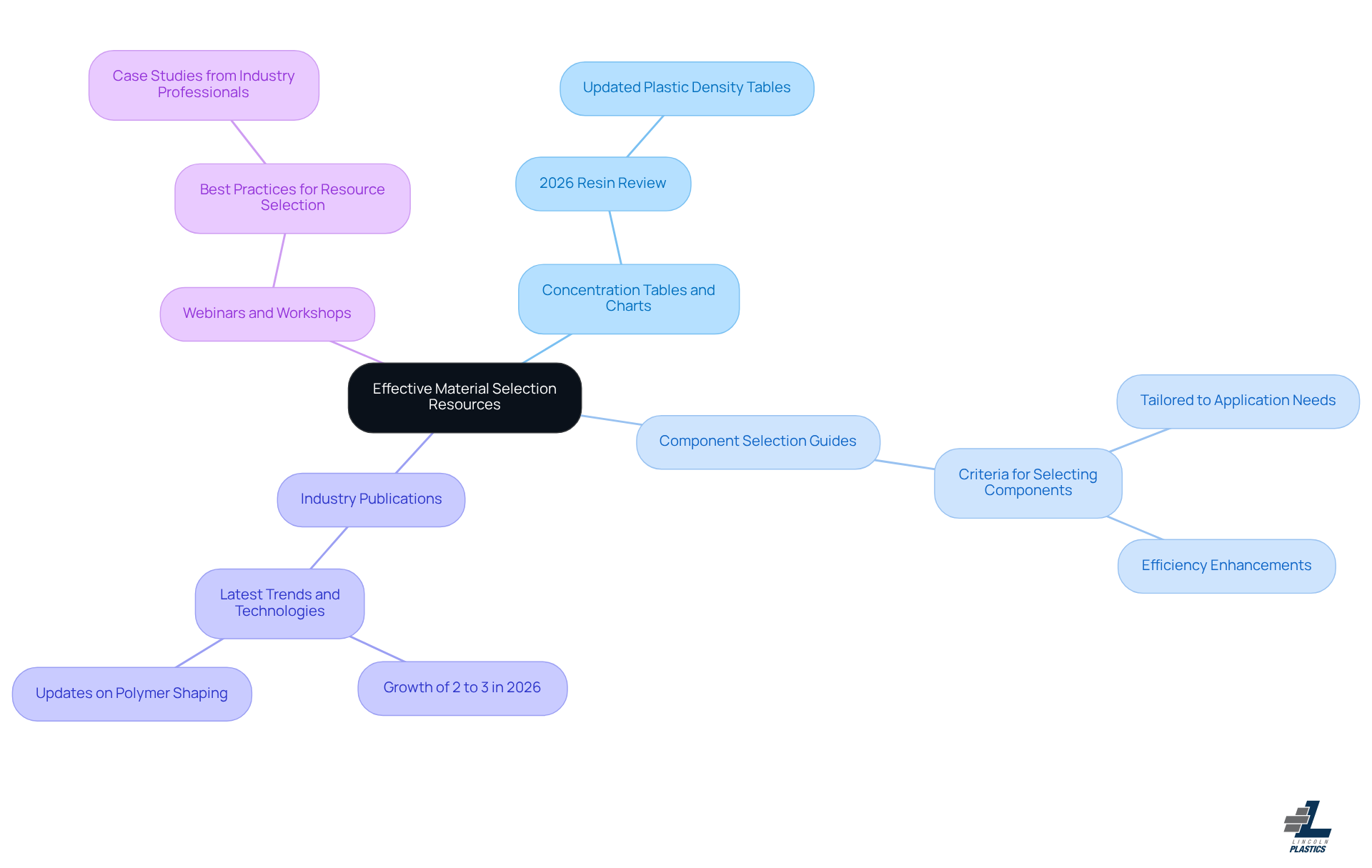
Navigating the complexities of the plastic density table is crucial for making informed material selections that drive success in extrusion projects. To enhance your understanding and improve your decision-making, consider these essential resources:
- Concentration Tables and Charts: Access comprehensive concentration tables from reputable sources, which offer detailed insights into various plastics, aiding in informed decision-making. For instance, the 2026 edition of the American Chemistry Council's 'Resin Review' includes updated plastic density tables that reflect current market conditions and trends.
- Component Selection Guides: Utilize guides from established providers that outline essential criteria for selecting components tailored to specific application needs, ensuring optimal performance. As Harbour highlights, concentrating on efficiency enhancements in resource selection is essential for promoting growth in the industry.
- Industry Publications: Stay informed about the latest trends and technologies in polymer shaping and substance science through industry publications, which offer valuable context and updates. Recent reports suggest a moderate growth of 2% to 3% for the plastics industry in 2026, emphasizing the significance of effective resource selection strategies.
- Webinars and Workshops: Participate in webinars and workshops conducted by industry professionals to discover best practices for resource selection and shaping processes, improving your knowledge. These sessions often feature case studies from companies successfully utilizing plastic density tables and charts for decision-making, illustrating practical applications.
By embracing these resources, you position yourself to make strategic decisions that enhance the quality and efficiency of your extrusion projects.
Conclusion
Mastering the plastic density table is crucial for optimizing material selection in extrusion processes. Recognizing how density influences characteristics such as strength, flexibility, and thermal stability allows for better alignment of materials with specific application requirements. By mastering this knowledge, manufacturers can significantly improve their production processes.
The article outlines four key steps to effectively utilize the plastic density table:
- Identifying the substance
- Understanding mass per unit volume
- Comparing materials
- Considering application requirements
Each step emphasizes the importance of precise measurements and informed decision-making to avoid costly mistakes and ensure optimal performance. Misinterpretations can lead to costly errors in material selection, reinforcing the critical role of density in material selection.
In conclusion, mastering the plastic density table streamlines the selection process and drives innovation in the polymer extrusion industry. By leveraging available resources and best practices, manufacturers can enhance their decision-making capabilities, leading to improved product outcomes and sustainability. Understanding these insights is essential for anyone involved in material selection, laying the groundwork for successful extrusion projects.
Frequently Asked Questions
What is plastic density and why is it important?
Plastic density is defined as the mass of a substance per unit volume. It is crucial for optimizing product performance and ensuring reliability in applications, as it influences the strength, flexibility, and thermal stability of plastic products.
How does plastic density affect product performance?
Higher density substances, such as Polyvinyl Chloride (PVC), are preferred for their durability and resistance to environmental factors, making them ideal for applications like outdoor irrigation systems. Variations in plastic density can significantly impact product performance, with higher density often correlating to increased strength and rigidity.
What role does Lincoln Plastics play in the industry?
Lincoln Plastics is a leader in custom profile extrusion since 1948, producing a variety of sizes and substances for flexible profiles. They also have the capability to co-extrude colors into products, enhancing workplace safety and addressing cable hazards.
Why might lower density plastics be chosen for certain applications?
Lower density plastics are often selected for applications that require lightweight components, making them easier to handle and install.
What are the consequences of choosing the wrong plastic density?
Opting for the wrong density can lead to product failures and unexpected costs. Proper material selection is essential for enhancing product performance and fostering innovation in the polymer extrusion industry.
What is the projected growth of the polymer extrusion market?
The worldwide polymer extrusion market is expected to achieve $268 billion by 2025, underscoring the importance of proper substance selection in promoting industry growth and innovation.
List of Sources
- Understand Plastic Density and Its Importance
- The Role of Plastic Extrusion in Modern Manufacturing | Rocal (https://rocalextrusions.co.uk/news/the-role-of-plastic-extrusion-in-modern-manufacturing)
- How Plastic Extrusion Is Powering Modern Manufacturing Across Industries | The Ritz Herald (https://ritzherald.com/how-plastic-extrusion-is-powering-modern-manufacturing-across-industries)
- Engineering Realities Defining Plastic Extrusion Manufacturing in 2026 - SANTA FE MACHINE WORKS, INC. (https://santafemachine.com/extrusion/engineering-realities-defining-plastic-extrusion-manufacturing-in-2026)
- dsbmaterials.com (https://dsbmaterials.com/blog/plastic-extrusion-key-to-300-billion-manufacturing-growth)
- ptonline.com (https://ptonline.com/articles/extrusion-the-role-of-polymer-density-in-screw-design)
- Interpret the Plastic Density Table for Material Selection
- Density of Plastics Material: Technical Properties Table (https://specialchem.com/plastics/guide/density)
- lincoln-plastics.com (https://lincoln-plastics.com/news-post/master-the-plastic-grade-chart-for-optimal-material-selection)
- lincoln-plastics.com (https://lincoln-plastics.com/news-post/understanding-plastic-density-kg-m-3-for-optimal-material-selection)
- polychemer.com (https://polychemer.com/news/density-of-a-plastic-what-you-need-to-know-84948640.html)
- plasticweightcalculator.com (https://plasticweightcalculator.com/guides/understanding-plastic-densities)
- Address Challenges in Material Selection Using Density
- leapaust.com.au (https://leapaust.com.au/blog/dem/expert-insights-materials-calibration-for-dem-modelling-of-bulk-solids)
- worthyhardware.com (https://worthyhardware.com/news/balance-cost-selecting-materials-based-on-yield-strength)
- smithers.com (https://smithers.com/resources/2025/august/cost-vs-performance-plastic-and-rubber-material)
- linkedin.com (https://linkedin.com/advice/1/how-do-you-evaluate-material-performance-cost-skills-manufacturing)
- ocnjdaily.com (https://ocnjdaily.com/news/2026/jan/06/navigating-material-selection-for-complex-prototypes-a-guide-to-avoiding-costly-errors-and-accelerating-development)
- Explore Additional Resources for Effective Material Selection
- Plastics Industry Faces Cost and Policy Pressures (https://plasticstoday.com/industry-trends/plastics-industry-faces-mounting-challenges-in-2026)
- Plastics Materials News (https://interplasinsights.com/plastics-materials)
- americanchemistry.com (https://americanchemistry.com/chemistry-in-america/news-trends/press-release/2026/acc-publishes-2026-statistical-reference-book-on-plastic-resins)
- plasticstoday.com (https://plasticstoday.com/materials)
- Plastics News - Plastic Industry News, Resin Pricing & Analysis (https://plasticsnews.com)
Related posts

Why Custom Pipe Extrusion Matters More Than Ever
Standard pipe sizes don’t always work. Learn how Lincoln Plastics delivers custom diameters, wall thicknesses, and finishes in right-sized runs.


Reducing Trip Hazards with Custom Cord Management
Loose cords are more than messy — they’re a safety hazard. Lincoln Plastics’ custom cord covers and Flexiduct solutions improve safety and efficiency.
The Power of Custom Plastic Profiles for OEMs
Off-the-shelf profiles force compromises. Learn how Lincoln Plastics designs custom extruded profiles for OEMs with exact specs and right-sized runs.
