

4 Steps to Solve Quality Issues in Manufacturing Effectively
Introduction
In the world of manufacturing, we all know that quality issues can really throw a wrench in the works, right? They can mess with productivity and leave customers feeling less than satisfied. By getting a grip on common challenges - like dimensional variability and inconsistent production processes - manufacturers can actually turn things around and boost their operations. But here’s the big question: how can organizations tackle these quality concerns head-on and create a culture of continuous improvement?
Let’s dive into four actionable steps that not only address these pesky quality issues but also set the stage for a solid quality control framework. This way, you’re not just fixing problems; you’re paving the way for long-term success in manufacturing. Sounds good, doesn’t it?
Identify Common Quality Issues in Manufacturing
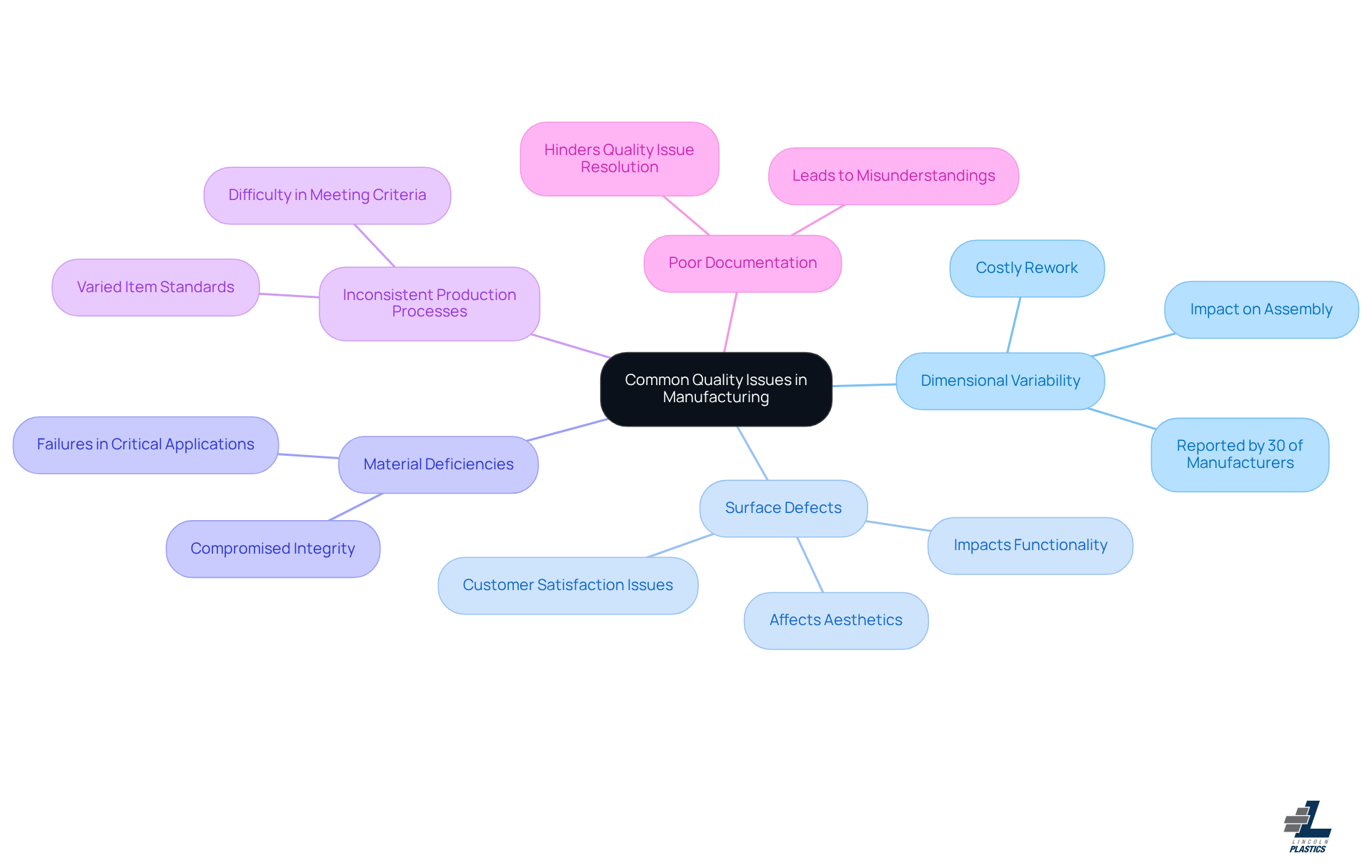
When it comes to how to solve quality issues, it’s super important to pinpoint the most common problems that can pop up. Let’s dive into some key issues:
- Dimensional inaccuracies: This is a biggie! Dimensional inaccuracies happen when parts don’t quite hit the specified dimensions, which can lead to headaches during assembly. Did you know that around 30% of manufacturers report dealing with this? It can lead to costly rework and delays, which nobody wants.
- Surface defects: Think about scratches, blemishes, or discoloration on products. These can really hurt both the look and functionality of items, affecting customer satisfaction and performance.
- Material quality: Using subpar materials can seriously compromise the integrity of items, leading to failures in critical applications. Not good!
- Process variability: If manufacturing procedures vary too much, it can create inconsistent item standards. This makes it tough to meet criteria and keep customers happy.
- Documentation issues: When documentation methods are lacking, misunderstandings and mistakes can creep in during production, making standards issues even worse.
By systematically identifying these common performance issues, manufacturers can understand how to solve quality issues through targeted solutions that boost product reliability and performance. For example, a case study with a leading automotive manufacturer showed how tackling quality issues through rigorous testing and advanced automation tools really improved production accuracy and cut down on defects.
Now, let’s talk about the importance of continuous improvement. By employing continuous improvement strategies, manufacturers can stay ahead of performance challenges, ensuring they meet both industry requirements and customer expectations. So, what do you think? Are you ready to take action and enhance your manufacturing processes?
Establish a Quality Control Framework
To build a solid quality control framework, let’s break it down into some easy steps:
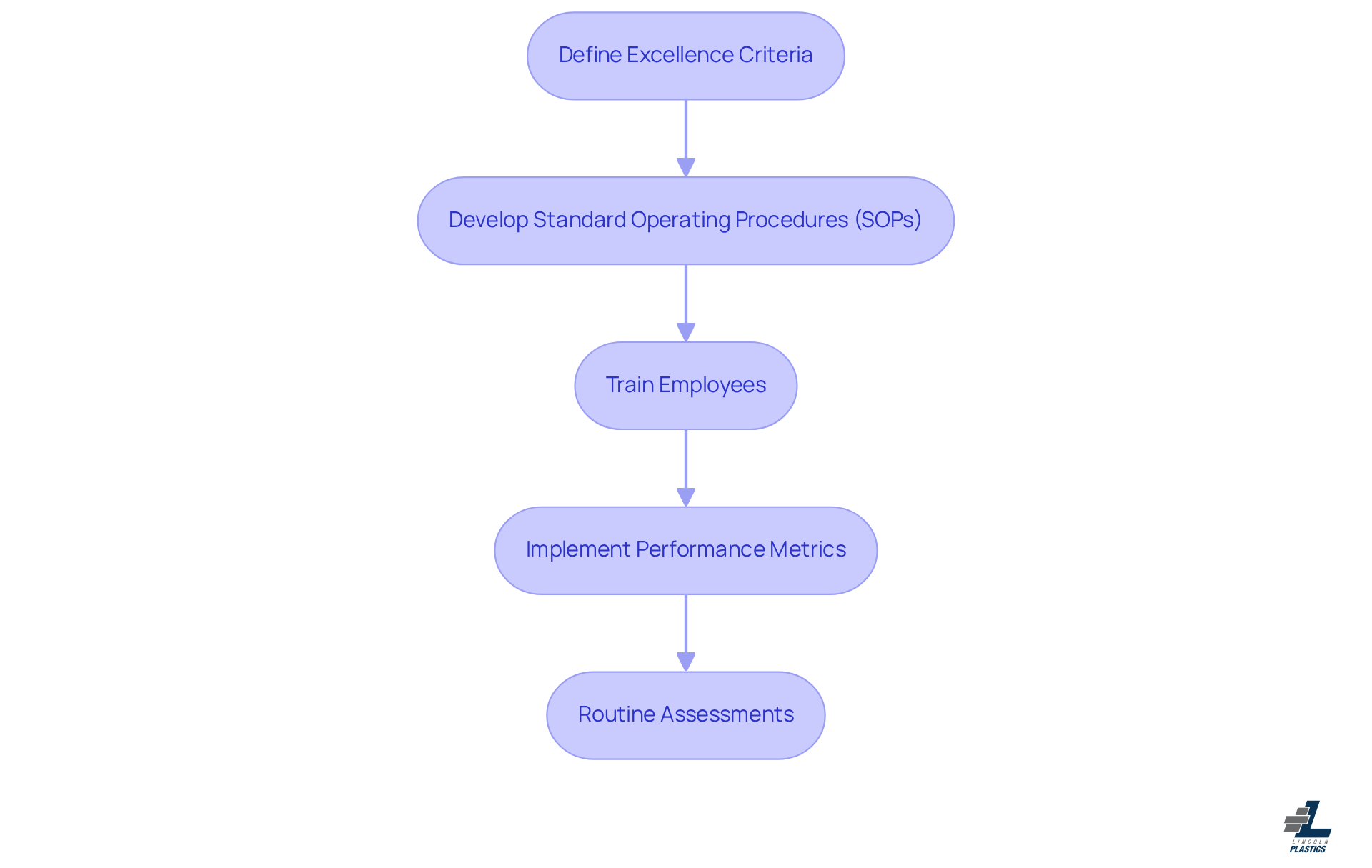
- Define Excellence Criteria: First off, what does excellence look like for your products? It’s all about figuring out the specific criteria that align with what your customers expect and what regulations require. Having clear criteria is key to keeping things consistent. Did you know that companies with well-developed quality control systems hit an average defect rate decrease? That’s a big deal! At Lincoln Plastics, we work hand-in-hand with OEMs to make sure all our products meet strict standards, including special checks for ‘fit and function’.
- Develop Standard Operating Procedures (SOPs): Next, let’s talk about creating SOPs. These procedures are essential in understanding how to solve quality issues, ensuring that everything runs smoothly and meets customer expectations. This is crucial for how to solve production problems by cutting down defects and boosting efficiency. Our quality assurance system is pretty robust, featuring a detailed manual, complete with drawings and essential in-process checks.
- Train Employees: Now, investing in training programs is a must. It’s all about making sure everyone understands the standards and procedures. A well-trained workforce fosters a culture of quality, which is essential for understanding how to solve operational challenges, resulting in fewer mistakes and better overall efficiency. Companies that focus on management excellence often see happier, more engaged employees, as highlighted in a study by McKinsey & Company.
- Implement Performance Metrics: How do you know if you’re hitting the mark? Establishing performance metrics is essential for understanding how to solve quality issues. These metrics help you assess standards at different production stages. Plus, using data analytics, including AI-driven systems, can provide insights on how to solve potential problems before they become issues. At Lincoln Plastics, we use various check gauges to ensure a proper end-use fit, which really enhances our assurance processes.
- Routine assessments are crucial for understanding how to solve quality issues, so don’t forget about regular evaluations of your control procedures. This is crucial for identifying areas that need improvement and ensuring you stick to those standards. Frequent assessments not only help maintain consistency but also build trust with your clients, showing them you’re committed to excellence and continuous improvement. And here’s a fun fact: companies see an average defect rate decrease of 32%. That’s a solid reason to consider certification in management!
Implement Effective Quality Control Measures
To implement effective quality control measures, let’s consider a few key points:
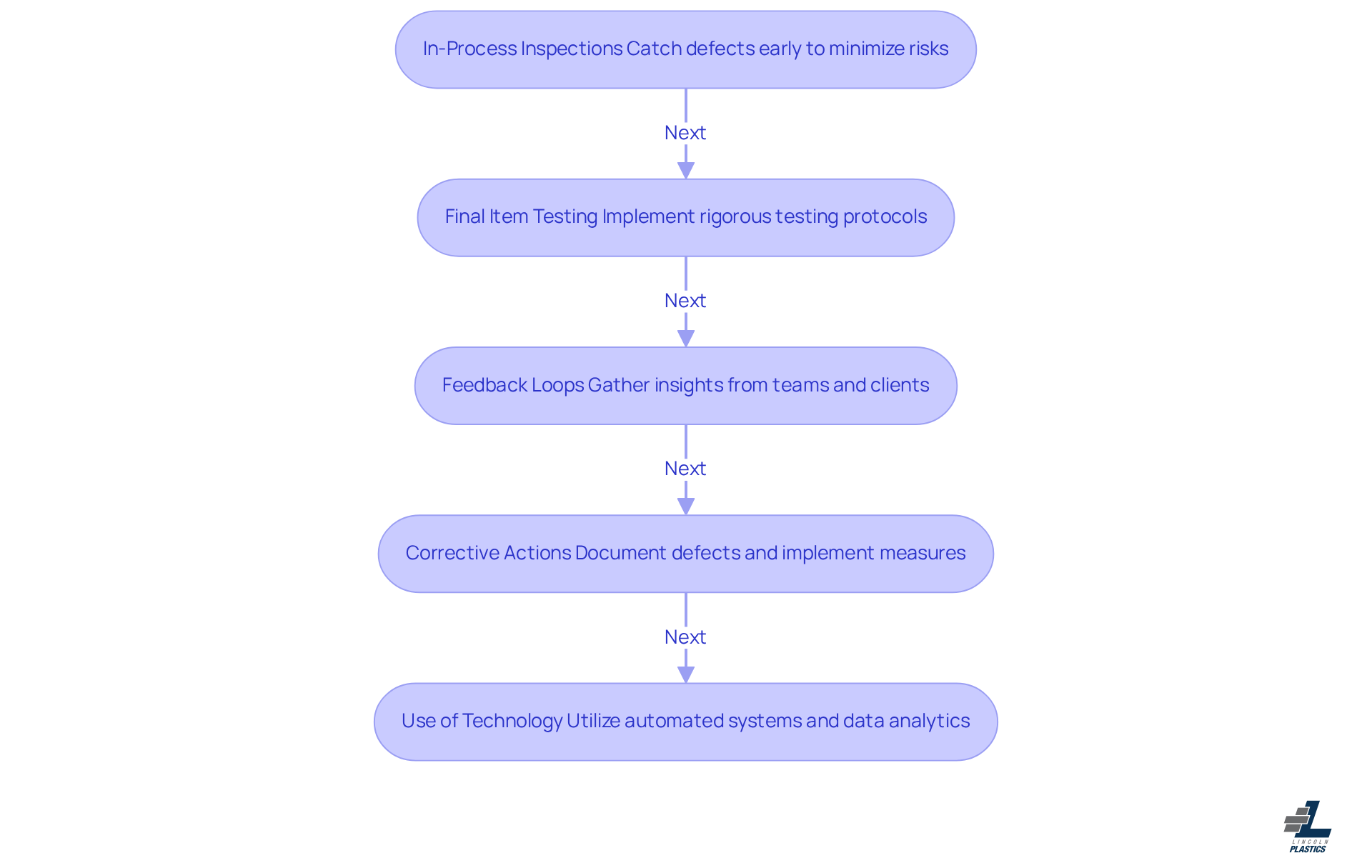
- Inspections: Have you ever caught a mistake just in time? Conducting inspections at various stages of production is a crucial method for learning by catching defects early. This proactive approach minimizes the risk of defects affecting the final outcome, demonstrating cost savings, which can save you money on rework and warranty claims. Historical data shows that knowing early can significantly cut costs compared to waiting until after production.
- Final Item Testing: Now, let’s talk about testing. Implementing testing procedures for completed items is a key strategy in quality assurance and ensures they meet excellence standards. By using statistical methods, like X-bar and R charts, you can understand process performance by consistently tracking item standards and maintaining process stability. This approach helps in understanding quality issues by addressing any variations promptly, thereby boosting overall product reliability.
- Feedback Systems: What about feedback? Creating systems to gather insights from production personnel and clients about quality standards can be a game changer. Involving your teams in meaningful discussions fosters a culture of collaboration and accountability. Industry leaders often say that excellence comes from clear objectives and genuine effort, highlighting the importance of teamwork in achieving high standards.
- Defect Documentation: Let’s not forget about defect management. Developing a system to document defects and implement corrective measures is a strategy for learning and preventing them from happening again. Tools like cause-and-effect diagrams can assist in understanding issues by identifying root causes of performance problems, enabling targeted interventions that enhance process reliability.
- Technology Integration: Finally, how about technology? Utilizing automation and data analytics is an effective approach to learn from production data. Integrating advanced technologies in SPC not only maximizes productivity but also enhances operational efficiency by cutting down on manual inspections. As the manufacturing landscape evolves, embracing these innovations will be key to staying competitive.
Adopt Continuous Improvement Strategies
To effectively implement strategies in manufacturing, let’s consider some friendly guidelines:
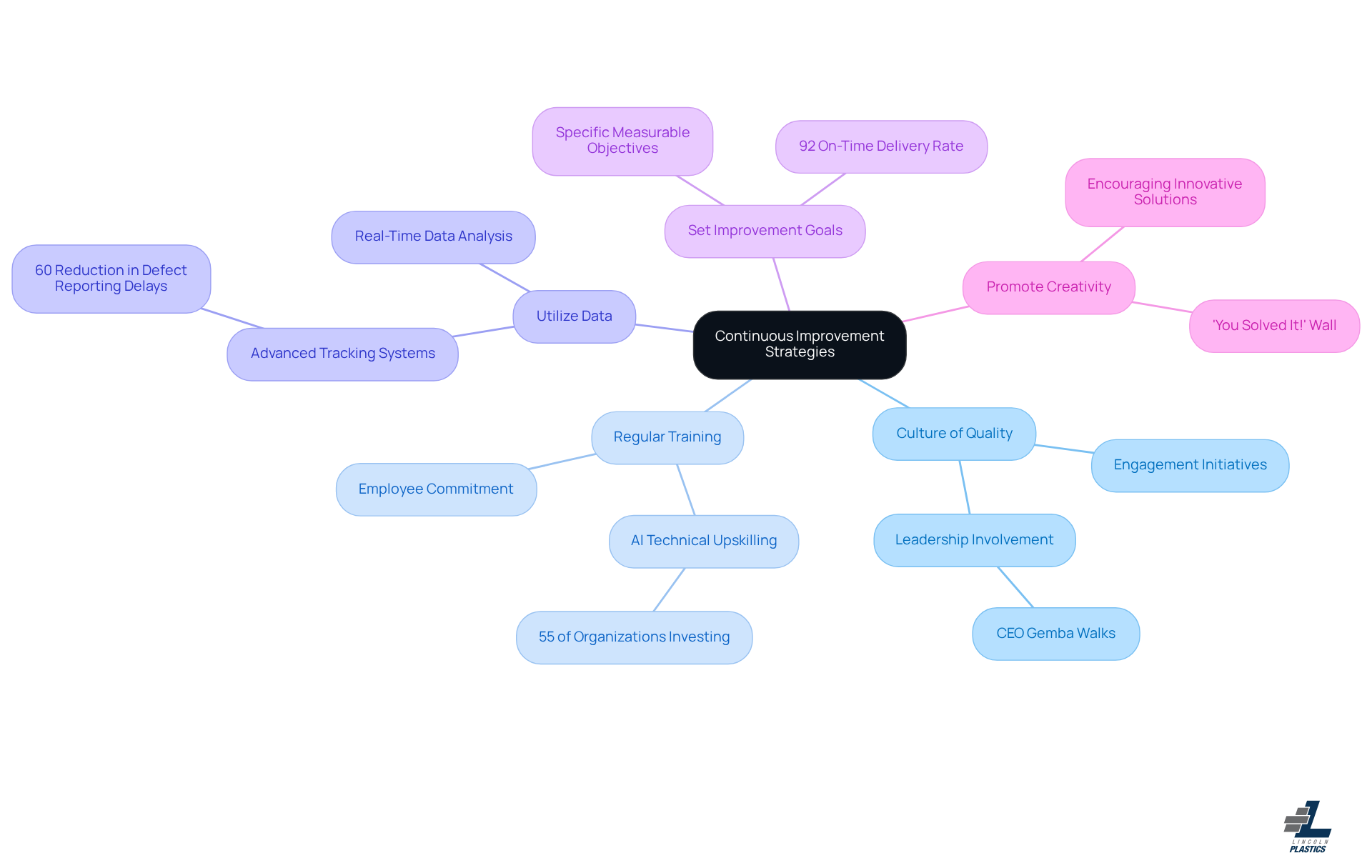
- Embrace Quality Culture: Cultivating an organizational culture that prioritizes quality is key. This means getting everyone involved in quality enhancement initiatives, which can lead to a more engaged workforce. For instance, a Michigan-based SME had its CEO join in on weekly Gemba walks, documenting improvements and encouraging frontline participation. Pretty cool, right?
- Provide Continuous Training: Continuous training is super important for equipping employees with the skills they need in quality enhancement methods. Current trends show that organizations are increasingly investing in AI technical upskilling, with 55% already providing such training in 2025. This not only boosts employee skills but also fosters a culture of innovation.
- Utilize Data Analysis: Data analysis is crucial for spotting trends and areas that need improvement in manufacturing processes. Advanced tracking systems can streamline communication and cut down on errors, ensuring jobs get done on time. For example, a CNC workshop that embraced digital solutions saw a 60% drop in defect reporting delays. That’s the power of real-time data!
- Set Improvement Goals: Setting improvement goals for quality enhancement is essential for tracking progress. Organizations with developed management systems report an average on-time delivery rate of 92%, compared to just 74% for those without. This really highlights how important it is to have clear goals to boost performance.
- Promote Creativity: Creating an environment where staff feel empowered to suggest and implement innovative solutions is vital for improving standards. Recognizing contributions, like through a 'You Solved It!' wall, encourages a culture of participation and makes continuous improvement a shared habit.
By weaving these strategies into your organization, you can build a strong culture of quality that not only meets but exceeds customer expectations, particularly in understanding how to solve quality issues. This ultimately leads to improved satisfaction and loyalty. So, what do you think? Ready to take action?
Conclusion
Addressing quality issues in manufacturing is super important for making sure products are reliable and operations run smoothly. By spotting common problems, setting up a solid quality control system, and taking effective action, manufacturers can really boost their processes and results. This all-encompassing approach not only helps reduce risks tied to defects but also builds a culture of continuous improvement, which is key for long-term success.
Now, let’s talk about some key strategies highlighted in the article. It’s all about:
- Defining what excellence looks like
- Creating standard operating procedures
- Training employees
- Using technology for real-time monitoring
Each of these steps plays a part in keeping high standards and making sure quality issues are tackled head-on. Plus, focusing on continuous improvement strategies - like fostering a culture of quality and leveraging data analytics - shows how organizations can adapt and thrive in a competitive landscape.
Ultimately, prioritizing quality control and continuous improvement isn’t just about ticking boxes; it’s about building trust with customers and boosting overall satisfaction. Manufacturers should definitely take action by implementing these strategies. Doing so will lead to better operational efficiencies and a stronger reputation in the market. Embracing these principles will keep quality at the forefront of manufacturing processes, paving the way for future success.
Frequently Asked Questions
What are common quality issues in manufacturing?
Common quality issues in manufacturing include dimensional variability, surface defects, material deficiencies, inconsistent production processes, and poor documentation.
What is dimensional variability and why is it a concern?
Dimensional variability occurs when parts do not meet specified dimensions, which can lead to assembly issues. Approximately 30% of manufacturers report dealing with this problem, resulting in costly rework and delays.
How do surface defects affect manufacturing?
Surface defects, such as scratches, blemishes, or discoloration, can negatively impact the appearance and functionality of products, ultimately affecting customer satisfaction and performance.
What are material deficiencies and their consequences?
Material deficiencies refer to the use of subpar materials that compromise the integrity of items, potentially leading to failures in critical applications.
How do inconsistent production processes impact quality?
Inconsistent production processes can create varying item standards, making it difficult to meet quality criteria and maintain customer satisfaction.
What role does documentation play in manufacturing quality?
Poor documentation can lead to misunderstandings and mistakes during production, exacerbating issues related to quality standards.
How can manufacturers address these quality issues?
Manufacturers can systematically identify these common performance issues and implement targeted solutions, such as rigorous testing and advanced automation tools, to enhance product reliability and operational efficiency.
Why is fostering a culture of ongoing improvement important in manufacturing?
Fostering a culture of ongoing improvement, along with real-time monitoring, helps manufacturers stay ahead of performance challenges and ensures they meet industry requirements and customer expectations.
List of Sources
- Identify Common Quality Issues in Manufacturing
- linkedin.com (https://linkedin.com/advice/3/what-most-common-quality-control-mistakes)
- spiderstrategies.com (https://spiderstrategies.com/kpi/industry/manufacturing)
- britest.co.uk (https://britest.co.uk/case_studies)
- atsindustrialautomation.com (https://atsindustrialautomation.com/case_studies/achieving-micron-level-accuracy-in-medical-device-manufacturing)
- Establish a Quality Control Framework
- Statistical Quality Control in Manufacturing | Business and Management | Research Starters | EBSCOhost (https://ebsco.com/research-starters/business-and-management/statistical-quality-control-manufacturing)
- tradeaiders.com (https://tradeaiders.com/steps-to-ensure-quality-control-in-manufacturing-in-2025.html)
- Quality Statistics and Why Your QMS Matters | Steelhead Technologies (https://gosteelhead.com/quality-statistics-and-why-your-qms-matters)
- The Importance of Quality Control in Engineering and Manufacturing (https://automate.org/news/the-importance-of-quality-control-in-engineering-and-manufacturing)
- Implement Effective Quality Control Measures
- blog.rarecrew.com (https://blog.rarecrew.com/post/the-best-qa-quotes-you-need-to-hear)
- welleinspection.com (https://welleinspection.com/de/quality-control-solutions/top-quality-quotes)
- The Importance of Quality Control in Engineering and Manufacturing (https://automate.org/news/the-importance-of-quality-control-in-engineering-and-manufacturing)
- spotfire.com (https://spotfire.com/glossary/what-is-statistical-process-control)
- 25 Quotes to Inspire Quality And Success - Pro QC Blog (https://proqc.com/blog/25-quotes-to-inspire-quality-success)
- Adopt Continuous Improvement Strategies
- Quality Statistics and Why Your QMS Matters | Steelhead Technologies (https://gosteelhead.com/quality-statistics-and-why-your-qms-matters)
- manufacturingtomorrow.com (https://manufacturingtomorrow.com/article/2025/07/6-steps-to-build-a-continuous-improvement-culture-in-american-smes/25342)
- whatfix.com (https://whatfix.com/blog/employee-training-statistics)
Related posts

Why Custom Pipe Extrusion Matters More Than Ever
Standard pipe sizes don’t always work. Learn how Lincoln Plastics delivers custom diameters, wall thicknesses, and finishes in right-sized runs.


Reducing Trip Hazards with Custom Cord Management
Loose cords are more than messy — they’re a safety hazard. Lincoln Plastics’ custom cord covers and Flexiduct solutions improve safety and efficiency.
The Power of Custom Plastic Profiles for OEMs
Off-the-shelf profiles force compromises. Learn how Lincoln Plastics designs custom extruded profiles for OEMs with exact specs and right-sized runs.
