

4 Steps to Improve Quality Control in Production Effectively
Introduction
You know, when it comes to manufacturing, chasing excellence really depends on how well we handle quality control. Think about it: setting solid quality standards and sticking to them can make a huge difference in production results. This not only boosts customer satisfaction but can also help cut down costs. But here’s the kicker - many manufacturers struggle with putting effective quality control measures in place.
So, what can we do about it? What are the key steps to not just improve quality control but also foster a culture of continuous improvement in our production environments? Let’s dive into this together!
Establish Clear Quality Standards
- Let’s Talk Quality Metrics: First off, what does quality mean for your products? Think about the factors that define excellence - dimensions, material properties, and performance criteria. It’s super helpful to use industry standards as your benchmarks. This way, you’re not just guessing; you’re aligning with what the market expects.
- Creating Your Documentation: Now that you know what quality looks like, it’s time to document it! A solid quality manual is your best friend here. Make sure it includes clear descriptions, acceptable ranges, and examples. This will help everyone stay on the same page and understand expectations, which is crucial when considering how to improve processes.
- Spread the Word: It’s crucial that everyone on your team knows these guidelines inside and out. Regular training sessions and easy-to-access documentation can make a big difference. And don’t forget - review and update these criteria regularly to keep them fresh and effective.
- Setting Goals That Matter: Finally, let’s talk about goals. Establishing measurable objectives, like targets or benchmarks, is key. These metrics not only help you track progress but also motivate your team to strive for excellence. Who doesn’t want to hit those targets?

Select Reliable Suppliers and Inspect Raw Materials
- Supplier Evaluation: Let’s kick things off by diving into how to find the right suppliers. Start by doing some homework on potential partners. Look at their reputation, check for relevant certifications like ISO 9001, and review their past performance. It’s a good idea to create a checklist to help you assess their reliability. Did you know that 98% of industry leaders think supplier certifications are key when picking partners? At Lincoln Plastics, we work closely with OEMs to make sure our products meet all the necessary standards. We even do special checks for ‘fit and function’ and ensure compliance with tolerances that depend on the material and application.
- Request Samples: Before you seal any deals, don’t forget to ask for samples of materials. This step is crucial for checking if they meet your standards. By being proactive, you can dodge the risks that come with using subpar materials, ensuring that only the best inputs make it to production. We can easily find colors that match your Pantone specifications, so your products look consistent across different manufacturers.
- Conduct Inspections: Now, let’s talk about quality inspections. It’s super important to have a solid process in place to make sure products align with your standards. This should include visual checks, dimensional evaluations, and functional testing. These steps are vital for understanding how to improve quality in production. At Lincoln Plastics, we’ve got a strong assurance system that includes a dedicated manual for your plastic profile, complete with drawings, critical in-process checks, and run documentation. This way, we ensure precision and compliance.
- Maintain Communication: Finally, let’s not overlook the importance of communication. Keeping the lines of communication open about standards and potential improvements is key. Regular audits and performance reviews help maintain high standards and foster a culture of continuous improvement. Remember, effective quality control is shifting from just solving problems to preventing risks proactively. Collaboration is essential for achieving long-term success!
Implement In-Process Quality Control Techniques
- Establish Checkpoints: Let’s kick things off by talking about those critical points in the production process where we really need to keep an eye on things. Think about quality metrics. It’s all about making sure they stay within those specified limits. At Lincoln Plastics, we’ve got established protocols. We make sure these checkpoints are carefully recorded and followed, and we even conduct audits to meet their specific standards.
- Utilize SPC Techniques: Now, let’s talk about SPC techniques. These are super handy for analyzing production data in real-time. By keeping an eye on trends and variations, manufacturers can spot potential issues before they blow up into bigger problems. This way, we can keep those product standards consistent. Plus, incorporating machine vision systems and data analytics really boosts the effectiveness of SPC in today’s production environments. Our specialized in-line operations for fitting insertion, threading, and hose clamping are all designed to help maintain those high standards.
- Train Employees: Next up, let’s discuss training. It’s crucial to provide education for all employees on quality control techniques. When everyone understands the importance of their roles in upholding product standards, it fosters a culture of accountability and continuous improvement. At Lincoln Plastics, we ensure our team is well-versed in essential in-process checks for the best results.
- Document Findings: Finally, we can’t forget about documentation. Keeping thorough records of inspections and any deviations from set criteria is key. This practice enhances transparency and shows our commitment to quality in manufacturing processes. Ensuring complete traceability through careful record-keeping is vital for effective management. Our strong system includes dedicated logs for each item, making it all work seamlessly.

Conduct Final Inspections and Quality Checks
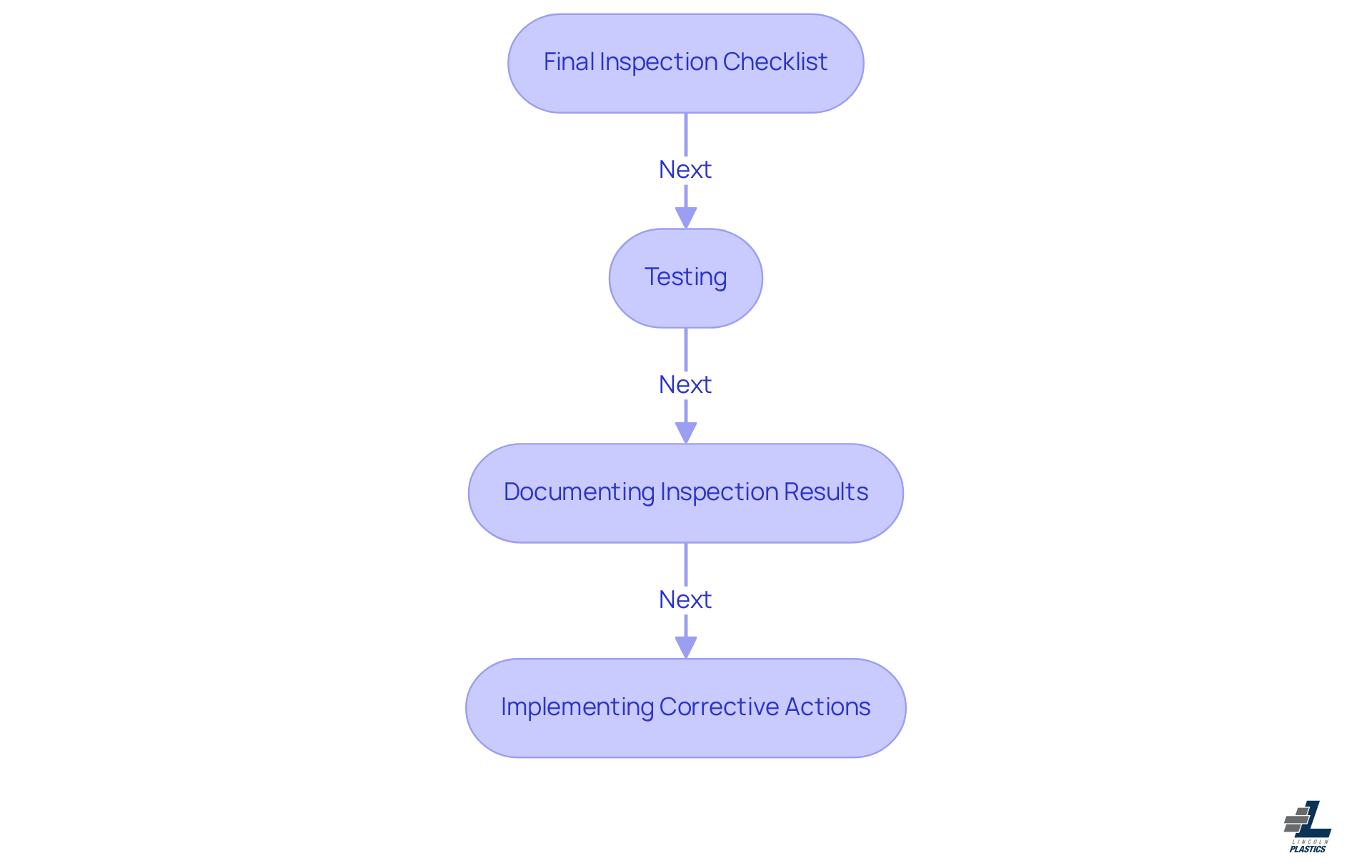
- Let’s Start with a Final Checklist: You know how important it is to have everything in order before wrapping up a project. So, why not create a checklist? This should cover all the criteria that the finished item needs to meet, making sure it aligns with the standards you’ve set. Think about sections for appearance, dimensions, functionality, and compliance. This way, you can ensure quality. As David Campbell puts it, "A final checklist is crucial for maintaining standards in project management." At Lincoln Plastics, we work hand-in-hand with OEMs to ensure our products meet all requirements, including those specific checks for 'fit and function.'
- Now, Let’s Talk About Testing: It’s time to put your items to the test! Implement a solid testing protocol on a representative sample of completed items to make sure they meet specifications. This includes tests, dimensional evaluations, and visual inspections. Did you know that early testing can catch defects early? This can significantly reduce the risk of shipping out faulty products, which is key to maintaining customer trust and your brand’s reputation. At Lincoln Plastics, we use various check gauges, like calipers and micrometers, to ensure everything fits just right. It’s all about turning routine documentation into a powerful tool for continuous improvement.
- Documenting Inspection Results is Key: Once you’ve done your inspections, it’s crucial to meticulously record the outcomes. Make sure to detail any defects or non-conformities you find. This documentation is essential for keeping track of standards and tackling recurring issues effectively. A well-organized quality system not only standardizes evaluations but also helps you stick to regulatory standards. Our robust quality system at Lincoln Plastics includes a dedicated quality book for your plastic profile, complete with drawings, critical in-process checks, and run documentation. Plus, we ensure that the colors we source meet your Pantone specifications for consistency across manufacturers.
- Implementing Corrective Actions: If you spot any defects, it’s time to roll up your sleeves and dig into a thorough root cause analysis. This will help you to prevent those issues from popping up again. It might mean retraining staff, adjusting processes, or even changing suppliers. Acting quickly on defects is essential; studies show that addressing issues promptly can keep problems from reaching customers, which is vital for protecting your company’s reputation and operational efficiency.
Conclusion
When it comes to production, having solid quality control is key to keeping those high standards and making sure customers are happy. By honing in on clear quality metrics, reliable suppliers, in-process control techniques, and thorough final inspections, manufacturers can build a strong framework that not only meets but often exceeds what the industry expects. This all-encompassing approach helps align production practices with what the market demands, ultimately boosting product quality and operational efficiency.
Throughout this article, we’ve highlighted some essential steps to enhance quality control processes. These steps include:
- Defining quality standards
- Choosing trustworthy suppliers
- Implementing in-process checks
- Conducting meticulous final inspections
Each of these plays a crucial role in nurturing a culture of quality within the organization, ensuring that every product not only meets specifications but also builds trust with customers.
So, let’s wrap this up! The importance of quality control in production really can’t be overstated. It’s not just a checklist of procedures; it’s a commitment to excellence that resonates throughout the entire manufacturing process. By embracing these best practices, organizations can not only reduce risks but also position themselves as leaders in their field. Taking these steps will not only boost product quality but also spark continuous improvement and innovation, paving the way for long-term success.
Frequently Asked Questions
What does quality mean for products?
Quality for products refers to key attributes that define excellence, including dimensions, material properties, and performance criteria. It is important to use industry standards and customer needs as benchmarks.
How can a quality manual help in maintaining quality standards?
A quality manual documents clear descriptions, acceptable ranges, and testing methods, helping everyone stay aligned and maintain consistency in production, which is crucial for improving quality control.
Why is it important to spread awareness of quality standards among the team?
It is important for everyone on the team to know the quality guidelines thoroughly to ensure consistent application. Regular training sessions and accessible documentation can significantly enhance understanding and adherence.
How often should quality criteria be reviewed and updated?
Quality criteria should be reviewed and updated regularly to keep them fresh and effective.
What types of goals should be established to measure quality?
Measurable objectives such as defect rates or customer satisfaction scores should be established. These metrics help track progress and motivate the team to strive for excellence.
List of Sources
- Establish Clear Quality Standards
- qualityze.com (https://qualityze.com/blogs/quality-management-trends-2026)
- clarkstonconsulting.com (https://clarkstonconsulting.com/insights/2026-quality-compliance-trends)
- f7i.ai (https://f7i.ai/blog/quality-assurance-why-checking-the-box-is-no-longer-enough-for-modern-manufacturing)
- The Importance of Quality Control in Engineering and Manufacturing (https://automate.org/news/the-importance-of-quality-control-in-engineering-and-manufacturing)
- Select Reliable Suppliers and Inspect Raw Materials
- sgs.com (https://sgs.com/en-id/news/2025/11/the-benefits-of-iso-9001-certification-for-modern-businesses)
- forbes.com (https://forbes.com/sites/daveevans/2026/02/27/the-2026-manufacturing-shifts-you-cant-ignore)
- Future of Supplier Quality: Top Trends and Challenges (https://compliancequest.com/blog/supplier-quality-challenges-and-trends-2026)
- gep.com (https://gep.com/blog/strategy/professional-services-procurement-best-practices-2026)
- mdpi.com (https://mdpi.com/2071-1050/16/16/7021)
- Implement In-Process Quality Control Techniques
- 5 Proven Practices to Increase Product Quality in Extrusion (https://lincoln-plastics.com/news-post/5-proven-practices-to-increase-product-quality-in-extrusion)
- Quality Control in Plastic Extrusion for Consistent Results | Rocal (https://rocalextrusions.co.uk/news/quality-control-in-plastic-extrusion-to-ensure-consistent-results)
- qualitymag.com (https://qualitymag.com/articles/keyword/3089-statistical-process-control-spc)
- Quality Control Measures in Precision Aluminum Extrusion Manufacturing | Profile Precision Extrusions - Aluminum Extrusions Blog (https://profileprecisionextrusions.com/quality-control-measures-in-precision-aluminum-extrusion-manufacturing)
- Quality Control and Testing Procedures - Plastic Extrusion Technologies (https://plasticextrusiontech.net/quality-control-and-testing-procedures-in-plastic-extrusions)
- Conduct Final Inspections and Quality Checks
- raps.org (https://raps.org/news-and-articles/news-articles/2026/3/fda-drafts-guidance-on-best-practices-for-respondi)
- forbes.com (https://forbes.com/sites/daveevans/2026/02/27/the-2026-manufacturing-shifts-you-cant-ignore)
- nestforms.com (https://nestforms.com/blog/223/Final-Inspection-Checklist-A-Useful-Key-to-Quality-Control)
- tradeaiders.com (https://tradeaiders.com/key-procedures-for-successful-quality-inspections-in-manufacturing.html)
- fieldeagle.com (https://fieldeagle.com/blog/2026-inspection-strategy-how-plan-safer-smarter-year)
Related posts

Why Custom Pipe Extrusion Matters More Than Ever
Standard pipe sizes don’t always work. Learn how Lincoln Plastics delivers custom diameters, wall thicknesses, and finishes in right-sized runs.


Reducing Trip Hazards with Custom Cord Management
Loose cords are more than messy — they’re a safety hazard. Lincoln Plastics’ custom cord covers and Flexiduct solutions improve safety and efficiency.
The Power of Custom Plastic Profiles for OEMs
Off-the-shelf profiles force compromises. Learn how Lincoln Plastics designs custom extruded profiles for OEMs with exact specs and right-sized runs.
