

4 Key Comparisons of Plastic L Channels vs. Metal Channels
Introduction
Choosing between plastic and metal channels is a big deal, and it can really affect a bunch of industries, from construction to automotive. Think about it: understanding the pros and cons of each material can help you make the best choice for your needs. As businesses look for lighter and more cost-effective solutions, you might be asking yourself: which material is truly the best when it comes to durability, flexibility, and overall value?
In this article, we’ll dive into the key comparisons between plastic L channels and metal channels. We’ll share insights that could help you decide what works best for you. So, let’s get started!
Compare Material Properties: Plastic vs. Metal Channels
When you think about plastic and metal channels, a few key material properties really stand out, right?
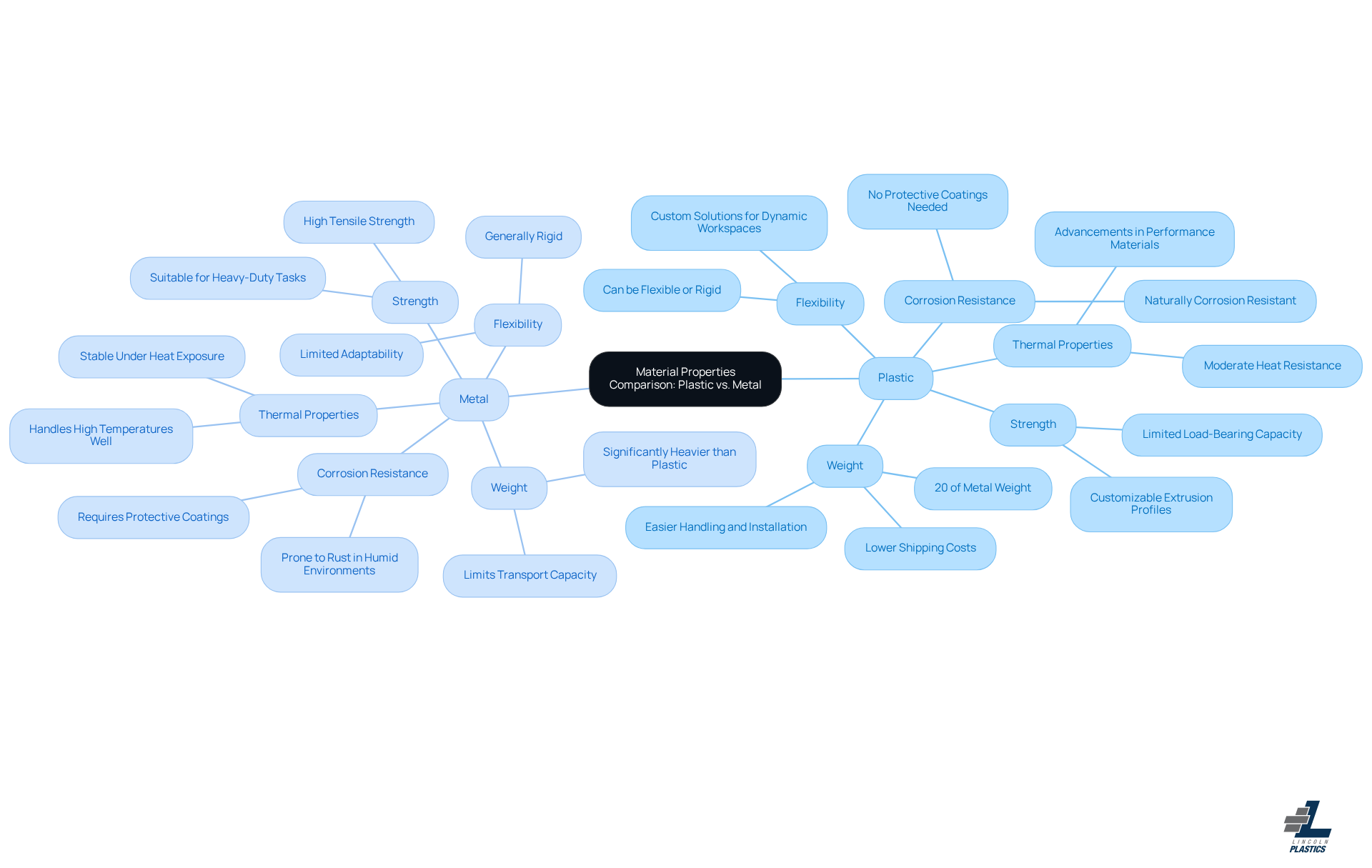
Weight is a big one. Plastic products are significantly lighter than metal ones, weighing in at just about 20% of what metal products do. This lighter weight makes handling and installation a breeze, plus it reduces transportation costs. Imagine being able to transport more per truckload! And let’s not forget Lincoln Plastics' innovative solutions. This flexible cord management solution not only helps keep your workspace organized but also boosts productivity by making it easier to manage desks and equipment.
Now, let’s talk about strength. While plastic channels shine in lightweight applications, metal channels usually pack a punch when it comes to durability. That’s why alloys are often the go-to for heavy-duty applications. But here’s the kicker: Lincoln Plastics can tailor their products to meet specific strength needs, giving you a versatile option for various applications.
What about corrosion resistance? Plastic conduits naturally resist corrosion, which means you won’t need those protective coatings that metal alternatives often require to fend off rust and degradation-especially in humid or corrosive environments. This makes plastic channels durable and reliable, perfect for use with cord management solutions that help prevent cord hazards.
Then there’s flexibility. Plastics can be designed to be both flexible and rigid, allowing for various configurations. On the flip side, metals are generally rigid, which can limit their adaptability in situations where bending or shaping is necessary. Lincoln Plastics really showcases this flexibility, helping users manage cords effectively in dynamic workspaces.
And let’s not overlook thermal resistance. Metals can handle high temperatures without losing their shape, making them suitable for heat-exposed applications. But thanks to advancements in performance materials, there are now formulations that can withstand moderate heat, providing a practical alternative in many scenarios.
So, what’s the takeaway? Choosing between synthetic and metallic conduits really boils down to your specific needs-think load capacity, environmental conditions, and installation factors. As industries lean more towards efficiency, the advantages of synthetic conduits are becoming clearer, especially in construction and other sectors where efficiency and performance are crucial. Lincoln Plastics' innovative solutions, like flexible cord management systems, are here to enhance safety and productivity in your workplace.
Evaluate Application Suitability: Industries and Use Cases
Plastic and metal channels serve a bunch of different industries, each with its own unique needs.
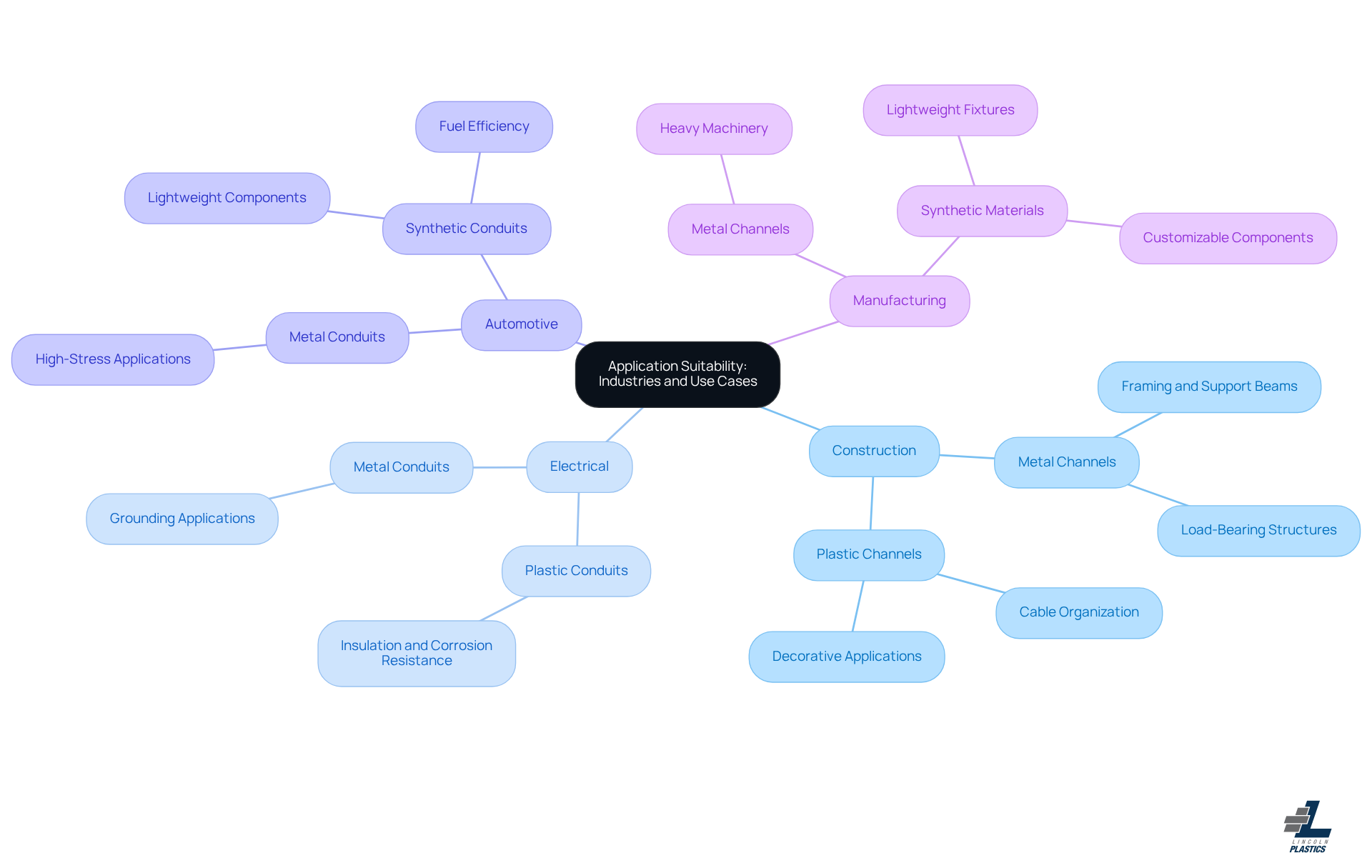
Construction: When it comes to construction, metal channels are the go-to. They’re strong and durable, making them perfect for framing, support beams, and load-bearing structures. But don’t count out plastic conduits! They shine in non-structural roles, like organizing cables or adding a decorative touch using color where it matters.
Electrical: Now, in the electrical world, plastic conduits are often the favorite. Why? Their insulation properties make them ideal for protecting wiring and cables in homes and businesses alike. Metal channels still have their place, especially when grounding is a must, showing just how important electrical safety and performance can be.
Automotive: Over in the automotive sector, metal channels are usually the top pick due to their strength and ability to handle high stress. But things are shifting! Synthetic conduits are becoming more popular for lightweight applications, helping to reduce vehicle weight and boost fuel efficiency. This aligns perfectly with the industry's push for sustainability.
Manufacturing: In manufacturing, both materials have their roles. Metal channels are crucial for structural support, while synthetic materials are stepping up for lightweight fixtures and customizable components. This really shows how adaptable they can be in production settings.
So, what’s the takeaway? While metal channels are often chosen for their sturdiness, options like plastic conduits provide important benefits such as flexibility and cost-effectiveness. This makes them suitable for a wide range of applications. What do you think? Are you leaning towards one type over the other?
Analyze Cost Factors: Initial Investment and Maintenance
When it comes to choosing between plastic channels and metal channels, cost considerations really matter.
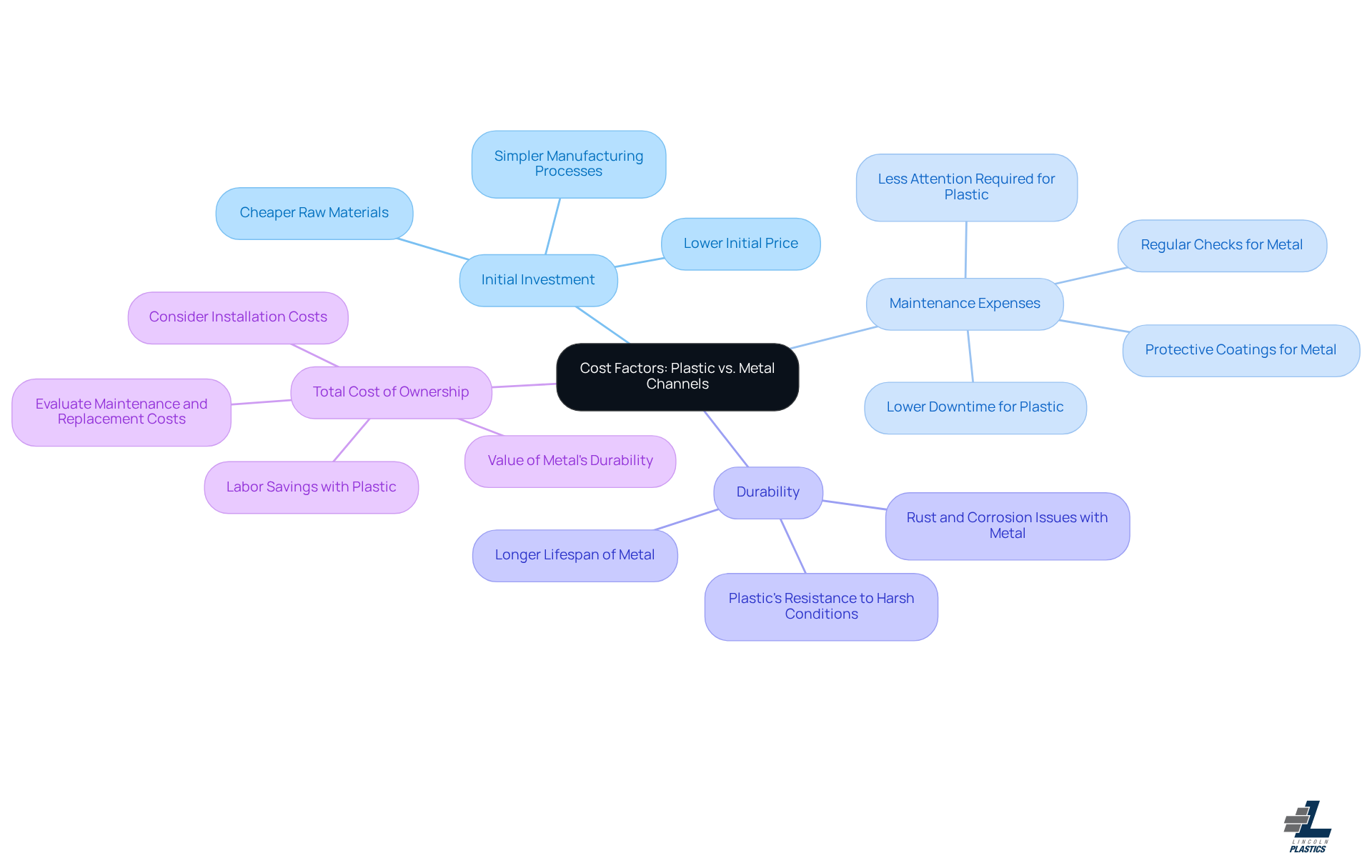
- Plastic channels: Let’s face it, plastic usually comes with a lower initial price tag than metal ones. Why? Well, it’s mainly due to the cheaper raw materials and simpler manufacturing processes involved with synthetic materials. If you’re working on a tight budget, choosing plastic conduits can be a smart choice. Plastic is generally more affordable than metals, making it a popular option.
- Maintenance: Now, let’s talk upkeep. Plastic conduits typically need less attention than metal ones, which often require regular checks and protective coatings to fend off rust. Cleaning and maintaining the plastic channels is a breeze, which means less downtime and fewer disruptions. This reduced need for maintenance can lead to significant savings over time, especially in harsh conditions where using plastic can prevent issues that metals might experience.
- Durability: Sure, metal conduits might hit your wallet harder upfront, but their durability can mean they last longer, potentially balancing out those initial costs. However, keep in mind that metals are prone to rust and corrosion, which means you’ll need to stay on top of maintenance to avoid extra costs down the line.
- Total costs: When you’re evaluating costs, don’t just look at the purchase price. Think about installation, maintenance, and replacement costs throughout the product’s life. While plastic conduits might save you money initially, metal conduits can offer value through their durability and lifespan.
So, as you weigh your options, remember to consider both the initial and ongoing expenses. This way, you can make a well-informed decision that fits your operational needs.
Assess Pros and Cons: Strengths and Weaknesses of Each Option
When it comes to choosing between plastic channels and metal channels, each has its own set of perks and drawbacks that can really shape how well they fit into your project.
Pros:
- They’re lightweight and super easy to handle, which means quicker installation.
- Plus, they resist corrosion, especially in humid or chemically active spots.
- Generally, they come with lower upfront and installation expenses, making them a budget-friendly option for smaller systems.
- And let’s not forget their versatility! You can customize them to meet your specific project needs.
Cons:
- On the flip side, they usually have lower tensile strength compared to metal, which might limit their use in high-load situations.
- Their performance can take a hit in extreme temperatures, potentially leading to deformation under heavy loads.
- Recycling options are limited, as synthetic ductwork is often harder to process after use, which can impact sustainability efforts.
Pros:
- Now, if you need strength, metal channels are where it’s at. They have exceptional durability, making them perfect for demanding structural applications.
- They’re also incredibly durable and last a long time, especially in harsh environments, where they really outshine synthetic options.
- Plus, they meet fire safety standards, which makes them a solid choice for critical uses in commercial and industrial settings.
Cons:
- However, they are heavier than plastic, which can complicate installation and bump up labor costs.
- If not properly coated, they can be prone to corrosion, so regular maintenance is key to keeping them around for the long haul.
- And let’s be real, their higher initial costs can be a hurdle for budget-conscious projects, along with potential maintenance expenses down the line.
So, what’s the takeaway? Choosing between plastic and metal channels really boils down to your specific application needs. Think about your budget, the environment, and what performance criteria matter most to you. Sustainability is also a big deal; metal ductwork is highly recyclable, while synthetic materials can pose challenges.
Cleaning and longevity are crucial too. Plastic l channel ductwork is easier to maintain thanks to its smooth internal surfaces, while metal ductwork, though durable, might require a bit more effort to inspect and clean.
As industry experts often say, understanding these factors is key to optimizing the overall lifecycle cost and effectiveness of your ductwork systems. So, what’s your next move?

Conclusion
When it comes to choosing between plastic L channels and metal channels, it’s all about understanding what each material brings to the table. Each option has its own perks that can really fit different project needs, so it’s crucial to think about what you specifically require - like weight, strength, corrosion resistance, and cost.
Let’s break it down a bit.
- Plastic channels are lightweight, making them super easy to handle and install.
- On the flip side, metal channels are the heavyweights when it comes to load-bearing and durability.
- Plus, if you’re in a corrosive environment, plastic channels shine with their resistance and flexibility, making them versatile for various uses.
- But if you’re in construction or the automotive industry, metal channels are often the go-to because of their strength and ability to handle high temperatures.
So, how do you decide? It really comes down to your budget, the environment you’re working in, and what performance you need. As more industries look for lightweight and cost-effective solutions, the advantages of plastic channels are becoming clearer, especially in situations where flexibility and low maintenance are key. By considering all these factors together, you can make choices that boost efficiency and safety in your projects.
Frequently Asked Questions
What are the weight differences between plastic and metal channels?
Plastic channels are significantly lighter than metal channels, weighing about 20% of what metal products do. This lighter weight makes handling and installation easier and reduces shipping costs.
How does the strength of plastic channels compare to metal channels?
While plastic channels are suitable for lightweight applications, metal channels generally have greater tensile strength and load-bearing capability, making them ideal for heavy-duty tasks. However, Lincoln Plastics can customize their plastic extrusion profiles to meet specific strength requirements.
What is the corrosion resistance of plastic channels compared to metal channels?
Plastic conduits naturally resist corrosion, eliminating the need for protective coatings that metal alternatives require to prevent rust and degradation, especially in humid or corrosive environments.
How flexible are plastic channels compared to metal channels?
Plastics can be designed to be both flexible and rigid, allowing for customized solutions. In contrast, metals are typically rigid, which can limit their adaptability in situations requiring bending or shaping.
How do the thermal properties of plastic and metal channels differ?
Metals can withstand high temperatures without losing their shape, making them suitable for heat-exposed applications. However, advancements in performance materials have led to plastic formulations that can also withstand moderate heat, providing a practical alternative in many scenarios.
What factors should be considered when choosing between plastic and metal channels?
The choice between synthetic and metallic conduits depends on specific needs such as load capacity, environmental conditions, and installation factors. As industries move towards lightweight and cost-effective solutions, the advantages of synthetic conduits are becoming more prominent.
List of Sources
- Compare Material Properties: Plastic vs. Metal Channels
- jlccnc.com (https://jlccnc.com/blog/metal-material-and-plastic-material-performance-comparison)
- iplasticsupply.com (https://iplasticsupply.com/tag/plastic-weights-vs-metal-weights)
- lincoln-plastics.com (https://lincoln-plastics.com/news-post/plastic-c-channels-vs-metal-key-differences-for-oe-ms)
- Plastic vs Metal Extrusions for OEMs by Amfas International (https://amfasinternational.com/newsroom/plastic-vs-metal-extrusions-key-differences-strategic-trade-offs-use-cases)
- Evaluate Application Suitability: Industries and Use Cases
- marketsandmarkets.com (https://marketsandmarkets.com/Market-Reports/construction-plastics-market-233437057.html)
- Plastics News - Plastic Industry News, Resin Pricing & Analysis (https://plasticsnews.com)
- bennettplastics.com (https://bennettplastics.com/why-are-plastic-parts-important-in-the-electrical-industry)
- lincoln-plastics.com (https://lincoln-plastics.com/news-post/10-innovative-extrusion-plastic-products-for-oem-needs?dcc2137a_page=9)
- Analyze Cost Factors: Initial Investment and Maintenance
- kenenghardware.com (https://kenenghardware.com/the-difference-between-plastic-cnc-machining-and-metal-cnc-machining)
- eyby.com (https://eyby.com/ke/category/raw-materials/plastics/plastic-u-shaped-channels?srsltid=AfmBOoplVoa0KX4g0Is8g7fuOtmUtFfQpW8R0O35hFASI0D6g-la2oEk)
- Assess Pros and Cons: Strengths and Weaknesses of Each Option
- customdesigntechnologies.com (https://customdesigntechnologies.com/2022/04/10/pros-cons-of-plastic-v-metal-for-custom-enclosures)
- futuremarketinsights.com (https://futuremarketinsights.com/reports/plastic-market)
- dobyverrolec.com (https://dobyverrolec.com/en/news/plastic-vs-metal-ductwork-choosing-the-best-for-your-hvac-system)
Related posts

Why Custom Pipe Extrusion Matters More Than Ever
Standard pipe sizes don’t always work. Learn how Lincoln Plastics delivers custom diameters, wall thicknesses, and finishes in right-sized runs.


Reducing Trip Hazards with Custom Cord Management
Loose cords are more than messy — they’re a safety hazard. Lincoln Plastics’ custom cord covers and Flexiduct solutions improve safety and efficiency.
The Power of Custom Plastic Profiles for OEMs
Off-the-shelf profiles force compromises. Learn how Lincoln Plastics designs custom extruded profiles for OEMs with exact specs and right-sized runs.
