
4 Best Practices for Sourcing High-Quality Extruded Products
Introduction
Navigating the complex world of custom plastic extrusion requires a keen understanding of supplier capabilities and product quality. We’ll explore best practices that streamline sourcing while ensuring products meet rigorous quality standards.
With so many options available, how do you choose the right supplier? Failing to select the right partner can lead to costly inefficiencies and compromised product quality.
Understand the Extrusion Process
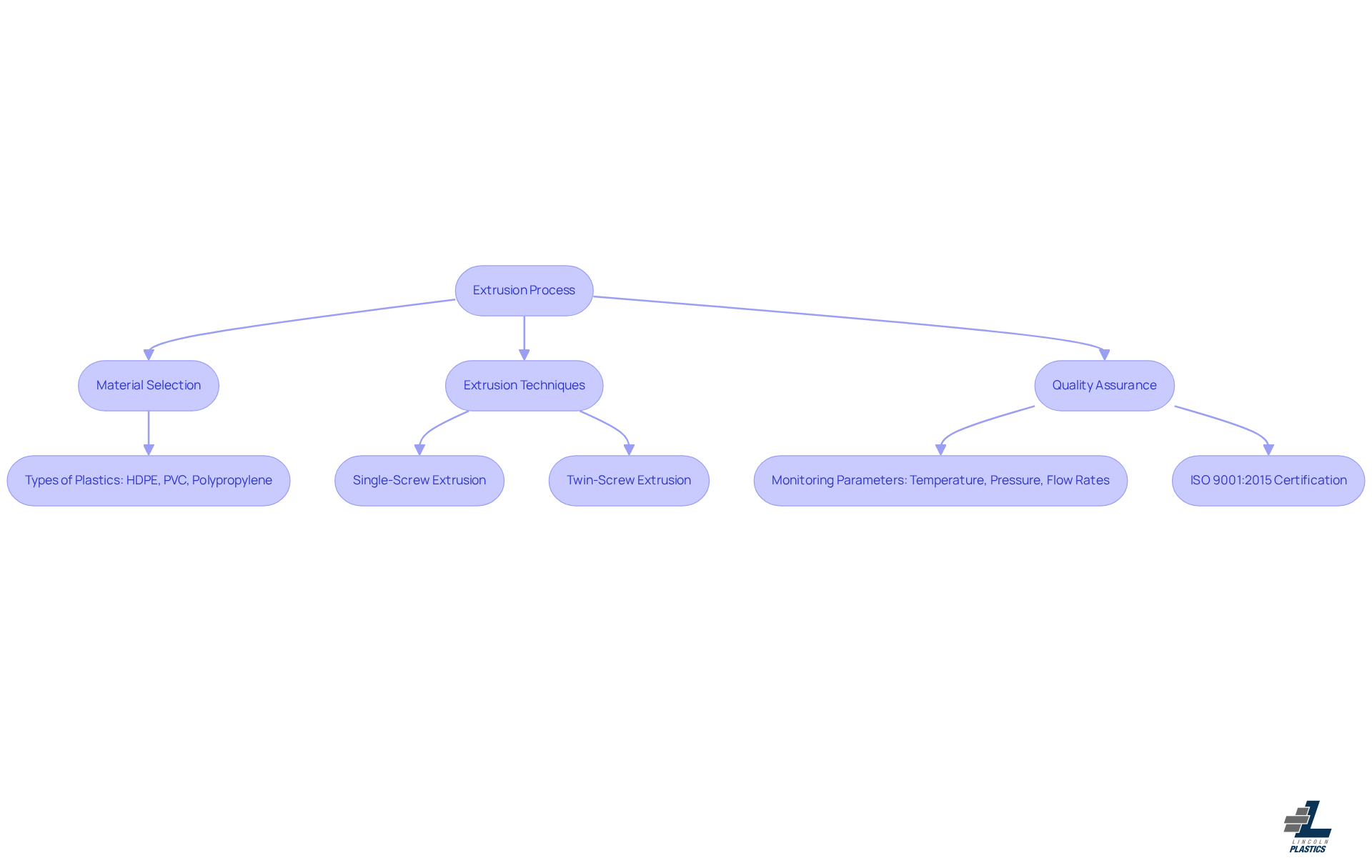
Understanding the intricacies of the extrusion process is crucial for sourcing high-quality extruded products that meet your specific needs. This process involves melting plastic materials and forcing them through a die to create specific shapes and profiles. Key factors to consider include:
- Material Selection: Different plastics, such as high-density polyethylene (HDPE), polyvinyl chloride (PVC), and polypropylene, possess unique properties that significantly impact the performance of the final product. Knowing the right materials can make all the difference in selecting the best option for your application. The company Plastics provides expert advice on material selection, ensuring that you choose the best option for your specific needs.
- Extrusion Techniques: Familiarity with various extrusion methods, including single-screw and twin-screw extrusions, is important. Each approach provides unique benefits that can affect the standard and features of the final outcome. For instance, twin-screw extrusions allow for better mixing and compounding, which can enhance material properties. Additionally, this company offers co-extrusion capabilities, enabling the creation of multi-color or multi-material profiles tailored to your design specifications.
- Quality Assurance: Furthermore, implementing stringent assurance measures during the extrusion process is vital to ensure that items meet required specifications and standards. This includes monitoring critical parameters such as temperature, pressure, and material flow rates. The company adheres to rigorous quality management plans, including ISO 9001:2015 certification, dedicated quality documentation, and in-process checks to ensure that your items are manufactured to the highest standards.
Grasping these basics facilitates improved interaction with companies such as Plastics, guaranteeing that acquired items correspond with operational needs. By partnering with Lincoln Plastics, you ensure that your extruded products not only meet but exceed your operational requirements. For tailored solutions and expert insights, including our range of flexible profiles and the logistics advantages of our Midwest location, contact Lincoln Plastics today.
Evaluate Supplier Capabilities
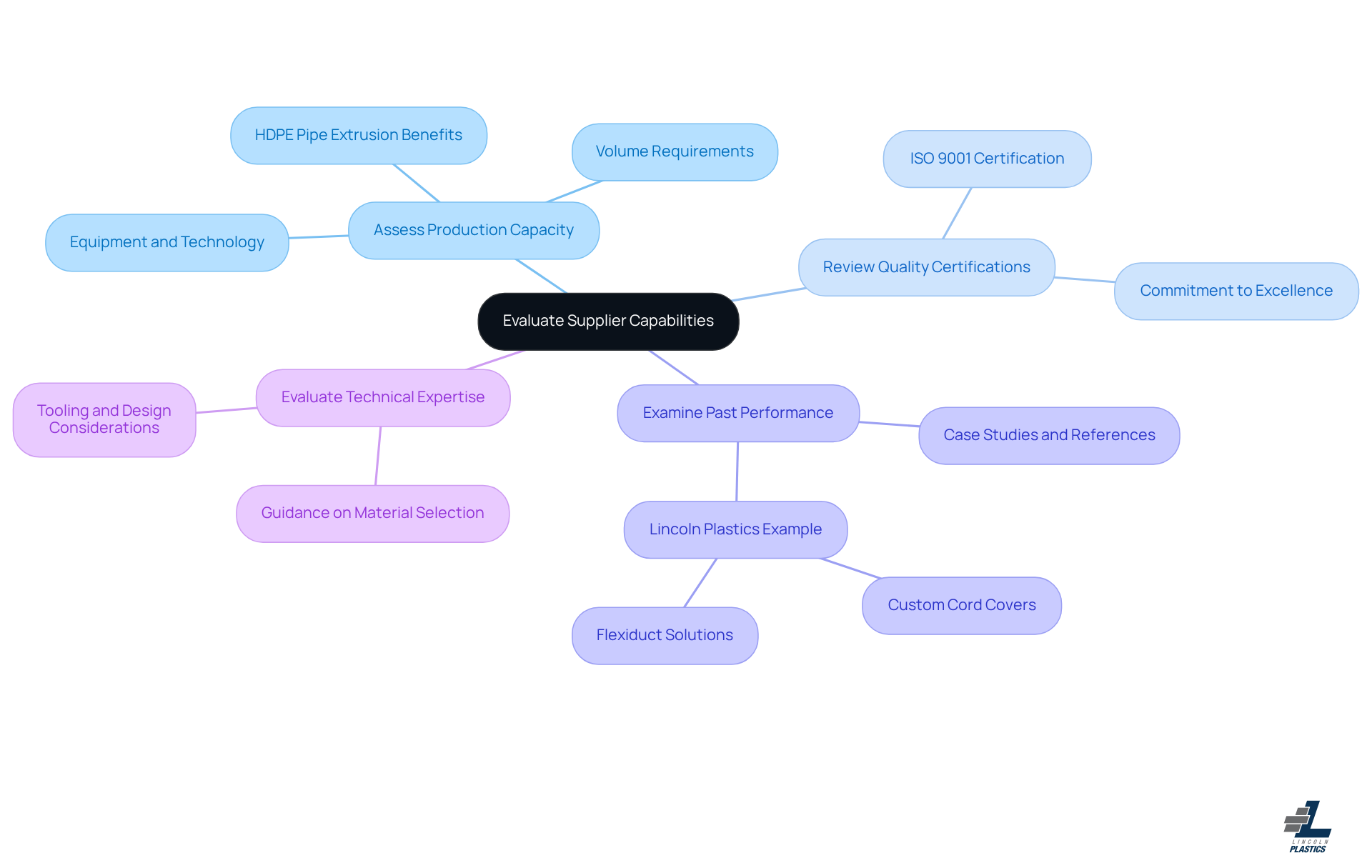
Choosing the right vendor for ensuring quality and efficiency in your projects is crucial for extruded products. Here are some best practices to follow:
- Assess Production Capacity: Confirm that the supplier possesses the necessary equipment and technology to meet your volume requirements. Have you considered how high-density polyethylene (HDPE) pipe extrusion, known for its lightweight and durable characteristics, could benefit your applications? This includes an evaluation of their extrusion machinery and the variety of profiles they can produce.
- Review Quality Certifications: Seek vendors with industry certifications, such as ISO 9001, which demonstrate a commitment to excellence in management and ongoing enhancement. This certification is particularly relevant in the extrusion industry, where maintaining high standards is crucial for the reliability of extruded products.
- Examine Past Performance: Request case studies or references from previous clients to assess the supplier's reliability and quality of work. For example, Lincoln Plastics has successfully addressed safety hazards by providing custom cord covers and Flexiduct solutions, showcasing their ability to meet specific client needs while enhancing operational efficiency.
- Evaluate Technical Expertise: Suppliers should have a knowledgeable team capable of offering guidance on material selection, tooling, and design considerations. This expertise is invaluable in ensuring that your items are manufactured to the highest standards, particularly when custom solutions are required to avoid the compromises often associated with off-the-shelf profiles.
By prioritizing these evaluations, you safeguard your projects against potential setbacks and ensure optimal outcomes.
Define Clear Specifications and Requirements
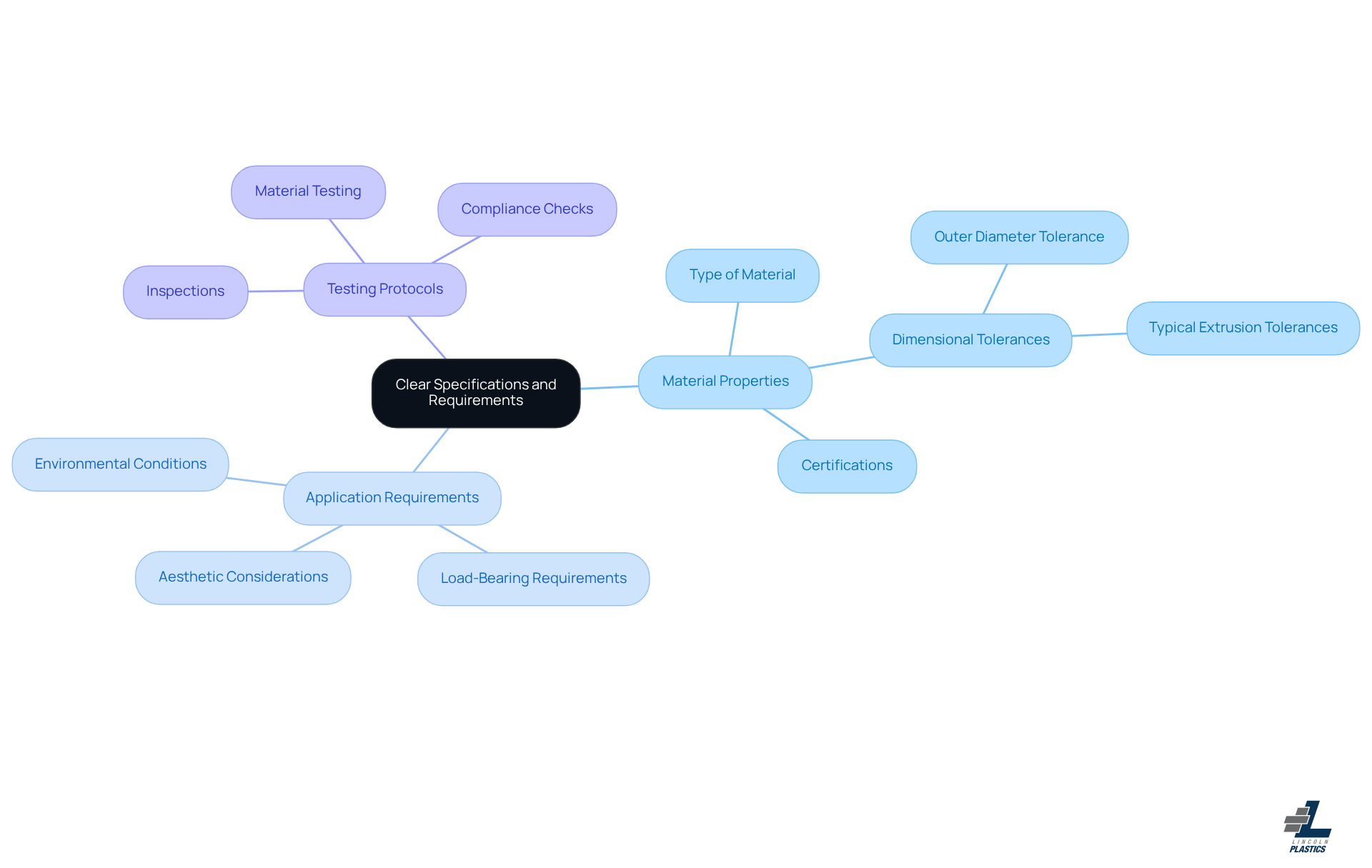
To achieve optimal performance in extruded products, it’s essential to define clear specifications and requirements. Here are some best practices:
- Detail Material Properties: Clearly specify the type of plastic material required, including any necessary certifications or compliance with industry standards. Lincoln Plastics is certified to the ISO 9001:2015 standard, ensuring that suppliers understand the performance characteristics essential for your application. Outline dimensional tolerances by defining the dimensions and tolerances for the extruded products, including length, width, wall thickness, and any specific geometric features essential to the item's functionality. For instance, achieving an outer diameter tolerance of ±0.05 mm can significantly enhance performance. Typical extrusion tolerances range from ±0.5 mm to ±1.5 mm, which should be communicated to ensure quality.
- Communicate Application Requirements: Provide detailed information about how the product will be used, including environmental conditions, load-bearing requirements, and aesthetic considerations. This context enables Lincoln Plastics to tailor production processes and proactively address challenges like warpage and tolerance drift.
- Include Testing and Assurance Protocols: Specify any testing or assurance measures to be implemented during production. This may involve inspections, material testing, and compliance checks to ensure that the final item meets established standards. Incorporating metrics such as the Process Capability Index (Cpk) and Process Performance Index (Ppk) can provide insights into process variation and help maintain quality throughout production.
Furthermore, this company provides co-extrusion capabilities, enabling the creation of multi-color or multi-material profiles, which can improve functionality and aesthetics. Our strategic position in Nebraska allows for rapid order processing and effective logistics, including less-than-truckload shipping and international delivery.
Clearly expressing these specifications reduces the risk of errors and ensures sourced items perform as expected, contributing to project success. For expert guidance and tailored solutions that ensure project success, reach out to Lincoln Plastics today.
Build Strong Supplier Relationships
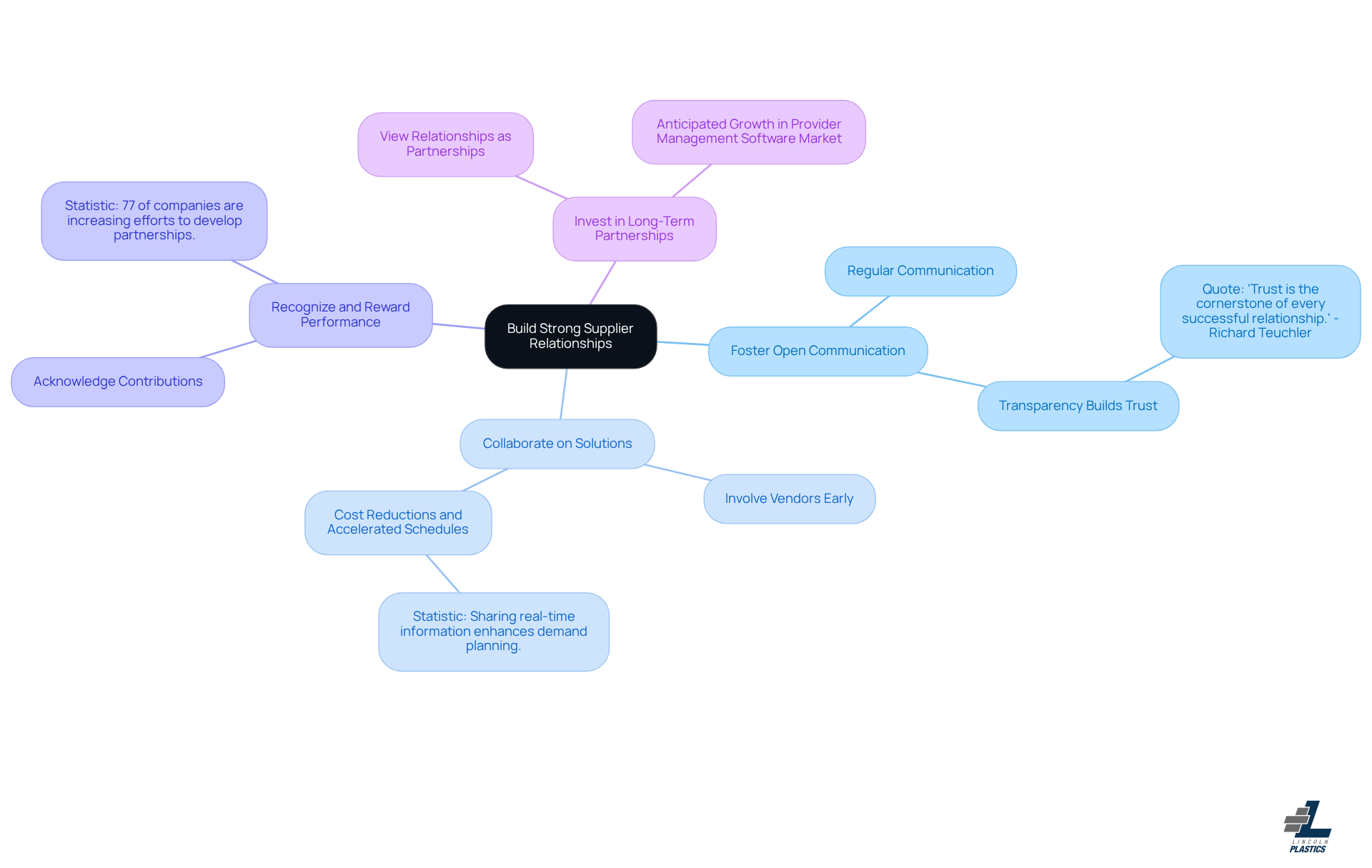
Building strong connections with vendors is essential for the effective sourcing of extruded products. Here are some best practices:
- Foster Open Communication: Regular communication with suppliers is vital. Without it, misunderstandings can arise, jeopardizing project success. This transparency builds trust. It ensures everyone is aligned on expectations, which is crucial for effective collaboration. As Richard Teuchler states, "Trust is the cornerstone of every successful relationship."
- Collaborate on Solutions: Involving vendors in the design and development process can yield valuable insights that enhance product performance and manufacturability. Early participant involvement often results in cost reductions and accelerated schedules, creating a strategic benefit. A study indicates that sharing real-time information between providers and companies enhances demand planning and lowers inventory expenses, demonstrating the advantages of collaboration.
- Recognize and Reward Performance: Acknowledging vendors who consistently meet or exceed expectations fosters a positive relationship. This can include providing positive feedback, offering incentives, or recognizing their contributions in company communications. Recognizing vendor performance not only strengthens relationships but also drives quality improvements. According to recent statistics, 77% of companies are increasing efforts to develop partnerships with providers, highlighting the importance of recognizing contributions from these entities.
- Invest in Long-Term Partnerships: Viewing vendor relationships as partnerships rather than mere transactions encourages a collaborative environment. Allocating time and resources to these connections can foster innovation and ongoing enhancement, ultimately improving the standard of extruded products. The anticipated expansion of the Provider Management Software Market highlights the growing significance of efficient vendor relationship management in today's manufacturing environment.
By building strong supplier relationships, organizations can improve product quality and create a more resilient supply chain. Strong supplier relationships are not just beneficial; they are essential for thriving in today's competitive manufacturing landscape.
Conclusion
Sourcing high-quality extruded products is not just a task; it’s a strategic necessity for operational success. Understanding the extrusion process and evaluating supplier capabilities are crucial. Defining clear specifications and building strong vendor relationships can significantly enhance sourcing quality and efficiency. Lincoln Plastics stands out as a reliable partner in this endeavor, offering expertise and a commitment to excellence that aligns with the best practices outlined.
Key insights from this article emphasize the importance of:
- Material selection
- Quality assurance
- Evaluation of supplier capabilities
Understanding the nuances of extrusion techniques and maintaining rigorous quality management, as demonstrated by Lincoln Plastics' ISO 9001:2015 certification, are essential for achieving optimal results. Furthermore, defining clear specifications and fostering open communication with suppliers can lead to improved collaboration and innovation, ultimately benefiting the entire supply chain.
In a competitive manufacturing landscape, failing to prioritize these best practices can lead to subpar products and strained supplier relationships. Think of your suppliers as partners in your success, investing in long-term collaborations that drive continuous improvement. For tailored solutions and expert guidance in sourcing high-quality extruded products, engaging with Lincoln Plastics could be the key to unlocking your project’s full potential.
Frequently Asked Questions
What is the extrusion process?
The extrusion process involves melting plastic materials and forcing them through a die to create specific shapes and profiles.
Why is material selection important in the extrusion process?
Different plastics, such as high-density polyethylene (HDPE), polyvinyl chloride (PVC), and polypropylene, have unique properties that significantly impact the performance of the final product. Choosing the right material is crucial for meeting specific application needs.
What extrusion techniques are commonly used?
Common extrusion techniques include single-screw and twin-screw extrusions. Twin-screw extrusions allow for better mixing and compounding, enhancing material properties.
What are co-extrusion capabilities?
Co-extrusion capabilities enable the creation of multi-color or multi-material profiles tailored to specific design specifications.
How does Lincoln Plastics ensure quality during the extrusion process?
Lincoln Plastics implements stringent quality assurance measures, including monitoring critical parameters like temperature, pressure, and material flow rates. They adhere to rigorous quality management plans, including ISO 9001:2015 certification and in-process checks.
What advantages does Lincoln Plastics' Midwest location offer?
Lincoln Plastics' strategic Midwest location allows for quick order turnaround and efficient logistics, including less-than-truckload shipping and international delivery.
How can I get tailored solutions from Lincoln Plastics?
For tailored solutions and expert insights, including flexible profiles and logistics advantages, you can contact Lincoln Plastics directly.
List of Sources
- Understand the Extrusion Process
- Latest Plastic Extrusion News | Bausano (https://bausano.com/en/press-and-news?q=NEWS)
- 10 Innovative Examples of Extrusion Transforming Industries (https://lincoln-plastics.com/news-post/10-innovative-examples-of-extrusion-transforming-industries?dcc2137a_page=4)
- Revolutionising Plastic Extrusion: The Role of Chemical Recycling - Condale Plastics (https://condaleplastics.com/company-news/revolutionising-plastic-extrusion-the-role-of-chemical-recycling)
- Shaping the Future: Innovations in Plastic Extrusion Techniques - SeaGate Plastics Company (https://seagateplastics.com/shaping-the-future-innovations-in-plastic-extrusion-techniques)
- Plastics News - Plastic Industry News, Resin Pricing & Analysis (https://plasticsnews.com)
- Evaluate Supplier Capabilities
- Interplas Insights | Latest Plastics Extrusion Machinery News (https://interplasinsights.com/plastics-machinery/plastics-extrusion-machinery-news)
- 4 Best Practices for Choosing Reliable Plastic Extrusion Suppliers (https://lincoln-plastics.com/news-post/4-best-practices-for-choosing-reliable-plastic-extrusion-suppliers?dcc2137a_page=1)
- Latest Plastic Extrusion News | Bausano (https://bausano.com/en/press-and-news?q=NEWS)
- Extrusion Machinery Market Size & Share | Industry Growth 2032 (https://databridgemarketresearch.com/reports/global-extrusion-machinery-market?srsltid=AfmBOoqg39kVHccs1h--Yl28uLr6md3kI__iBX6eAEwxMBJGk370Cig6)
- Plastics Extrusion: 4 Critical Statistics to Track for Increased Quality & Plant Profit (https://gaugeadvisor.com/plastics-extrusion-4-critical-statistics-to-track-for-increased-quality-plant-profit)
- Define Clear Specifications and Requirements
- Plastics Extrusion: 4 Critical Statistics to Track for Increased Quality & Plant Profit (https://gaugeadvisor.com/plastics-extrusion-4-critical-statistics-to-track-for-increased-quality-plant-profit)
- Plastic vs Metal Extrusions for OEMs by Amfas International (https://amfasinternational.com/newsroom/plastic-vs-metal-extrusions-key-differences-strategic-trade-offs-use-cases)
- 5 Best Practices for Working with Custom Plastic Extrusion Manufacturers (https://lincoln-plastics.com/news-post/5-best-practices-for-working-with-custom-plastic-extrusion-manufacturers?dcc2137a_page=4)
- Dimensional Stability in Plastic Extrusion: Managing Tolerances - Goodfish (https://goodfishgroup.com/dimensional-stability-in-plastic-extrusion-managing-tolerances)
- Build Strong Supplier Relationships
- Supplier Partnerships: Your Key to Supply Chain Resilience (https://capstonelogistics.com/blog/supplier-relationships-matter)
- Top 10 Stats: Supplier Relationship Management Software Market (2022) (https://kodiakhub.com/blog/top-10-stats-supplier-relationship-management-software-market?hs_amp=true)
- Quantifying the influence of supplier relationship management and supply chain performance: an investigation of Bangladesh’s manufacturing and service sectors | Brazilian Journal of Operations & Production Management (https://bjopm.org.br/bjopm/article/view/2015)
- Supplier Collaboration: Elevating Manufacturing Performance (https://jaggaer.com/blog/supplier-collaboration-elevating-manufacturing)
- How Strong Supplier Relationships Add to Your Bottom Line (https://ewmfg.com/post/how-strong-supplier-relationships-add-to-your-bottom-line)


