

4 Best Practices for Selecting Strong Plastic Materials
Introduction
Choosing the right plastic materials can feel overwhelming, right? With so many options out there, it’s tough to know where to start. Understanding the different types of plastics and their properties is key to making sure your choices fit your project needs. But with sustainability and cost efficiency becoming more important, how do you navigate this tricky landscape?
In this article, we’ll explore some best practices for selecting strong plastic materials. We’ll dive into:
- Mechanical properties
- Sustainability considerations
- Effective supplier management strategies
By the end, you’ll have the insights you need to enhance both performance and environmental responsibility. So, let’s get started!
Understand Plastic Material Types and Properties
Choosing the right synthetic materials can feel a bit overwhelming, right? To make it easier, let’s break down the different types of polymers and what makes them tick. You’ve got two main categories: thermoplastics and thermosetting materials. Thermoplastics are super flexible. You can reshape them when heated, which opens up a world of possibilities. On the flip side, thermosetting materials, such as epoxy and phenolic resins, harden permanently after shaping. They’re your go-to for high-performance applications.
Now, what should you keep in mind when selecting materials? Here are a few key properties:
- Mechanical properties: Think about tensile strength, impact resistance, and flexibility. These factors determine how well a material can handle stress. For instance, researchers at Penn State have developed a new polymer that boasts a dielectric constant of 13.5, significantly enhancing its mechanical properties compared to traditional plastics.
- Thermal properties: Understanding the melting point and thermal stability is crucial, especially for applications exposed to heat. Take the polycarbonate, for example. It combines glass-like reshaping abilities with impressive strength, showcasing some exciting advancements in material science.
- Chemical resistance: Some plastics are better equipped to deal with harsh chemicals, which is essential in industries like automotive and chemical manufacturing. As scientist Li Li points out, 'The dielectrics are inexpensive and readily accessible, and the method to produce large amounts is straightforward.'
By familiarizing yourself with these characteristics, you can make informed choices that fit your project needs, ensuring your final product performs well and lasts. Just be mindful of common pitfalls, like using materials in the wrong settings, which can lead to failures. Real-world examples, such as the use of compleximers in automotive applications, highlight the benefits of selecting the right materials.

Evaluate Mechanical Properties for Application Suitability
When you're selecting plastic materials, it’s super important to check their mechanical properties to ensure they’re suitable for the job. Let’s break down some key properties you should look at:
- Tensile strength: This tells you how well a material can resist being pulled apart. For example, ABS is considered a strong material with a tensile strength of 15-20 kJ/m², which makes it a great choice for tough applications like automotive parts and protective gear.
- Flexural modulus: This one shows how much a material will bend when you put a load on it. A higher flexural modulus means more stiffness, which helps prevent deformation under stress. ABS is pretty rigid, thanks to its styrene content, so it keeps its shape and size even in different conditions.
- Impact resistance: This measures how well a material can handle sudden forces or shocks. ABS, a tough plastic, really shines here, especially in heavy-duty applications like dashboard components and industrial parts.
To really get a handle on these properties, you’ll want to run some standardized tests, like ASTM D638 for tensile strength and ASTM D790 for flexural properties. Understanding these mechanical traits helps you choose materials that not only meet but exceed performance standards, ensuring reliability in tough situations. So, next time you’re selecting plastics, keep these factors in mind!

Incorporate Sustainability Considerations in Material Selection
Sustainability is super important when it comes to choosing plastic materials. With eco-conscious shoppers and businesses putting a spotlight on green practices, picking sustainable options can really boost your brand's reputation and help you stay on top of changing regulations. So, what should you keep in mind?
- Biodegradability: Look for materials that break down naturally. This helps lessen environmental impact. Bioplastics, made from renewable sources, are becoming a hit because they can decompose in composting settings within just a few months. They’re a great alternative to traditional materials! In fact, the bioplastics market is set to grow the fastest in the sustainable plastics scene, demonstrating the increasing importance of strong plastic material.
- Recyclability: Opt for materials that can be easily recycled when they’ve reached the end of their life. This not only cuts down on waste but also supports a circular economy, where resources get reused and repurposed. Did you know there’s a lot of buzz online about recycled materials? Recycled polypropylene and PVC items are popping up more and more, reflecting a shift towards sustainability in manufacturing.
- Life Cycle Assessment: It’s key to conduct an LCA to assess the sustainability of materials from production to disposal. This detailed evaluation helps you pinpoint resources that offer the best sustainability profile, making sure your choices align with both environmental goals and what consumers expect. Plus, having solid data on biodegradation is essential for making informed material choices.
By weaving these sustainability factors into your resource selection process, you’re not just helping the planet—you’re also meeting the needs of eco-aware consumers. As the market continues to grow, driven by regulations and consumer preferences, companies that focus on these materials are likely to gain a competitive edge in the evolving landscape of sustainable packaging.

Manage Supplier Relationships and Cost Efficiency
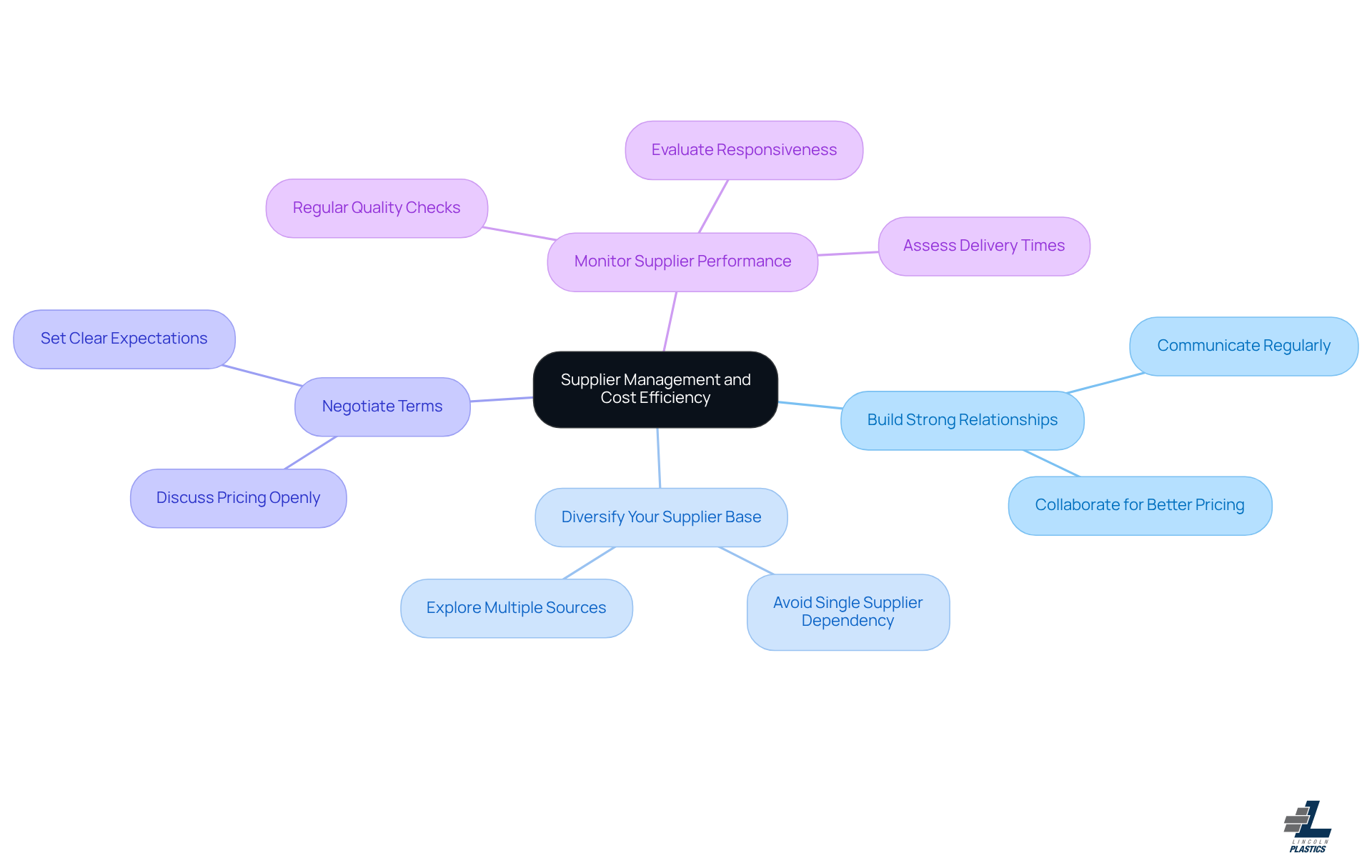
Effective communication is super important for keeping costs down and ensuring you get quality resources consistently. So, let’s dive into some best practices that can really make a difference:
- Think of your suppliers as partners, not just vendors. When you communicate regularly and collaborate, you can often score better deals.
- Relying on just one supplier? That can be risky! By diversifying your sources, you can dodge potential supply chain hiccups.
- Don’t shy away from having open chats about pricing, payment terms, and delivery schedules. Setting clear expectations can lead to agreements that work for both sides.
- Keep an eye on how your suppliers are doing. Regularly checking in on quality, delivery times, and responsiveness helps you spot areas for improvement and ensures they meet your standards.
By putting these strategies into action, you can strengthen your supplier network, cost management, and efficiency of your operations. So, why not start today?
Conclusion
Choosing the right plastic materials is super important for the success and longevity of any project. Think about it: when you understand the different types of plastics and their properties, you can make choices that not only meet performance needs but also align with sustainability goals. The insights shared here really highlight how crucial it is to pick materials based on their mechanical strength, thermal properties, and chemical resistance, while also considering the environmental impact of those choices.
Now, let’s talk about some key points. Evaluating mechanical properties like tensile strength, flexural modulus, and impact resistance is essential to ensure that the materials are suitable for specific applications. Plus, incorporating sustainability factors - like biodegradability and recyclability - can really boost a brand's reputation and cater to eco-conscious consumers. And don’t forget about effective supplier management; it’s vital for keeping costs down and securing high-quality materials.
Ultimately, choosing strong plastic materials isn’t just a technical decision; it’s a strategic one that can greatly influence product performance and environmental responsibility. By embracing these best practices, you can navigate the complexities of material selection and contribute to a sustainable future while meeting your project needs. So, why not adopt these principles? They not only spark innovation but also help position your business favorably in an increasingly eco-aware market.
Frequently Asked Questions
What are the two main categories of plastic materials?
The two main categories of plastic materials are thermoplastics and thermosetting materials.
What are thermoplastics and can they be reshaped?
Thermoplastics, such as polyethylene (PE) and polypropylene (PP), are flexible materials that can be reshaped when heated.
What are thermosetting materials and how do they behave after shaping?
Thermosetting materials, like epoxy and phenolic resins, harden permanently after shaping and are suitable for high-temperature applications.
What key properties should be considered when selecting plastic materials?
Key properties to consider include mechanical strength, thermal properties, and chemical resistance.
What does mechanical strength refer to in plastic materials?
Mechanical strength refers to factors such as tensile strength, impact resistance, and flexibility, which determine how well a material can handle stress.
Why are thermal properties important in material selection?
Thermal properties, including melting point and thermal stability, are crucial for applications that are exposed to heat.
What is an example of a material with advanced thermal properties?
A novel compleximer combines glass-like reshaping abilities with impressive impact resistance, showcasing advancements in thermal properties.
How does chemical resistance factor into material selection?
Some plastics are better suited to withstand harsh chemicals, which is essential for industries like automotive and chemical manufacturing.
What common pitfalls should be avoided when selecting materials?
Common pitfalls include using materials in the wrong settings, which can lead to product failures.
Can you provide a real-world example of the importance of material selection?
The use of compleximers in automotive applications highlights the benefits of selecting the right materials for performance and longevity.
List of Sources
- Understand Plastic Material Types and Properties
- phys.org (https://phys.org/news/2026-02-compleximer-plastic-glass-impact-resistance.html)
- Thermosetting and Thermoplastics Market Research Report 2033 (https://dataintelo.com/report/global-thermosetting-and-thermoplastics-market)
- science.psu.edu (https://science.psu.edu/news/new-plastic-material-could-solve-energy-storage-challenge-researchers-report)
- datainsightsmarket.com (https://datainsightsmarket.com/reports/thermosetting-plastics-market-2076)
- globenewswire.com (https://globenewswire.com/news-release/2026/01/06/3213877/0/en/Thermoplastic-Composites-Market-Size-is-Poised-to-Reach-USD-54-03-Billion-by-2033-Owing-to-the-Increasing-Use-of-Lightweight-Materials-in-Automotive-Industry-Globally-SNS-Insider.html)
- Evaluate Mechanical Properties for Application Suitability
- Careers in Plastic Manufacturing at Allied Plastics | Join Our Team (https://vciplastics.com/blog/2026-trends-in-abs-plastic-materials-applications)
- instron.com (https://instron.com/en/resources/news-listing/2026/02/instron-to-exhibit-at-jec-world-2026)
- upminc.com (https://upminc.com/acrylonitrile-butadiene-styrene-abs)
- lincoln-plastics.com (https://lincoln-plastics.com/news-post/10-toughest-plastics-for-heavy-duty-applications-you-need)
- jairajgroup.com (https://jairajgroup.com/blog/strongest-types-plastics-durability-impact)
- Incorporate Sustainability Considerations in Material Selection
- dhl.com (https://dhl.com/discover/en-ca/logistics-advice/sustainability-and-green-logistics/sustainable-packaging-trends)
- ecoenclose.com (https://ecoenclose.com/blog/sustainable-packaging-trends-for-2026?srsltid=AfmBOopfkr6hGtoS3V4fDZiBenCtFGBPParjgA8q7iWAtTtTFYfn7uIG)
- accio.com (https://accio.com/business/trending-plastics-products-for-2026)
- goecopure.com (https://goecopure.com/key-trends-shaping-the-biodegradable-plastics-industry-in-2026)
- Manage Supplier Relationships and Cost Efficiency
- Tips for Building a Smarter Resin Purchasing Strategy in 2026 (https://mholland.com/market-insights/tips-for-building-a-smarter-resin-purchasing-strategy-in-2026)
- supplychaindive.com (https://supplychaindive.com/news/supply-chain-risks-trends-outlook-2026/810852)
- How Manufacturers Are Improving Efficiency in 2026 (https://aktion.com/how-manufacturers-are-improving-efficiency-in-2026)
- kodiakhub.com (https://kodiakhub.com/blog/top-10-stats-supplier-relationship-management-software-market)
- 2026 Forecast for U.S. Plastics Procurement - Sterling Plastics (https://sterlingplasticsinc.com/insights/2026-forecast-for-plastics-procurement)
Related posts

Discover the key benefits of ISO certified plastic extrusion services for reliability and efficiency.


Discover the diverse applications of plastic tubing PVC across industries, enhancing efficiency and safety.
Master the installation and benefits of strain relief clamps for range cords to enhance safety and reliability.
