

10 Innovative Uses for Recycled Plastic Extrusions in Industry
Introduction
Sustainability is all the buzz these days, right? It’s amazing how it’s changing the game for industries, especially when it comes to using recycled materials like plastic extrusions. In this article, we’re diving into ten cool ways recycled plastic extrusions are being used. From making workplaces more organized to giving outdoor furniture a fresh twist, the possibilities are pretty exciting!
But here’s the kicker: as more businesses look for eco-friendly solutions, they face a big question. How can they weave these sustainable practices into their operations while still keeping customers happy? By exploring these innovative uses, we not only get to see the perks of recycled plastic but also think about what the future holds for manufacturing and our responsibility to the environment. So, let’s jump in and see what’s possible!
Lincoln Plastics: Custom Cord Management Solutions from Recycled Plastic Extrusions
Let’s talk about cord management. We all know how messy cords can get, right? Lincoln Plastics has come up with some tailored solutions that really make a difference. One standout product is cord organizers, which is made from recycled plastic. Not only does it help organize and protect those pesky cords, but it also boosts efficiency. Imagine having a tidy setup where desks, furniture, and equipment are arranged without the hassle of cord hazards. Sounds great, doesn’t it?
The product comes in handy 6-foot pre-split lengths, so installation is a breeze. You can easily customize it for whatever you need. Plus, using recycled materials means these are not just durable but also more sustainable. As sustainability becomes more important in manufacturing, incorporating recycled plastic demonstrates a genuine commitment to responsible practices and innovation.
Now, here’s something to think about: the market for cord management solutions is expected to grow at a whopping 10.20% from 2025 to 2032. That’s a clear sign that eco-friendly resources are gaining traction! Jérôme Fournier, the corporate vice president of innovation at Nexans, points out that this shift highlights how practical it is to use products made from 100% recovered materials while still maintaining quality and safety.
And it gets better! Using recycled plastic in production can significantly reduce waste. That’s a big win for the environment! So, if you’re looking for a way to improve your workspace and make a positive impact, consider these innovative solutions. They’re not just smart; they’re also a step towards a more sustainable future.

Sustainable Agriculture: Recycled Plastic Irrigation Pipes
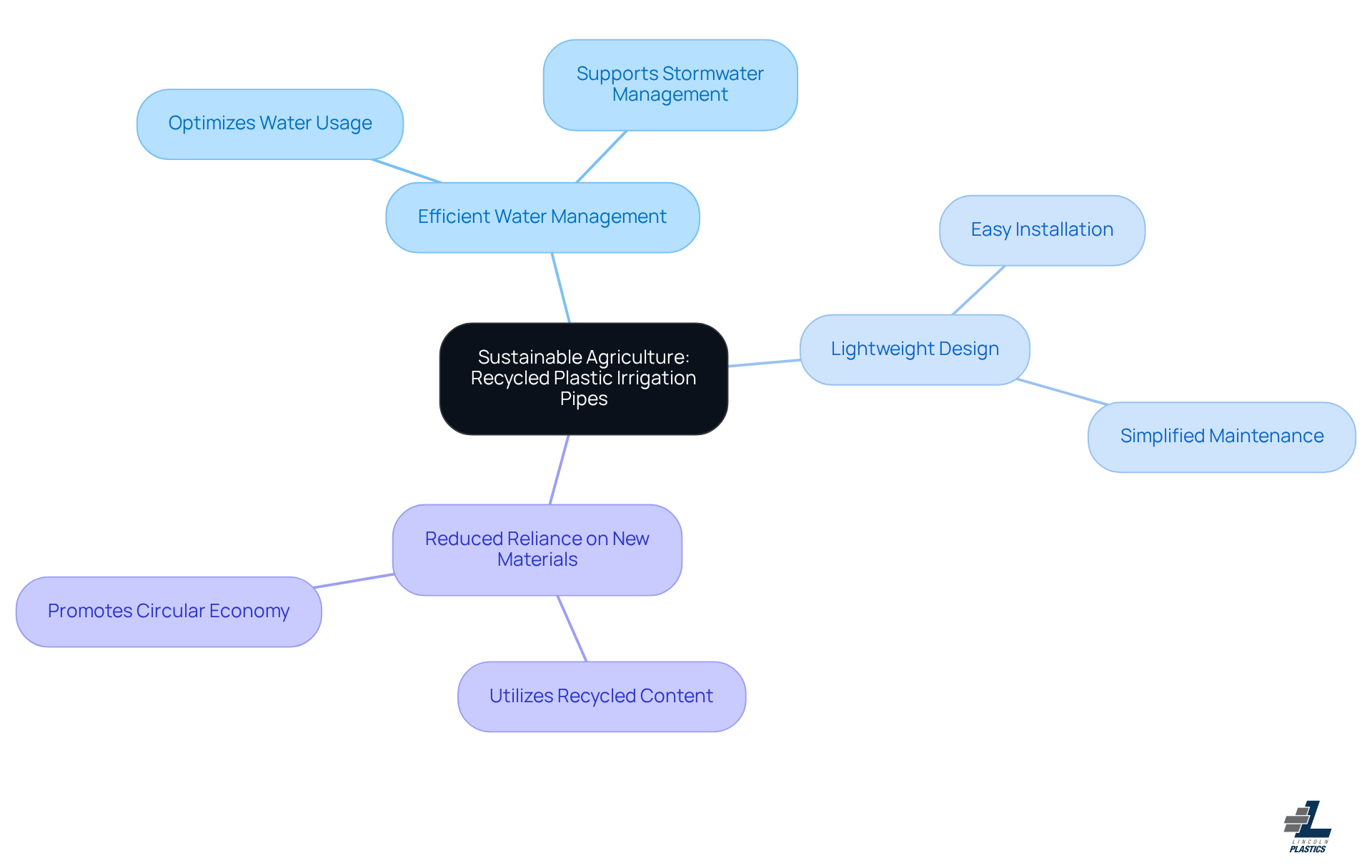
Have you ever thought about how farmers manage water efficiently? Well, recycled plastic pipes are stepping in to make a real difference in agriculture. These pipes, constructed from recycled plastic and post-consumer repurposed materials, help farmers conserve water while ensuring sustainability.
Now, let’s talk about why these pipes are so great! Their installation makes a breeze, which is a big win for farmers. Imagine being able to set up your irrigation system without breaking a sweat!
So, if you’re looking for a way to boost your farming practices while being kind to the planet, consider giving these pipes a shot. They’re not just practical; they’re eco-friendly!
Versatile Solutions: Flexible Profiles Made from Recycled Plastics
Have you noticed how adaptable profiles made from recycled plastics are really starting to catch on? They're popping up in all sorts of places, especially in the automotive and construction industries. These profiles are known for their incredible durability and flexibility, making them perfect for tough environments that need to stand up to wear and tear. For instance, in automotive applications, they are becoming the go-to for interior parts and under-the-hood applications. Not only do they meet industry standards, but they also help reduce weight, which is a win for fuel efficiency!
Now, let’s talk about construction. Here, these profiles are being used in innovative ways, showing just how versatile they can be. By using reclaimed materials, manufacturers can cut down on costs while also being kinder to the planet. This is something industry leaders are really getting behind. A spokesperson from Ford even mentioned that using recycled plastics in vehicle manufacturing has led to over 23,000 tons of reclaimed resources being included. That’s a big step towards sustainability!
And it doesn’t stop there. Experts are highlighting that using these materials not only supports a circular economy but also aligns with the growing consumer interest in eco-friendly options. As the industry evolves, the potential uses for products made from recycled plastics are set to expand, paving the way for innovative and sustainable solutions. So, what do you think? Isn’t it exciting to see how these changes can make a difference?

Industry Standards: Rigid Profiles from Recycled Plastic Extrusions
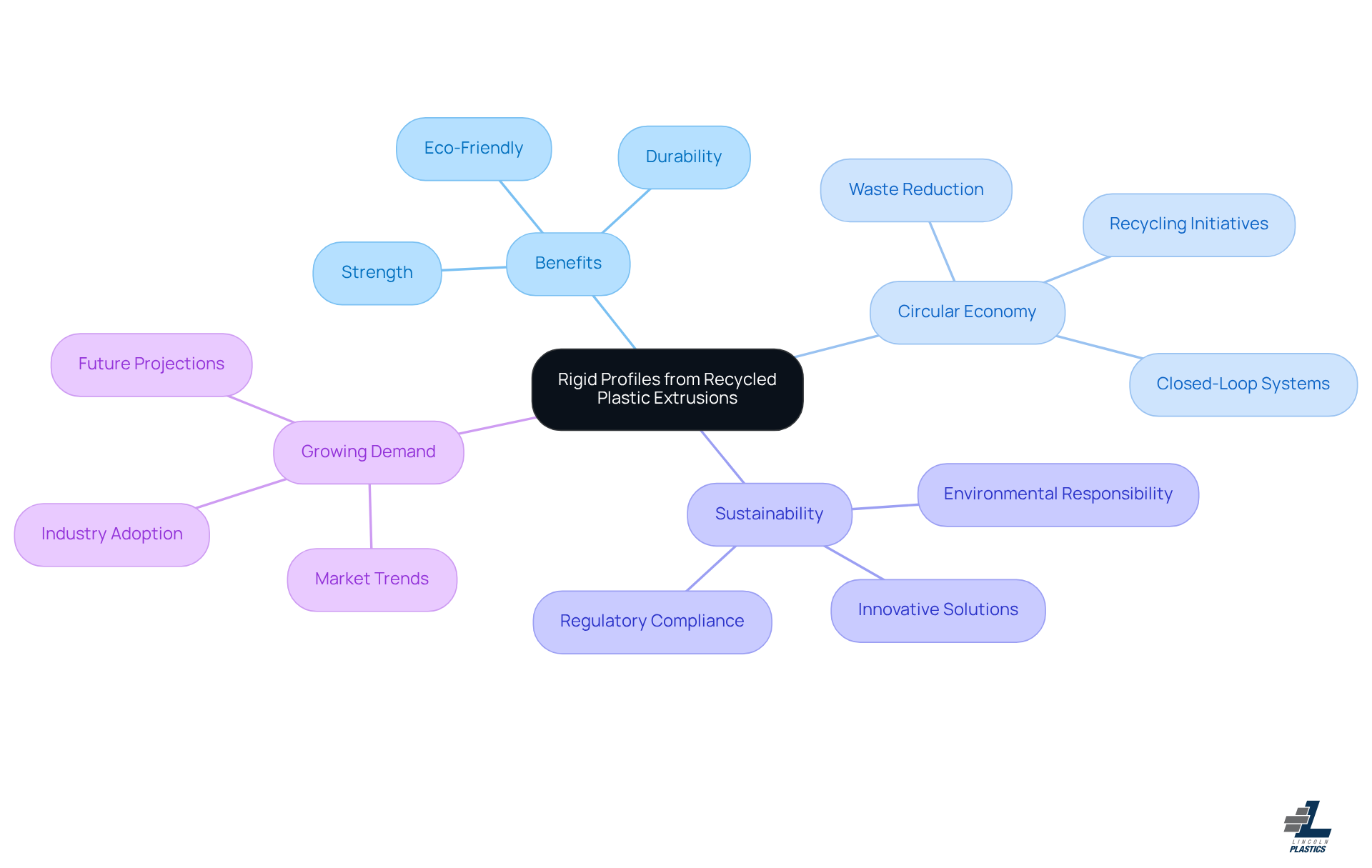
Have you ever thought about the materials we use in construction? Well, stiff profiles made from recycled plastics are gaining a lot of attention in the construction and manufacturing worlds. Why? Because they meet strict industry standards and serve as alternatives to traditional resources. These profiles are not just strong; they’re durable too, making them perfect for all sorts of applications.
By using recycled materials, these profiles play a big role in promoting a circular economy. They help cut down on waste and support sustainable practices. As more people look for eco-friendly solutions, the demand for these innovative profiles is expected to rise. This shift reflects a growing trend towards environmentally responsible practices in the industry.
Experts are saying that choosing these materials doesn’t just tick the boxes for regulations; it also boosts the overall sustainability of construction projects. So, why not consider making the switch? It’s a step towards a greener future, and every little bit helps!
Eco-Friendly Packaging: Custom Solutions with Recycled Plastic Extrusions
Have you noticed how products made from recycled materials are becoming a must-have for brands that care about sustainability? These eco-friendly choices not only help cut down on plastic waste but also keep the quality we expect from traditional packaging. By opting for recycled materials, companies can really boost their brand reputation, especially as more consumers are on the lookout for eco-friendly products.
In fact, did you know that:
- 90% of consumers are more likely to support brands that prioritize sustainability?
- 8% of Germans are ready to pay significantly more for eco-friendly packaging?
This shows there’s a real opportunity to jump on board with these practices.
Now, let’s talk about the importance of eco-friendly packaging. It’s gone up from 20% in 2020 to a whopping 39% in 2025! This really highlights how crucial sustainability is. Younger consumers and those with higher incomes are especially willing to pay more for eco-friendly options, making them key targets for brands.
As sustainability takes center stage in consumer choices, brands that weave repurposed components into their packaging strategies are likely to gain a competitive edge. Plus, getting certified by BPI and ASTM standards can help brands back up their eco claims and build trust with consumers. So, what do you think? Is your brand ready to embrace this shift?

Building Green: Construction Materials from Recycled Plastic Extrusions
Recycled plastics are shaking things up in the construction world! You might have noticed them popping up in products like decking, fencing, and insulation. These innovative materials, such as recycled plastic extrusions, not only help with building projects but also boost durability and weather resistance. Did you know that the global market for repurposed polymers in construction is projected to hit around USD 12.24 billion by 2034? That’s a compound annual growth rate (CAGR) of 8.71% from 2025 to 2034! This growth shows just how much we need eco-friendly resources that can effectively replace traditional options.
Utilizing recycled materials enables construction workers to contribute to a more sustainable industry while enjoying the benefits of innovation. Projects that incorporate recycled plastics often experience significant savings, as these materials typically require less maintenance and last longer than conventional options. Plus, environmental experts point out that using recycled materials not only conserves resources but also creates a circular economy, where waste is minimized and resources are reused.
Take saveBOARD, for example. Their projects show how turning waste into building materials can keep tons of packaging waste out of landfills. Their products, made from flexible materials and food containers, showcase methods that meet today’s environmental standards. By using these materials, builders can innovate while meeting the growing demand for sustainable solutions.
So, what do you think? Isn’t it exciting to see how recycled materials are changing the game in construction? Let’s keep the conversation going about how we can all contribute to a greener future!
Automotive Innovation: Recycled Plastic Components for Sustainable Vehicles
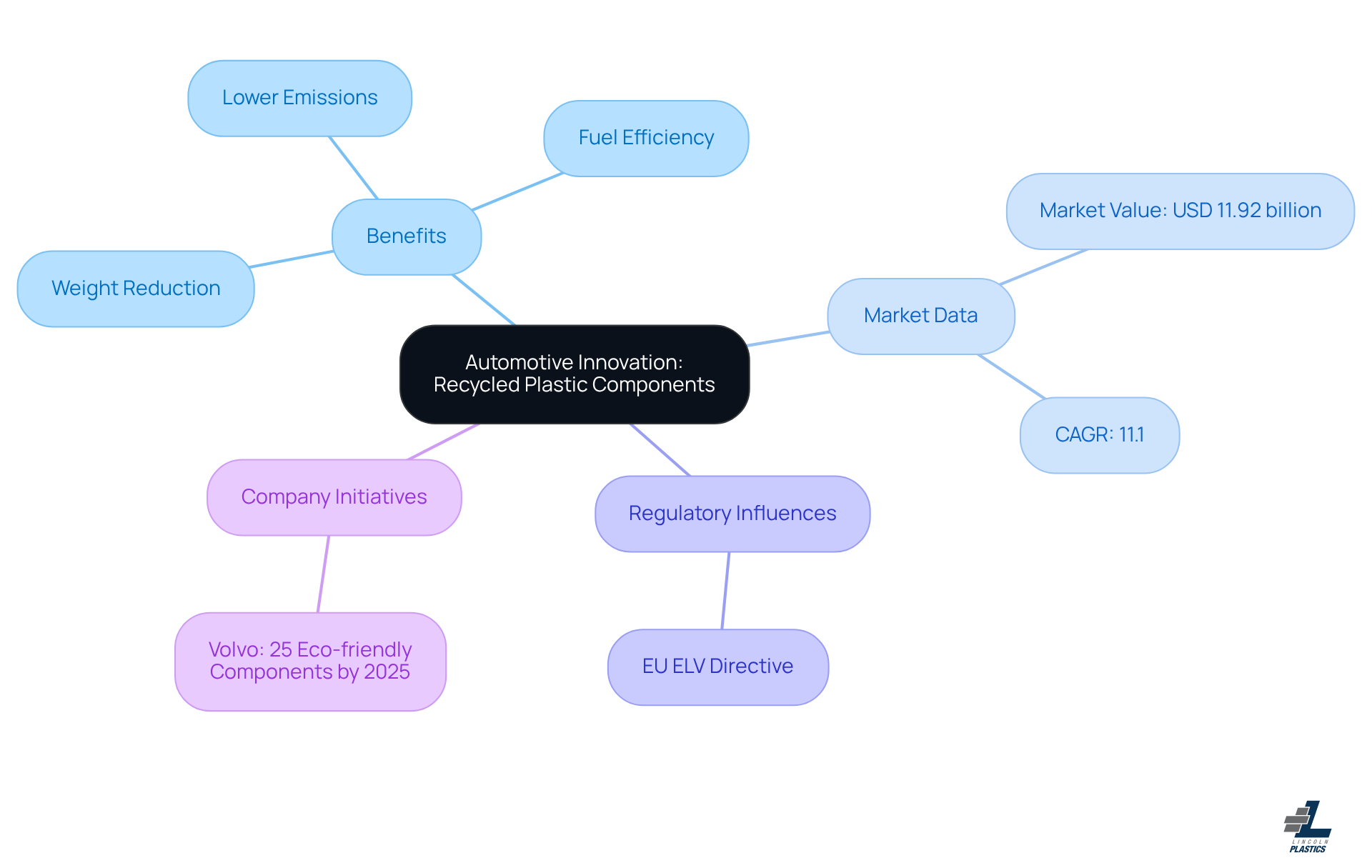
Recycled plastic components are becoming super important in the production of sustainable vehicles. Why? Because they help cut down on overall vehicle weight, which boosts efficiency and lowers emissions. This shift is right in line with what the automotive industry is aiming for when it comes to sustainability.
As manufacturers start using repurposed materials, including recycled plastics, in everything from interior trims to exterior panels, the demand for sustainable solutions just keeps growing. Industry leaders are realizing that using recycled materials isn’t just about meeting regulations - like the European Union directive, which says 95% of vehicle parts need to be recoverable or recyclable - but also about connecting with consumers who care about environmental responsibility.
Did you know that the global market for post-consumer recycled polymers in the automotive sector was valued at a whopping USD 11.92 billion in 2024? And it’s expected to grow at a CAGR of 11.1% from 2025 to 2030! That really shows how crucial recycled materials are becoming.
Take Volvo, for instance. They’re leading the charge by aiming for 25% of the vehicle weight to be made from recycled materials by 2025. This movement towards sustainability is not just a trend; it’s set to spark innovation, with recycled plastics playing a key role in the future of automotive design and production. So, what do you think? Are you ready to embrace this exciting shift?
Consumer Goods Revolution: Innovative Products from Recycled Plastics
The consumer goods industry is really shaking things up with some cool new products made from recycled plastics. Brands are getting creative, using reused components to whip up eco-friendly options in everything from household goods to personal care items. This shift isn’t just about cutting down on waste; it’s also about building a community among us consumers.
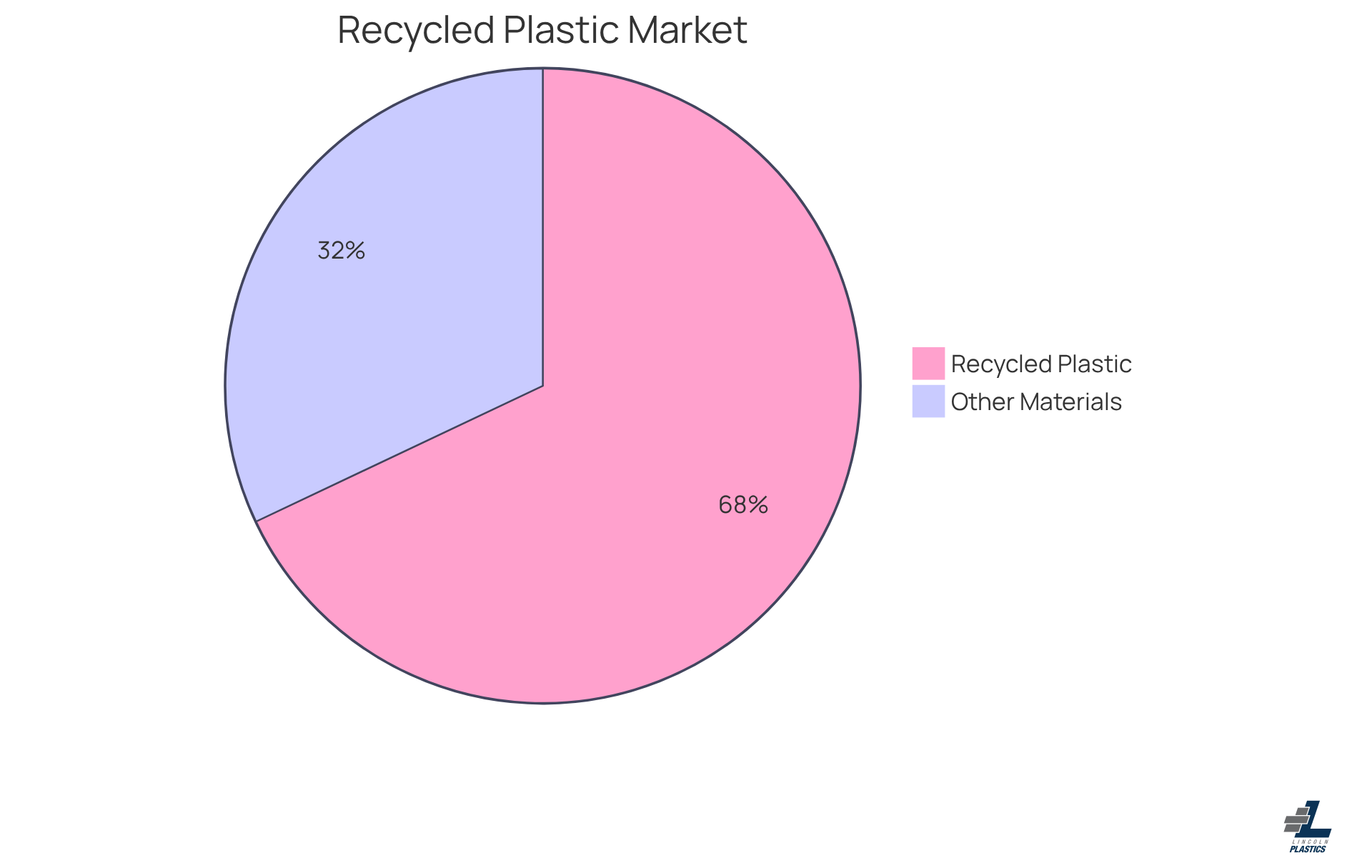
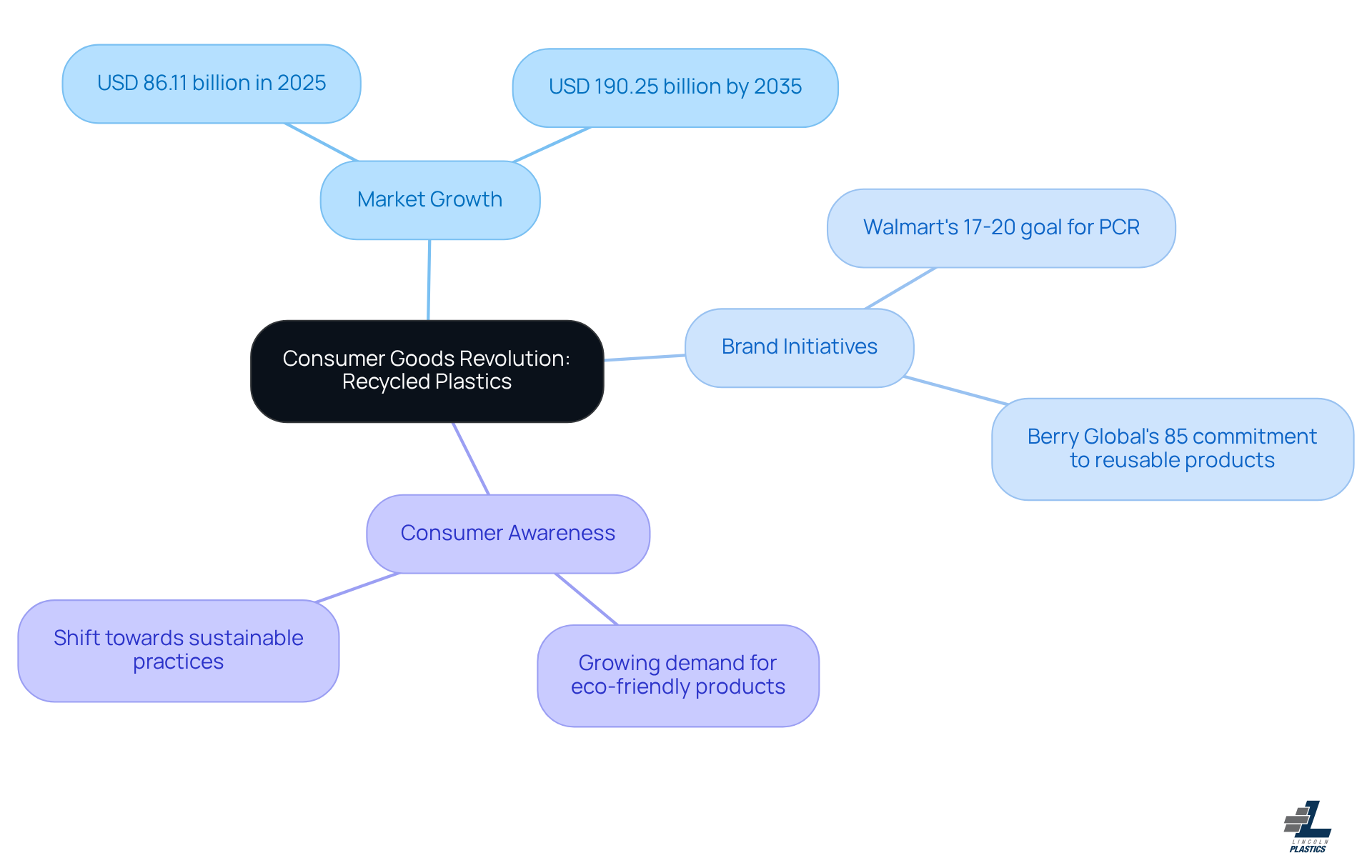
You might be surprised to learn that the market for recycled plastics is set to skyrocket from USD 86.11 billion in 2025 to USD 190.25 billion by 2035. Why? Well, there’s a growing demand for sustainable products and stricter regulations on waste. Big retailers like Walmart are committing to sustainability, up from just 8% in 2023. That’s a clear sign that sustainability is becoming a big deal in consumer goods.
As we all become more aware of our ecological footprint, brands that focus on sustainability are really starting to shine. For instance, companies like Unilever are leading the charge. This isn’t just a passing trend; it’s a major shift in how we shop, pushing more companies to innovate and embrace eco-friendly practices.
And here’s the good news: advocates for sustainability say you don’t have to make huge sacrifices. Thanks to advancements in formulation and production techniques, we can enjoy effective, high-quality products that are good for both our health and the planet. So, let’s keep the conversation going and support brands that are making a difference!
Outdoor Living: Sustainable Furniture from Recycled Plastic Extrusions
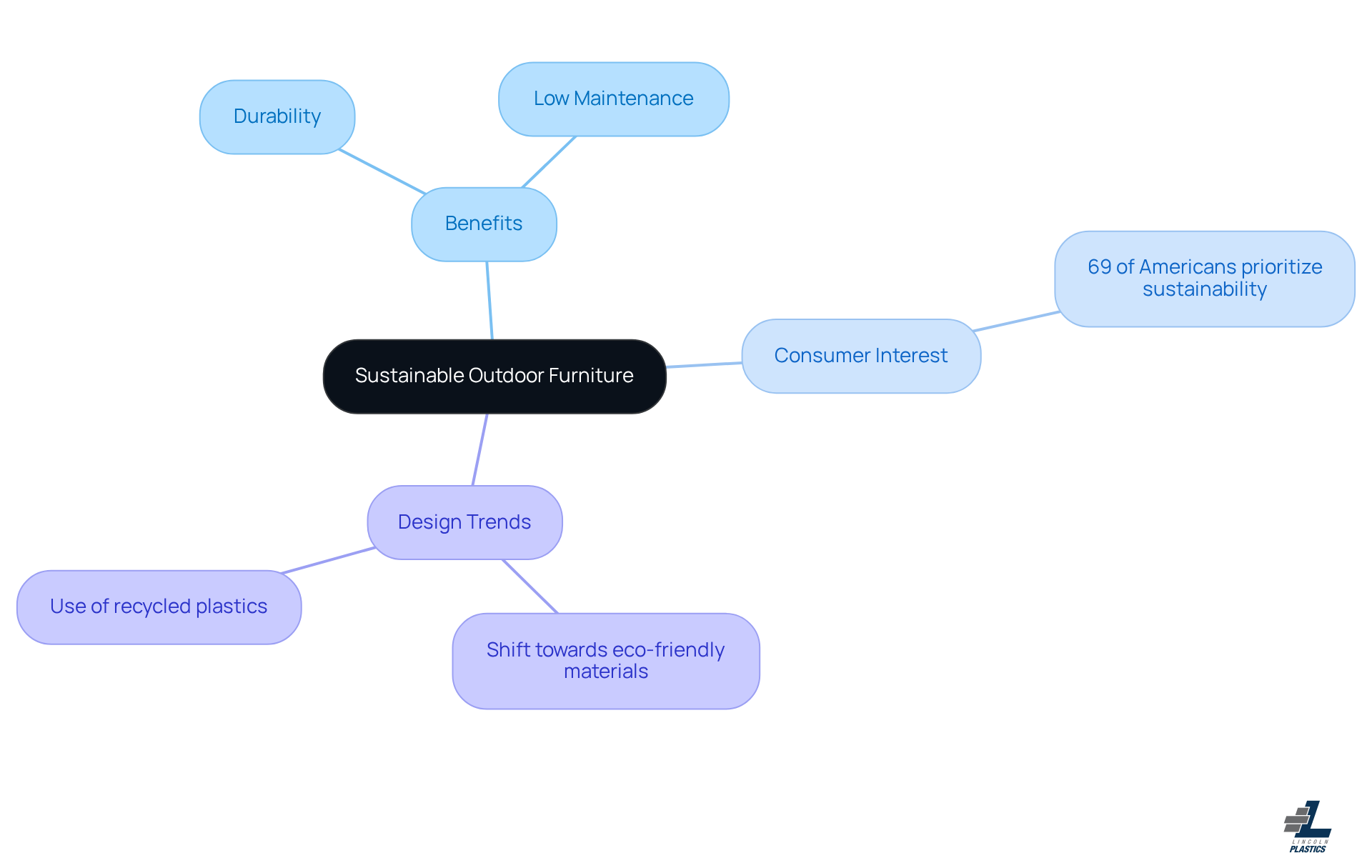
Have you ever thought about how your outdoor furniture choices impact the environment? Furniture made from recycled plastic is becoming a popular choice, and for good reason! Not only is it durable, but it also requires very little maintenance. These pieces are designed to withstand harsh weather conditions, making them a solid alternative to traditional wood furniture.
You might be surprised to learn that recycled plastic can outlast its counterparts, often needing no frequent painting or treatment. By opting for these sustainable options, including chairs and tables, you’re not just creating a stylish outdoor space; you’re also playing a part in ecological preservation. It’s a win-win!
And here’s something to think about: 69% of Americans are looking to incorporate sustainable elements into their home designs. This trend reflects a growing awareness of environmental issues. You can see recycled plastic furniture in everywhere - from cozy residential gardens to bustling commercial spaces. They enhance the look without sacrificing functionality.
Design experts agree that this shift towards recycled plastic and other repurposed materials isn’t just a passing trend; it’s a crucial evolution in outdoor living. It shows a commitment to sustainability that resonates with today’s eco-conscious consumers. So, why not join the movement? Let’s make our outdoor spaces not just beautiful, but also kind to our planet!
The Future of Recycling: Innovations in Plastic Extrusion Processes
The future of recycling looks bright, doesn’t it? With some really cool innovations in processes, we’re seeing a big boost in how efficiently recycling operations work. Think about it: technology, automation, and optimized workflows are all stepping up to the plate, helping us produce high-quality materials.
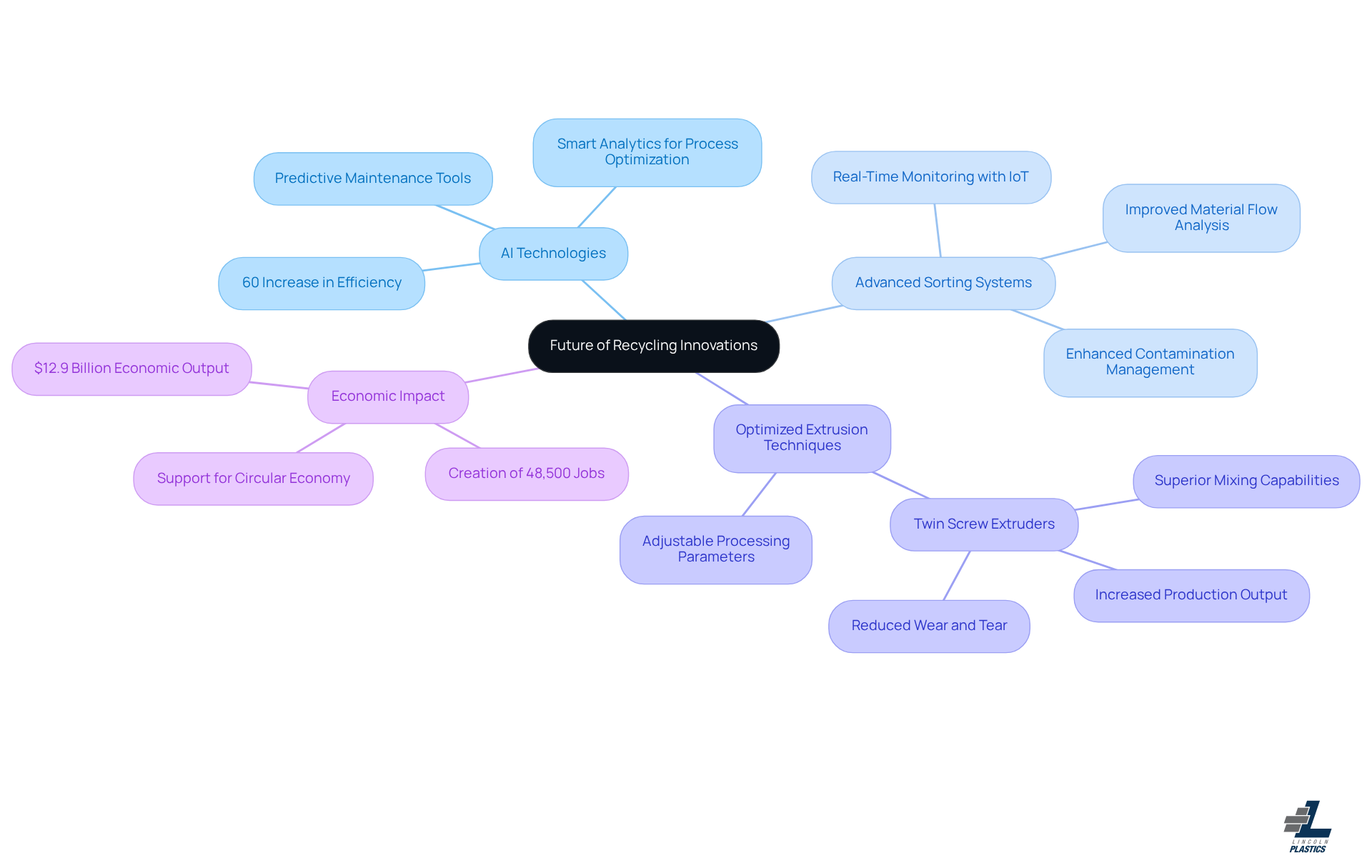
For example, have you heard about the impact of AI technologies? They’ve shown a whopping 60% increase in recycling efficiency! That’s thanks to smarter analytics that really fine-tune operational processes. Plus, these advanced recycling methods, particularly machine learning applications, could bring in an estimated $12.9 billion in revenue and create up to 48,500 jobs right here in the U.S. That’s a win-win for both economic growth and job creation!
These advancements not only boost the recycling industry but also address the growing demand for sustainable materials across various industries. As experts in the field point out, adopting innovative technologies is key for producing high-quality recycled products. They’re known for their fantastic mixing capabilities and precise control over material processing, which is essential for achieving consistent quality in recycled goods.
So, what does this mean for us? This commitment to innovation is setting the recycling sector up to tackle future challenges and play a big role in creating a more sustainable manufacturing landscape. Let’s keep the conversation going about how we can all contribute to this exciting future!
Conclusion
You know, the innovative use of recycled plastic extrusions is really changing the game across various industries. It’s all about sustainability and being responsible towards our environment. When businesses start using these repurposed materials in everything from cord management solutions to construction materials, they’re not just boosting their efficiency - they’re also helping to create a greener future. It’s great to see more people recognizing how important eco-friendly practices are in manufacturing and consumer goods.
Now, let’s talk about some key insights that show just how versatile recycled plastic extrusions can be. Take Lincoln Plastics' Flexiduct, for instance; it’s all about improving workplace organization. And then there are those innovative irrigation pipes that are making waves in sustainable agriculture. The automotive industry is also getting on board, using recycled materials to meet the growing demand for sustainable vehicles. Plus, the packaging sector is stepping up to offer eco-friendly solutions. Each of these examples really highlights how recycled plastic is shaking up traditional practices and pushing us towards a circular economy.
As more industries embrace these innovative uses, it’s super important for both consumers and businesses to support sustainable practices. The market for recycled materials is booming, and it’s not just about economic opportunities - it’s also about tackling environmental challenges. By choosing products made from recycled plastic extrusions, we can all play a part in building a more sustainable future and inspire others to do the same.
Frequently Asked Questions
What is Flexiduct and what are its benefits?
Flexiduct is a cord management solution made from recycled plastic extrusions. It helps organize and protect cords, boosts workplace productivity, and is available in handy 6-foot pre-split lengths for easy installation.
How does using recycled plastic extrusions benefit the environment?
Using recycled plastic extrusions reduces greenhouse gas emissions and demonstrates a commitment to sustainability in manufacturing. It also helps cut down on reliance on new materials.
What is the market trend for repurposed plastic pipes?
The market for repurposed plastic pipes is expected to grow at a rate of 10.20% from 2025 to 2032, indicating a rising interest in eco-friendly resources.
How do recycled plastic irrigation pipes assist in sustainable agriculture?
Recycled plastic irrigation pipes, made from post-consumer repurposed materials, help farmers efficiently manage water while reducing reliance on new materials, making them a practical choice for eco-conscious farming.
What are the advantages of flexible profiles made from recycled plastics in various industries?
Flexible profiles made from recycled plastics are durable and adaptable, making them suitable for tough environments in industries like automotive and construction. They help meet safety standards, reduce weight for fuel efficiency, and provide reliable structural support.
How does the use of repurposed materials in manufacturing impact costs and sustainability?
Using repurposed materials allows manufacturers to cut down on costs while being environmentally friendly. It supports a circular economy and aligns with consumer demand for eco-friendly options.
What industries are increasingly utilizing recycled plastics and why?
The automotive and construction industries are increasingly utilizing recycled plastics due to their durability, flexibility, and potential to reduce costs while adhering to sustainability practices.
List of Sources
- Lincoln Plastics: Custom Cord Management Solutions from Recycled Plastic Extrusions
- assemblymag.com (https://assemblymag.com/articles/99466-new-sustainable-cable-is-made-out-of-recycled-materials)
- rfsworld.com (https://rfsworld.com/articles/press-releases/rfs-launches-new-more-sustainable-eco-cable-family)
- databridgemarketresearch.com (https://databridgemarketresearch.com/reports/global-recycled-plastic-pipes-market?srsltid=AfmBOopgl2kVdYaNuk7WVBr19qCuZ6zIgPk5bfR3SiKxde8Mf-MupIFd)
- managingmfg.com (https://managingmfg.com/news/the-strategic-rise-of-cable-suppliers-in-sustainable-manufacturing-nwid-760.html)
- businessmarketinsights.com (https://businessmarketinsights.com/pr/north-america-wire-and-cable-plastics-market)
- Sustainable Agriculture: Recycled Plastic Irrigation Pipes
- openpr.com (https://openpr.com/news/4207069/recycled-plastic-pipes-market-to-surge-to-usd-21-1-billion)
- grandviewresearch.com (https://grandviewresearch.com/horizon/statistics/recycled-plastic-pipes-market/application/agricultural-irrigation/global)
- wienerberger.com (https://wienerberger.com/en/stories/2025/20250430-Rethinking-Sustainability-Plastic-Pipe-Industry.html)
- orbia.com (https://orbia.com/this-is-orbia/news-and-stories/regen-program-recycling)
- Versatile Solutions: Flexible Profiles Made from Recycled Plastics
- banyannation.com (https://banyannation.com/blog/automotive-plastic-recycling)
- dijmexeurope.com (https://dijmexeurope.com/dijmex-insights/revolutionizing-the-automotive-industry-the-role-of-recycled-plastic-compounds)
- plasticsnews.com (https://plasticsnews.com/news/recycled-plastics-gain-ground-construction)
- towardspackaging.com (https://towardspackaging.com/insights/post-consumer-recycled-plastic-market-sizing)
- packaginginsights.com (https://packaginginsights.com/news/flexible-plastics-tech-innovations-circular-solutions.html)
- Industry Standards: Rigid Profiles from Recycled Plastic Extrusions
- plasticsnews.com (https://plasticsnews.com/news/recycled-plastics-gain-ground-construction)
- priorityone.co.nz (https://priorityone.co.nz/2025/07/09/circular-construction-in-action-building-with-recycled-plastics)
- futuremarketinsights.com (https://futuremarketinsights.com/reports/ribc-market)
- waste-management-world.com (https://waste-management-world.com/resource-use/sustainable-construction-recycled-plastic-in-construction-materials)
- marketintelreports.com (https://marketintelreports.com/report/MEQ24274/global-rigid-frame-system-market)
- Eco-Friendly Packaging: Custom Solutions with Recycled Plastic Extrusions
- mckinsey.com (https://mckinsey.com/industries/packaging-and-paper/our-insights/sustainability-in-packaging-2025-inside-the-minds-of-global-consumers)
- plasticsnews.com (https://plasticsnews.com/news/sc-johnson-ups-recycled-content-goals-plastic-packaging)
- directsourceprocurement.com (https://directsourceprocurement.com/top-trends-in-recycled-and-custom-packaging-for-2025)
- finance.yahoo.com (https://finance.yahoo.com/news/global-sustainable-packaging-usage-trends-140000185.html)
- Building Green: Construction Materials from Recycled Plastic Extrusions
- sustainableplastics.com (https://sustainableplastics.com/news/recycled-plastics-gain-ground-construction)
- plasticsnews.com (https://plasticsnews.com/news/recycled-plastics-set-trend-cladding)
- priorityone.co.nz (https://priorityone.co.nz/2025/07/09/circular-construction-in-action-building-with-recycled-plastics)
- finance.yahoo.com (https://finance.yahoo.com/news/recycled-plastics-green-building-materials-123700885.html)
- Automotive Innovation: Recycled Plastic Components for Sustainable Vehicles
- grandviewresearch.com (https://grandviewresearch.com/industry-analysis/post-consumer-recycled-plastics-automotive-market-report)
- evmagazine.com (https://evmagazine.com/articles/globaldata-sustainable-materials-reshape-auto-industry)
- autoleap.com (https://autoleap.com/blog/automotive-sustainability-trends)
- plasticstoday.com (https://plasticstoday.com/automotive-mobility/volvo-targets-25-sustainable-plastic-in-cars-by-2025)
- basf.com (https://basf.com/global/en/media/news-releases/2025/10/p-25-194)
- Consumer Goods Revolution: Innovative Products from Recycled Plastics
- braskem.com (https://braskem.com/europe/news-detail/braskem-to-present-its-recycling-solutions-at-prse-2025-in-amsterdam)
- forbes.com (https://forbes.com/sites/geristengel/2025/11/25/repurpose-scales-compostable-household-products)
- worldhealth.net (https://worldhealth.net/news/sustainability-in-personal-and-home-care)
- resource-recycling.com (https://resource-recycling.com/recycling/2025/04/15/walmart-berry-keep-working-toward-2025-plastics-goals)
- finance.yahoo.com (https://finance.yahoo.com/news/recycled-plastics-market-size-worth-124000653.html)
- Outdoor Living: Sustainable Furniture from Recycled Plastic Extrusions
- ovationoutdoor.com (https://ovationoutdoor.com/why-recycled-plastic-furniture-is-the-future-of-outdoor-design)
- Outdoor Living Trends 2025 (https://thisoldhouse.com/home-finances/outdoor-living-trends)
- penguinpr.co.uk (https://penguinpr.co.uk/newscentre/2025/11/24/award-winning-company-tdp-proud-to-supply-recycled-plastic-furniture-to-iconic-riber-castle)
- cbs42.com (https://cbs42.com/business/press-releases/ein-presswire/785669625/unopick-outdoor-launches-new-collection-of-sustainable-outdoor-furniture-in-australia)
- wjbf.com (https://wjbf.com/business/press-releases/ein-presswire/817382876/garvee-com-introduces-eco-friendly-outdoor-furniture-made-from-sustainable-materials)
- The Future of Recycling: Innovations in Plastic Extrusion Processes
- plasticsnews.com (https://plasticsnews.com/news/erema-redefines-advanced-plastics-recycling-ahead-k-2025)
- energy.policyplatform.news (https://energy.policyplatform.news/environment/advanced-recycling-technology-alleviates-landfills-and-boosts-economy)
- lyondellbasell.com (https://lyondellbasell.com/en/who-we-are/updates-events/products--technology-news/enhancing-mechanical-recycling-quality-through-investments-in-research-and-development-for-plastic-sorting-decontamination-compounding-and-analysis)
- zsjtjx.com (https://zsjtjx.com/news/twin-screw-extruders-for-sustainable-plastic-recycling-in-2025)
- news.climate.columbia.edu (https://news.climate.columbia.edu/2025/06/18/how-ai-is-revolutionizing-the-recycling-industry)


