
10 Essential Insights on Plastic Extrusion Tubing for OEMs
Introduction
Welcome to the world of plastic extrusion tubing! It’s a lively space that plays a crucial role in industries ranging from automotive to healthcare. As manufacturers like you look for custom solutions to meet unique needs, getting a grip on the ins and outs of this process is key.
In this article, we’re diving into ten essential insights that not only showcase the benefits and applications of plastic extrusion tubing but also tackle the challenges OEMs face when sourcing reliable materials and keeping quality standards in check. You might be wondering, how can these insights help you enhance your operations and stay ahead in such a competitive market? Let’s explore!
Lincoln Plastics: Leading Provider of Custom Plastic Extrusion Tubing
Hey there! Have you ever found yourself in need of custom plastic extrusion tubing? Well, Lincoln Plastics is here to help! They’re a standout producer in this field, dedicated to crafting high-quality products. Whether it’s irrigation pipes or cord covers, they’ve got a solution to meet the unique needs of different industries.
What’s really cool is that Lincoln Plastics is all about quality. They hold an ISO certification, which means their products meet some pretty tough quality standards. This commitment not only boosts their operational efficiency but also makes them a reliable choice such as custom solutions. They work with materials like polyethylene, PVC, and polypropylene, ensuring they have what you need.
Now, you might be wondering how they fit into the bigger picture. As the synthetic molding sector is set to grow significantly, Lincoln Plastics is in a prime position to ride that wave. Industry experts emphasize the importance of innovation, and that’s exactly what Lincoln Plastics focuses on. Their recent projects, especially in the irrigation sector, highlight their ability to meet client demands while promoting sustainability.
So, if you’re an OEM looking for custom plastic extrusion solutions, Lincoln Plastics could be your go-to choice. With their blend of quality, innovation, and expertise, they’re making a name for themselves in the industry. Why not check them out and see how they can help you with your polymer needs?
Understanding the Plastic Extrusion Process: Key Steps and Techniques
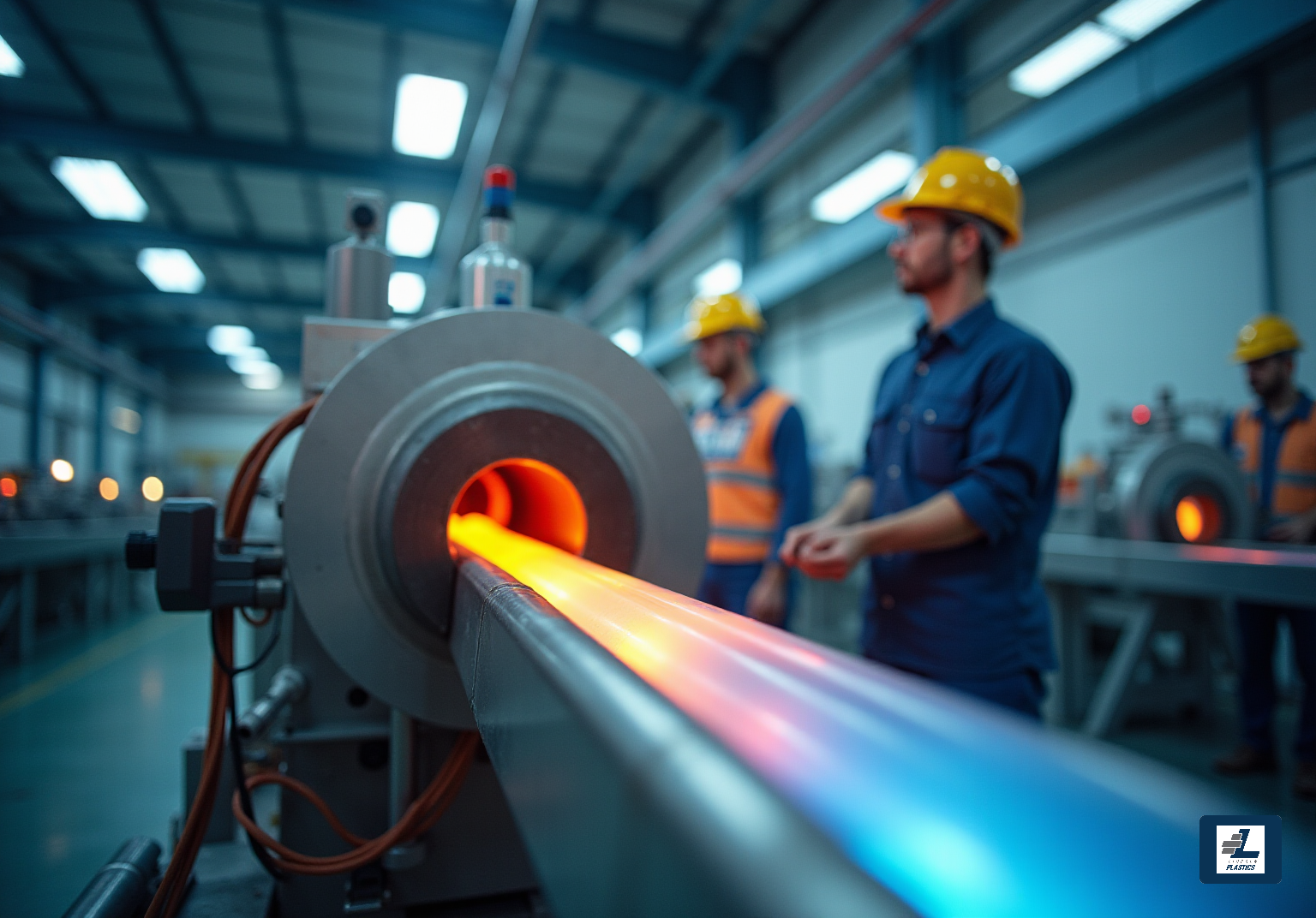
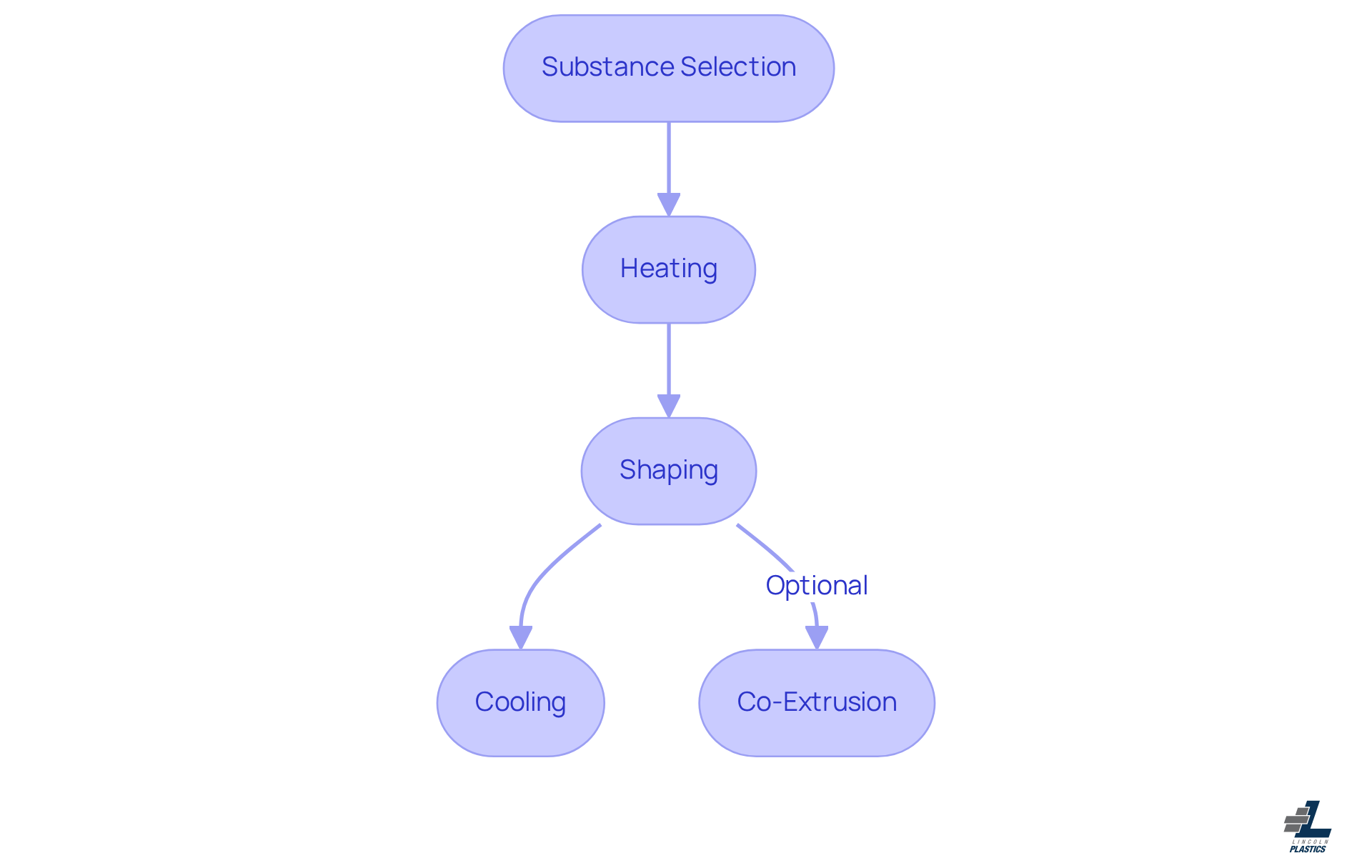
Let’s dive into the procedure of plastic extrusion. It’s made up of a few key phases: substance selection, heating, shaping, and cooling. First off, you start with unprocessed polymers like polypropylene, ABS, or PVC. These materials, such as PVC and polyethylene, get fed into the extruder, where they’re heated until they become flexible enough for shaping. Once they’re molten, the material is pushed through a die to create tubing in the desired profile, and then it cools down to solidify into the final product. Oh, and methods like co-extrusion let you combine different substances, which really boosts product functionality and adaptability.
Now, you might be wondering why substance choice is such a big deal. Well, it directly impacts the performance of the final product. For instance, sustainable materials are becoming more popular, showing how the industry is shifting towards sustainability. Plus, there are some exciting innovations, like using IoT for monitoring processes, which really amps up efficiency.
Let’s look at some real-world examples. In the construction industry, specialized profiles and tubing produced through extrusion meet strict building codes. This really highlights how crucial precise design and processing are. The time it takes to produce these polymer shapes can vary, but with modern equipment, lead times can be significantly reduced, making it easier to respond to market demands.
As the global polymer shaping market continues to evolve, understanding these essential steps and methods is key for OEMs. It helps ensure that their specifications are met and allows them to take advantage of the latest advancements in the field. So, keep these insights in mind as you navigate this fascinating area!
Common Materials for Plastic Extrusion Tubing: PVC, Polyethylene, and More
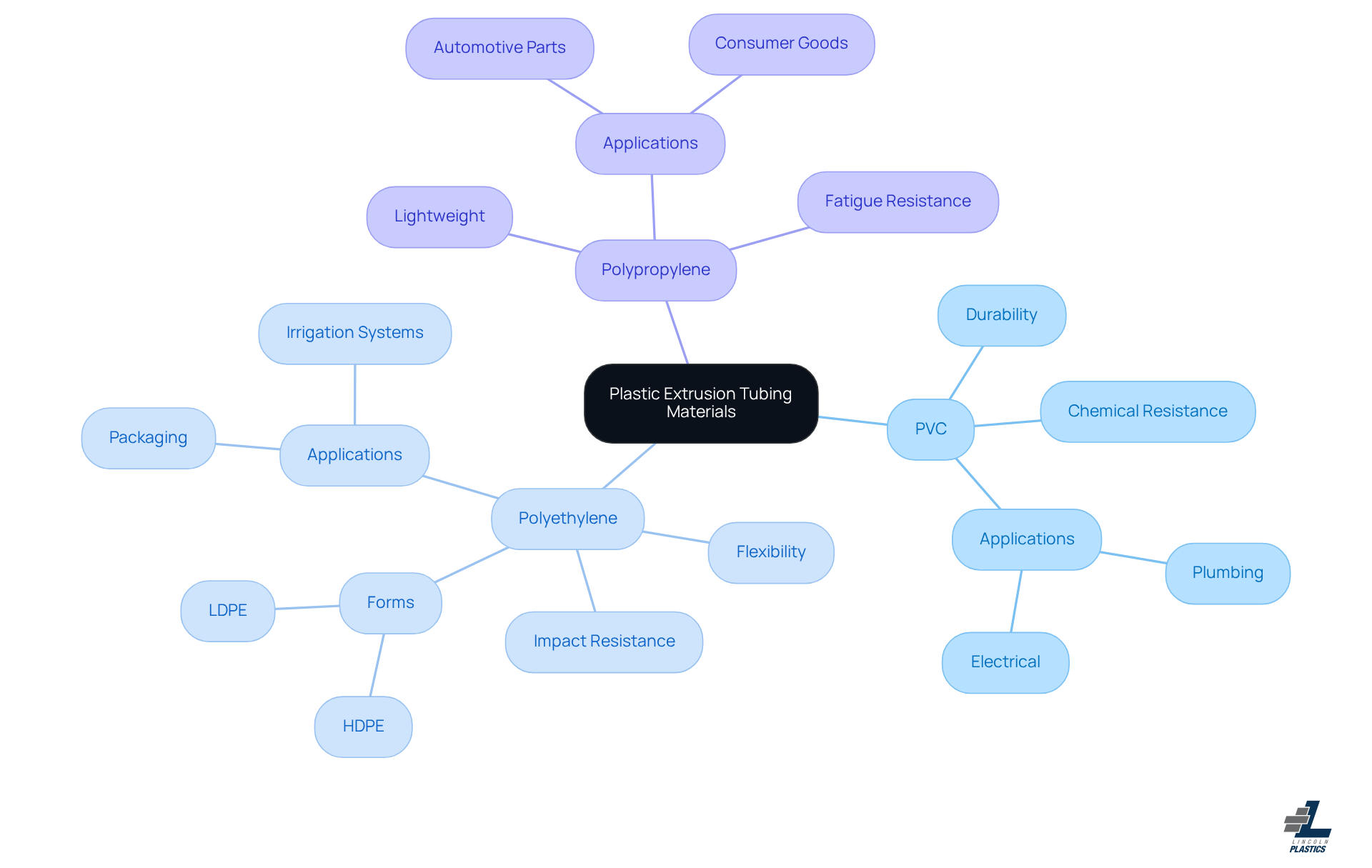
When it comes to the production of plastic extrusion tubing, you might be wondering which materials are the best fit for your needs. Well, let’s break it down! The big players here are PVC, polyethylene (PE), and polypropylene (PP), and each one has its own advantages.
First up, we have PVC. It’s known for its incredible durability and versatility, which is why it’s often the go-to for plumbing and electrical applications. If you’re in an environment where harsh chemicals are a regular thing, PVC really shines with its longevity and toughness.
Now, let’s talk about polyethylene. This material comes in two forms: low-density polyethylene (LDPE) and high-density polyethylene (HDPE). What makes PE stand out is its flexibility and resistance to impact. This versatility makes it perfect for things like packaging and irrigation systems, where you need something that can adapt and hold up under pressure.
And then there’s polypropylene. While it doesn’t always get as much attention, it’s becoming more popular thanks to its lightweight nature and chemical resistance. It’s particularly useful in applications that require a lot of bending or flexing, like automotive parts.
Understanding the specific traits and performance indicators of these materials can significantly assist OEMs in making smart choices that align with their project needs. This way, you can ensure success in whatever applications you’re working on. So, which material do you think would work best for your next project?
Types of Plastic Extrusion Tubing: Rigid vs. Flexible Options
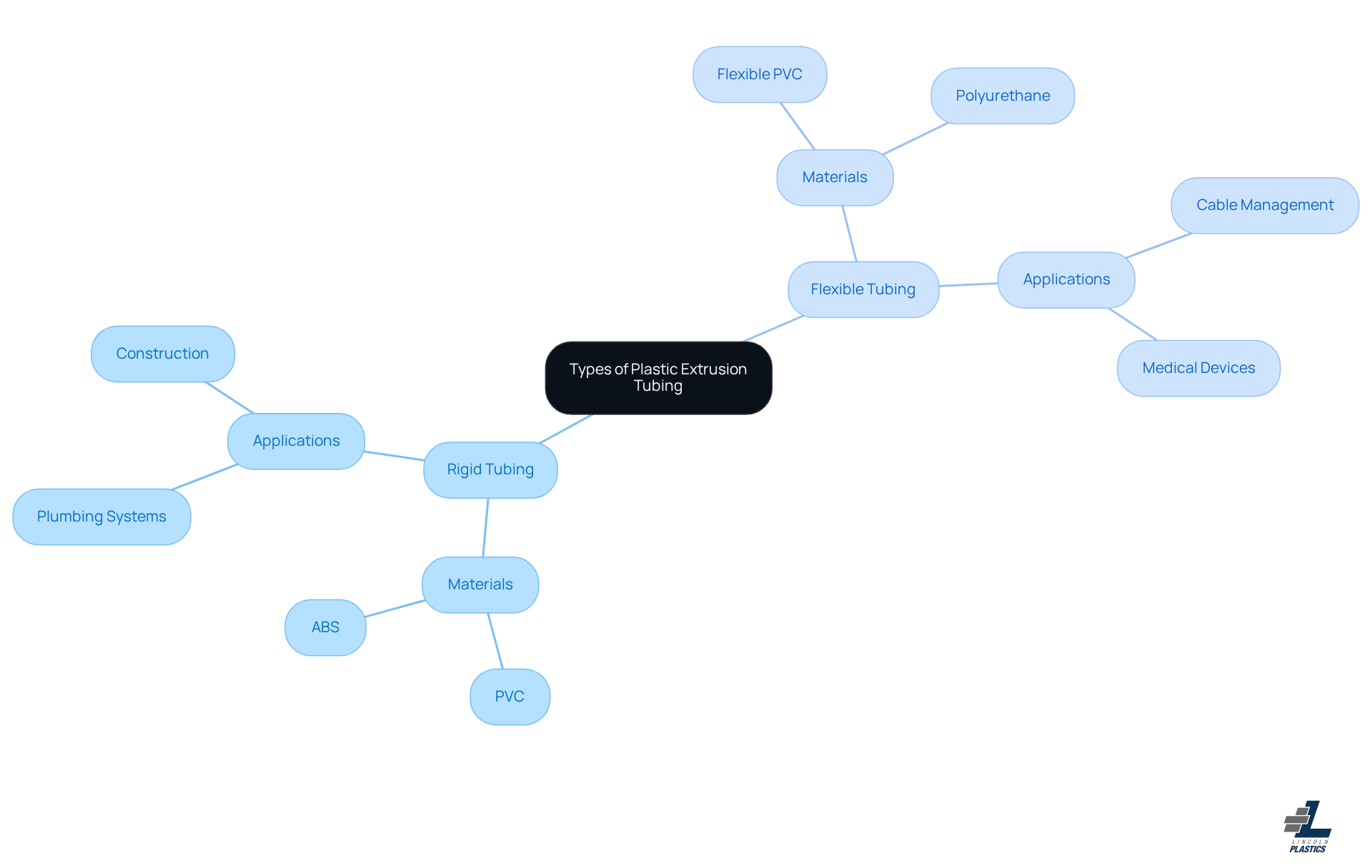
In the realm of plastic extrusion tubing, there are two primary types: rigid and flexible. Each one has its own special role in different industries. Rigid tubing, often made from materials like PVC and ABS, is your go-to for applications that need a solid structure—think plumbing systems and construction projects. Its durability and resistance to the elements make it a top choice for industrial applications.
Now, let’s talk about flexible tubing. This type, usually crafted from thermoplastic elastomers or polyurethane, shines in situations where bending or movement is key. It’s super versatile, making it perfect for automotive, medical devices, and any application where adaptability is a must.
Did you know that flexible plastics can range from very flexible at 60A to nearly rigid at 95A? That’s quite a spectrum! Industry experts stress the importance of picking the right tubing based on what you need. For example, PVC is known for being cost-effective, which makes it suitable for a bunch of different uses. On the other hand, polyurethane is the star in environments where wear resistance is crucial.
When it comes to rigid tubing, think electrical conduits and structural components—places where strength and reliability are non-negotiable. Flexible tubing, however, finds its home in dynamic settings like cable jacketing and robotics, where movement and flexibility are essential. Understanding these differences not only helps OEMs make smarter choices regarding tubing but also boosts the performance and reliability of their products. So, what’s your next move? Dive into the world of tubing and see how the right choice can make all the difference!
Applications of Plastic Extrusion Tubing: From Automotive to Medical Uses
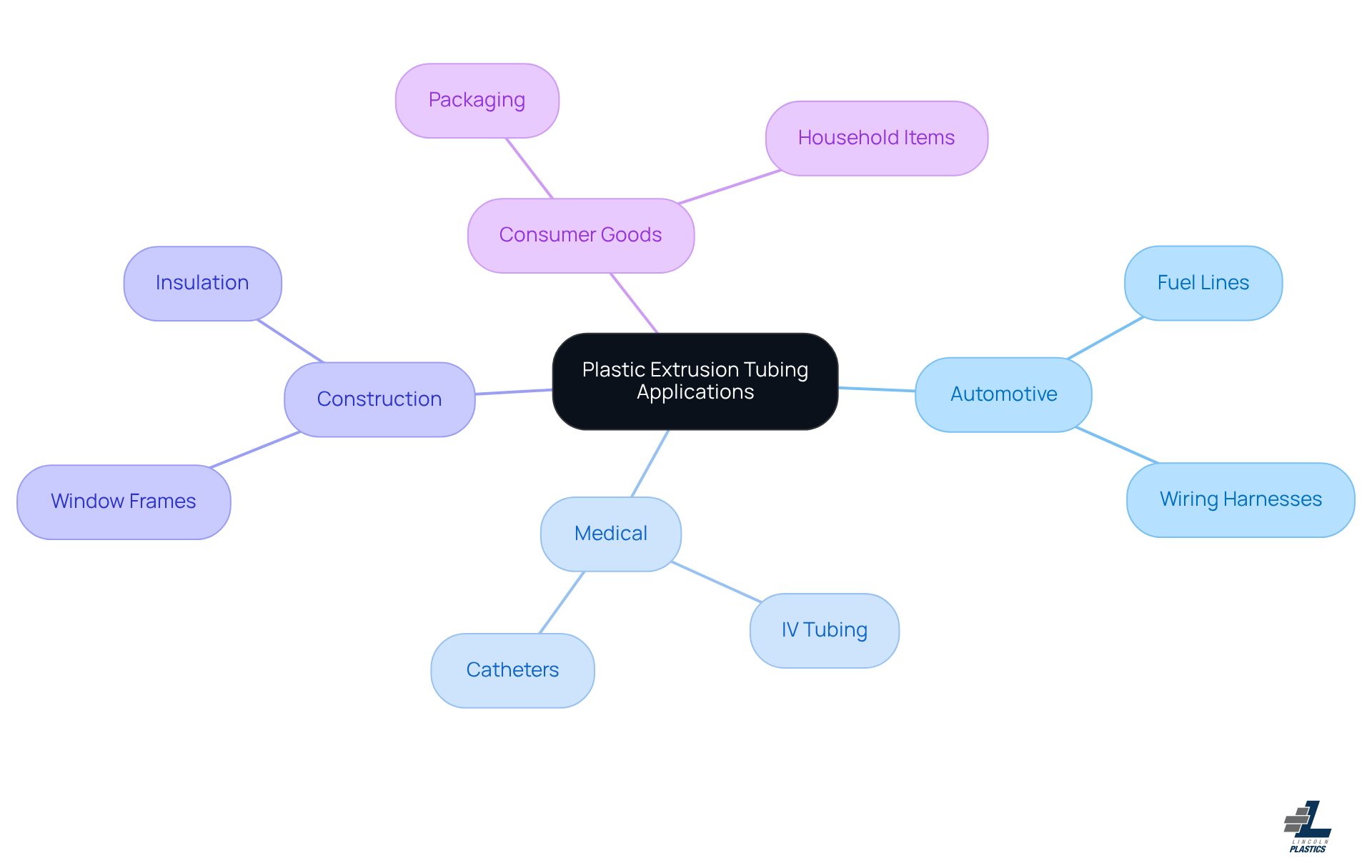
Have you ever considered how plastic extrusion tubing is integrated into our everyday lives? It’s pretty fascinating! This material, such as PVC and polyethylene, pops up in all sorts of places, from automotive to medical, construction, and even consumer goods. For instance, in the automotive world, it’s used for fuel lines and wiring harnesses. And in healthcare, it plays a crucial role as medical tubing. In construction, you’ll find it in plumbing systems. Talk about adaptability!
At Lincoln Plastics, we really value our partnerships with OEMs. We work closely with them to ensure our tubing meets all the specifications. This includes specific checks for fit and function, which are super important. Our robust assurance system features quality inspections and thorough documentation, making sure everything aligns perfectly with OEM specifications.
So, why does this matter? By understanding how our products and our processes align with the market's needs, it’s all about creating solutions that work for everyone. Now, let’s talk about how we can help you meet those demands!
Custom Solutions in Plastic Extrusion Tubing: Tailoring Products to Client Needs
Custom solutions are essential for meeting the needs of customers. Producers like Lincoln Plastics really shine when it comes to offering custom designs, colors, and property characteristics. We specialize in creating products with materials such as polyethylene, rigid PVC, flexible PVC, and polypropylene, including custom blends. This means we can work with any resin to meet your specifications.
Now, let’s talk about what makes this customization so crucial. There’s a wide range of applications, including medical, aerospace, and automotive industries. Did you know that the global polymer market was valued at over $638 billion in 2023? It’s expected to grow at an annual rate of 4.3% by 2030! This trend really highlights how much industries rely on tailored synthetic materials like plastic tubing to boost efficiency and performance in their final products.
For example, Lincoln Plastics has successfully developed solutions for everything from center pivot irrigation systems to specialized cord covers. This shows our ability to meet diverse client specifications. As industry specialists point out, the customization not only enhances functionality but also fosters collaboration between producers and OEMs. This way, essential components are delivered on time and to exact standards.
This dedication to personalization and strict quality oversight sets us apart in the competitive world of plastic processing. So, if you’re looking for solutions that truly fit your needs, let’s chat! We’re here to help you find the perfect fit.
Benefits of Plastic Extrusion Tubing: Cost-Effectiveness and Durability
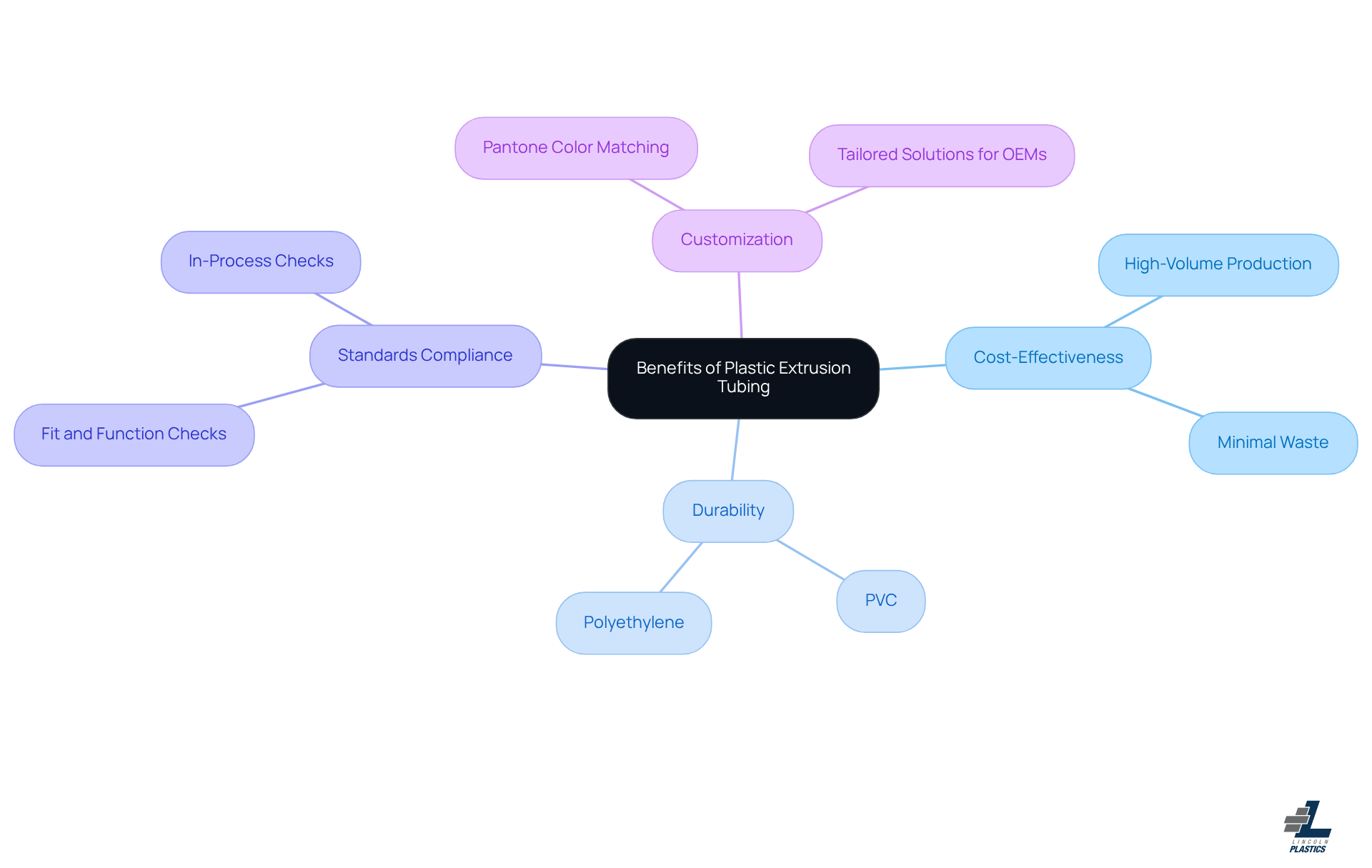
You know, plastic extrusion tubing really has a lot going for it. It’s cost-effective, which is a win-win for manufacturers. The extrusion process? Super efficient! It allows for high-volume production with minimal waste, meaning lower costs for OEMs.
Now, let’s talk about how Lincoln Plastics steps in. They work closely with OEMs to make sure the tubing meets all the necessary standards. They even do inspections using various types of check gauges. Pretty neat, right?
And let’s not forget about durability. The materials are tough enough to handle harsh conditions, so you won’t have to worry about frequent replacements. Plus, Lincoln Plastics has a solid assurance system in place. They provide a comprehensive quality plan, complete with essential in-process checks and run documentation. This ensures that everything is tailored to meet your specific requirements.
You might be wondering about colors. No problem! They can easily source custom colors, keeping things consistent across manufacturers.
All these benefits make plastic extrusion tubing a smart choice for producers looking to reduce costs while maintaining quality and accuracy. So, why not consider it for your next project?
Challenges in Plastic Extrusion Tubing: Navigating Supplier Reliability and Material Costs
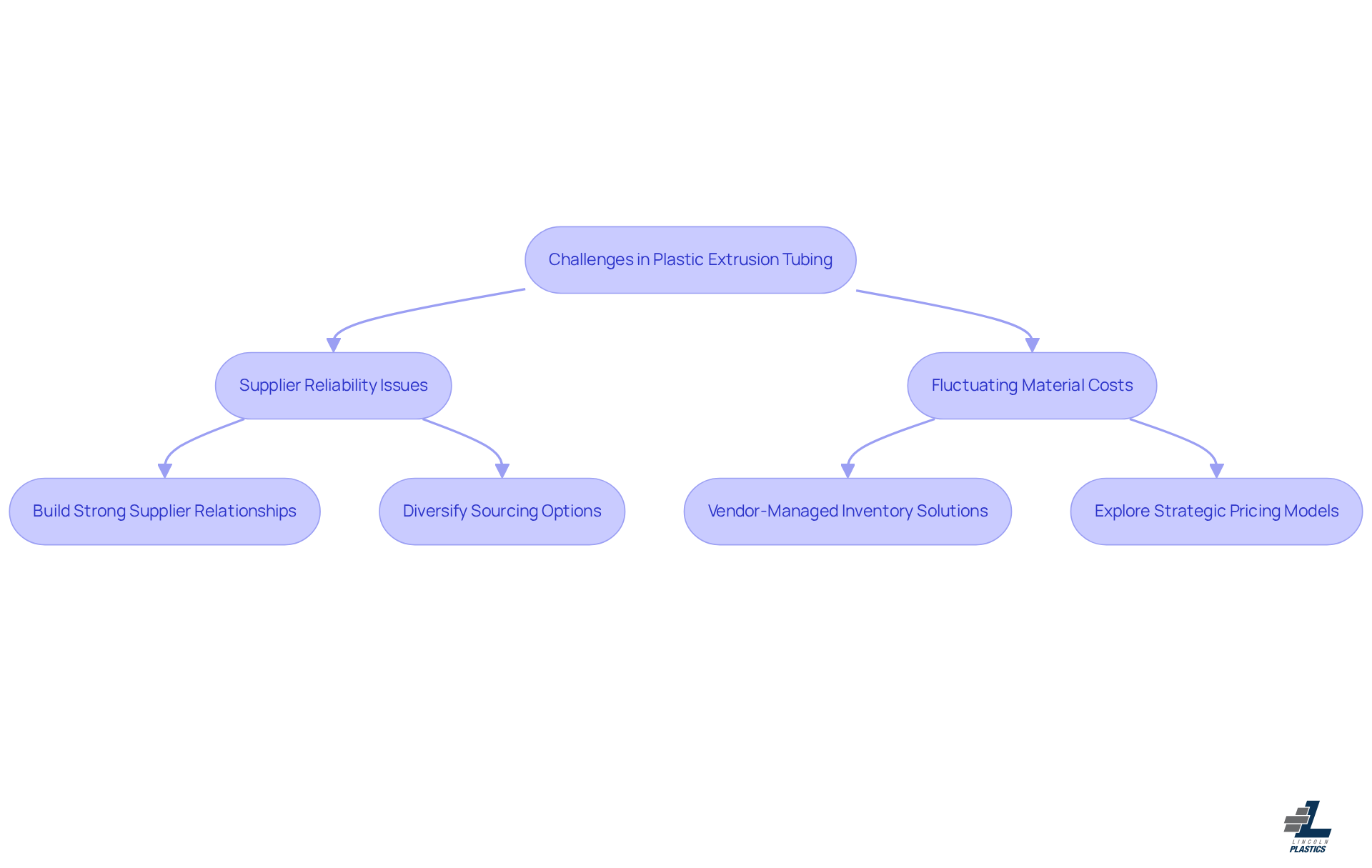
The sector offers its perks, but let’s be real—it’s not without its challenges. Supplier reliability and fluctuating resource costs can really throw a wrench in the works. OEMs are often juggling the need for timely deliveries while trying to get those materials delivered on time. That’s where Lincoln Plastics steps in, offering custom solutions and custom pipes. They help OEMs fine-tune their designs for manufacturing while keeping quality standards in check.
Now, you might be wondering how market volatility plays into all this. Well, it can lead to increased costs, which can directly impact production costs. Industry experts are all about building strong relationships with suppliers. This way, you’re not putting all your eggs in one basket—especially when it comes to regions like China and the Middle East.
By tapping into Lincoln Plastics' expertise, you can streamline operations, boosting operational efficiency. Plus, exploring new options, looking into alternative resources, and considering or ramping up the use of recycled products can really help manage costs. It’s all about keeping production sustainable and profitable, right? So, let’s take those steps together!
Future Trends in Plastic Extrusion Tubing: Innovations and Market Directions
The future of polymer tubing is looking pretty exciting! With major advancements in technology, we’re on the brink of something revolutionary. Take Lincoln Plastics, for example. They’ve been shaping the industry since 1948, and they really show how important it is to have precision tools to ensure accuracy and quality in their products.
Now, let’s talk about quality assurance. Lincoln Plastics has a robust system in place that uses various check gauges and keeps a dedicated record book for each production run. This way, they make sure that all the critical dimensions are spot on for things like fittings and connectors.
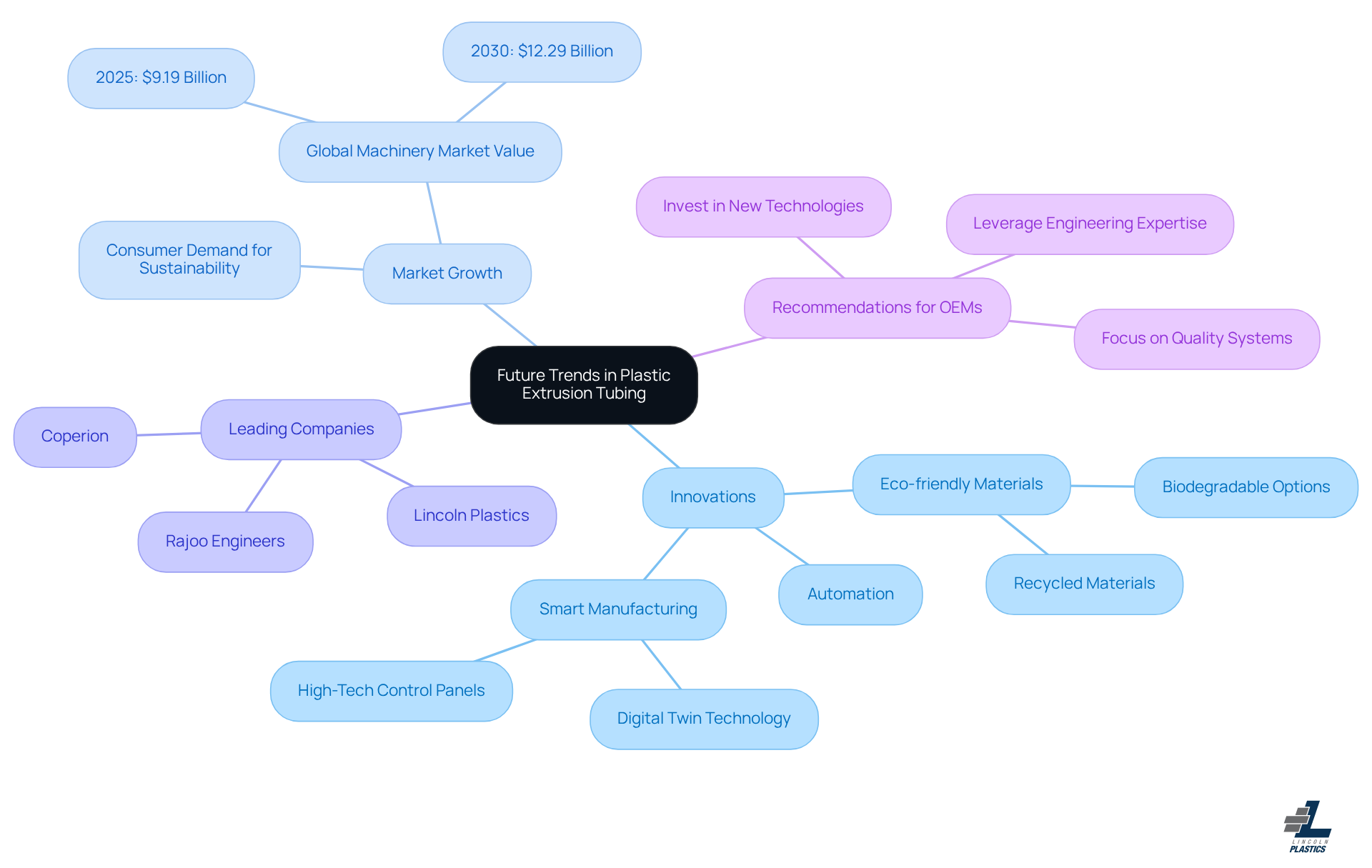
Did you know that the global machinery market for forming processes is valued at $9.19 billion in 2025 and is expected to reach $12.29 billion by 2030? That’s a clear sign of how important these trends are becoming! Plus, with the rise of Industry 4.0 technologies—think Internet of Things (IoT) and data analytics—manufacturers are boosting their production efficiency and control. This means they can optimize their processes in real-time, which is pretty cool.
And it doesn’t stop there! Advancements in software are making operations more user-friendly and efficient. As the market shifts towards eco-friendly solutions, we’re seeing a big move towards sustainable materials. This change is driven by consumer preferences and regulatory requirements.
Companies like Coperion and Rajoo Engineers are leading the charge with their innovations in energy efficiency and multi-layer film production. By embracing these advancements, manufacturers can really sharpen their competitive edge and secure long-term success in this fast-evolving market.
So, what should companies do to keep up with these trends? It’s time to think about investing in new technologies and sustainable resources to meet future demands. And don’t forget to leverage the engineering expertise and strong quality systems that partners like Lincoln Plastics offer. Together, we can navigate this exciting future!
Quality Control in Plastic Extrusion Tubing: Ensuring High Standards and Compliance
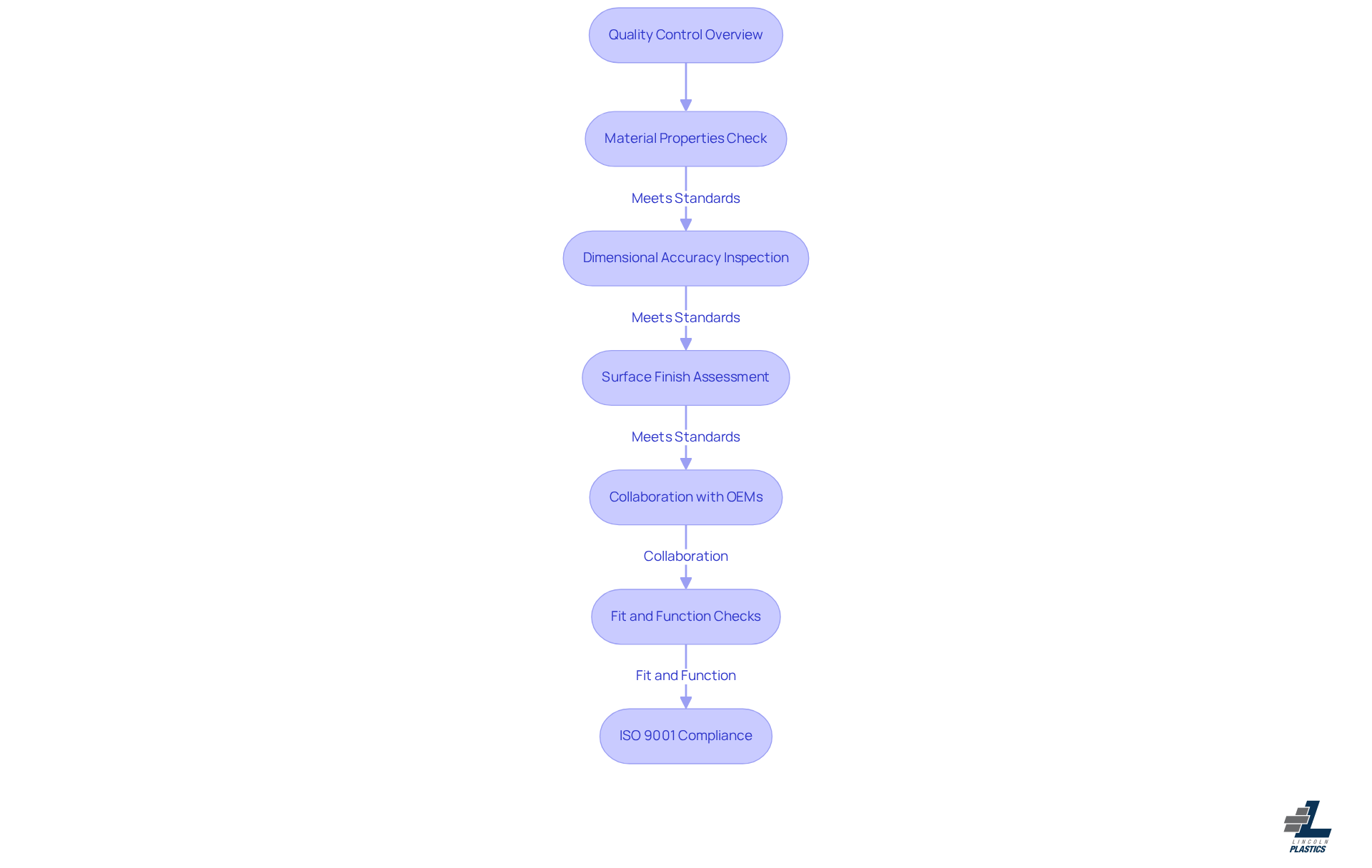
Quality control is absolutely crucial when it comes to tubing. Think about it: you want to ensure that every product meets the specifications, right? That’s why we focus on thorough testing and inspection at every step of the manufacturing process. We keep an eye on material properties, check for defects, and assess the surface finish to make sure everything aligns with industry standards.
At Lincoln Plastics, we don’t just stop there. We work hand-in-hand with clients to ensure our products meet all requirements. This includes special checks for ‘fit and function’ and using various types of check gauges to guarantee that everything fits just right for its intended use. It’s all about making sure you get what you need.
Our commitment to quality doesn’t just happen by chance. We have a robust assurance system certified to the highest standards. Each plastic profile comes with its own dedicated handbook, complete with drawings, specifications, and run documentation. This level of detail not only helps us maintain high standards but also boosts customer satisfaction.
So, why is all this important for manufacturers? By prioritizing quality control, you can ensure that your products are reliable and meet the strict requirements of your industry. Industry leaders often stress that sticking to ISO standards is key to success. This approach can lead to improved operational efficiency and, ultimately, greater customer loyalty.
Now, let’s talk about how you can implement these practices in your own operations. Are you ready to take your quality control to the next level?
Conclusion
You know, the importance of plastic extrusion tubing really can’t be overlooked, especially for OEMs looking for solutions that fit their unique needs. Lincoln Plastics shines in this area, offering a wide variety of products designed to boost efficiency and quality. By honing in on custom solutions and maintaining strict quality control, they help OEMs navigate a competitive landscape with the right tools.
Throughout this article, we’ve explored some key insights into the plastic extrusion process, material choices, and the different types of tubing out there. We’ve talked about the benefits of materials like PVC, polyethylene, and polypropylene, and the essential differences between rigid and flexible tubing. Plus, we can’t forget about quality assurance and the hurdles manufacturers face, like supplier reliability and those pesky fluctuating material costs.
As the industry keeps evolving with new innovations in automation and sustainable practices, it’s crucial for OEMs to stay in the loop and adapt. Embracing tech advancements and building strong partnerships with suppliers like Lincoln Plastics can really enhance product performance and lead to long-term success. The future of plastic extrusion tubing looks promising, so now’s the perfect time for manufacturers to invest in solutions that align with these exciting trends.
Frequently Asked Questions
What is Lincoln Plastics known for?
Lincoln Plastics is a leading provider of custom plastic extrusion tubing, dedicated to crafting personalized solutions for OEMs across various industries, including irrigation and cord covers.
What quality certifications does Lincoln Plastics hold?
Lincoln Plastics holds an ISO 9001:2015 certification, indicating that their products meet stringent quality standards, enhancing operational efficiency and reliability.
What materials does Lincoln Plastics work with?
Lincoln Plastics works with materials such as polyethylene, PVC, and polypropylene to produce their plastic extrusion tubing.
How does Lincoln Plastics fit into the synthetic molding sector?
As the synthetic molding sector is expected to grow significantly, Lincoln Plastics is well-positioned to leverage this growth by focusing on excellence in polymer shaping and meeting client demands, particularly in sustainable agricultural practices.
What are the key phases in the plastic extrusion process?
The key phases in the plastic extrusion process include substance selection, heating, shaping, and cooling. This involves feeding unprocessed polymers into an extruder, heating them until they are flexible, shaping them through a die, and then cooling them to solidify.
Why is material choice important in plastic extrusion?
Material choice is crucial because it directly affects the performance and longevity of the final product. The industry is increasingly shifting towards sustainable options like biodegradable polymers and post-consumer recycled materials.
What advancements are being made in shaping technology for plastic extrusion?
Advancements in shaping technology include the use of IoT for real-time monitoring and control, which enhances production efficiency and quality.
What are the common materials used for plastic extrusion tubing?
The common materials for plastic extrusion tubing include PVC, polyethylene (PE), and polypropylene (PP), each offering unique benefits suitable for different applications.
What are the characteristics of PVC as a material for plastic extrusion?
PVC is known for its durability and chemical resistance, making it ideal for plumbing and electrical applications, especially in harsh chemical environments.
How does polyethylene differ from polypropylene in terms of usage?
Polyethylene is flexible and impact-resistant, making it suitable for packaging and irrigation systems, while polypropylene is lightweight with excellent fatigue resistance, ideal for applications requiring bending or flexing, such as automotive parts.
List of Sources
- Lincoln Plastics: Leading Provider of Custom Plastic Extrusion Tubing
- precedenceresearch.com (https://precedenceresearch.com/extruded-plastics-market)
- Lincoln Plastics expands coextrusion capabilities (https://plasticsnews.com/news/lincoln-plastics-expands-coextrusion-capabilities)
- verifiedmarketreports.com (https://verifiedmarketreports.com/product/extruded-plastics-market)
- Extruded Plastics Market Size, Share & Growth Report, 2030 (https://grandviewresearch.com/industry-analysis/extruded-plastics-market-report)
- thebusinessresearchcompany.com (https://thebusinessresearchcompany.com/report/extruded-plastics-global-market-report)
- Understanding the Plastic Extrusion Process: Key Steps and Techniques
- sciencedaily.com (https://sciencedaily.com/releases/2025/05/250507125656.htm)
- sheet-extrusionline.com (https://sheet-extrusionline.com/news/advancements-in-plastic-extrusion-technology-a-look-at-the-future-224319.html)
- k-online.com (https://k-online.com/en/Media_News/News/Company_News/Apex_Unveils_Next-Gen_Extrusion_Lines_at_K_2025)
- The Extrusion Industry in 2025: Innovations, Trends, and Opportunities (https://plextrusions.com/extrusion-blog/the-extrusion-industry-in-2025-innovations-trends-and-opportunities)
- Common Materials for Plastic Extrusion Tubing: PVC, Polyethylene, and More
- PVC extrusion in transition: overcoming challenges and tapping potential (https://inoex.com/news/detail/pvc-extrusion-in-transition-overcoming-challenges-and-tapping-potential)
- plasticstoday.com (https://plasticstoday.com/plastics-processing/extrusion-pipe-profile)
- The Extrusion Industry in 2025: Innovations, Trends, and Opportunities (https://plextrusions.com/extrusion-blog/the-extrusion-industry-in-2025-innovations-trends-and-opportunities)
- Types of Plastic Extrusion Tubing: Rigid vs. Flexible Options
- plasticsnews.com (https://plasticsnews.com/news/tariffs-lack-stability-top-concerns-resin-distribution-firms-2025)
- packagingnews.co.uk (https://packagingnews.co.uk/news/materials/rigid-plastics/amcor-achieves-over-16-plastic-reduction-in-flexible-tubes-for-bulldog-13-06-2025)
- lincoln-plastics.com (https://lincoln-plastics.com/news-post/4-steps-to-choose-reliable-custom-plastic-tubing-solutions?dcc2137a_page=8)
- The Extrusion Industry in 2025: Innovations, Trends, and Opportunities (https://plextrusions.com/extrusion-blog/the-extrusion-industry-in-2025-innovations-trends-and-opportunities)
- spiratex.com (https://spiratex.com/flexible-plastic-tubing/flexible-vs-rigid-plastic-extrusion)
- Applications of Plastic Extrusion Tubing: From Automotive to Medical Uses
- baod-extrusion.com (https://baod-extrusion.com/news)
- Pipe extruders add products, plants at bullish time (https://plasticsnews.com/news/pipe-extruders-add-products-plants-bullish-time)
- industryarc.com (https://industryarc.com/Research/Plastic-Extrusion-Molded-Parts-Market-Research-501541)
- paulmurphyplastics.com (https://paulmurphyplastics.com/industry-news-blog/exploring-the-versatile-applications-of-plastic-extrusion)
- nextmsc.com (https://nextmsc.com/news/how-is-precision-evolving-in-medical-tubing)
- Custom Solutions in Plastic Extrusion Tubing: Tailoring Products to Client Needs
- pexco.com (https://pexco.com/custom-plastic-extrusion-basics-benefits-and-future-explained)
- Exploring the Extrusion Industry for Custom Plastic Solutions (https://plasticsengineering.org/2024/09/exploring-the-extrusion-industry-for-custom-plastic-solutions-006579)
- lincoln-plastics.com (https://lincoln-plastics.com/news-post/10-key-benefits-of-pvc-extrusions-for-oem-purchasing-managers?dcc2137a_page=2)
- crescentind.com (https://crescentind.com/blog/the-benefits-of-custom-plastic-parts)
- 10 Leading PVC Extrusion Manufacturers for OEM Solutions (https://lincoln-plastics.com/news-post/10-leading-pvc-extrusion-manufacturers-for-oem-solutions?dcc2137a_page=17)
- Benefits of Plastic Extrusion Tubing: Cost-Effectiveness and Durability
- lincoln-plastics.com (https://lincoln-plastics.com/news-post/10-leading-pvc-extrusion-manufacturers-for-oem-solutions?dcc2137a_page=10)
- The Versatility of Plastic Tubing in Modern Industries (https://paulmurphyplastics.com/industry-news-blog/the-versatility-of-plastic-tubing-in-modern-industries)
- lakelandplastics.com (https://lakelandplastics.com/the-strength-and-durability-advantage-of-custom-extruded-plastic-products)
- The Role of Plastic Extrusion in Modern Manufacturing | Rocal (https://rocalextrusions.co.uk/news/the-role-of-plastic-extrusion-in-modern-manufacturing)
- Challenges in Plastic Extrusion Tubing: Navigating Supplier Reliability and Material Costs
- The Extrusion Industry in 2025: Innovations, Trends, and Opportunities (https://plextrusions.com/extrusion-blog/the-extrusion-industry-in-2025-innovations-trends-and-opportunities)
- The 5 Biggest Risks Facing Plastic Producers in 2025–And How to Insure Against Them (https://bakerhopp.com/the-5-biggest-risks-facing-plastic-producers-in-2025-and-how-to-insure-against-them)
- sterlingplasticsinc.com (https://sterlingplasticsinc.com/insights/how-the-2025-tariffs-will-impact-plastic-prices)
- plasticstoday.com (https://plasticstoday.com/legislation-regulations/us-tariffs-begin-impacting-plastic-industry-supply)
- plasticsindustry.org (https://plasticsindustry.org/blog/tariffs-inflation-and-plastics-untangling-the-price-effects)
- Future Trends in Plastic Extrusion Tubing: Innovations and Market Directions
- jurryextrusion.com (https://jurryextrusion.com/news/jurry-showcased-advanced-pipe-extrusion-technologies-at-k-2025-in-d-sseldorf)
- yeshaextrusionmachineries.com (https://yeshaextrusionmachineries.com/what-is-new-in-plastic-extrusion-technology-in-2025)
- The Extrusion Industry in 2025: Innovations, Trends, and Opportunities (https://plextrusions.com/extrusion-blog/the-extrusion-industry-in-2025-innovations-trends-and-opportunities)
- midtech-mc.com (https://midtech-mc.com/how-will-plastic-extrusion-technology-revolutionize-the-next-decade-deep-dive-into-global-trends-sustainable-solutions)
- Quality Control in Plastic Extrusion Tubing: Ensuring High Standards and Compliance
- The Importance of Quality Control in Plastic Manufacturing (https://plastekgroup.com/blog/the-importance-of-quality-control-in-plastic-manufacturing)
- Quality Control and Testing Procedures - Plastic Extrusion Technologies (https://plasticextrusiontech.net/quality-control-and-testing-procedures-in-plastic-extrusions)
- metrology.news (https://metrology.news/pixargus-launches-profilcontrol-7-xline-smart-inline-inspection-for-plastics-and-rubber-extrusions)
- talismangroup.co.uk (https://talismangroup.co.uk/news/standards-in-plastics-manufacturing-why-certification-matters)
- jinenplastic.com (https://jinenplastic.com/blog/the-importance-of-iso9001-certification-in-plastic-manufacturing)
Related posts

Why Custom Pipe Extrusion Matters More Than Ever
Standard pipe sizes don’t always work. Learn how Lincoln Plastics delivers custom diameters, wall thicknesses, and finishes in right-sized runs.


Reducing Trip Hazards with Custom Cord Management
Loose cords are more than messy — they’re a safety hazard. Lincoln Plastics’ custom cord covers and Flexiduct solutions improve safety and efficiency.
The Power of Custom Plastic Profiles for OEMs
Off-the-shelf profiles force compromises. Learn how Lincoln Plastics designs custom extruded profiles for OEMs with exact specs and right-sized runs.
